
- Release Year: 2019
- Platforms: Windows
- Publisher: Zono LLC
- Developer: Zono LLC
- Genre: Action, Simulation
- Perspective: 1st-person
- Game Mode: Single-player
- Gameplay: Aviation, Flight, Shooter, Vehicular combat
- Setting: World War II
Description
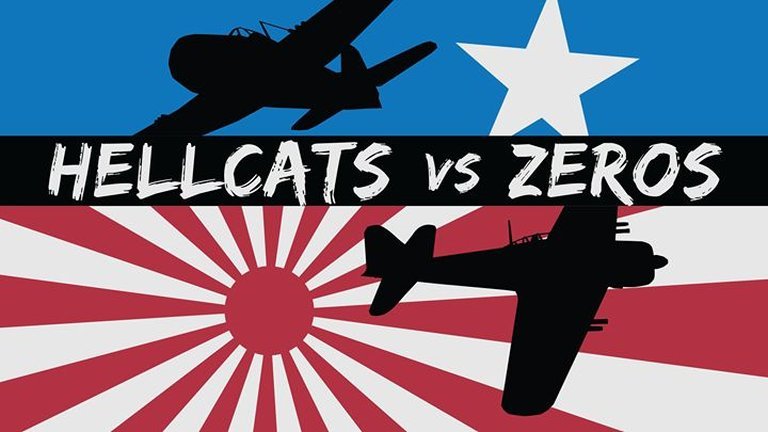
Hellcats vs Zeros is a retro-style World War II combat flight simulator set in the Pacific Theater, offering a sandbox experience where players can pilot either the heavily armored US Grumman F6F Hellcat or the agile Japanese Mitsubishi A6M Zero. The game features detailed, functional cockpits optimized for VR with hands-on controls, realistic flight mechanics, and destructible aircraft that react dynamically to damage. Players can engage in intense dogfights, carrier landings, and ground attacks through campaign missions or a customizable free-flight mode.
Gameplay Videos
Hellcats vs Zeros: A Retro-Flight Sim’s Bold Dive into WWII Dogfighting
Introduction: The Forgotten Gem of Pacific Theater Combat
In the crowded landscape of World War II flight simulators, Hellcats vs Zeros (2019) emerges as a fascinating anomaly—a game that embraces retro aesthetics while leveraging modern VR technology to deliver an immersive, if niche, combat experience. Developed by the obscure studio Zono LLC, this title eschews the hyper-realism of IL-2 Sturmovik or the arcade accessibility of War Thunder in favor of a tactile, hands-on approach to aerial warfare. With its fully interactive cockpits, destructible aircraft, and a sandbox-style campaign, Hellcats vs Zeros carves out a unique space in the genre.
Yet, despite its ambitions, the game remains largely overlooked—a victim of limited marketing, a lack of critical coverage, and the dominance of more established franchises. This review seeks to rediscover and dissect Hellcats vs Zeros, examining its strengths, flaws, and historical significance. Was it a missed opportunity, or a cult classic waiting for its moment? Let’s take off and find out.
Development History & Context: A Labor of Love in a Crowded Sky
The Studio Behind the Stick: Who Is Zono LLC?
Zono LLC is a small, independent developer with no prior major releases, making Hellcats vs Zeros their debut title. Little is known about the team’s background, but their focus on VR-compatible flight simulation suggests a passion for aviation history and immersive gameplay. The game’s Oculus Store exclusivity at launch (later expanded to Steam) indicates a deliberate push toward the VR flight sim market, a niche but dedicated audience.
Technological Constraints & Design Philosophy
Released in November 2019, Hellcats vs Zeros arrived at a time when VR flight simulators were still finding their footing. Titles like VTOL VR (2019) and Warplanes: WW1 Fighters (2017) had proven there was demand, but the genre lacked a polished, historically grounded WWII experience. Zono LLC’s approach was twofold:
1. Retro-Stylized Realism – The game’s visuals evoke 1990s flight sims (e.g., Jane’s WWII Fighters), blending low-poly models with modern physics.
2. VR-First Design – Unlike many flight sims that retrofit VR support, Hellcats vs Zeros was built from the ground up for virtual reality, emphasizing physical interaction over traditional HUDs.
The Gaming Landscape in 2019
At the time of release, the flight sim genre was in a state of flux:
– War Thunder dominated the free-to-play, arcade-style market.
– IL-2 Sturmovik: Battle of Bodenplatte (2019) catered to hardcore sim enthusiasts.
– Microsoft Flight Simulator (2020) was on the horizon, promising unprecedented realism.
Hellcats vs Zeros occupied a middle ground—more accessible than IL-2 but more simulation-heavy than War Thunder. Its sandbox campaign and VR focus set it apart, but its lack of multiplayer and limited scope (only two aircraft) may have hindered its appeal.
Narrative & Thematic Deep Dive: A War of Metal and Men
The Pacific Theater as a Battleground
Hellcats vs Zeros eschews a traditional linear campaign in favor of a sandbox-style mission structure, allowing players to engage in historically inspired scenarios from the Pacific War (1942–1945). The game’s two playable aircraft—the Grumman F6F Hellcat and the Mitsubishi A6M Zero—serve as avatars of their respective nations’ aerial doctrines:
– The Hellcat – A heavily armored, high-speed bruiser, designed to outmuscle the Zero in dive attacks and survivability.
– The Zero – A lightweight, ultra-maneuverable interceptor, built for hit-and-run tactics and superior climb rates.
Historical Accuracy vs. Gameplay Balance
One of the most contentious aspects of Hellcats vs Zeros is its handling of historical accuracy. Early player feedback (as seen in Steam discussions) suggested that the Zero was initially overpowered, reflecting its real-world dominance in early-war engagements. However, later updates rebalanced the aircraft to account for:
– Pilot skill disparities (Japanese aces vs. green US recruits).
– Technological upgrades (the Hellcat was designed to counter the Zero).
– Combat scenarios (e.g., bomber escorts vs. dogfights).
This dynamic balancing raises an interesting question: Should a WWII flight sim prioritize historical fidelity or fun gameplay? Hellcats vs Zeros leans toward a middle ground, where realistic flight models meet accessible controls.
The Absence of a Traditional Story
Unlike Battlefield V’s narrative-driven War Stories or IL-2’s historical mission briefings, Hellcats vs Zeros lacks a structured narrative. Instead, it relies on emergent storytelling—players create their own dogfight legends through sandbox missions, carrier landings, and free-flight mode. This approach alienates players seeking a cinematic experience but delights simulation purists who prefer unscripted aerial combat.
Gameplay Mechanics & Systems: A Pilot’s Dream or a Sim Enthusiast’s Nightmare?
Core Gameplay Loop: Dogfights, Bombers, and Carrier Landings
Hellcats vs Zeros structures its gameplay around three primary modes:
1. Campaign Missions – Historically inspired objectives (e.g., intercepting bombers, escorting fleets).
2. Free Flight – A sandbox mode where players can test aircraft, practice landings, or engage in custom dogfights.
3. Training Mode – Tutorials for VR controls, flight mechanics, and combat tactics.
Flight Model & Physics: A Retro-Sim Hybrid
The game’s flight model is neither fully arcade nor hardcore sim—it sits in an awkward middle ground:
– Pros:
– Weighty, responsive controls that reward precision flying.
– Damage modeling affects performance (e.g., losing a wing alters maneuverability).
– VR interactions (flipping switches, adjusting throttle) enhance immersion.
– Cons:
– Lack of advanced flight dynamics (e.g., no stall modeling, simplified aerodynamics).
– AI behavior can be unpredictable (e.g., enemy pilots sometimes fly in straight lines).
Combat & Weapon Systems
- Guns & Armament:
- The Hellcat boasts heavy machine guns and cannons, ideal for high-speed strafing runs.
- The Zero relies on light, fast-firing weapons, better suited for hit-and-run attacks.
- Damage & Destruction:
- Fully destructible aircraft (wings, engines, tails can be shot off).
- Realistic performance degradation (e.g., engine damage reduces speed).
VR & Motion Controls: A Double-Edged Sword
The game’s biggest selling point—VR with motion controls—is also its most divisive feature:
– Strengths:
– Unparalleled immersion (physically reaching for controls feels incredible).
– Intuitive interactions (e.g., flipping switches, pulling levers).
– Weaknesses:
– Motion controls can be finicky (e.g., accidental inputs, calibration issues).
– No traditional HOTAS (Hands-On Throttle-and-Stick) support at launch (later patched in).
UI & Menus: A Retro-Futuristic Aesthetic
The user interface, designed by Chad Woyewodzic, blends 1940s military aesthetics with modern VR functionality:
– World-space menus (floating in the cockpit).
– Hand-tracked interactions (e.g., grabbing mission briefings).
– Minimalist HUD (relying on cockpit instruments rather than on-screen prompts).
World-Building, Art & Sound: A Love Letter to WWII Aviation
Visual Design: Low-Poly Charm Meets Functional Realism
Hellcats vs Zeros adopts a retro-stylized art direction, reminiscent of late-90s flight sims:
– Aircraft models are detailed but not hyper-realistic, prioritizing readability in VR.
– Environments (ocean, islands, carriers) are simplified but effective, avoiding excessive clutter.
– Cockpit interiors are highly interactive, with functional switches, gauges, and levers.
Sound Design: The Roar of the Pacific
The audio experience is one of the game’s strongest aspects:
– Engine sounds are deep and immersive, changing dynamically with throttle adjustments.
– Gunfire and explosions have weight and impact, enhancing combat feedback.
– Radio chatter (though limited) adds atmosphere to missions.
Atmosphere & Immersion
The game excels in creating a sense of presence:
– VR cockpit interactions make players feel like real pilots.
– Dynamic weather (though basic) affects visibility and flight conditions.
– Carrier landings are tense and rewarding, requiring precision and skill.
Reception & Legacy: The Game That Slipped Through the Cracks
Critical & Commercial Reception
Hellcats vs Zeros received almost no mainstream coverage—no Metascore, no major reviews, and minimal player feedback. The few discussions (e.g., Steam forums, Reddit) suggest:
– VR enthusiasts praised its immersion but criticized lack of depth.
– Flight sim purists found it too arcade-like for a “true sim.”
– Casual players were deterred by the VR requirement and steep learning curve.
Post-Launch Support & Community
Zono LLC released several patches, addressing:
– Balance issues (e.g., Zero vs. Hellcat performance).
– HOTAS support (adding traditional flight stick compatibility).
– Bug fixes (e.g., AI behavior, collision detection).
However, no major expansions or DLC were released, and the community remained small.
Influence & Legacy
Hellcats vs Zeros did not revolutionize the genre, but it proved that VR flight sims could work with:
– Tactile, hands-on controls.
– A sandbox approach to missions.
– A focus on historical aircraft without overwhelming complexity.
Its biggest legacy may be as a cult favorite among VR flight sim enthusiasts—a game that dared to be different in a market dominated by either hyper-realism or arcade shooters.
Conclusion: A Flawed but Fascinating Flight into History
Hellcats vs Zeros is not a perfect game, but it is a bold experiment—one that prioritizes immersion and interactivity over polish and mainstream appeal. Its VR-first design, destructible aircraft, and sandbox campaign make it a hidden gem for WWII aviation buffs, even if its lack of multiplayer, limited scope, and occasional jank hold it back from greatness.
Final Verdict: 7.5/10 – A Niche Masterpiece
- For VR flight sim fans: A must-play for its unmatched immersion.
- For hardcore sim enthusiasts: Too arcade-like to replace IL-2 or DCS.
- For casual gamers: Too complex without a proper tutorial or controller support.
Hellcats vs Zeros may not have soared to commercial success, but it carved out a unique space in the WWII flight sim genre—one that deserves recognition as a creative, if imperfect, tribute to Pacific Theater dogfighting.
Final Thought: If you’ve ever dreamed of physically flipping switches in a Hellcat while diving on a Zero, this is the closest you’ll get—warts and all.
Would you like additional sections on modding potential, comparisons to other WWII flight sims, or deeper technical analysis? Let me know how to expand this review further!