
- Release Year: 2005
- Platforms: Windows
- Publisher: media Verlagsgesellschaft mbH
- Developer: TASK four
- Genre: Action, Puzzle
- Perspective: Side view
- Game Mode: Single-player
- Gameplay: Falling block puzzle
- Average Score: 35/100
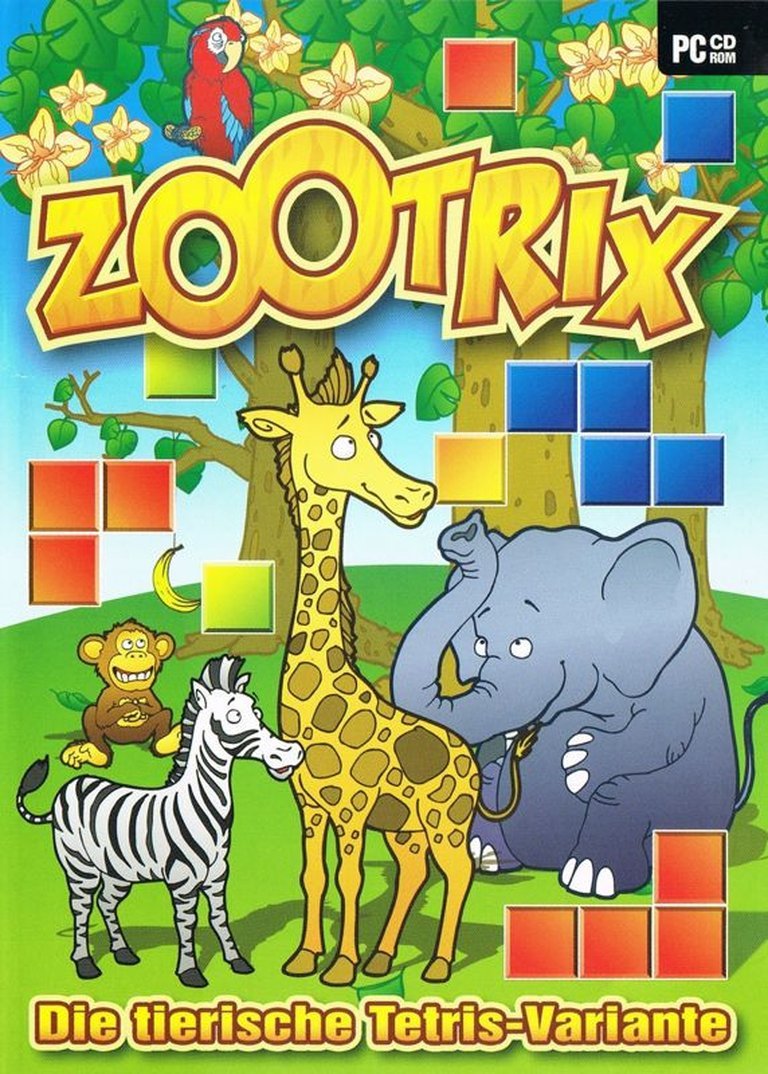
Description
Zootrix is a Tetris-inspired puzzle game released in 2005, featuring 12 progressively challenging levels that can be played individually or as part of a campaign. As players complete each level, they unlock a new zoo animal, with the goal of filling an entire zoo after clearing all 12 stages. The game offers a side-view, fixed-screen perspective with direct control over falling blocks, blending classic block-stacking mechanics with a lighthearted animal-collecting theme.
Gameplay Videos
Zootrix Free Download
PC
Zootrix Reviews & Reception
mobygames.com (35/100): Zootrix is a Tetris clone. 12 levels with a rising difficulty level are included.
digitallydownloaded.net : Zotrix is a decidedly simple game with some good ideas to keep you coming back for more, but that’s only assuming that the very old school arcade style shooter appeals to you in the first place.
Zootrix: A Forgotten Relic of the Tetris Clone Era
Introduction: The Curious Case of Zootrix
In the vast, ever-expanding universe of video games, some titles fade into obscurity not because they were bad, but because they were unremarkable—products of their time, devoid of innovation, yet not entirely without charm. Zootrix (2005), developed by German studio TASK four and published by media Verlagsgesellschaft mbH, is one such game. A Tetris clone in every sense of the term, it arrived in an era already saturated with falling-block puzzlers, offering little to distinguish itself beyond a thin veneer of zoo-themed aesthetics.
Yet, Zootrix is not without its curiosities. It is a game that exists at the intersection of commercial ambition, minimalist design, and the early 2000s budget-game market—a relic of a time when publishers could still sell CD-ROM puzzle games in retail boxes, even if they were mechanically identical to decades-old classics. This review seeks to dissect Zootrix not just as a game, but as a cultural artifact, exploring its development, its place in gaming history, and why it ultimately failed to leave a lasting impression.
Development History & Context: The Birth of a Tetris Clone
The Studio Behind the Game: TASK four
Zootrix was developed by TASK four, a German studio with a modest portfolio primarily consisting of budget titles, educational software, and casual games. Founded in the late 1990s, TASK four was not a household name, even in Europe. Their output included games like Kreuzzüge (a historical strategy game) and Panzerjagd (a tank combat simulator), but Zootrix represented a rare foray into the puzzle genre.
The team behind Zootrix was small—just 10 people credited in total:
– Haiko Ruttmann (Project Management)
– Karsten Koch (Programming)
– Stefan Richter (Layout)
This lean development structure was typical for budget PC games of the era, where efficiency and quick turnaround were prioritized over ambition.
The Gaming Landscape in 2005: A Market Flooded with Clones
By 2005, the falling-block puzzle genre was already 21 years old, with Tetris (1984) having long since cemented its status as one of the most cloned games in history. The market was saturated with variations:
– Columns (1990)
– Dr. Mario (1990)
– Puyo Puyo (1991)
– Lumines (2004)
Even Tetris itself had seen countless official and unofficial iterations, from Tetris DS to Tetris Worlds. In this environment, Zootrix had to compete not just with established franchises, but with free flash games and shareware alternatives that offered similar (or better) experiences without the price tag.
Technological Constraints & Design Philosophy
Zootrix was built for Windows PCs in an era when 2D puzzle games were no longer cutting-edge. The game’s fixed/flip-screen perspective and side-view presentation were holdovers from the 16-bit era, making it feel dated even at launch.
The developers made no attempt to innovate mechanically—Zootrix was Tetris in everything but name, with:
– 12 levels of increasing difficulty
– A “campaign” mode (which was just a linear progression of levels)
– A zoo animal unlock system (the sole “unique” feature)
The lack of online multiplayer (a feature already present in games like Tetris Online) and no significant gameplay twists meant that Zootrix was, at best, a nostalgic curiosity and, at worst, a lazy cash grab.
Narrative & Thematic Deep Dive: The Illusion of a Zoo
The “Story” of Zootrix
Zootrix does not have a traditional narrative. Instead, it employs a loose thematic framing:
– The player is a zookeeper (or perhaps a zoo architect).
– Each level, when completed, unlocks a new animal for the zoo.
– After 12 levels, the zoo is “complete.”
This is not a story—it is a progression mechanic disguised as one. There are no characters, no dialogue, no plot twists. The “zoo” is merely a visual reward system, with each animal appearing as a static image upon level completion.
Themes: Conservation, Completionism, and Childhood Nostalgia
The game’s zoo theme suggests a superficial engagement with conservation, but in reality, it is purely aesthetic. The animals serve no purpose beyond visual feedback, and there is no ecological messaging or educational content.
Instead, Zootrix leans into:
– Completionism (unlocking all animals)
– Childhood appeal (bright colors, simple mechanics)
– Non-violent gameplay (marketed as “family-friendly”)
The lack of depth in its thematic execution makes Zootrix feel like a missed opportunity—it could have been an educational puzzle game about animal habitats, but instead, it settled for being Tetris with a zoo skin.
Gameplay Mechanics & Systems: Tetris by Another Name
Core Gameplay Loop: The Tetris Formula
Zootrix follows the Tetris blueprint almost identically:
1. Blocks fall from the top of the screen.
2. The player rotates and positions them to form complete horizontal lines.
3. Completed lines disappear, earning points.
4. The game speeds up as the player progresses.
The only deviation is the zoo animal unlock system, which does nothing to alter gameplay—it is purely a cosmetic reward.
Game Modes: A False Sense of Variety
Zootrix offers two modes:
1. Free Play – A standard endless mode with increasing difficulty.
2. Campaign – A linear progression through 12 levels, each unlocking an animal.
Neither mode introduces new mechanics, power-ups, or obstacles. The “campaign” is not a campaign—it is just Tetris with a progress bar.
UI & Controls: Functional but Uninspired
The user interface is minimalist to a fault:
– No tutorial (assumes player familiarity with Tetris)
– Basic score display
– Animal unlock notifications (the only “unique” UI element)
Controls are direct and responsive, but nothing special—standard arrow keys for movement, spacebar for rotation.
Innovation? None. Flaws? Plenty.
Zootrix suffers from:
– No innovation (why play this over Tetris?)
– Repetitive gameplay (no new mechanics after Level 1)
– Lack of replayability (once all animals are unlocked, there’s no incentive to continue)
– No multiplayer (a glaring omission in 2005)
The only redeeming feature is the online leaderboard, which was ahead of its time for a budget puzzle game—but even this was not enough to save it.
World-Building, Art & Sound: Aesthetic Simplicity
Visual Design: Bright, Childish, and Forgettable
Zootrix employs a cartoonish, colorful art style that screams “made for kids.” The zoo animals are static, low-detail sprites, and the blocks themselves are basic geometric shapes with primary colors.
The backgrounds are plain and unchanging, with no animation beyond the falling blocks. The zoo theme is purely decorative—there is no interaction with the animals, and they do not affect gameplay.
Sound Design: Elevator Music and Basic SFX
The soundtrack was criticized in contemporary reviews as “nerve-grating elevator music” (PC Games Germany). The sound effects are functional but unremarkable—standard block placement and line-clear noises.
The ability to turn off the music was one of the few praised features, as it allowed players to focus on the gameplay without auditory distraction.
Atmosphere: A Hollow Zoo
Zootrix fails to create any meaningful atmosphere. The zoo setting is purely superficial, with no environmental storytelling or immersive elements. The game feels sterile, like a Tetris mod rather than a fully realized experience.
Reception & Legacy: The Fate of a Forgotten Clone
Critical Reception: Harsh but Fair
Zootrix received two professional reviews, both from German gaming magazines:
– PC Games (Germany) – 36/100
– Criticized the “nerve-grating music” and lack of long-term motivation.
– PC Action (Germany) – 34/100
– Called it “nothing more than Tetris” and questioned its commercial viability when free alternatives existed.
The consensus was clear: Zootrix was unnecessary, offering nothing new in a crowded genre.
Commercial Performance: A Budget Bin Title
Zootrix was not a commercial success. It was sold on CD-ROM in Germany, but never gained traction outside its home market. By 2005, digital distribution was already rising, and physical puzzle games were becoming obsolete.
Legacy: A Footnote in Gaming History
Zootrix is not remembered—it is not referenced in discussions of Tetris clones, puzzle games, or German game development. It exists today as:
– A curiosity for retro gamers
– A cautionary tale about lack of innovation
– A reminder of the early 2000s budget-game market
Its only lasting impact is as a case study in how not to design a puzzle game.
Conclusion: The Unremarkable Life of Zootrix
Zootrix is not a bad game—it is Tetris, and Tetris is a masterpiece. But Zootrix is not Tetris. It is a pale imitation, a shell of a game that borrows mechanics without adding anything of value.
Final Verdict: 3/10 – A Relic of a Bygone Era
- Gameplay: 4/10 (Functional but unoriginal)
- Presentation: 3/10 (Childish and forgettable)
- Innovation: 1/10 (Nonexistent)
- Replayability: 2/10 (Only for completionists)
- Legacy: 2/10 (Forgotten, and for good reason)
Zootrix is not worth playing today—there are dozens of better Tetris clones (Tetris Effect, Puyo Puyo Tetris, Tetris 99) and free alternatives that do everything Zootrix does, but better.
Yet, as a historical artifact, Zootrix serves as a fascinating snapshot of the early 2000s gaming market—a time when publishers could still sell unremarkable clones in physical boxes, before digital distribution and indie innovation made such games obsolete.
In the end, Zootrix is not a game to celebrate, but one to study—a reminder that even in gaming, mediocrity rarely stands the test of time.