
- Release Year: 2004
- Platforms: PlayStation 2, Windows
- Publisher: Vivendi Universal Games International S.A.
- Developer: Coktel Vision
- Genre: Action
- Perspective: 3rd-person
- Game Mode: Hotseat, Single-player
- Gameplay: Dynamic difficulty, Platforming, Racing
- Setting: Fantasy, Sci-fi
- Average Score: 71/100
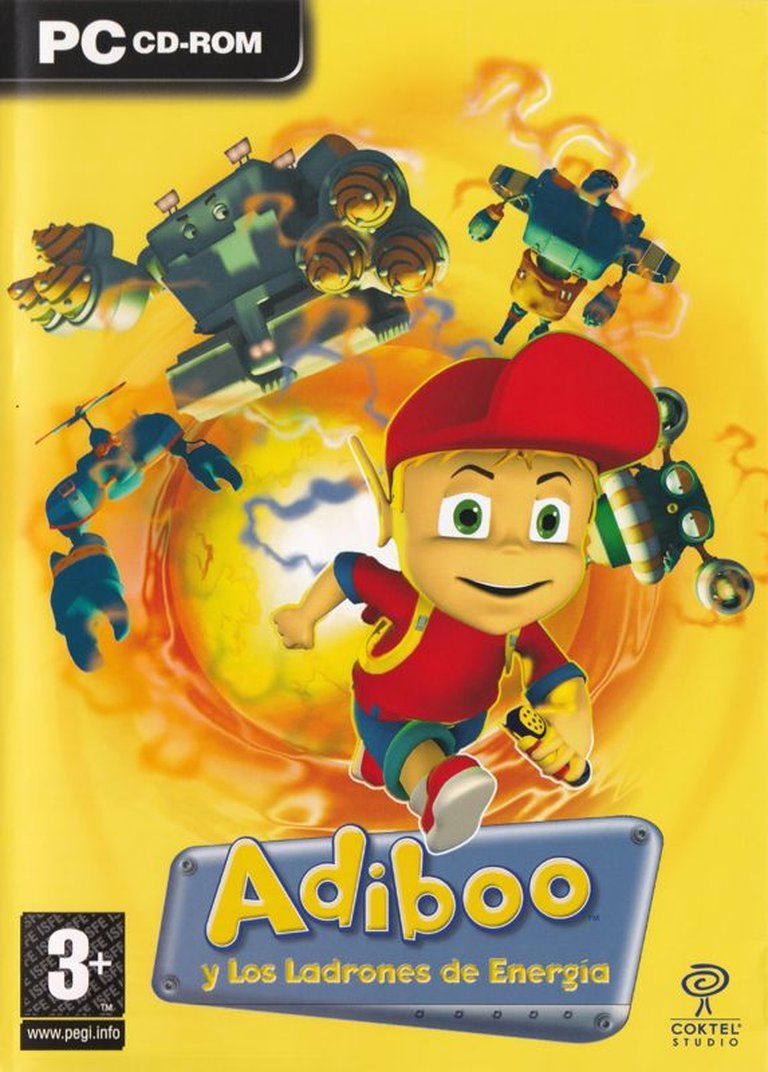
Description
The Energy Thieves is a child-friendly action game featuring the beloved character Adiboo, designed for players aged five and up. Set across fourteen diverse levels, the game tasks Adiboo with thwarting a resource-stealing robot that threatens the planet’s lava, rocks, wood, and water. Gameplay includes 2D side-scrolling platforming, racing segments with varying perspectives, and exploration in a central hub world. The game also offers a two-player multiplayer mode, time trial challenges, and dynamic difficulty adjustment to suit the player’s skill level.
Gameplay Videos
The Energy Thieves Free Download
The Energy Thieves Cracks & Fixes
The Energy Thieves Reviews & Reception
mobygames.com (71/100): An action game for children five years and up starring the Adiboo character.
The Energy Thieves: A Forgotten Gem of Early 2000s Edutainment
Introduction: The Overlooked Adventure of Adiboo
In the vast landscape of early 2000s children’s gaming, The Energy Thieves (2004) stands as a curious artifact—a title that attempted to blend action, adventure, and educational elements into a cohesive experience for young players. Developed by Coktel Vision and published by Vivendi Universal Games, this game starred Adiboo, a beloved edutainment mascot, in a mission to save the planet Celesta from a resource-stealing robot. While it may not have left a lasting mark on gaming history, The Energy Thieves offers a fascinating glimpse into the design philosophies of children’s games from its era.
This review will dissect the game’s development, narrative, gameplay mechanics, and legacy, arguing that while The Energy Thieves was a well-intentioned and technically competent title, its rigid adherence to educational frameworks and lack of depth ultimately relegated it to obscurity.
Development History & Context: Coktel Vision’s Edutainment Legacy
The Studio Behind the Game
Coktel Vision, a French developer with a long history in edutainment software, was the creative force behind The Energy Thieves. Known for titles like Adiboo & Paziral’s Secret (2003) and Dr. Seuss’ The Cat in the Hat, the studio specialized in games that blended learning with interactive storytelling. The Energy Thieves was part of the Adi series, which aimed to teach children through playful exploration.
The game’s development involved a massive team of 182 people, including lead designers Philippe Blanchet and Olivier Rochas, and art directors Arnaud Bouron and Jean-Christophe Charter. The use of the RenderWare engine—a popular middleware at the time—allowed for a mix of 2D and 3D visuals, though the game’s technical ambitions were tempered by the hardware limitations of the PlayStation 2 and early 2000s PCs.
The Gaming Landscape of 2004
Released in 2004, The Energy Thieves entered a market dominated by more mainstream titles like Sly 2: Band of Thieves and Uncharted 2: Among Thieves. Unlike these action-adventure games, The Energy Thieves was explicitly designed for children aged five and up, prioritizing accessibility over complexity. Its dynamic difficulty system—a rarity at the time—adjusted challenges based on player performance, ensuring younger audiences wouldn’t become frustrated.
However, the game’s educational focus and simplistic mechanics made it a niche product, overshadowed by more polished or ambitious titles. A planned GameCube version was canceled, further limiting its reach.
Narrative & Thematic Deep Dive: A Simple but Effective Premise
Plot Overview
The Energy Thieves follows Adiboo, an alien child, as he battles a rogue robot stripping the planet Celesta of its natural resources: water, wood, minerals, and lava. The narrative is straightforward, with Adiboo traversing 14 levels to thwart the robot’s plans. The game’s hub world allows for exploration, though the story remains linear.
Themes and Educational Intent
The game’s central theme—environmental conservation—was progressive for a children’s title in 2004. By framing the antagonist as a resource-stealing machine, The Energy Thieves subtly introduced young players to ecological awareness. However, the execution was often heavy-handed, with dialogue and objectives reinforcing educational goals at the expense of immersive storytelling.
Characters and Dialogue
Adiboo himself is a cheerful, non-threatening protagonist, designed to appeal to young children. The robot antagonist, while visually imposing, lacks depth, serving primarily as a functional obstacle. Dialogue is minimal, focusing on guidance rather than character development.
Gameplay Mechanics & Systems: A Mix of Platforming and Racing
Core Gameplay Loops
The Energy Thieves features a hybrid of gameplay styles:
– 2D Side-Scrolling Platforming: Adiboo navigates obstacle courses, collecting resources and avoiding hazards.
– Racing Sections: Players control a “Luftflitzer” (aircraft) in time-trial challenges, using both frontal and behind-the-camera views.
– Boss Battles: Non-violent “intelligent duels” replace traditional combat, emphasizing problem-solving over aggression.
Dynamic Difficulty and Accessibility
The game’s adaptive difficulty system was ahead of its time, scaling challenges based on player performance. This ensured younger audiences could progress without excessive frustration, though it also limited replayability for older or more skilled players.
Multiplayer and Time Trials
A two-player mode and time-trial challenges added variety, but these features were underdeveloped, serving more as distractions than meaningful extensions of the core experience.
World-Building, Art & Sound: A Colorful but Limited Universe
Visual Design
The game’s art style is bright and cartoonish, with a mix of 2D sprites and 3D environments. The RenderWare engine allowed for smooth scrolling and basic lighting effects, but the visuals were constrained by the era’s technical limitations. The hub world, while functional, lacked the depth of more ambitious platformers.
Sound and Music
The soundtrack is cheerful and unobtrusive, designed to maintain a child-friendly atmosphere. Sound effects are simple but effective, reinforcing actions without overwhelming the player.
Reception & Legacy: A Forgotten Footnote in Gaming History
Critical Reception
The Energy Thieves received a lukewarm 71% from PC Action (Germany), which noted its appeal to young children but questioned its broader relevance. The game’s educational focus and simplistic design limited its appeal beyond its target demographic.
Commercial Performance and Legacy
With only four players documented on MobyGames, The Energy Thieves was a commercial non-entity. Its legacy is tied to the Adi series, which continued with titles like Dis-moi ADI: Français – Maths CE2 (2005). While it introduced innovative features like dynamic difficulty, its rigid adherence to edutainment principles prevented it from achieving lasting influence.
Conclusion: A Well-Intentioned but Flawed Experiment
The Energy Thieves is a fascinating relic of early 2000s children’s gaming—a title that prioritized education and accessibility over depth and innovation. While its adaptive difficulty and environmental themes were commendable, the game’s simplistic mechanics and lack of narrative ambition relegated it to obscurity.
Final Verdict: The Energy Thieves is a minor footnote in gaming history, notable more for its intentions than its execution. For historians of edutainment, it offers valuable insights into the design philosophies of its era. For modern players, it serves as a reminder of how far children’s games have evolved.
Score: 6/10 – A noble effort, but ultimately forgettable.