
- Release Year: 2023
- Platforms: Nintendo Switch, Windows
- Publisher: Sunsoft
- Developer: Sunsoft
- Genre: Action
- Perspective: Top-down
- Game Mode: Online Co-op, Single-player
- Gameplay: Arcade
- Setting: Classical, Japan (Ancient, Medieval)
- Average Score: 65/100
Description
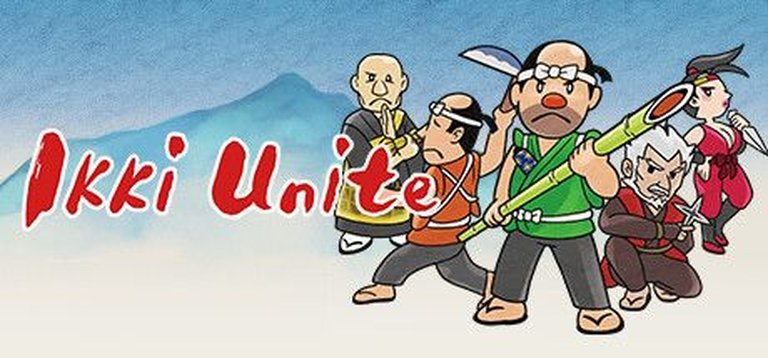
Ikki Unite is a top-down, 2D action game set in ancient Japan, blending arcade-style gameplay with anime/manga aesthetics. Inspired by the classic Ikki series, it offers both solo and online multiplayer modes, where players unite to battle waves of enemies in a challenging, fast-paced experience. While the game draws comparisons to modern titles like Vampire Survivors, it retains a distinct identity with its retro-inspired mechanics and cooperative rebellion theme.
Gameplay Videos
Where to Buy Ikki Unite
Ikki Unite Patches & Updates
Ikki Unite Guides & Walkthroughs
Ikki Unite Reviews & Reception
purenintendo.com : Ikki Unite is not kusogē, although your mileage with it will depend whether you’re initiating the game’s uprising alone or with company.
gamesasylum.com : Compared to other recent Vampire Survivors clones, Ikki Unite is far more complex and unique.
opencritic.com (65/100): Ikki Unite adds a Vampire Survivors spin to a 1985 game you’ve probably never even heard of. It works, but only if you’re able to take advantage of the online multiplayer.
waytoomany.games : Ikki Unite is nowhere near as fun to play as Vampire Survivors. That’s a very obvious given, I know. Then again, it’s not bad per se.
Ikki Unite Cheats & Codes
Nintendo Entertainment System/Famicom
This cheat requires the Pro Action Replay cheat device.
| Code | Effect |
|---|---|
| 0000 C502 | Infinite Lives |
Nintendo Entertainment System/Famicom (Game Genie)
| Code | Effect |
|---|---|
| 00C5:02 | Infinite Lives |
| 0019:00+00C4:80 | Untouchable |
| 0709:07 | Collect One Yen to pass level |
| AAZOVL | Infinite Lives |
Ikki Unite: A Rebellion Reborn in the Shadow of Vampire Survivors
Introduction: The Legendary Kusoge Rises Again
In the annals of video game history, few titles carry the infamous legacy of Ikki, the 1985 Famicom game that birthed the term kusoge—Japanese slang for a “crap game.” Decades later, Sunsoft, the studio behind classics like Blaster Master and Batman for the NES, has resurrected this notorious franchise with Ikki Unite, a bold reimagining that fuses its feudal Japanese rebellion theme with the modern Vampire Survivors formula. But is this a triumphant revival or a misguided attempt to cash in on a trend? This review dissects Ikki Unite in exhaustive detail, exploring its development, mechanics, reception, and place in gaming history.
Development History & Context: Sunsoft’s Gambit
The Studio’s Legacy and the Kusoge Phenomenon
Sunsoft’s resurrection of Ikki is a fascinating case study in self-awareness. The original Ikki (1985) was a top-down shooter where players controlled a lone farmer leading a revolt against oppressive samurai rule—a premise that, in execution, was plagued by unfair difficulty, clunky controls, and a soundtrack so grating it became legendary. The game’s failure was so profound that it coined the term kusoge, a badge Sunsoft now wears with ironic pride.
Fast-forward to 2022, when Sunsoft announced its return to game development after years of dormancy. Their first major project? A revival of Ikki, but this time as a Vampire Survivors-style roguelike. The choice was deliberate: Ikki Unite leverages the original’s notoriety while modernizing its core concept. The game launched on PC in February 2023, followed by a Nintendo Switch port in April 2024.
Technological and Market Constraints
Ikki Unite is a product of its time, both in its retro-inspired aesthetics and its reliance on modern multiplayer infrastructure. The game’s 2D pixel art and top-down perspective pay homage to its 8-bit roots, but its online co-op for up to 16 players is a far cry from the original’s single-player limitations. However, this ambition comes with caveats:
– Server Dependency: The game’s multiplayer is its lifeblood, but early reviews highlight sparse player populations, making solo play the default experience.
– Balancing Issues: The shift from arcade-style difficulty to a roguelike structure introduces new challenges, particularly in character balance and progression pacing.
Narrative & Thematic Deep Dive: The Peasant’s Revolt
Plot and Setting
Ikki Unite transports players to feudal Japan, where a village ravaged by locusts and oppressive taxation rises in rebellion. The premise is simple: overthrow the corrupt magistrate and his lackeys. The narrative is minimal, serving as a backdrop for the gameplay, but it’s steeped in historical context—the ikki were real peasant uprisings during Japan’s Sengoku period.
Characters and Themes
The game’s roster of 16 playable characters is a motley crew of farmers, ninjas, priests, and even a daimyo (Hideyori). Each character falls into one of four roles:
– Offense: Direct damage dealers (e.g., Magoichi, the gunman).
– Recovery: Healers and support (e.g., Bonze, the priest).
– Enhancement: Buff-focused (e.g., Minstrel, who boosts allies with music).
– Exploration: Scouting and resource gathering (e.g., Gonbe, the protagonist).
Themes of unity and class struggle permeate the experience. The game’s tagline—“You can’t riot with just one or two people!”—underscores its multiplayer focus. Solo play feels like a half-measure, a nod to the original’s flaws.
Dialogue and Tone
The game’s tone is self-deprecating, embracing its kusoge roots with humor. The English localization is functional but incomplete, with some menus (e.g., character recruitment) left in Japanese—a quirky but frustrating oversight.
Gameplay Mechanics & Systems: Vampire Survivors Meets Feudal Japan
Core Gameplay Loop
Ikki Unite adapts the Vampire Survivors formula with key twists:
1. Time-Limited Runs: Players start with a short time limit (e.g., 4 minutes) to defeat a boss. Success grants additional time.
2. Automatic Combat: Attacks and skills trigger automatically, emphasizing movement and positioning.
3. Roguelike Progression: Randomized stages, power-ups, and boss encounters ensure no two runs are identical.
Character Progression and Balance
The game’s 16 characters offer varied playstyles, but balance is uneven. Some (e.g., offense-focused Magoichi) dominate, while others (e.g., support roles) feel underwhelming. The lack of a tutorial exacerbates this, leaving players to experiment blindly.
UI and Controls
- Simplicity: Controls are limited to movement (arrow keys or analog stick), with attacks handled automatically.
- Cluttered HUD: The mini-map and health bars can become overwhelming during chaotic multiplayer sessions.
Innovations and Flaws
- Multiplayer Synergy: The game shines when teams coordinate, but the lack of voice chat or robust matchmaking hampers this.
- Boss Battles: Defeating bosses extends the time limit, adding urgency but also frustration when RNG denies critical power-ups.
World-Building, Art & Sound: A Feudal Pixel Dream
Visual Design
Ikki Unite’s art style is a love letter to retro gaming, with:
– Pixel Art: Sprites are detailed but inconsistent in scale, leading to visual clutter.
– Environmental Variety: Stages feature rivers, villages, and forests, but collision detection can be finicky.
Sound and Music
The soundtrack is a deliberate throwback to the original’s “terrible” music, with MIDI renditions of traditional Japanese tunes. While nostalgic, it lacks the polish of modern indie games.
Reception & Legacy: A Mixed Uprising
Critical Reception
Reviews have been lukewarm, with an average score of 57% on MobyGames. Critics praise the multiplayer concept but cite:
– Solo Play Fatigue: Without a full team, the game feels repetitive.
– Balancing Issues: Character disparities and RNG-heavy progression frustrate players.
Commercial Performance
The game’s $5.99 price point on Steam and Switch is accessible, but its niche appeal limits mainstream success. Sunsoft’s post-launch updates (e.g., the “Back Side” DLC) show commitment, but player retention remains a challenge.
Influence and Future
Ikki Unite is a curiosity—a kusoge reborn as a Vampire Survivors clone. Its legacy may lie in proving that even infamous games can find new life, albeit with mixed results.
Conclusion: A Rebellion Worth Joining?
Ikki Unite is a fascinating experiment: a self-aware revival that embraces its flaws while striving for modernity. Its multiplayer focus is ambitious, but solo play exposes its limitations. For fans of Vampire Survivors or Sunsoft’s retro catalog, it’s a quirky diversion. For everyone else, it’s a reminder that some rebellions are best left in history.
Final Verdict: 6.5/10 – A flawed but charming revival that shines in co-op but stumbles alone.