
- Release Year: 2010
- Platforms: Macintosh, Windows
- Publisher: Masque Publishing, Inc., phenomedia publishing gmbh, Runesoft GmbH
- Developer: Deck13 Interactive GmbH
- Genre: Adventure, Puzzle
- Perspective: 1st-person
- Game Mode: Single-player
- Gameplay: Dialogue choices, Hidden object, Inventory management, Puzzle-solving
- Setting: Church, Italian mountain village, Monastery
- Average Score: 63/100
Description
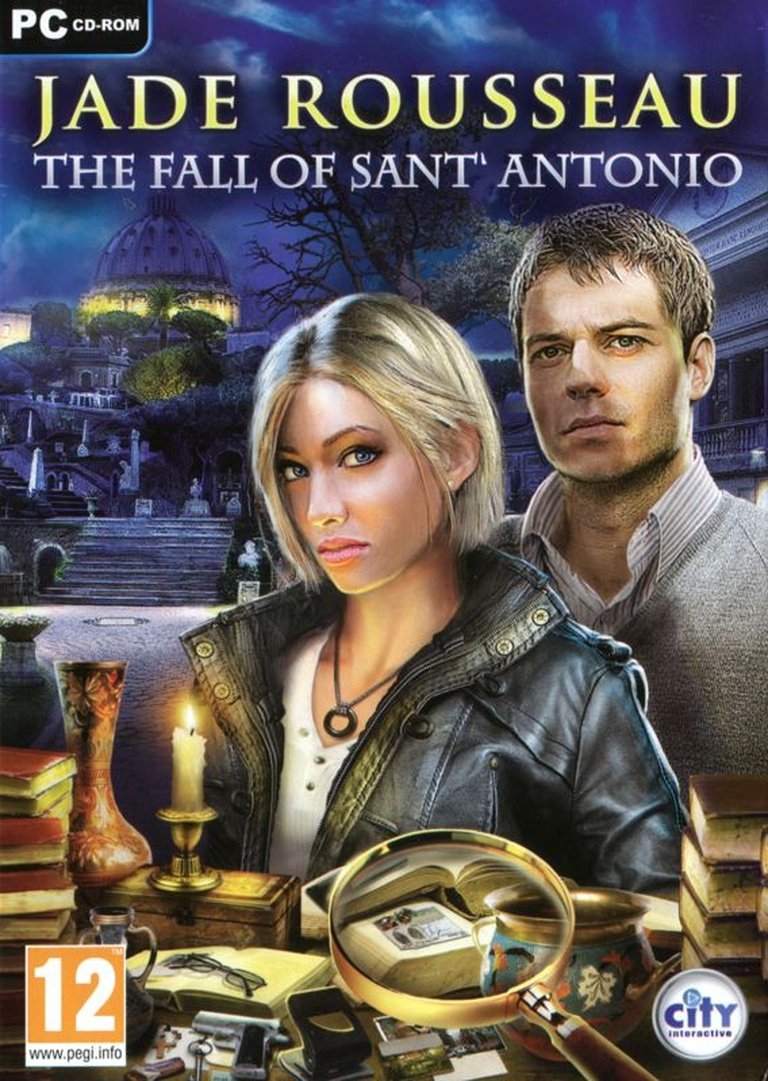
Jade Rousseau: The Secret Revelations – The Fall of Sant’ Antonio is a first-person hidden object adventure game set in a small Italian mountain village. Players take on the role of detective Jade Rousseau, who, after a car accident, begins investigating a break-in at her new police station. The mystery deepens when she receives a cryptic call about a murder at the local abbey, uncovering a conspiracy far more sinister than expected. The game features voice-acting, dialogue choices, inventory-based puzzles, and a mix of hidden object challenges and detective work, all set against the eerie backdrop of a secluded monastery.
Gameplay Videos
Jade Rousseau: The Secret Revelations – The Fall of Sant’ Antonio Guides & Walkthroughs
Jade Rousseau: The Secret Revelations – The Fall of Sant’ Antonio Reviews & Reception
wildtangent.com (56/100): A Secret Revelations game full of realistic hidden objects and an even greater mystery.
mobygames.com (70/100): A hidden object game which features full voice-acting and dialogue choices seen in regular adventure games.
Jade Rousseau: The Secret Revelations – The Fall of Sant’ Antonio: A Forgotten Gem of Hidden Object Mysteries
Introduction: A Detective’s Descent into Conspiracy
Few games capture the eerie allure of a small-town mystery quite like Jade Rousseau: The Secret Revelations – The Fall of Sant’ Antonio. Released in 2010 by Deck13 Interactive and published by Phenomedia, this hidden object adventure (HOA) stands as a fascinating relic of its era—a time when casual gaming was evolving beyond simple point-and-click puzzles into richer, narrative-driven experiences. While it may not have achieved the mainstream acclaim of contemporaries like The Secret Files or Mystery Case Files, The Fall of Sant’ Antonio carves its own niche with a brooding atmosphere, a layered conspiracy, and a protagonist whose personal demons are as compelling as the case she’s unraveling.
This review will dissect the game’s development, narrative depth, gameplay mechanics, and legacy, arguing that Jade Rousseau is an underappreciated title that deserves recognition for its ambitious storytelling and innovative approach to the hidden object genre.
Development History & Context: The Birth of a Mystery
Deck13 Interactive’s Early Days
Deck13 Interactive, now best known for The Surge and Lords of the Fallen, was in its infancy when Jade Rousseau was developed. Founded in 2001, the German studio had cut its teeth on smaller projects like Ankh and Jack Keane before venturing into the hidden object market. The Fall of Sant’ Antonio was part of a planned six-episode series, a bold move in an era where episodic gaming was still finding its footing outside of Telltale’s dominance.
The Hidden Object Boom of the Late 2000s
The late 2000s and early 2010s saw an explosion of hidden object games, fueled by digital distribution platforms like Big Fish Games and WildTangent. These games were often dismissed as “casual” fare, but Jade Rousseau sought to elevate the genre by blending traditional HOA mechanics with:
– Full voice acting (a rarity in many HOAs at the time).
– Dialogue choices (though largely superficial).
– A serialized narrative with cliffhangers and recurring characters.
Technological Constraints & Design Choices
Built on Deck13’s proprietary PINE engine, The Fall of Sant’ Antonio was constrained by the hardware of its time. The game’s 250MB footprint and 512MB RAM requirement were modest even for 2010, but the developers maximized these limitations with:
– Pre-rendered backgrounds (a staple of adventure games).
– Static but detailed environments (the abbey, police station, and Italian village).
– A lack of manual saving, relying instead on autosave checkpoints—a controversial choice that streamlined gameplay but frustrated players who wanted more control.
The game’s first-person perspective and point-and-click interactions were standard for the genre, but its integration of inventory-based puzzles and mini-games (like code-breaking and spot-the-difference challenges) set it apart from more repetitive HOAs.
Narrative & Thematic Deep Dive: A Detective’s Personal and Professional Crisis
Plot Summary: From Car Crash to Conspiracy
The game opens with Jade Rousseau, a disillusioned detective, driving to the remote Italian village of Sant’ Antonio in search of solitude. Her journey is abruptly interrupted by a car crash, a metaphorical and literal collision with her past. After surviving unscathed (a narrative contrivance that strains believability), she meets her new partner, David, and her gruff boss, setting the stage for a break-in investigation at the police station.
The real mystery begins when Jade receives a mysterious phone call urging her to investigate the Abbey of Sant’ Antonio. What starts as a routine check-up spirals into a covered-up murder, a secret society, and hints of Vatican corruption. The narrative’s pacing is deliberate, with clues unfolding through:
– Environmental storytelling (disturbed flowerbeds, hidden keys, cryptic notes).
– Interrogations (including a tense confrontation with a suspect named Toni).
– A trail of evidence leading from the abbey to Rome.
Character Analysis: Jade Rousseau’s Inner Turmoil
Jade is a flawed, introspective protagonist, a far cry from the cheerful detectives of other HOAs. Her dialogue choices (though mostly cosmetic) hint at her cynicism and distrust, particularly toward her partner, David. The game’s German development roots (Deck13 is based in Frankfurt) lend Jade a European noir sensibility, reminiscent of The Name of the Rose or The Da Vinci Code.
Supporting characters include:
– David: The enigmatic partner whose loyalty is questionable.
– The Abbott: A figure shrouded in suspicion.
– Toni: A local with ties to the abbey’s dark secrets.
Themes: Faith, Betrayal, and the Weight of the Past
The game’s themes are unapologetically heavy for a hidden object title:
1. The Corruption of Institutions: The abbey’s secrets imply church scandals, a bold narrative choice in 2010.
2. Personal Redemption: Jade’s transfer to Sant’ Antonio is an attempt to escape her past, but the case forces her to confront it.
3. Trust and Paranoia: The mysterious caller, David’s ambiguous motives, and the covered-up murder create an atmosphere of distrust.
The game’s ending—which sees Jade and David uncovering a hidden tunnel beneath the abbey—sets up future episodes that, sadly, never materialized. The unresolved threads (What is the “Secret Revelations” document? Who is the caller?) leave players with a lingering sense of intrigue.
Gameplay Mechanics & Systems: Innovation Within Constraints
Core Gameplay Loop: Hidden Objects with a Detective Twist
The Fall of Sant’ Antonio follows the standard HOA formula but enhances it with:
– Contextual interactions: Clicking on objects triggers environmental responses (e.g., using a rake to uncover a key).
– Inventory-based puzzles: Players must combine items (e.g., using a magnifying glass to examine evidence).
– Mini-games: These include:
– Spot-the-difference challenges (comparing a photo to a crime scene).
– Code-breaking puzzles (entering numbers into a telescope).
– Symbolic logic games (rotating stone discs in the crypt).
The Hint System: A Double-Edged Sword
The game’s hint system is tied to an in-game cellphone, which charges over time (approximately 30 seconds per hint). While this prevents excessive hand-holding, the lack of a manual save feature means players must rely on autosave checkpoints, a design choice that feels archic by modern standards.
Puzzle Design: Clever but Occasionally Frustrating
Most puzzles are logical and well-integrated into the narrative (e.g., deciphering Roman numerals to drain a fountain). However, some arbitrary object hunts (finding “twinkling objects” in the abbey) feel like padding. The ability to skip puzzles after a timer fills is a welcome accessibility feature.
UI and Navigation: Functional but Unremarkable
The inventory system is straightforward, with items dragging to the cursor for use. The notepad tracks objectives, but the lack of a map means players must manually backtrack, which can be tedious in later sections.
World-Building, Art & Sound: Crafting an Atmosphere of Unease
Setting: The Haunting Beauty of Sant’ Antonio
The game’s Italian alpine village and gothic abbey are rendered in detailed, pre-rendered 2D backgrounds, evoking a Tim Burton-esque aesthetic. Key locations include:
– The Police Station: A cluttered, lived-in space that grounds the mystery.
– The Abbey: A labyrinthine structure with hidden passages and crypts.
– The Mines: A claustrophobic, eerie environment where the game’s climax unfolds.
Visual Design: A Mix of Realism and Stylization
The character models are stiff by modern standards, but the environmental art is rich in detail, with flickering candles, dusty books, and ominous religious iconography reinforcing the game’s themes.
Sound Design & Music: Ambience Over Spectacle
The soundtrack is subtle and atmospheric, relying on droning chants and ambient noise to build tension. The voice acting is serviceable, though some lines lack emotional depth. The lack of a dynamic score means the audio often fades into the background, which is a missed opportunity for immersion.
Reception & Legacy: A Cult Classic in the Making?
Critical Reception: A Mixed but Promising Debut
Upon release, The Fall of Sant’ Antonio received modest acclaim:
– GameZebo (70/100): Praised the story and mystery but criticized the repetitive hidden object segments.
– Player Score (4.2/5 on MobyGames): Suggests a small but dedicated fanbase.
The game’s biggest flaw was its unfulfilled potential—the planned six-episode series was abandoned, leaving the narrative incomplete.
Legacy: Influence on Later HOAs and Adventure Games
While Jade Rousseau didn’t spawn sequels, its blend of detective storytelling and hidden object gameplay influenced later titles like:
– The Raven: Legacy of a Master Thief (2013).
– Sherlock Holmes: Crimes & Punishments (2014).
– The Council (2018).
Its serialized approach also foreshadowed the episodic revival seen in games like Life is Strange.
Conclusion: A Flawed but Fascinating Mystery
The Fall of Sant’ Antonio is a flawed gem—a game that dares to be more than its genre conventions but is held back by technical limitations and an unfinished narrative. Its strongest elements—the atmospheric setting, intricate puzzles, and Jade’s compelling characterization—make it a standout in the hidden object genre, even if its repetitive gameplay and abrupt ending prevent it from being a classic.
Final Verdict: 7.5/10 – A Must-Play for HOA Enthusiasts and Mystery Fans
- Pros:
- Engaging, conspiracy-laden story.
- Strong environmental storytelling.
- Innovative puzzle design.
- Cons:
- Unfinished narrative arc.
- Repetitive hidden object segments.
- No manual save system.
For those willing to overlook its rough edges, Jade Rousseau: The Secret Revelations – The Fall of Sant’ Antonio offers a unique, moody detective experience that lingers in the memory long after the credits roll. It’s a shame the series was abandoned, as Jade’s story had the potential to rival the greats of adventure gaming. As it stands, this first episode remains a cult curiosity—a hidden object game with soul.
Where to Play Today:
– WildTangent (Digital Purchase).
– MobyGames (Preservation & Reviews).
– Internet Archive (Box Art & Historical Context).
Would you dare to uncover the secrets of Sant’ Antonio? The truth, as Jade learns, is far darker than it seems.