
- Release Year: 2001
- Platforms: Windows
- Publisher: Activision Value Publishing, Inc.
- Developer: FUN Labs Romania S.R.L.
- Genre: Action
- Perspective: 1st-person
- Game Mode: Online PVP, Single-player
- Gameplay: Shooter, Tactical elements
- Setting: Modern
- Average Score: 57/100
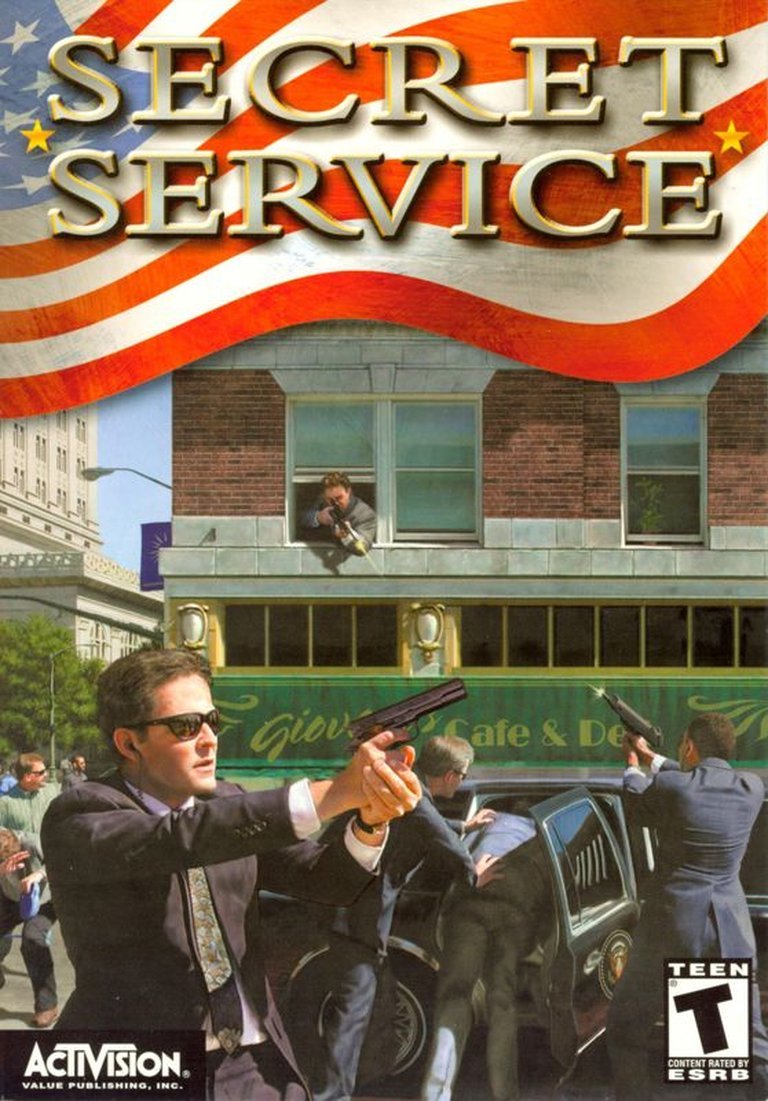
Description
Secret Service: In Harm’s Way is a budget first-person shooter with tactical elements, where players assume the role of a bodyguard tasked with protecting political figures. The game features dynamic combat mechanics, including the ability to shoot through walls and doors, and utilizes rag-doll physics for realistic enemy reactions. Set in high-stakes scenarios, players must ensure both their survival and the safety of their charge, navigating through action-packed environments filled with enemies and obstacles.
Gameplay Videos
Where to Buy Secret Service: In Harm’s Way
PC
Secret Service: In Harm’s Way Free Download
Secret Service: In Harm’s Way Cracks & Fixes
Secret Service: In Harm’s Way Patches & Updates
Secret Service: In Harm’s Way Guides & Walkthroughs
Secret Service: In Harm’s Way Reviews & Reception
gamespot.com : A lot of potential hampered by sloppy execution.
mobygames.com (52/100): Secret Service: In Harm’s Way is a budget first person shooter incorporating some tactical elements.
gamespot.com (62/100): This is probably the most glitchest game known to man. Just a waste of money basically.
Secret Service: In Harm’s Way Cheats & Codes
PC
Press ~ during gameplay to display the console window, then enter one of the following codes to activate the corresponding cheat function.
| Code | Effect |
|---|---|
| aigodmode 1 | God Mode |
| aiprotectprotectee 1 | Protectee God Mode |
| free lives | Invincibility |
| god 1 | God Mode |
| noclip 1 | Toggle flight mode and no clipping |
| giveall(); | All guns and maximum ammunition |
| aidisableears 1 | Toggle enemy AI cannot hear you |
| aidisableeyes 1 | Toggle enemy AI cannot see you |
| aiGodMode 1 | Enemy God Mode |
| aiProtectProtectee 1 | Protectee God Mode |
| aiDisableEyes 1 | Enemy Cannot See You |
| aiDisableEars 1 | Enemy Cannot Hear You |
| ainucleardeathgun 1 | Toggle nuclear gun |
| giveammo(); | Just max. ammo |
Secret Service: In Harm’s Way: A Forgotten Gem or a Flawed Experiment?
Introduction
In the crowded landscape of early 2000s first-person shooters, Secret Service: In Harm’s Way (2001) stands as a curious artifact—a game that dared to blend tactical depth with the high-stakes drama of protecting world leaders, yet ultimately stumbled under the weight of its own ambitions. Developed by Romania’s FUN Labs and published by Activision Value, this budget-priced shooter attempted to carve out a niche in a genre dominated by giants like Rainbow Six and Counter-Strike. But was it a bold innovation or a cautionary tale of unfulfilled potential? This review dives deep into the game’s development, mechanics, narrative, and legacy to answer that question.
Development History & Context
The Studio and the Vision
FUN Labs, a Romanian developer primarily known for the Cabela’s hunting series, took a bold leap with Secret Service: In Harm’s Way. The studio aimed to create a tactical shooter that emphasized protection over pure combat, a rarity in a genre obsessed with body counts. The game’s premise—playing as a Secret Service agent guarding dignitaries—was fresh, tapping into the post-Rainbow Six craze for squad-based tactics.
Technological Constraints and Innovations
Released in November 2001, Secret Service was built on a proprietary engine that showcased some impressive (if inconsistent) physics. The game’s ragdoll system, which allowed enemies to slump against walls or fall out of windows, was ahead of its time. However, the engine’s limitations were equally apparent: clunky AI, confusing level design, and a lack of polish that plagued many budget titles of the era.
The Gaming Landscape of 2001
The early 2000s were a golden age for tactical shooters. Rainbow Six and Ghost Recon set the standard for squad-based gameplay, while Counter-Strike dominated the multiplayer scene. Secret Service arrived as a budget alternative, priced at $30—a steep discount compared to AAA titles but still a hard sell given its rough edges.
Narrative & Thematic Deep Dive
Plot Overview
The game’s campaign follows a rookie Secret Service agent through 16 missions, starting with low-stakes protection details in the Middle East before escalating to a full-blown conspiracy involving chemical weapons and terrorist attacks on U.S. soil. The final missions—including a desperate escape through the D.C. sewers with the President—are undeniably tense, even if the storytelling is barebones.
Characters and Dialogue
The protagonist is a silent cipher, a common trope in shooters of the era. Supporting characters, from the national security advisor to the President himself, are barely more than mission objectives. The game’s reliance on radio chatter and mission briefings leaves little room for personality, making the narrative feel more like a checklist than a gripping spy thriller.
Themes: Duty, Sacrifice, and the Cost of Protection
At its core, Secret Service explores the pressure of being the last line of defense. The game’s most compelling moments come when the player must balance aggression with caution—do you charge ahead to eliminate threats, or stay close to your protectee and risk being overwhelmed? This tension is the game’s strongest thematic element, even if it’s undercut by clunky execution.
Gameplay Mechanics & Systems
Core Gameplay Loop
Secret Service blends first-person shooting with tactical squad commands. Players can issue orders to AI teammates (e.g., “follow,” “hold position,” “attack”) and position static agents as snipers or guards. The game’s physics engine allows for destructible environments—bullets penetrate walls, and enemies react dynamically to gunfire.
Combat and Progression
Combat is forgiving by tactical shooter standards—players can survive multiple hits if wearing heavy armor—but the lack of mid-mission saves makes failure punishing. The weapon arsenal, while varied, lacks the tactile feedback of contemporaries like Counter-Strike. The AI, both friendly and hostile, is inconsistent: teammates often ignore threats, while enemies oscillate between hyper-competent and oblivious.
UI and Controls
The interface is functional but clunky. The mission briefings are confusing (e.g., the infamous “Mud Mover” code name fiasco), and the in-game map is nearly useless for navigation. The lack of a server browser for multiplayer further hampers the experience.
World-Building, Art & Sound
Setting and Atmosphere
The game’s levels span Middle Eastern cities, U.S. government buildings, and even the White House, but the environments lack detail. The Middle Eastern missions, in particular, feel generic, with repetitive textures and uninspired architecture. The later D.C. levels fare better, with tense, claustrophobic corridors that amplify the stakes.
Visual Direction
For a budget title, Secret Service has moments of visual flair. The ragdoll physics, while glitchy, add a chaotic realism to firefights. However, the character models are stiff, and the animations are rudimentary. The game’s lighting is flat, and the draw distance is limited, making long-range engagements frustrating.
Sound Design
The audio is serviceable but unremarkable. Gunfire lacks punch, and the voice acting is minimal. The ambient sounds—distant gunfire, breaking glass—help sell the tension, but the overall mix is forgettable.
Reception & Legacy
Critical and Commercial Reception
Reviews were mixed, with critics praising the game’s ambition but criticizing its execution. GameSpot gave it a 6.7/10, calling it “thrilling in spite of itself,” while Jeuxvideo.com dismissed it as “horribly ugly and profoundly boring.” The game’s difficulty curve—especially the brutal first level—alienated many players.
Influence and Obscurity
Secret Service didn’t spawn a lasting franchise, though it did get two sequels (Security Breach and Ultimate Sacrifice), both of which fared worse critically. The game’s legacy is one of missed potential: a tactical shooter that could have been a cult classic if not for its technical flaws.
Conclusion
Secret Service: In Harm’s Way is a fascinating relic—a game that dared to innovate within the constraints of a budget title but ultimately fell short of its ambitions. Its blend of protection mechanics and tactical combat was ahead of its time, but clunky AI, confusing design, and a lack of polish relegated it to obscurity. For historians of the genre, it’s a worthwhile curiosity; for modern players, it’s a reminder of how far shooters have come.
Final Verdict: A flawed but ambitious experiment that deserves recognition for its bold ideas, even if its execution leaves much to be desired. 6.5/10 – A niche gem for tactical shooter enthusiasts, but not for the faint of heart.