
- Release Year: 2009
- Platforms: Windows
- Publisher: Intenium GmbH
- Developer: Awem Studio
- Genre: Puzzle
- Perspective: 1st-person
- Game Mode: Single-player
- Gameplay: Tile matching puzzle
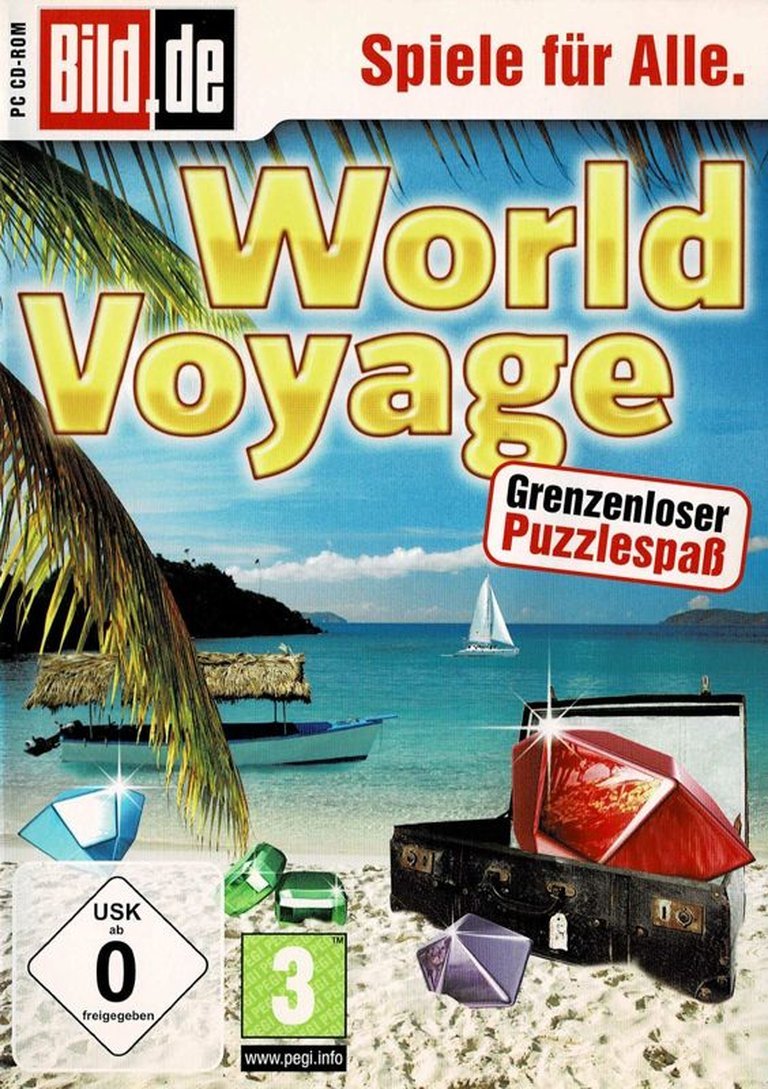
Description
World Voyage is a tile-matching puzzle game developed by Awem Studio and published by Intenium GmbH, released on August 21, 2009, for Windows. The game features a first-person perspective with a fixed/flip-screen visual style, where players engage in a point-and-select interface to solve puzzles. Set in a historically inspired environment, the game challenges players with intricate tile-matching mechanics, blending strategy and quick thinking. With a PEGI rating of 3, it is designed to be accessible to a wide audience, offering a relaxing yet engaging experience for puzzle enthusiasts.
World Voyage Guides & Walkthroughs
World Voyage: A Puzzle Odyssey Through Time and Space
Introduction
In the vast ocean of casual gaming, few titles manage to blend education, relaxation, and challenge as seamlessly as World Voyage. Released in 2009 by Awem Studio and published by Intenium GmbH, this tile-matching puzzle game invites players on a virtual tour of the world’s most famous landmarks, monuments, and natural wonders. At its core, World Voyage is a love letter to travel enthusiasts and armchair explorers alike, offering a unique fusion of gameplay and geography. Yet, beneath its serene surface lies a game that is both a product of its time and a precursor to the modern “edutainment” genre. This review will dissect World Voyage in exhaustive detail, exploring its development, mechanics, aesthetic, and legacy to determine its place in gaming history.
Development History & Context
The Studio and Creators
Awem Studio, the developer behind World Voyage, is a name that may not resonate with mainstream audiences but is well-regarded in the casual and puzzle game spheres. Founded in 2001, Awem has carved a niche for itself by specializing in visually rich, accessible games that often incorporate elements of strategy, time management, and puzzle-solving. Titles like Voyage (2005) and Endless Voyage (2021) demonstrate the studio’s recurring fascination with travel and exploration themes, suggesting that World Voyage was part of a broader creative vision to merge gaming with cultural and geographical education.
The game’s publisher, Intenium GmbH, is a German company known for distributing digital entertainment products, particularly in the European market. Their involvement likely facilitated World Voyage’s reach, ensuring it found an audience among casual gamers who frequented platforms like Big Fish Games, where the title was prominently featured.
Technological Constraints and Design Philosophy
World Voyage was released in 2009, a transitional period for the gaming industry. The late 2000s saw the rise of digital distribution platforms like Steam and the App Store, but casual games were still heavily tied to CD-ROM releases and online portals. World Voyage’s CD-ROM format and fixed/flip-screen perspective reflect these technological limitations. The game’s 1st-person viewpoint and point-and-select interface were standard for puzzle games of the era, prioritizing accessibility over complexity.
The decision to structure World Voyage as a tile-matching puzzle game was strategic. Tile-matching mechanics, popularized by classics like Bejeweled (2001) and Zuma (2003), were well-established by 2009, offering a familiar yet engaging framework for players. Awem Studio’s innovation lay in integrating this mechanics with a travel-themed narrative, transforming what could have been a generic puzzle game into an educational experience.
The Gaming Landscape of 2009
The year 2009 was a pivotal one for gaming. The industry was in the midst of a casual gaming boom, fueled by the success of titles like Peggle (2007) and Plants vs. Zombies (2009). Meanwhile, the rise of social gaming on platforms like Facebook was beginning to reshape how casual games were consumed. World Voyage arrived at a time when players were increasingly seeking games that could be enjoyed in short bursts, offering both mental stimulation and escapism.
In this context, World Voyage’s blend of puzzle mechanics and virtual tourism was well-timed. It catered to an audience that desired relaxation and intellectual engagement without the time commitment required by more hardcore titles. The game’s PEGI 3 rating further underscored its broad appeal, positioning it as family-friendly entertainment.
Narrative & Thematic Deep Dive
The Concept: A Virtual Tour of the World
World Voyage’s narrative is deceptively simple: players embark on a global journey, visiting 20 famous locations through 120 levels of tile-matching puzzles. Each completed level unlocks a new “sight,” gradually filling a virtual landscape with iconic landmarks like the Eiffel Tower, the Great Pyramid of Giza, and the Statue of Liberty. The game’s official description positions it as a “traveling encyclopedia,” a digital scrapbook that rewards players with visual and informational tidbits about each destination.
While the game lacks a traditional story or characters, its narrative is environmental and thematic. The progression from one location to another creates a sense of adventure, as if the player is gradually uncovering the world’s wonders. The absence of dialogue or a linear plot is not a flaw but a deliberate choice—World Voyage is less about storytelling and more about evoking the joy of discovery.
Themes: Exploration, Education, and Escapism
At its heart, World Voyage is a celebration of exploration. The game taps into a universal human curiosity about the world, offering players a low-stakes way to “visit” places they may never see in person. This theme is reinforced by the game’s mechanics, which frame puzzle-solving as a means of unlocking new destinations. The act of matching tiles becomes a metaphor for the journey itself—each move brings the player closer to their next virtual stop.
Education is another central theme. While World Voyage is not a simulator in the vein of Civilization or Age of Empires, it shares DNA with historical and geographical video games that aim to teach through play. The game’s focus on real-world landmarks aligns it with titles like Where in the World Is Carmen Sandiego? (1985), which used gaming as a tool for cultural and geographical literacy. World Voyage’s approach is subtler, embedding learning within its gameplay rather than presenting it as an overt goal.
Finally, escapism permeates the experience. The game’s serene visuals, soothing soundtrack, and lack of pressure create a meditative atmosphere. In an era where gaming was increasingly associated with high-stakes competition (e.g., Call of Duty: Modern Warfare 2, also released in 2009), World Voyage offered a counterpoint—a game that invited players to slow down and savor the journey.
The Role of Bonuses and Progression
The game’s structure reinforces its themes through its progression system. Players are not merely completing levels; they are “collecting” sights, much like a traveler gathering postcards or photographs. The bonus puzzles and special features (e.g., power-ups that clear tiles more efficiently) serve as tools to aid the player’s journey, framing the gameplay as a collaborative effort between the player and the game itself.
This design philosophy is reminiscent of “flow” theory in game design, where challenges are carefully balanced to keep players engaged without causing frustration. World Voyage’s difficulty curve is gentle, ensuring that the focus remains on the joy of exploration rather than the stress of overcoming obstacles.
Gameplay Mechanics & Systems
Core Gameplay Loop
World Voyage’s gameplay revolves around a classic tile-matching mechanic, where players swap adjacent tiles to create matches of three or more identical tiles. This core loop is augmented by several key features:
- Level-Based Progression: The game is divided into 120 levels, each set in one of 20 real-world locations. Completing a level unlocks the next, creating a sense of forward momentum.
- Sight Unlocking: As players progress, they unlock “sights”—visual representations of famous landmarks that populate a virtual landscape. This system provides a tangible reward for completion, reinforcing the game’s travel theme.
- Bonus Puzzles: Interspersed throughout the game are bonus puzzles that offer additional challenges and rewards. These puzzles often introduce unique mechanics or constraints, such as limited moves or time limits, adding variety to the core gameplay.
- Power-Ups and Special Features: Players can earn or purchase power-ups that aid in tile-matching, such as bombs that clear large sections of the board or swaps that allow for strategic repositioning of tiles.
Combat and Character Progression
Unlike many puzzle games, World Voyage does not feature traditional combat or character progression systems. There are no enemies to defeat, no health bars to manage, and no skills to upgrade. Instead, the game’s challenge lies in the player’s ability to strategize and adapt to the puzzle mechanics.
This absence of combat is notable, as it aligns World Voyage with a subset of puzzle games that prioritize relaxation and mental stimulation over competition. Games like The Witness (2016) and Monument Valley (2014) would later perfect this approach, but World Voyage was an early example of a puzzle game that embraced tranquility as a core design principle.
UI and Accessibility
The game’s user interface (UI) is minimalist and intuitive, reflecting its casual gaming roots. The fixed/flip-screen perspective ensures that the player’s focus remains on the puzzle board, while the point-and-select interface makes the game accessible to players of all ages and skill levels. The UI’s simplicity is one of its greatest strengths, as it allows the game’s visuals and soundtrack to take center stage.
One potential flaw in the UI is the lack of depth in its feedback systems. While the game does provide visual and auditory cues for successful matches, it lacks the robust tutorial systems and dynamic feedback loops seen in later puzzle games. For example, Candy Crush Saga (2012) would later popularize the use of animated tutorials and progressive difficulty adjustments to onboard players more effectively. World Voyage’s reliance on player intuition may have limited its appeal to those unfamiliar with tile-matching mechanics.
Innovative and Flawed Systems
World Voyage’s most innovative system is its integration of real-world landmarks into the gameplay. By tying puzzle completion to the unlocking of famous sights, the game creates a compelling incentive for players to engage with its content. This system is not merely cosmetic; it reinforces the game’s educational themes and provides a sense of accomplishment that extends beyond the puzzle board.
However, the game’s lack of deeper mechanical innovation is also its greatest limitation. The tile-matching genre was already well-established by 2009, and World Voyage does little to iterate on the formula. The absence of multiplayer modes, social features, or procedural generation—all of which would become staples of later puzzle games—means that World Voyage feels somewhat dated in retrospect. Its strengths lie in its execution and thematic coherence rather than its mechanical originality.
World-Building, Art & Sound
Setting and Atmosphere
World Voyage’s world-building is entirely environmental, relying on its visuals and sound design to immerse players in its travel-themed narrative. The game’s 20 locations are drawn from a diverse array of global landmarks, including:
- Natural Wonders: The Grand Canyon, Mount Everest, and the Northern Lights.
- Architectural Marvels: The Taj Mahal, the Colosseum, and the Sydney Opera House.
- Cultural Icons: The Great Wall of China, the Statue of Liberty, and the Pyramids of Giza.
Each location is rendered in a stylized, almost painterly fashion, evoking the aesthetic of a travel poster or postcard. The game’s art direction prioritizes beauty and serenity, with soft colors, gentle lighting, and a focus on iconic silhouettes. This approach ensures that the landmarks are instantly recognizable, even to players who may not be familiar with their real-world counterparts.
Visual Direction
The game’s visual style is a blend of realism and abstraction. While the landmarks are depicted with enough detail to be identifiable, the backgrounds and puzzle boards are more impressionistic, using gradients and soft edges to create a dreamlike atmosphere. This artistic choice reinforces the game’s escapist themes, presenting the world as a place of beauty and wonder rather than a site of conflict or complexity.
The fixed/flip-screen perspective further enhances this effect, framing each location as a self-contained diorama. The lack of camera movement or dynamic angles ensures that the player’s attention remains focused on the puzzle and the landmark, creating a sense of intimacy and immersion.
Sound Design
The soundtrack of World Voyage is a critical component of its atmospheric design. Composed of gentle, ambient tracks that evoke the mood of each location, the music is designed to be unobtrusive yet evocative. For example, levels set in tropical locations might feature steel drum melodies, while those set in European cities might incorporate classical strings or accordion motifs.
The sound effects are equally understated, with soft chimes and subtle whooshes accompanying tile matches and sight unlocks. This minimalist approach ensures that the audio never overwhelms the visuals, instead serving as a complementary layer that enhances the game’s meditative qualities.
Contribution to the Overall Experience
The combination of visual and sound design in World Voyage creates a cohesive and immersive experience. The game’s world-building is not about narrative depth or mechanical complexity but about evoking a sense of place and wonder. By presenting the world as a series of beautiful, self-contained vignettes, World Voyage invites players to engage with its content on an emotional level, fostering a sense of curiosity and appreciation for global culture.
Reception & Legacy
Critical and Commercial Reception
Upon its release in 2009, World Voyage received modest attention from critics and players alike. The game’s lack of presence on major review aggregators like Metacritic or OpenCritic suggests that it was not widely covered by mainstream gaming press, likely due to its status as a casual title. However, its inclusion on platforms like Big Fish Games and its PEGI 3 rating indicate that it found an audience among casual gamers, particularly those interested in puzzle games with educational or travel-themed elements.
Player reception, as evidenced by the game’s MobyGames entry, is similarly muted. With only one player listed as having collected the game on the platform, World Voyage does not appear to have achieved significant commercial success or cult status. This is not necessarily a reflection of the game’s quality but rather a testament to the challenges faced by casual titles in a crowded market.
Evolution of Reputation
In the years since its release, World Voyage has largely faded from the public consciousness. It is not frequently cited in discussions of influential puzzle games, nor has it spawned a dedicated fanbase or modding community. However, its legacy can be seen in the proliferation of travel-themed puzzle games that followed, such as Voyage (2021) and Endless Voyage (2021), both of which share World Voyage’s focus on exploration and relaxation.
The game’s reputation has also benefited from the growing appreciation for “cozy games”—titles that prioritize comfort, beauty, and low-stakes gameplay. In this context, World Voyage can be seen as an early example of a game that embraced these principles, offering players a respite from the stresses of everyday life.
Influence on Subsequent Games
While World Voyage may not have directly inspired major franchises or mechanical innovations, its influence can be traced in several key areas:
- Edutainment and Travel-Themed Games: World Voyage’s blend of puzzle mechanics and geographical education paved the way for later titles like GeoGuessr (2013) and The Room series (2012–present), which similarly use gaming as a tool for cultural and historical exploration.
- Relaxation and Escapism in Gaming: The game’s emphasis on tranquility and beauty foreshadowed the rise of “chill-out” games like Stardew Valley (2016) and Animal Crossing: New Horizons (2020), which prioritize player well-being and stress relief.
- Casual Game Design: World Voyage’s accessible mechanics and gentle difficulty curve reflect the design principles that would come to define the casual gaming boom of the 2010s. Its success in balancing challenge and relaxation set a template for later puzzle games to follow.
Conclusion
World Voyage is a game that defies easy categorization. It is neither a mechanical innovator nor a commercial juggernaut, yet it occupies a unique niche in gaming history as a title that seamlessly blends education, relaxation, and exploration. Its strengths lie in its thematic coherence, its commitment to accessibility, and its ability to evoke a sense of wonder through its visual and auditory design.
In the grand tapestry of video game history, World Voyage may not be a thread that stands out on its own, but it is one that contributes to a larger pattern—a pattern of games that use interactivity to foster curiosity, provide comfort, and celebrate the beauty of the world. For these reasons, World Voyage deserves recognition not as a forgotten gem or a flawed masterpiece, but as a quiet pioneer—a game that understood the power of gaming to inspire and soothe long before such ideas became mainstream.
Final Verdict: World Voyage is a charming and understated puzzle game that offers a meditative journey through some of the world’s most iconic landmarks. While it lacks the mechanical depth or narrative ambition of more celebrated titles, its commitment to accessibility, education, and escapism makes it a noteworthy entry in the casual gaming canon. For players seeking a relaxing and visually stunning experience, World Voyage remains a hidden treasure worth uncovering. 7.5/10