
- Release Year: 2005
- Platforms: Windows
- Publisher: Game Factory Interactive Ltd., RTL Playtainment, Russobit-M
- Developer: Exozet Games GmbH, Provox Games
- Genre: Action, Driving, Racing
- Perspective: 1st-person
- Game Mode: Single-player
- Gameplay: Car Chases, Detective, Stunt scenes, Third-person action
- Setting: German highway, Law enforcement
- Average Score: 53/100
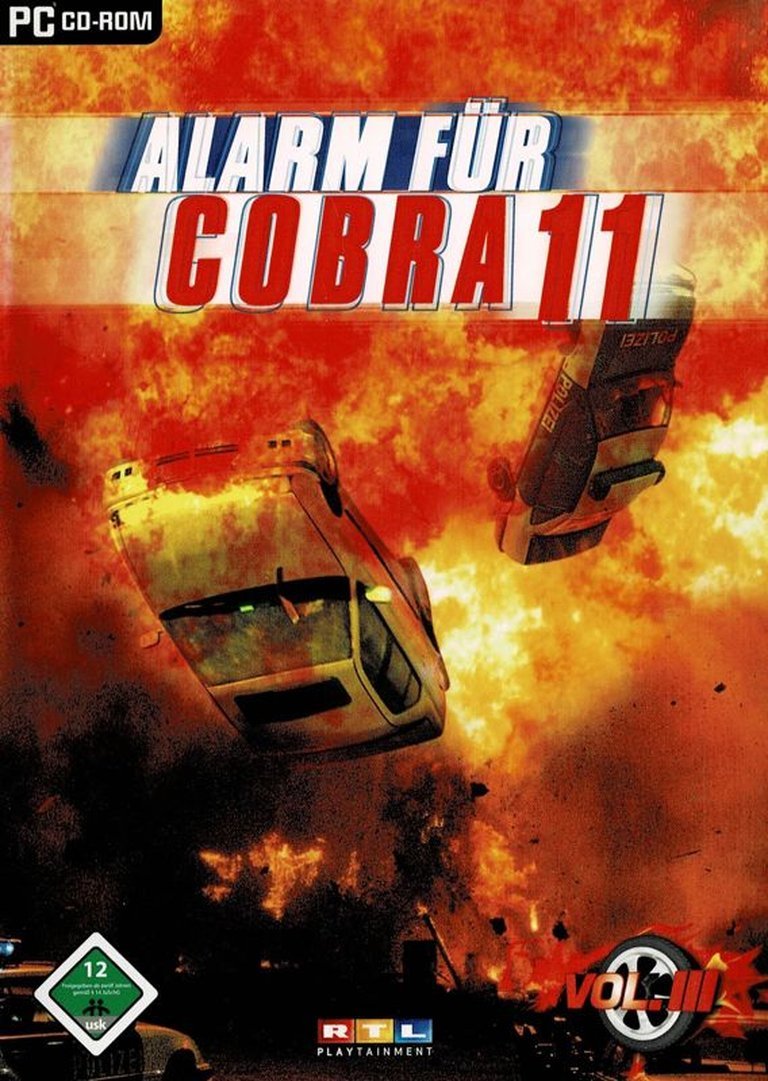
Description
Alarm für Cobra 11: Vol. III is a licensed action-racing game based on the popular German TV series, immersing players in the high-stakes world of the German highway police. As detectives Tom and Semir, players engage in thrilling car chases across the Autobahn and third-person action sequences on foot, all while unraveling a criminal conspiracy to bring its leader to justice. The game features motion-captured animations, authentic voice acting from the show’s cast, and the series’ iconic soundtrack, blending high-speed pursuits with detective work in a dynamic, episode-style adventure.
Gameplay Videos
Alarm für Cobra 11: Vol. III Cracks & Fixes
Alarm für Cobra 11: Vol. III Patches & Updates
Alarm für Cobra 11: Vol. III Mods
Alarm für Cobra 11: Vol. III Guides & Walkthroughs
Alarm für Cobra 11: Vol. III Reviews & Reception
gamepressure.com (32/100): The third installment of RTL’s budget car series, based on the popular German series Alarm fur Cobra 11.
imdb.com (74/100): Alarm für Cobra 11 – Vol. 3 has an IMDb rating of 7.4 out of 10.
retro-replay.com : The core of Alarm für Cobra 11: Vol. III is its high-octane blend of highway pursuits and on-foot investigation sequences.
Alarm für Cobra 11: Vol. III Cheats & Codes
PC
Enter one of the following codes during game play.
| Code | Effect |
|---|---|
| adac | Auto Repair. |
| eatlead | Unlimited ammunition. |
| fullgarage | All cars. |
| goaway | Normal cars explode when near. |
| johnwayne | Enable shooting in all game modes. |
| needspeed | Unlimited nitrous. |
| useshel | Vehicle cannot be damaged. |
| luna | Can leave the default route. |
| wannago | Frei herumfahren. |
Alarm für Cobra 11: Vol. III: A High-Octane Homage to German TV’s Finest
Introduction
In the mid-2000s, licensed video games based on television shows were a dime a dozen, often serving as little more than cash grabs with minimal effort put into their design. However, Alarm für Cobra 11: Vol. III (2005) stands as a rare exception—a game that not only captures the essence of its source material but also delivers a surprisingly competent and engaging experience. Based on the long-running German TV series Alarm für Cobra 11 – Die Autobahnpolizei, this third installment in the game series is a high-speed blend of vehicular action and on-foot detective work, wrapped in a package that feels authentic to the show’s spirit.
This review will dissect Alarm für Cobra 11: Vol. III in exhaustive detail, exploring its development history, narrative depth, gameplay mechanics, technical achievements, and lasting legacy. By the end, we’ll determine whether this game is a forgotten gem or a relic of its time.
Development History & Context
The Studio and the Vision
Alarm für Cobra 11: Vol. III was developed by a collaboration between Provox Games (a Croatian studio) and Exozet Games GmbH (a German studio), with publishing handled by RTL Playtainment, Russobit-M, and Game Factory Interactive Ltd.. The game was released in November 2005, exclusively for Windows, and was part of a broader trend of licensed games tied to popular European TV shows.
The development team, led by Bartol Ruzic (Development Director/Producer) and Marko Banjac (Head of Development), sought to create a game that felt like an interactive episode of the TV series. This vision was reinforced by the inclusion of motion-captured animations, original voice acting from the show’s stars, and a licensed soundtrack, all of which were rare for licensed games of the era.
Technological Constraints and Innovations
The game was built using the Havok Vision Engine, a middleware solution that allowed for realistic physics and collision detection—a critical feature for a game centered around high-speed chases and crashes. The engine was also used in other titles of the era, such as Hinter Gittern Vol. II and Bode Miller Alpine Skiing, but Alarm für Cobra 11: Vol. III pushed it further with its emphasis on destructible environments and dynamic traffic systems.
However, the game’s hardware requirements were steep for 2005, demanding a Pentium 4 1.5 GHz processor, 512 MB of RAM, and a 64 MB graphics card. This was partly due to the motion capture technology used for the on-foot action sequences, which were a new addition to the series. These sequences were inspired by the Grand Theft Auto series, marking the first time the Alarm für Cobra 11 games incorporated first-person and third-person action alongside the traditional driving mechanics.
The Gaming Landscape of 2005
2005 was a transitional year for gaming. The PlayStation 2 and Xbox were still dominant, but the Xbox 360 was on the horizon, and PC gaming was thriving with titles like Half-Life 2, World of Warcraft, and F.E.A.R. In this context, Alarm für Cobra 11: Vol. III was a niche product, catering primarily to fans of the TV show and European audiences.
The game’s competition included other licensed racing titles like Juiced and Ford Bold Moves Street Racing, as well as open-world action games like Grand Theft Auto: San Andreas. While Alarm für Cobra 11: Vol. III couldn’t compete with these titles in terms of scope or polish, it carved out its own identity by focusing on authenticity and fan service.
Narrative & Thematic Deep Dive
Plot Overview
Alarm für Cobra 11: Vol. III follows detectives Tom Kranich and Semir Gerkhan as they investigate a counterfeit money syndicate operating along the German autobahn. The narrative unfolds like a self-contained episode of the TV series, complete with twists, betrayals, and high-stakes chases. The game’s structure is linear, with players progressing through a series of missions that alternate between driving sequences and on-foot investigations.
The story begins with a routine traffic stop that quickly escalates into a full-blown manhunt, revealing a deeper conspiracy involving corrupt officials and organized crime. The pacing is cinematic, with cutscenes featuring the original actors reprising their roles, lending an air of authenticity that many licensed games lack.
Characters and Dialogue
The game’s strongest narrative asset is its faithful recreation of the TV show’s characters. Tom and Semir are portrayed with the same dry wit, camaraderie, and professionalism that fans of the series would expect. The dialogue is sharp and often humorous, with the two leads trading quips even in the midst of high-speed pursuits.
However, the supporting cast is underdeveloped, with most NPCs serving as little more than mission objectives or cannon fodder. The villains, while menacing, lack the depth of their TV counterparts, making the story feel predictable at times.
Themes and Tone
The game’s themes revolve around justice, loyalty, and the cost of duty. Tom and Semir are flawed but honorable protagonists, willing to bend the rules to bring criminals to justice. The tone is gritty but not overly dark, with moments of levity balancing the high-stakes action.
One of the game’s most interesting thematic elements is its exploration of moral dilemmas. Players are occasionally forced to make tough choices, such as whether to pursue a fleeing suspect or protect civilians, adding a layer of depth to the otherwise straightforward narrative.
Gameplay Mechanics & Systems
Core Gameplay Loop
Alarm für Cobra 11: Vol. III is divided into two primary gameplay modes:
- Driving Sequences: High-speed chases along the autobahn, where players must navigate traffic, avoid obstacles, and take down criminal vehicles using a variety of tactics.
- On-Foot Sequences: Third-person action segments where players investigate crime scenes, interrogate suspects, and engage in shootouts.
The game’s mission structure is episodic, with each mission advancing the overarching plot. Side objectives, such as tailing suspects or gathering evidence, add variety but are ultimately optional.
Driving Mechanics
The driving mechanics are the heart of the game, and they are surprisingly polished. The controls are responsive, with a boost mechanism that allows for dramatic overtakes and last-second maneuvers. The Havok Vision Engine ensures that crashes are visually spectacular, with cars crumpling realistically and debris flying in all directions.
However, the AI traffic can be unpredictable, with civilian cars sometimes spawning directly in the player’s path or behaving erratically during chases. The damage system is also inconsistent, with some collisions causing instant failure while others are barely noticeable.
On-Foot Action
The on-foot sequences are a new addition to the series, and they are functional but flawed. The third-person shooting is serviceable, with a lock-on system that makes combat accessible but not particularly deep. The melee combat is clunky, with animations that lack impact.
The investigation segments are more successful, with players searching for clues, interrogating witnesses, and solving puzzles. These segments break up the action and add a detective-like feel to the game, though they are not as polished as the driving sequences.
UI and Progression
The user interface is clean and functional, with a minimalist HUD that keeps the focus on the action. The mission objectives are clearly displayed, and the map system is easy to navigate.
Progression is linear, with players unlocking new vehicles and weapons as they advance through the story. However, there is no customization or upgrades, which limits replayability.
World-Building, Art & Sound
Setting and Atmosphere
The game’s world is a fictionalized version of the German autobahn, complete with rolling hills, industrial zones, and bustling cities. The environmental design is authentic, with road signs, landmarks, and traffic patterns that feel true to life.
The atmosphere is cinematic, with dynamic weather effects and day-night cycles that add variety to the missions. The lighting engine is dated, with night-time chases often too dark, but the overall aesthetic is cohesive and immersive.
Visual Design
The visual design is serviceable but not groundbreaking. The textures are detailed enough to recognize road signs and landmarks, but they lack the polish of contemporary titles. The character models are faithful to the TV show, but their animations can be stiff at times.
The standout visual feature is the motion-captured animations, which lend fluidity to both driving and on-foot sequences. The crash physics are particularly impressive, with cars crumpling realistically and debris flying convincingly.
Sound Design
The sound design is excellent, with a licensed soundtrack that captures the spirit of the TV show. The voice acting is top-notch, with the original actors reprising their roles and delivering authentic performances.
The sound effects are well-implemented, with engine roars, screeching tires, and gunfire all sounding realistic. The music is dynamic, shifting between tense orchestral scores and pulsing electronic beats depending on the situation.
Reception & Legacy
Critical and Commercial Reception
Alarm für Cobra 11: Vol. III received mixed reviews upon release. Critics praised its authenticity and faithful recreation of the TV show, but criticized its repetitive gameplay and technical flaws.
The game’s commercial performance was modest, with it finding an audience primarily among fans of the TV series. It was not a breakout hit, but it solidified the franchise’s place in the licensed game market.
Evolution of the Series
The Alarm für Cobra 11 series continued with Alarm for Cobra 11: Nitro (2006) and later rebranded as Crash Time for international audiences. These later entries refined the formula, adding more open-world elements and improved graphics, but Vol. III remains a fan favorite for its faithful adaptation of the TV show.
Influence on the Industry
While Alarm für Cobra 11: Vol. III did not revolutionize the gaming industry, it proved that licensed games could be more than just cash grabs. Its focus on authenticity and fan service set a benchmark for future TV-to-game adaptations.
Conclusion
Alarm für Cobra 11: Vol. III is a flawed but fascinating game that captures the spirit of its source material with surprising fidelity. Its high-speed chases, authentic voice acting, and cinematic presentation make it a standout entry in the licensed game genre.
However, its repetitive gameplay, technical limitations, and lack of depth prevent it from being a classic. For fans of the TV show, it is a must-play, but for general audiences, it is a curiosity—a time capsule of a bygone era of gaming.
Final Verdict: 7/10 – A high-octane homage that delivers on its promise, despite its flaws.