
- Release Year: 2013
- Platforms: Windows
- Publisher: MDNA Games
- Developer: MDNA Games
- Genre: Adventure
- Perspective: 1st-person
- Game Mode: Single-player
- Gameplay: Graphic adventure, Point and select, Puzzle elements
- Setting: Europe
- Average Score: 79/100
Description
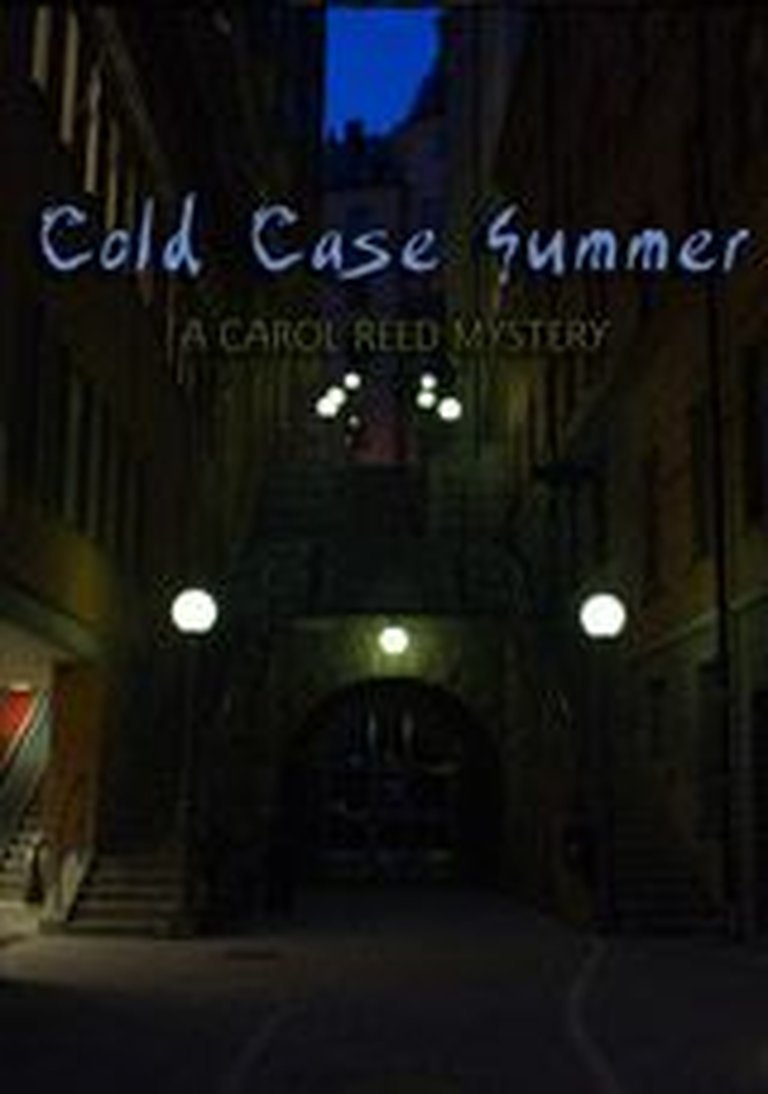
Cold Case Summer: A Carol Reed Mystery is the ninth installment in the long-running first-person adventure series, where players step into the shoes of detective Carol Reed. After receiving an anonymous call from a man who later turns up dead, Carol is drawn into a gripping investigation tied to the real-life unsolved murder of a Swedish Prime Minister. Set in Sweden and featuring node-based movement with still photography, the game blends exploration, clue-hunting, and puzzle-solving with voice acting and atmospheric music. A new hotspot revealer aids players in navigating the fixed-screen environments as they unravel a politically charged mystery.
Gameplay Videos
Cold Case Summer: A Carol Reed Mystery Cracks & Fixes
Cold Case Summer: A Carol Reed Mystery Patches & Updates
Cold Case Summer: A Carol Reed Mystery Guides & Walkthroughs
Cold Case Summer: A Carol Reed Mystery Reviews & Reception
mobygames.com (79/100): A point-and-click adventure game that involves exploring for clues and inventory items, as well as solving logic and inventory-based puzzles.
Cold Case Summer: A Carol Reed Mystery – A Definitive Retrospective
Introduction: The Allure of the Unsolved
Few games dare to intertwine real-world political intrigue with fictional detective work as boldly as Cold Case Summer: A Carol Reed Mystery. Released in 2013 by MDNA Games, this ninth installment in the long-running Carol Reed Mysteries series plunges players into a labyrinthine investigation tied to one of Sweden’s most infamous unsolved crimes: the 1986 assassination of Prime Minister Olof Palme. The game’s premise—a private investigator drawn into a decades-old conspiracy—is compelling enough, but its execution elevates it beyond mere pastiche. Cold Case Summer is a masterclass in atmospheric storytelling, blending meticulous environmental design, a deeply personal narrative, and a gameplay loop that respects the intelligence of its audience.
This review dissects Cold Case Summer through multiple lenses: its development history, narrative ambition, mechanical design, and cultural legacy. We’ll explore how Mikael Nyqvist’s singular vision, constrained by the limitations of indie development, crafted an experience that feels both intimate and expansive. Whether you’re a longtime fan of the Carol Reed series or a newcomer intrigued by its blend of history and mystery, this analysis will illuminate why Cold Case Summer remains a standout in the adventure game canon.
Development History & Context: The Birth of a Swedish Noir
MDNA Games: A One-Man Studio’s Obsession
MDNA Games is the brainchild of Mikael Nyqvist, a developer whose passion for adventure games and Swedish history has fueled the Carol Reed series since its inception in 2004. The studio’s name—a playful nod to Nyqvist’s former Madonna fan site—belies its serious commitment to crafting immersive, photographically rendered mysteries. Unlike many indie developers, Nyqvist has eschewed crowdfunding and publisher interference, opting instead for a self-sustaining model that prioritizes creative control over commercial pressure.
Cold Case Summer was developed using the Wintermute Engine, a toolset that allowed Nyqvist to stitch together static photographs into a navigable 3D space. This approach, while technologically modest, lent the game a hyper-realistic aesthetic rooted in the streets of Norrköping, Nyqvist’s hometown. The city’s industrial landscapes, abandoned buildings, and quiet residential areas became the game’s canvas, imbuing it with a sense of place rarely seen in adventure games.
The Olof Palme Connection: Fact Meets Fiction
The game’s most audacious creative decision was its integration of the Olof Palme assassination, a real-life cold case that has haunted Sweden for decades. Palme, a polarizing figure in Swedish politics, was shot dead on a Stockholm street in 1986. The crime remains unsolved, with theories ranging from Kurdish separatists to South African intelligence operatives. By weaving this historical enigma into Carol Reed’s investigation, Nyqvist didn’t just borrow from reality—he offered a plausible fictional resolution, one that resonated with Swedish audiences familiar with the case’s lingering mysteries.
This bold narrative choice was not without risk. Tackling a national trauma required sensitivity, and Nyqvist’s solution—a theory implicating a shadowy underworld figure—walked a fine line between speculation and exploitation. Yet, by grounding the story in Carol’s personal journey (her initial reluctance to take the case, her growing obsession), the game avoided sensationalism. Instead, it framed the Palme murder as a metaphor for Sweden’s unhealed wounds, a theme that elevated Cold Case Summer beyond a simple whodunit.
Technological Constraints and Creative Workarounds
The Carol Reed series has always been defined by its photographic realism, a double-edged sword that limited animation but enhanced immersion. Cold Case Summer continued this tradition, using static images to depict Norrköping’s streets, interiors, and landmarks. Movement was node-based, with players clicking arrows to transition between pre-rendered “screens.” While this approach felt archaic compared to contemporary 3D adventures like The Walking Dead (2012) or Gone Home (2013), it lent the game a cinematic, almost voyeuristic quality. Players weren’t just solving puzzles; they were peering into a frozen moment in time.
Nyqvist’s resourcefulness extended to the game’s voice acting and sound design. The cast, comprised of friends and family (including Nyqvist’s sister-in-law, Sara Louise Williams, as Carol), delivered performances that were earnest if occasionally stiff. The ambient soundtrack, composed by Nyqvist himself, reinforced the game’s melancholic tone, with sparse piano melodies underscoring Carol’s solitary investigations.
The Adventure Game Landscape in 2013
Cold Case Summer arrived at a crossroads for the adventure genre. The late 2000s and early 2010s had seen a resurgence of point-and-click games, thanks to digital distribution and indie development tools. Titles like Machinarium (2009) and The Book of Unwritten Tales (2011) proved that traditional adventure mechanics could thrive in the modern era. Yet, Cold Case Summer stood apart by rejecting whimsy in favor of grit. Where many contemporaries embraced humor or fantasy, Nyqvist’s game was unapologetically adult, dealing with themes of corruption, trauma, and the cost of obsession.
Critically, the game was well-received but niche. Reviewers praised its atmosphere and ambition while noting its clunky interface and occasional pacing issues. Adventure Gamers’ 3.5/5 score summarized the consensus: “A short but entertaining game that offers some intriguing background information on the unsolved political murder of Olof Palme.” For fans of the series, it was another solid entry; for newcomers, it was an acquired taste.
Narrative & Thematic Deep Dive: A Mystery Within a Mystery
Plot Summary: From Anonymous Call to National Conspiracy
Cold Case Summer begins with a classic noir setup: Carol Reed, a British ex-pat living in Sweden, receives a cryptic phone call from a man calling himself “Mister X.” He claims to have information that could make her “world famous,” but Carol—ever the skeptic—rebuffs him. The next day, she learns that Mister X is dead, his body fished from a river near the Wire Lookout. His real name? Harri Michelsen, a petty criminal with ties to Stockholm’s underworld.
As Carol digs deeper, she uncovers Harri’s obsession with the Olof Palme assassination. Harri believed he knew the truth behind the murder, and his notes suggest a conspiracy involving drug trafficking, political cover-ups, and a shadowy figure named “Roy.” The investigation takes Carol from Norrköping’s industrial outskirts to Stockholm’s back alleys, with detours into abandoned leper colonies (the eerie “Dead City”) and clandestine drug drop-off points.
The game’s non-linear structure allows players to explore leads in any order, though certain discoveries (like the Morse code cipher or the revolver box puzzle) gate progress. The climax reveals that Roy Stenson, a former associate of Harri’s, orchestrated the murder to silence him—a twist that ties into the Palme case while keeping the focus on Carol’s personal stakes.
Themes: Obsession, Memory, and the Weight of History
-
The Burden of the Past
- The Palme assassination serves as a macguffin, but the game’s true subject is how history haunts the present. Carol’s investigation mirrors Sweden’s inability to move on from the crime, with characters like Sigge (a former drug dealer turned hostel owner) and Amber (a sex worker from Amber’s Blood) embodying the lingering scars of the 1980s.
- The “Dead City”, an abandoned leper colony, functions as a physical manifestation of repressed trauma. Its crumbling buildings and hidden treasures (including a cache of diamonds) symbolize the secrets buried beneath Sweden’s orderly surface.
-
The Cost of Truth
- Carol’s journey is one of moral ambiguity. She begins as a reluctant investigator but becomes increasingly consumed by the case, even as it endangers her and those around her (e.g., the hanged doll warning left in her apartment).
- The game asks: Is solving a cold case worth the personal toll? By the end, Carol has uncovered the truth, but at what cost? The final scenes, set against a nocturnal Norrköping skyline, suggest that some mysteries are better left unsolved.
-
Class and Corruption
- Cold Case Summer critiques Sweden’s self-image as a progressive utopia. The Palme murder, in this reading, wasn’t just a political assassination but a symptom of deeper rot: drug trafficking, police incompetence, and the exploitation of the marginalized (e.g., Amber’s sex work, Sigge’s criminal past).
- The game’s villains—Roy Stenson and his associates—are working-class criminals, not shadowy elites. This subverts the typical noir trope of the “corrupt aristocrat,” instead implicating systemic failures that allow men like Roy to thrive.
Characters: A Cast of Broken Souls
- Carol Reed: The series’ protagonist is a flawed everyman—intelligent but stubborn, compassionate but prone to tunnel vision. Her British outsider status (voiced with a subtle accent by Sara Louise Williams) reinforces her role as a detective peeling back Sweden’s layers.
- Harri Michelsen: A tragic figure whose obsession with the Palme case leads to his death. His notes and recordings (found throughout the game) paint him as a paranoid truth-seeker, akin to Chinatown’s Noah Cross.
- Roy Stenson: The antagonist is a former friend of Harri’s, now a drug dealer with ties to the Palme conspiracy. His final confrontation with Carol—set in the Dead City’s ruins—is a tense, dialogue-driven showdown.
- Amber: Returning from Amber’s Blood, she provides emotional weight as a sex worker with her own ties to Harri’s past. Her subplot explores survivor’s guilt and the cost of redemption.
- Sigge: A reformed criminal running a hostel, Sigge embodies the ghosts of Sweden’s drug epidemic. His hostel’s graffiti-covered walls and hidden letters hint at a man trying (and failing) to escape his past.
Dialogue and Writing: The Power of Restraint
Nyqvist’s writing is economical, favoring subtext over exposition. Conversations often unfold in short, punchy exchanges, with Carol’s dry wit providing levity. The game’s most effective moments, however, are its silences:
– The Morse code notes scattered throughout the game force players to decode meaning, mirroring Carol’s investigative process.
– The revolver box puzzle, which requires players to cross-reference colors, numbers, and historical documents, is a masterclass in environmental storytelling.
Gameplay Mechanics & Systems: The Art of the Puzzle
Core Gameplay Loop: Exploration and Deduction
Cold Case Summer is a classic point-and-click adventure, with players navigating static screens via node-based movement (clicking arrows to turn or advance). The game’s inventory system is straightforward, with items combining logically (e.g., a wire brush + solvent = cleaned spark plug).
The hotspot revealer (activated by pressing Space) was a new addition to the series, addressing a common frustration in adventure games: pixel-hunting. While purists might decry it as “hand-holding,” it streamlined the experience without dumbing down the puzzles.
Puzzle Design: Logic Over Moon Logic
Nyqvist’s puzzles are grounded in realism, avoiding the absurd “monkey wrench in a banana” solutions that plague lesser adventure games. Standout examples include:
1. The Revolver Box: A multi-step puzzle requiring players to:
– Find a primitive map in Harri’s summer house.
– Cross-reference it with the Substrata painting (a surrealist artwork) to derive a 4-digit code.
– Input the code into a clock-like lock to retrieve a photo of the Palme murder scene.
Why it works: The puzzle ties into the game’s themes, with the painting’s colors symbolizing hidden truths.
-
The Air Force Bunker: A maze-like sequence where players must:
- Navigate a dark tunnel using a flashlight.
- Decipher symbols to open a rusted door.
- Retrieve a wooden stick to access a hidden cache.
Why it works: The bunker’s claustrophobic design and historical context (a Cold War relic) deepen the immersion.
-
The Morse Code Cipher: Players must translate Morse code notes (e.g.,
///..---///---..///---..///-....///) into numbers (2 8 8 6), which unlock Harri’s summer house.
Why it works: It rewards attention to detail, with clues hidden in environmental textures (e.g., a graffiti heap note).
Combat and Progression: A Non-Violent Detective
Cold Case Summer eschews combat entirely, focusing on dialogue, exploration, and puzzle-solving. Carol’s progression is tied to unlocking new locations (e.g., the Dead City, Nimis) and piecing together Harri’s notes.
The notebook system (accessed via the inventory) tracks objectives and hints, though it occasionally spoils solutions for players who prefer organic discovery.
UI and Quality-of-Life Improvements
- Inventory Management: Items are easy to examine (right-click for close-ups) and combine intuitively.
- Map System: A blinking icon indicates new locations, though some players found the lack of fast-travel tedious.
- Save System: 100 save slots allow for experimentation, though the auto-save feature is unreliable.
Flaws and Frustrations
- Backtracking: The game’s lack of fast-travel means players must re-traverse locations frequently, a chore in later chapters.
- Pixel-Hunting: Despite the hotspot revealer, some critical items (e.g., the chisel in Carol’s bathroom) are easy to miss.
- Pacing: The mid-game slog (e.g., the Pamplestone Pumping Station sequences) drags, with excessive fetch quests (e.g., retrieving a hammer multiple times).
World-Building, Art & Sound: Norrköping as a Character
Setting: A City of Secrets
Norrköping isn’t just a backdrop—it’s a living, breathing entity. Nyqvist’s photographic approach captures the city’s industrial grit (the Steiner Parking Lot), historical grandeur (the Aurora Temple), and decaying underbelly (the Dead City). Key locations include:
– The Wire Lookout: A riverfront tower where Harri’s body is found. Its panoramic views contrast with the grim discovery below.
– The Dead City: An abandoned leper colony filled with graffiti, hidden caches, and eerie silence. Its unfinished church and manager’s residence house critical clues.
– Nimis: A real-life art installation (a driftwood labyrinth) repurposed as a drug drop-off point. Its surreal geometry reinforces the game’s themes of hidden truths.
Visual Design: The Beauty of Stasis
The game’s static photographs are both its greatest strength and limitation:
– Pros:
– Unmatched realism: Locations feel tangible, from the peeling paint in Harri’s apartment to the overgrown vegetation of the Dead City.
– Atmospheric lighting: The golden-hour glow of Norrköping’s streets contrasts with the harsh fluorescents of the Air Force Bunker.
– Cons:
– Limited animation: Characters teleport between nodes, breaking immersion.
– Repetitive backdrops: Some areas (e.g., Pamplestone) reuse assets, making them feel less distinct.
Sound Design: Silence as a Weapon
- Ambient Audio: The wind howling through the Dead City, the distant hum of Norrköping’s streets, and the creaking of Harri’s apartment floorboards create a palpable sense of unease.
- Music: Nyqvist’s minimalist score (piano, synth pads) underscores key moments without overpowering them. The absence of music during puzzle sequences heightens tension.
- Voice Acting: While not professional-grade, the cast’s performances are authentic, with Sara Louise Williams’ Carol striking a balance between determination and vulnerability.
Reception & Legacy: A Cult Classic in the Making
Critical Reception: Praise and Reservations
Cold Case Summer earned modest acclaim, with critics highlighting its ambition and atmosphere while noting its technical limitations. Aggregate scores:
– GameBoomers: 91% – “A solid entry in the Carol Reed canon… its charm and enjoyably unique style.”
– Adventure Gamers: 3.5/5 – “Short but entertaining… offers a plausible theory to finally close the [Palme] case.”
– Adventure Classic Gaming: 80% – “Another worthy addition to the series… Carol’s most dangerous case to date.”
Common praises:
– Narrative depth: The Palme conspiracy and character-driven drama resonated with fans.
– Puzzle design: The revolver box and Morse code cipher were singled out as highlights.
Common criticisms:
– Outdated mechanics: The node-based movement and lack of animation felt archaic in 2013.
– Pacing issues: The mid-game slog and backtracking frustrated some players.
Commercial Performance: A Niche Audience
The Carol Reed series has always been a labor of love, not a commercial juggernaut. Cold Case Summer sold primarily through MDNA Games’ website, with no Steam release (a missed opportunity for broader visibility). Its cult following ensured steady sales, but it never broke into the mainstream.
Legacy: Influencing the Modern Adventure Game
While Cold Case Summer didn’t spawn imitators, its blend of real-world history and fiction presaged later games like:
– The Council (2018): A narrative-driven mystery with historical figures.
– Disco Elysium (2019): A detective RPG that interrogates political themes.
– Norco (2022): A point-and-click adventure set in a decaying industrial town, echoing Cold Case Summer’s sense of place.
Nyqvist’s photographic approach also influenced indie titles like The Vanishing of Ethan Carter (2014), which used real-world locations to similar effect.
The Carol Reed Series: A Quiet Evolution
Cold Case Summer marked a turning point for the series. Subsequent entries (Bosch’s Damnation, The Birdwatcher) embraced more experimental storytelling, but none matched its ambition. The 2021 shift to the Godot Engine (with Quarantine Diary) modernized the gameplay, but the photographic realism remained a signature.
Conclusion: A Masterpiece of Atmospheric Storytelling
Cold Case Summer: A Carol Reed Mystery is a flawed gem—a game that transcends its technical limitations through sheer force of narrative and atmosphere. Mikael Nyqvist’s obsessive attention to detail, from the graffiti-strewn Dead City to the Morse code notes, creates a world that feels lived-in and haunting.
Final Verdict: 8.5/10 – “A Detective’s Obsession, Immortalized”
Pros:
✅ Deep, thematically rich narrative tied to real-world history.
✅ Immersive photographic environments that capture Norrköping’s soul.
✅ Clever, logic-based puzzles that reward attention to detail.
✅ Ambitious integration of the Olof Palme case, handled with respect.
Cons:
❌ Outdated mechanics (node-based movement, lack of animation).
❌ Pacing issues in the mid-game, with excessive backtracking.
❌ Niche appeal—not for players seeking action or modern polish.
Where It Stands in Gaming History
Cold Case Summer is not a game for everyone, but for those who crave atmosphere, mystery, and a touch of Swedish noir, it’s an unforgettable experience. It proves that great storytelling doesn’t require cutting-edge graphics—just a visionary creator, a compelling setting, and the courage to tackle real-world demons.
In the pantheon of adventure games, Cold Case Summer occupies a unique space: a bridge between classic point-and-click design and modern narrative ambition. It may not have the polish of Firewatch or the scope of Disco Elysium, but its heart and soul are undeniable.
For fans of: The Longest Journey, Gabriel Knight, True Detective (Season 1), Twin Peaks.
Final Thought: If you’ve ever wondered what it’d be like to step into a Scandinavian crime novel, Cold Case Summer is your ticket. Just bring a flashlight, a notebook, and a healthy dose of paranoia.