
- Release Year: 2004
- Platforms: Windows
- Publisher: Ihsan Ul Haque
- Developer: Ihsan Ul Haque
- Genre: Educational, Puzzle
- Perspective: Text-based / Spreadsheet
- Game Mode: Single-player
- Gameplay: logic, Math, Puzzle-solving
- Setting: Educational
- Average Score: 95/100
Description
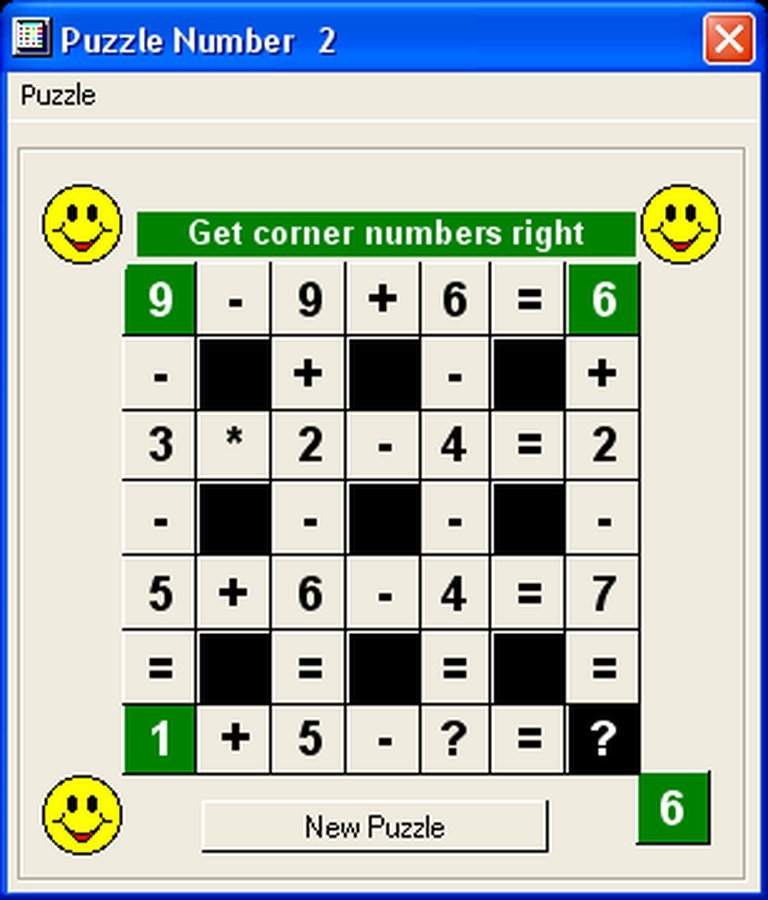
Numgrid is a number puzzle game where players must create a mathematically coherent 7×7 grid by filling in numbers from 1 to 9 and using addition, subtraction, or multiplication. The corners of the grid contain fixed numbers that cannot be altered, and the goal is to form 8 equations (4 vertical and 4 horizontal) that logically connect these numbers. The challenge lies in strategically placing numbers and operators to ensure all equations are valid, making it a test of logic and arithmetic skills.
Numgrid Reviews & Reception
comicbook.com (92/100): Rome: Total War received universal acclaim from critics and gamers.
metacritic.com (95/100): Clair Obscur: Expedition 33 is a turn-based RPG with unique real-time mechanics, making battles more immersive and addictive than ever.
verticalslicegames.com (98/100): The critical reception for Metal Gear Solid Delta: Snake Eater is overwhelmingly positive, with reviewers celebrating it as a masterful and visually stunning remake.
Numgrid: A Mathematical Puzzle Masterpiece
Introduction
In the vast landscape of video games, few titles manage to carve out a niche as unique and enduring as Numgrid. Released in 2004, this mathematical puzzle game stands as a testament to the power of simplicity and the allure of intellectual challenge. Unlike the flashy, narrative-driven titles that dominate the industry, Numgrid offers a pure, unadulterated puzzle experience that has captivated players for decades. This review delves deep into the game’s development, mechanics, and legacy, exploring why it remains a beloved classic among puzzle enthusiasts.
Development History & Context
Numgrid was developed by Ihsan Ul Haque, a name that may not be widely recognized but has contributed to several other games. The game was released as freeware, making it accessible to a broad audience without the barriers of cost. This decision reflects a broader trend in the early 2000s, where independent developers leveraged the internet to distribute their creations freely, fostering a community of players who valued innovation and creativity over commercial success.
The gaming landscape in 2004 was dominated by high-budget titles with advanced graphics and complex narratives. However, Numgrid emerged as a refreshing contrast, offering a minimalist yet deeply engaging experience. Its development was likely influenced by the growing popularity of puzzle games like Sudoku and Tetris, which demonstrated that simplicity and accessibility could lead to widespread appeal.
Narrative & Thematic Deep Dive
Numgrid is not a game driven by narrative or characters. Instead, it presents players with a purely abstract challenge: to complete a 7×7 grid using numbers and mathematical operations. The game’s thematic depth lies in its ability to engage players in a mental exercise that feels both rewarding and meditative. Each puzzle is a journey of logical reasoning and strategic planning, where the satisfaction comes from solving the equations rather than uncovering a story.
The absence of a traditional narrative allows Numgrid to focus on its core gameplay, making it a timeless experience that transcends cultural and linguistic barriers. The game’s minimalist approach to storytelling is a deliberate choice, emphasizing the intellectual challenge over superficial distractions.
Gameplay Mechanics & Systems
At its heart, Numgrid is a game about creating a mathematically coherent board. The board consists of a 7×7 grid, with the corners featuring predetermined numbers. Players must create eight equations—four vertical and four horizontal—using numbers from 1 to 9 and the operations of addition, subtraction, and multiplication. The challenge lies in ensuring that these equations interlock seamlessly, with each row and column contributing to the overall solution.
The gameplay mechanics are deceptively simple yet profoundly complex. Players must carefully consider each move, as every number and operation affects multiple equations. The game’s difficulty curve is well-balanced, with early puzzles serving as gentle introductions to the mechanics, while later levels demand strategic foresight and logical deduction.
The user interface is streamlined for efficiency, allowing players to input numbers and operations with minimal friction. The game also includes helpful features like hints and an undo function, which provide assistance without detracting from the challenge. This balance between accessibility and complexity makes Numgrid an addictive and rewarding experience.
World-Building, Art & Sound
Numgrid eschews elaborate world-building and visual spectacle in favor of a clean, minimalist aesthetic. The game’s visual presentation is understated, with a subdued color palette that directs attention to the numbers and operations. The interface is designed for clarity and ease of use, ensuring that players can focus on the puzzle without distractions.
The sound design is equally minimalist, with subtle audio cues that enhance the gameplay experience. The absence of a soundtrack allows players to immerse themselves fully in the mental challenge, creating a sense of focus and concentration that is rare in modern games.
Reception & Legacy
Upon its release, Numgrid received a modest but positive reception. Its freeware status and minimalist design made it accessible to a wide audience, and its intellectual challenge resonated with puzzle enthusiasts. Over time, the game has developed a cult following, with players appreciating its timeless appeal and the mental exercise it provides.
Numgrid has influenced subsequent puzzle games, demonstrating that simplicity and accessibility can lead to enduring success. Its legacy is a testament to the power of pure gameplay, proving that a well-designed puzzle can captivate players without the need for elaborate narratives or advanced graphics.
Conclusion
Numgrid is a masterpiece of puzzle design, offering a timeless and intellectually stimulating experience. Its minimalist approach to gameplay, art, and sound creates a focused and rewarding challenge that has stood the test of time. While it may not have the commercial success or widespread recognition of mainstream titles, Numgrid remains a beloved classic among puzzle enthusiasts, proving that simplicity and accessibility can lead to enduring appeal.
In the annals of video game history, Numgrid stands as a testament to the power of pure gameplay, demonstrating that a well-designed puzzle can captivate players without the need for elaborate narratives or advanced graphics. Its legacy is a reminder that the most rewarding experiences often come from the simplest challenges.