
- Release Year: 2009
- Platforms: Macintosh, Windows
- Publisher: Ludosity AB
- Developer: Ludosity AB
- Genre: Action, Puzzle
- Perspective: Side view
- Game Mode: Single-player
- Gameplay: Module fitting, Physics-based puzzles, pull beams, Push, Ship Customization, Thrust mechanics
- Setting: Futuristic, Sci-fi
- Average Score: 71/100
Description
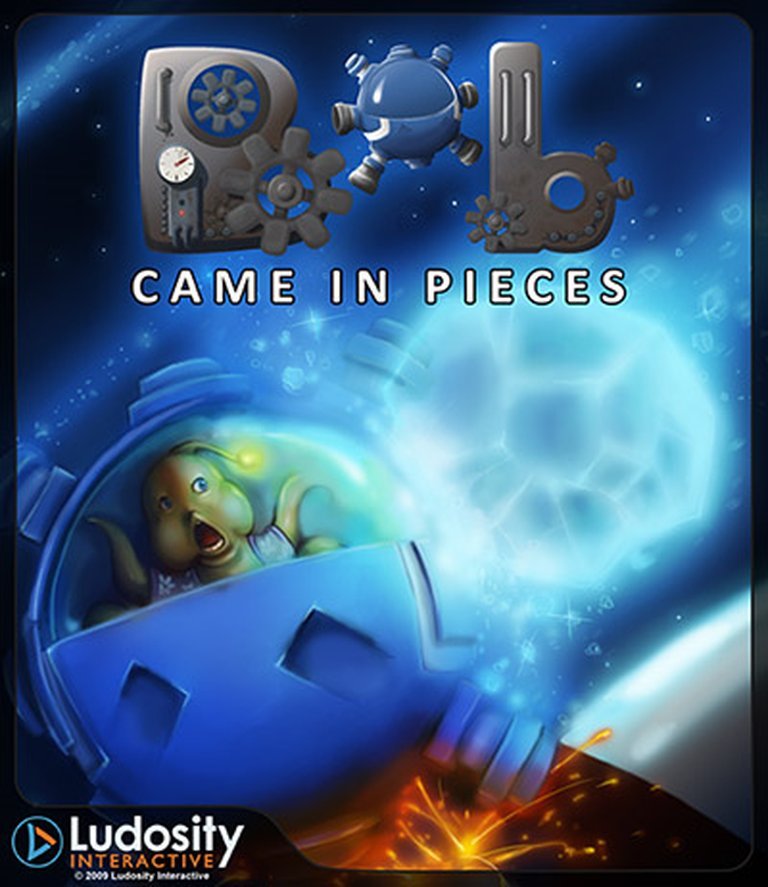
Bob Came in Pieces is a physics-based puzzle game set in a sci-fi universe. After his spaceship is damaged by a meteor, Bob must navigate through 14 chapters across a deserted planet, collecting lost parts and solving physics-based puzzles to repair his ship. The game features a unique ship-building mechanic, allowing players to customize their vessel with various modules to overcome environmental challenges, such as burning through obstacles or breaking ice. With no enemies or hazards, the focus is on creative problem-solving and exploration in diverse, themed levels.
Where to Buy Bob Came in Pieces
PC
Bob Came in Pieces Free Download
Bob Came in Pieces Patches & Updates
Bob Came in Pieces Guides & Walkthroughs
Bob Came in Pieces Reviews & Reception
steambase.io (68/100): Bob Came in Pieces has earned a Player Score of 68 / 100.
metacritic.com (73/100): Challenging fun.
gamepressure.com (68/100): A joyful puzzle-arcade game about the adventures of the title character.
gamersnexus.net (77/100): Bob Came in Pieces is a good indie game; just like its story, it’s not really good or bad.
elder-geek.com : The puzzles are too easy, the controls are horrible and it’s just not fun enough to make up for all that.
Bob Came in Pieces: A Physics-Based Puzzle Odyssey
Introduction: The Unassuming Genius of Bob’s Journey
In the vast cosmos of indie games, few titles manage to carve out a niche as distinct and enduring as Bob Came in Pieces. Released in 2009 by Swedish developer Ludosity AB, this physics-based puzzle adventure is a masterclass in minimalist design, blending whimsical charm with deceptively deep gameplay. At its core, Bob Came in Pieces is a game about reconstruction—both literal and metaphorical. Players assume the role of Bob, an alien call center employee whose ship is shattered by a meteor, leaving him stranded on a mysterious planet. The premise is simple: recover the scattered parts of your vessel, rebuild it, and escape. Yet, beneath this straightforward narrative lies a game that challenges players to think creatively, experiment fearlessly, and embrace the joy of iterative problem-solving.
What makes Bob Came in Pieces so compelling is its refusal to adhere to conventional puzzle-game tropes. There are no enemies, no time limits, and no punitive failure states. Instead, the game thrives on player agency, offering a sandbox of modular shipbuilding and environmental interaction. It’s a title that rewards curiosity as much as it does logic, inviting players to tinker with their ship’s design until they stumble upon the perfect configuration for each obstacle. In an era dominated by hyper-polished, narrative-driven experiences, Bob Came in Pieces stands as a testament to the power of pure gameplay innovation.
This review will dissect Bob Came in Pieces in exhaustive detail, exploring its development history, narrative subtleties, mechanical brilliance, artistic identity, and lasting legacy. By the end, it will be clear why this unassuming indie gem remains a cult classic over a decade after its release.
Development History & Context: The Birth of a Puzzle Innovator
Ludosity AB: The Swedish Indie Pioneers
Bob Came in Pieces was the brainchild of Ludosity AB, a Swedish indie studio founded in 2007. The team, composed of developers with backgrounds in both game design and programming, sought to create experiences that prioritized creativity and player freedom. Before Bob, Ludosity had dabbled in smaller projects, but this title marked their first major commercial release—a bold statement of their design philosophy.
The game’s development was driven by a desire to merge physics-based interaction with open-ended puzzle design. Inspired by titles like The Incredible Machine and Lemmings, the team aimed to create a game where players could approach challenges in multiple ways, rather than being funneled into a single solution. The Unity engine, still in its relative infancy at the time, provided the perfect toolset for realizing this vision, offering robust physics simulation and modular design capabilities.
The Gaming Landscape of 2009: A Perfect Storm for Indie Innovation
The late 2000s were a golden age for indie games, with digital distribution platforms like Steam democratizing access to smaller developers. Titles like World of Goo (2008), Braid (2008), and Machinarium (2009) had already proven that indie games could compete with AAA titles in both critical acclaim and commercial success. Bob Came in Pieces arrived at a time when players were hungry for fresh, experimental gameplay mechanics, and its unique blend of shipbuilding and physics puzzles filled a niche that few other games had explored.
Technologically, the game was constrained by the hardware of its era. The Unity engine, while powerful, required careful optimization to ensure smooth physics interactions. The team’s decision to adopt a 2D side-scrolling perspective was both a creative and technical choice, allowing for precise environmental design while keeping the game accessible to a broad audience.
The Vision: A Game About Creativity, Not Perfection
From the outset, Bob Came in Pieces was conceived as a game that celebrated experimentation. The developers wanted players to feel like engineers, constantly iterating on their ship designs to overcome obstacles. This philosophy is evident in the game’s lack of traditional failure states—players can crash, fumble, and restart without penalty, reinforcing the idea that each attempt is a learning experience.
The game’s title itself is a playful nod to its core mechanic. “Bob Came in Pieces” not only refers to the protagonist’s shattered ship but also hints at the modular nature of the gameplay. The name is memorable, quirky, and perfectly encapsulates the game’s tone: lighthearted yet intellectually engaging.
Narrative & Thematic Deep Dive: The Story of a Stranded Alien
Plot Summary: A Simple Premise with Hidden Depth
Bob Came in Pieces opens with a delightfully absurd scenario: Bob, an extraterrestrial call center employee, is commuting to work via an intergalactic route when his ship is struck by a meteor. The impact destroys his Hyperdrive 2000, sending him hurtling toward a nearby planet. Upon landing, Bob discovers that the planet is uninhabited, leaving him to fend for himself. His goal? Recover the scattered parts of his ship, rebuild it, and escape.
The narrative is minimalist by design, serving as little more than a framework for the gameplay. There are no cutscenes, no dialogue trees, and no complex character arcs. Instead, the story is conveyed through brief, humorous text snippets that appear between levels, offering Bob’s wry observations about his predicament. This approach ensures that the focus remains squarely on the puzzles, but it also imbues the game with a subtle charm.
Themes: Isolation, Ingenuity, and the Joy of Discovery
While Bob Came in Pieces lacks a traditional narrative, it is rich in thematic depth. The most prominent theme is isolation. Bob is utterly alone on this planet, with no one to rely on but himself. This sense of solitude is reinforced by the game’s serene, unpopulated environments—lush jungles, icy caverns, and underground tunnels devoid of life. Yet, rather than feeling bleak, the game’s tone is one of resilience and ingenuity. Bob’s journey is a testament to the power of problem-solving, a celebration of the human (or alien) capacity to adapt and overcome.
Another key theme is creativity as a survival tool. The game’s shipbuilding mechanic is not just a gameplay gimmick; it’s a metaphor for the iterative process of innovation. Players are encouraged to fail, learn, and refine their designs, mirroring the real-world process of engineering and invention. In this way, Bob Came in Pieces is as much about the journey of discovery as it is about reaching the end goal.
Characterization: Bob as the Everyman Alien
Bob is a deliberately unremarkable protagonist. He’s not a heroic space marine or a chosen one; he’s a mundane office worker who happens to be an alien. This everyman quality makes him relatable, even endearing. His ship is a clunky, modular contraption, reflecting his own imperfect, makeshift journey. The game’s humor stems from this contrast—Bob’s ordinary job (a call center employee!) juxtaposed with his extraordinary circumstances.
The lack of traditional characterization is a strength, not a weakness. By keeping Bob’s personality vague, the game allows players to project themselves onto him, making his struggles and triumphs feel personal.
Gameplay Mechanics & Systems: The Art of Modular Problem-Solving
Core Gameplay Loop: Build, Test, Iterate
At its heart, Bob Came in Pieces is a game about modular shipbuilding and physics-based puzzles. The gameplay loop is elegantly simple:
- Explore the Environment: Each level presents a series of obstacles—gaps to cross, switches to activate, objects to move, and barriers to destroy.
- Collect Ship Parts: Scattered throughout the levels are various ship components, from thrusters to push/pull beams. Some are essential for progression, while others are optional, rewarding exploration.
- Customize Your Ship: At designated “Ship Builder” stations, players can attach, detach, and rearrange parts on their ship. The ship has eight ports, allowing for a vast array of configurations.
- Solve the Puzzle: Using the newly configured ship, players must navigate the environment, leveraging physics to overcome obstacles. If a design doesn’t work, they can return to the Ship Builder and try again.
- Progress to the Next Level: Once the exit portal is reached, players move on to the next challenge, often with new parts to experiment with.
This loop is repeated across 14 levels, each introducing new mechanics and environmental hazards.
Ship Customization: The Heart of the Game
The shipbuilding system is where Bob Came in Pieces truly shines. The ship is a spherical core with eight attachment points, each of which can hold a variety of modules:
- Thrusters: Basic propulsion units that allow movement in any direction. Different thrusters have varying power levels, affecting speed and maneuverability.
- Pipes/Arms: Structural components that extend the ship’s reach, allowing players to interact with distant objects or navigate tight spaces.
- Push/Pull Beams: Tools that can manipulate objects in the environment, either by repelling or attracting them.
- Burners: Devices that can destroy obstacles like wooden barriers or bushes.
- Specialized Modules: Later levels introduce unique parts, such as ice-breakers or wind-resistant components.
The genius of the system lies in its modularity and player agency. There is rarely a single “correct” way to solve a puzzle. Instead, players are encouraged to experiment with different configurations, each offering a unique approach. For example, a level that requires moving a heavy boulder might be solved by:
– Attaching a powerful thruster to one side of the ship to ram the boulder.
– Using a push beam to gradually nudge it into place.
– Building a long arm to flip a switch that removes the obstacle entirely.
This freedom is empowering, but it also demands creative thinking. The game doesn’t hold the player’s hand; instead, it provides the tools and lets them figure out the rest.
Physics and Control: A Double-Edged Sword
The game’s physics engine is both its greatest strength and its most frustrating flaw. On one hand, the physics-based interactions are incredibly satisfying when they work. Watching a carefully constructed ship navigate a treacherous gap or seeing a chain reaction of objects fall into place is deeply rewarding.
On the other hand, the physics can be unpredictable and finicky. The ship’s movement is controlled via the arrow keys, with each thruster mapped to a direction. However, as players add more parts, the ship’s center of gravity shifts, making it increasingly difficult to control. This is intentional—part of the puzzle is learning to balance your ship—but it can also lead to frustration, especially in later levels where precision is required.
Critics and players have been divided on this aspect. Some praise the game’s emergent complexity, arguing that the unstable physics are part of the challenge. Others, however, find the controls clunky and imprecise, particularly when trying to navigate tight spaces or perform delicate maneuvers.
Level Design: Variety and Progression
The game’s 14 levels are divided into distinct thematic zones, each with its own environmental challenges:
- Jungle Levels: Dense foliage that can be burned away with thrusters.
- Ice Levels: Slippery surfaces and fragile ice barriers that require speed or specialized tools to break.
- Underground Caverns: Tight spaces that demand compact, agile ship designs.
- Wind Tunnels: Areas where wind physics must be accounted for, requiring careful thruster placement.
Each level introduces new mechanics gradually, ensuring that players are never overwhelmed. Early levels focus on basic movement and simple object manipulation, while later stages require multi-step solutions and advanced ship configurations.
One of the game’s strengths is its replayability. After completing a level, players can return to it with new parts, allowing them to find more efficient or creative solutions. The game also includes time trials for speedrunners, adding an extra layer of challenge.
User Interface and Accessibility
The UI is minimalist and functional. The Ship Builder screen is intuitive, with a drag-and-drop interface that makes experimentation easy. Players can save and load ship configurations, allowing them to switch between designs on the fly. The game also features undo/redo buttons, a small but crucial quality-of-life feature that prevents frustration when tinkering with complex builds.
However, the game’s lack of controller support is a notable omission. Given the precision required in some puzzles, a gamepad could have offered a more comfortable alternative to keyboard controls. This oversight likely contributed to some of the criticism regarding the game’s controls.
World-Building, Art & Sound: Crafting a Whimsical Alien Landscape
Visual Design: A Cartoonish, Colorful Universe
Bob Came in Pieces adopts a bright, cartoonish art style that belies its cerebral gameplay. The environments are vibrant and varied, with each level featuring distinct color palettes and thematic elements. The jungle levels are lush and green, the ice levels are cool and blue, and the underground caverns are dark and moody. Despite the 2D side-scrolling perspective, the game uses layered backgrounds to create a sense of depth, giving the world a lived-in feel.
The ship itself is a delightful amalgamation of pipes, thrusters, and gadgets, resembling something out of a child’s imagination. The modular nature of the design means that no two players’ ships will look the same, adding a personal touch to the experience.
Sound and Music: A Soothing, Ambient Soundtrack
The game’s audio design is understated but effective. The soundtrack, composed by Christoffer Holmström, consists of a single, looping ambient track that plays throughout the game. Rather than becoming repetitive, the music fades into the background, creating a calming atmosphere that complements the game’s relaxed pace.
Sound effects are similarly minimalist. Thrusters hum, beams whir, and objects clatter, but there’s no overbearing noise. This restraint ensures that the focus remains on the puzzles, rather than sensory overload.
Atmosphere: A Sense of Solitude and Wonder
The combination of visual and auditory elements creates a dreamlike, almost meditative atmosphere. The uninhabited planet feels vast and mysterious, yet never hostile. There are no enemies, no time limits, and no punitive mechanics—just Bob, his ship, and the quiet challenge of overcoming obstacles.
This atmosphere is crucial to the game’s appeal. It’s a stress-free experience, one that encourages players to take their time, experiment, and enjoy the process of discovery. In an industry often dominated by high-stakes action and competitive multiplayer, Bob Came in Pieces offers a refreshing alternative: a game that values patience and creativity over reflexes and precision.
Reception & Legacy: A Cult Classic’s Enduring Appeal
Critical Reception: Praise for Innovation, Criticism for Controls
Upon its release in December 2009, Bob Came in Pieces received generally positive reviews, with critics praising its innovative gameplay and charming presentation, while noting its control issues and short length.
- GameZebo (90%): “Bob Came in Pieces oozes creativity and rewards you for noodling around to your heart’s content. It’s easy to get into but hard to stop playing once you’ve been hooked.”
- Gamer Limit (85%): “An intelligent puzzle/adventure that challenges players to be creative to be successful, and, in doing so, is wonderfully entertaining.”
- Mac Games (80%): “One awesome and original game with great cartoon graphics and very interesting backgrounds. It’s different from any other platform game I played.”
- Out Of Eight (75%): “The game does feel unique, thanks to some innovative puzzles and full freedom to use your admittedly limited tool set as you desire.”
However, not all reviews were glowing. Some critics found the physics system frustrating and the puzzles too linear once the optimal ship design was discovered.
- Elder-Geek.com: “More time will be spent hassling with the nature of the physics system than solving the actual puzzles.”
- Game and Player: “The physics that control your spacecraft are a tad wonky… It’s almost as if the designers knew the physics in their game were flawed and decided to include this reset button to appease players.”
Despite these criticisms, the game’s unique premise and creative freedom earned it a MobyGames score of 7.3 and a Metacritic score of 73, placing it firmly in the “generally favorable” range.
Commercial Performance and Player Reception
Commercially, Bob Came in Pieces was a modest success. Priced at $9.99, it found an audience among puzzle enthusiasts and indie game fans. On Steam, the game holds a “Mixed” rating (68/100) based on player reviews, with many praising its creativity and relaxation value, while others criticized its short length and control issues.
Legacy: Influencing a Generation of Puzzle Games
While Bob Came in Pieces never achieved mainstream fame, its influence can be seen in subsequent puzzle games that emphasize modular design and player agency. Titles like Besiege, Scrap Mechanic, and Kerbal Space Program share DNA with Bob, offering players the tools to build, experiment, and problem-solve in open-ended ways.
The game also helped establish Ludosity AB as a notable indie developer. The studio went on to create other innovative titles, such as Cobalt and It’s Quiz Time, but Bob Came in Pieces remains their most distinctive and enduring work.
The Indie Puzzle Renaissance
Bob Came in Pieces arrived at a pivotal moment in indie gaming history. Alongside titles like World of Goo and Braid, it contributed to a renaissance of puzzle games that prioritized creativity over competition. Its legacy is one of inspiration—a reminder that even the simplest mechanics, when executed with care and imagination, can create something truly special.
Conclusion: A Timeless Celebration of Creativity
Bob Came in Pieces is a game that defies easy categorization. It is at once a puzzle game, a sandbox, and a physics playground, blending these elements into a cohesive and deeply satisfying experience. Its strengths—modular shipbuilding, open-ended problem-solving, and a serene atmosphere—far outweigh its weaknesses, which are largely confined to occasional control frustrations and a relatively short length.
More than a decade after its release, Bob Came in Pieces remains a hidden gem, a game that rewards patience, curiosity, and a willingness to embrace failure as part of the learning process. It is a testament to the power of player agency, proving that sometimes, the most memorable gaming experiences are those that give players the freedom to create, experiment, and discover on their own terms.
Final Verdict: 8.5/10 – A Masterpiece of Modular Puzzle Design
Bob Came in Pieces is not a perfect game, but it is a brilliant one. Its innovative mechanics, charming presentation, and emphasis on creative problem-solving make it a standout title in the puzzle genre. While its physics can be finicky and its length brief, the joy of tinkering with ship designs and overcoming obstacles in unexpected ways ensures that it remains a timeless classic.
For fans of physics puzzles, sandbox experimentation, or simply relaxing gaming experiences, Bob Came in Pieces is an essential play. It may not have the polish or scale of modern indie darlings, but its heart, creativity, and sheer fun make it a game that deserves to be remembered—and revisited—for years to come.
Where to Play: Available on Steam for $9.99, Bob Came in Pieces is a steal for the hours of creative enjoyment it provides. Whether you’re a puzzle veteran or a casual player looking for something different, Bob’s journey is one worth taking.