
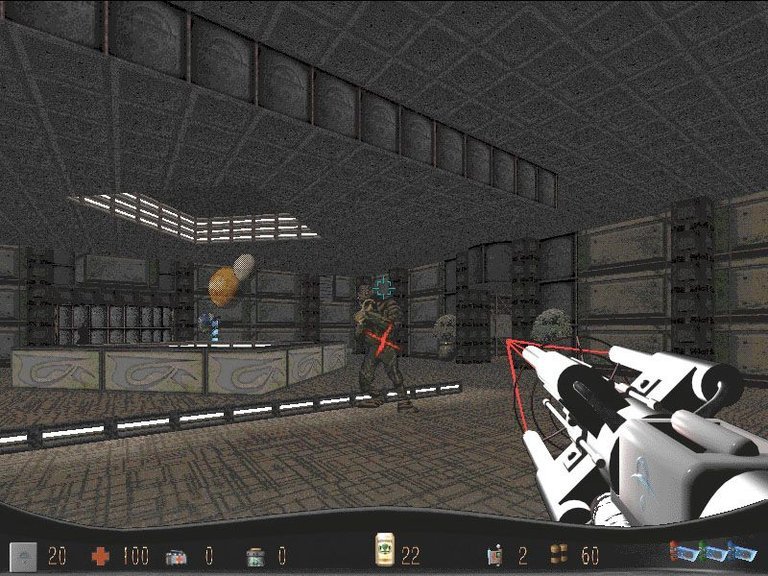
- Release Year: 2001
- Platforms: Windows
- Publisher: Espaço Informática Ltda
- Developer: Espaço Informática Ltda
- Genre: Action
- Perspective: 1st-person
- Game Mode: Single-player
- Gameplay: Shooter
- Setting: Futuristic, Sci-fi
- Average Score: 95/100
Description
Hades 2 is a roguelike dungeon crawler and sequel to the award-winning Hades, developed by Supergiant Games. Players take on the role of Melinoë, the immortal Princess of the Underworld and daughter of Hades, as she battles the Titan of Time using dark sorcery and the power of Olympus. Set in a mythic world rooted in Greek mythology, the game features an ever-shifting Underworld, new locations, and a deep narrative that unfolds through repeated attempts, with death serving as a temporary setback. With the support of gods like Hecate and familiar Olympians, players must vanquish the forces of time in an action-packed, endlessly replayable experience.
Gameplay Videos
Where to Buy Hades 2
Hades 2 Free Download
PC
Hades 2 Cracks & Fixes
Hades 2 Reviews & Reception
metacritic.com (95/100): A triumphant return to form for the series.
thegamer.com (93/100): Hades 2 is a hugely ambitious sequel that occasionally stretches itself too thin in an attempt to make up for its increased scope, but that only distracts temporarily from a game that’s intricately crafted in every facet of its existence.
ign.com (100/100): This exceptional action roguelite is some of Supergiant’s best work on nearly every level.
gamesradar.com (94/100): Hades 2 is a hugely ambitious sequel that occasionally stretches itself too thin in an attempt to make up for its increased scope, but that only distracts temporarily from a game that’s intricately crafted in every facet of its existence.
cartpitol.com (94/100): Hades II has become 2025’s highest-rated PC game.
Hades 2 Cheats & Codes
PC (Early Access)
Enter codes within the game.
| Code | Effect |
|---|---|
| HTCHE | Unlocks Weapon 3 – Mahat 765B |
| HAMELET | Unlocks Weapon 4 – Nogah |
| HBAGUAL | Unlocks Weapon 5 – Phaseron |
| HJAGUARA | Unlocks Weapon 6 – Golab |
| HMASBAH | Unlocks Weapon 7 – Devacan |
| HGREMIO | Unlocks Weapon 8 – Metatron |
| HOMYGOD | Unlocks Weapon 9 – PK-9 Sevekh |
| HXAVAXY | Unlocks Weapon 0 – Avastan |
| HDJETY | Unlocks Jetpack |
| HIBIN | Unlocks Binocular |
| HCESAMO | Unlocks All the Keys (Door’s keys) |
| HSAVEME | Grants Health |
| HMACHOMAN | Grants Invincibility |
| HDEMOZB | Unlocks All Weapons and Items |
| HMAPXY | Unlocks Map (press TAB to show) |
| HCFORF | Grants Protection Field |
| HIOCK | Unlocks Night Vision Glasses |
| HLEVY2, HLEVY3, HLEVY4 … | Changes Level |
| HARMAD | Grants Armor |
Hades 2: A Masterclass in Evolution and Mythological Storytelling
Introduction
In the pantheon of modern gaming, few titles have achieved the near-universal acclaim and cultural resonance of Hades (2020). Supergiant Games’ roguelike masterpiece redefined the genre, blending razor-sharp combat, a compelling narrative, and an unforgettable cast of characters drawn from Greek mythology. With Hades 2, the studio faced the Herculean task of not just meeting the sky-high expectations set by its predecessor, but surpassing them. The result is a game that is both a loving evolution of the original and a bold step forward, expanding the lore, deepening the mechanics, and introducing a new protagonist whose journey is as emotionally resonant as it is mechanically satisfying.
Hades 2 is not merely a sequel; it is a testament to Supergiant Games’ ability to iterate, innovate, and refine. It retains the core DNA of the original—fast-paced combat, procedural dungeon crawling, and a narrative that unfolds through repeated runs—while introducing fresh ideas that make it feel distinct. The game’s early access period, which began in May 2024, allowed the developers to fine-tune the experience based on player feedback, resulting in a polished, content-rich final product that launched in September 2025. This review will dissect Hades 2 in exhaustive detail, exploring its development, narrative, gameplay, art, sound, reception, and legacy.
Development History & Context
The Studio and Its Legacy
Supergiant Games has carved a niche for itself as one of the most consistent and innovative indie developers in the industry. Founded in 2009 by Amir Rao and Gavin Simon, the studio’s portfolio includes critically acclaimed titles like Bastion (2011), Transistor (2014), and Pyre (2017). Each of these games is distinguished by its unique art style, evocative soundtracks, and deep narrative themes. However, it was Hades that catapulted Supergiant into the mainstream consciousness, earning widespread acclaim and numerous awards, including the Hugo Award for Best Video Game and the Annie Award for Best Animated Video Game.
The success of Hades presented Supergiant with a unique challenge: how to follow up a game that had already perfected its formula. In an interview with Game Informer, creative director Greg Kasavin revealed that the studio’s approach to sequels is rooted in a deep respect for the original while exploring new narrative and mechanical avenues. “At Supergiant, we focus on one project at a time,” Kasavin explained. “With each project, as part of building out the world of the game, we consider other stories that could be told in that world.” This philosophy led to the creation of Hades 2, a game that builds on the strengths of its predecessor while introducing fresh ideas.
The Vision for Hades 2
The development of Hades 2 began in early 2021, shortly after the release of the original game’s final update. From the outset, the team was determined to avoid simply rehashing the first game’s formula. Instead, they sought to expand the lore of the Underworld and introduce new characters and mechanics that would make Hades 2 feel like a distinct experience.
One of the earliest decisions was to shift the protagonist from Zagreus to his sister, Melinoë. Kasavin cited the Orphic Hymns as inspiration for this choice, noting that Melinoë is a relatively obscure figure in Greek mythology, which gave the team creative freedom to shape her story. “Melinoë was also tied to the occult side of Greek mythology,” Kasavin said, “allowing us to introduce magic as a gameplay mechanic as well as the figure of Hecate, Melinoë’s mentor.”
The decision to focus on Melinoë also allowed the team to explore themes of family, legacy, and the passage of time. Unlike Zagreus, who was trying to escape the Underworld to reunite with his mother, Melinoë is driven by a desire to reclaim her family’s throne and defeat the Titan of Time, Chronos. This shift in narrative focus gave the team the opportunity to introduce new locations, characters, and mechanics that would differentiate Hades 2 from its predecessor.
Technological and Design Constraints
Hades 2 was developed using the same proprietary engine as the original game, but with significant upgrades to accommodate the expanded scope. The game features more detailed environments, a larger cast of characters, and a more complex narrative structure. The team also faced the challenge of ensuring that the game would run smoothly on a variety of platforms, including PC, macOS, and the Nintendo Switch 2.
One of the most significant technical challenges was the implementation of the game’s new combat mechanics. Melinoë’s abilities, which include a magic-based “Cast” system and a resource called “Magick,” required careful balancing to ensure that they felt distinct from Zagreus’ abilities while remaining intuitive and fun to use. The team also had to design new enemy types and boss fights that would take advantage of these mechanics, creating a fresh but familiar combat experience.
The Gaming Landscape at Launch
Hades 2 launched in a gaming landscape that had been significantly shaped by the success of its predecessor. The roguelike genre had seen a resurgence in popularity, with games like Dead Cells, Risk of Rain 2, and Returnal demonstrating the appeal of procedural generation and permadeath mechanics. However, Hades had set a new standard for the genre, blending these mechanics with a deep narrative and compelling characters.
The launch of Hades 2 in September 2025 was met with immense anticipation. The game’s early access period, which began in May 2024, had given players a taste of what to expect, and the final product delivered on those promises. The game’s release coincided with the launch of the Nintendo Switch 2, which helped to further amplify its reach and impact.
Narrative & Thematic Deep Dive
Plot Overview
Hades 2 begins in the aftermath of Chronos’ escape from his imprisonment in Tartarus. The Titan of Time, seeking revenge against the Olympians who overthrew him, has seized control of the Underworld and imprisoned Hades, Persephone, and Zagreus. Melinoë, the infant daughter of Hades and Persephone, is spirited away by Hecate, the Goddess of Witchcraft, who raises her in the Crossroads, a liminal space between the Underworld and the surface world.
As Melinoë grows, Hecate trains her in the arts of witchcraft and combat, preparing her for the day when she will challenge Chronos and reclaim the Underworld. The game’s narrative unfolds through Melinoë’s repeated attempts to descend into Tartarus and ascend to Mount Olympus, where she must confront Chronos’ forces and ultimately defeat the Titan himself.
Characters and Relationships
Melinoë: The Witch Princess
Melinoë is a complex and compelling protagonist, driven by a mix of personal vendetta and familial duty. Unlike Zagreus, who was motivated by a desire to escape the Underworld, Melinoë is determined to reclaim it. Her journey is one of self-discovery, as she grapples with her identity as both a princess of the Underworld and a witch trained by Hecate.
Melinoë’s relationships with the other characters in the game are central to her development. Her interactions with Hecate, in particular, are deeply emotional, as the two grapple with their roles as mentor and protégé. Hecate’s love for Melinoë is palpable, but she is also aware of the burden she has placed on the young witch, training her for a battle that may cost her everything.
Hecate: The Witch of the Crossroads
Hecate is one of the most intriguing characters in Hades 2, serving as both a mentor and a surrogate mother to Melinoë. Her backstory is shrouded in mystery, but it is hinted that she has a personal vendetta against Chronos, having fought him in the past. Hecate’s role in the game is multifaceted: she provides Melinoë with guidance, upgrades her abilities, and serves as a confidante.
Hecate’s relationship with Melinoë is one of the most emotionally resonant in the game. She is fiercely protective of the young witch, but she also recognizes the importance of allowing Melinoë to make her own choices. This dynamic is explored through a series of heartfelt conversations that unfold as the player progresses through the game.
Chronos: The Titan of Time
Chronos is the primary antagonist of Hades 2, a figure of immense power and malice. Unlike the gods of Olympus, who are bound by the rules of the cosmos, Chronos exists outside of time, making him nearly unstoppable. His motivations are rooted in a desire for revenge against the Olympians, who overthrew him and imprisoned him in Tartarus.
Chronos’ character is explored through a series of boss fights and narrative revelations. As Melinoë battles him repeatedly, she begins to uncover the truth about his past and his relationship with the other Titans. The game’s climax reveals that Chronos is not merely a villain, but a tragic figure whose actions are driven by a desire to undo the injustices of the past.
The Olympians and Chthonic Gods
Hades 2 features a expanded roster of gods and mythological figures, each of whom plays a role in Melinoë’s journey. The Olympians, including Zeus, Poseidon, and Athena, provide Melinoë with boons and guidance, while the Chthonic gods, such as Nemesis and Moros, offer their own unique perspectives on the conflict.
One of the most notable additions to the cast is Selene, the Titaness of the Moon, who provides Melinoë with powerful Hex abilities. Selene’s relationship with Melinoë is complex, as she is both an ally and a reminder of the larger cosmic forces at play in the game’s narrative.
Themes and Symbolism
The Passage of Time
At its core, Hades 2 is a meditation on the passage of time and the cyclical nature of history. Melinoë’s journey is framed as a battle against Chronos, a figure who embodies the relentless march of time. The game’s narrative explores the idea that time is both a destructive and a creative force, capable of erasing the past while also shaping the future.
This theme is reflected in the game’s mechanics, particularly in the way that Melinoë’s runs are structured. Each attempt to defeat Chronos is a cycle, with Melinoë returning to the Crossroads after each failure to regroup and try again. This cyclical structure mirrors the broader themes of the game, reinforcing the idea that history is not a linear progression, but a series of repeating patterns.
Family and Legacy
Family is a central theme in Hades 2, as Melinoë’s journey is driven by a desire to reclaim her family’s legacy. The game explores the complexities of familial relationships, particularly the bond between Melinoë and Hecate, which is both maternal and mentorial. The game also delves into the dynamics of the Olympian family, with characters like Zeus and Poseidon grappling with their own legacies and the weight of their past actions.
The theme of legacy is also reflected in the game’s narrative structure. Melinoë’s journey is not just about defeating Chronos, but about reclaiming the Underworld and restoring her family’s rule. This idea is reinforced by the game’s ending, which sees Melinoë and Hecate working together to undo the damage caused by Chronos’ reign.
The Power of Witchcraft
Witchcraft is a central motif in Hades 2, serving as both a narrative device and a gameplay mechanic. Melinoë’s abilities are rooted in witchcraft, and her journey is framed as a battle between the old ways of the Titans and the new ways of the Olympians. The game explores the idea that witchcraft is a form of resistance, a way for the marginalized to challenge the established order.
This theme is reflected in the game’s art and sound design, which draw heavily on occult imagery and folklore. The Crossroads, in particular, is a space that is steeped in witchcraft, with Hecate’s cauldron serving as a symbol of the transformative power of magic.
Gameplay Mechanics & Systems
Core Gameplay Loop
At its heart, Hades 2 is a roguelike dungeon crawler, with players guiding Melinoë through a series of procedurally generated levels as she battles her way to Chronos. The game’s core gameplay loop is familiar to fans of the original Hades, but with several key innovations that make it feel fresh and distinct.
Each run begins in the Crossroads, where Melinoë can interact with the game’s cast of characters, upgrade her abilities, and prepare for her next attempt. From there, she can choose to descend into the Underworld or ascend to the surface, with each path offering its own unique challenges and rewards.
Combat and Character Progression
Weapons and Abilities
Hades 2 introduces a new arsenal of weapons, each with its own unique playstyle and abilities. These include:
- Nyx’s Sickle: A fast, agile weapon that excels at close-range combat.
- Atlas Gauntlets: A heavy, powerful weapon that deals massive damage but is slower to wield.
- Torches of Hecate: A pair of twirling torches that allow for fluid, dance-like combat.
- Gigaros: A massive axe that can be transformed into a scythe, offering a mix of range and power.
Each weapon has multiple “Aspects,” which are unlockable variations that change the weapon’s abilities and playstyle. For example, the Aspect of Nyx for the Atlas Gauntlets allows the player to charge up a powerful blast by sprinting, while the Aspect of Hecate for the Torches of Hecate grants the player additional magical abilities.
Boons and Hexes
Like its predecessor, Hades 2 features a system of “Boons,” which are temporary upgrades granted by the gods. These Boons can enhance Melinoë’s abilities, provide new attacks, or grant passive bonuses. The game introduces a new layer of strategy with the addition of “Hexes,” which are ultimate abilities tied to the Titaness Selene. Hexes can range from slowing down time to unleashing a devastating lunar blast, and they can be upgraded through a talent tree that is semi-randomized with each run.
The Boon system has been refined in Hades 2, with each god offering a more diverse and balanced set of upgrades. For example, Poseidon’s Boons now include abilities that speed up resource collection, making them more useful in a wider range of situations. Similarly, Hermes’ Boons, which focus on speed and mobility, have been tweaked to ensure that they remain powerful without being overpowered.
Magick and Resource Management
One of the most significant additions to Hades 2 is the “Magick” system, a resource that fuels Melinoë’s magical abilities. Magick is replenished by attacking enemies, encouraging players to maintain an aggressive playstyle. The system adds a new layer of strategy to combat, as players must balance their use of Magick with their other abilities.
The game also introduces a variety of new resources, such as Zodiac Sand and V-Lens, which are used to craft incantations and unlock new abilities. These resources are scattered throughout the game’s levels, and players must carefully manage their collection to ensure that they have the materials they need to progress.
UI and Accessibility
Hades 2 features a refined user interface that is both intuitive and informative. The game’s menus are well-organized, with clear icons and descriptions that make it easy to navigate the various systems. The game also includes a variety of accessibility options, such as adjustable text size, colorblind modes, and remappable controls, ensuring that it is accessible to a wide range of players.
One of the most notable improvements to the UI is the addition of a “God Mode,” which allows players to adjust the game’s difficulty on the fly. This feature, which was first introduced in the original Hades, has been expanded in the sequel, with players now able to fine-tune the game’s challenge to suit their preferences.
Innovative and Flawed Systems
While Hades 2 is a masterclass in refinement, it is not without its flaws. One of the most notable issues is the game’s difficulty curve, which can be punishing in the mid-game. Some players have reported that the game’s bosses, particularly Eris and Typhon, can be frustratingly difficult, requiring multiple attempts to defeat.
Another potential issue is the game’s resource management system, which can feel overwhelming at times. With so many different currencies and materials to track, some players may find it difficult to keep up with the game’s various upgrade paths.
Despite these flaws, Hades 2 is a triumph of game design, offering a deep and rewarding experience that is both familiar and fresh.
World-Building, Art & Sound
Setting and Atmosphere
Hades 2 takes place in a richly detailed world that blends Greek mythology with occult imagery. The game’s setting is divided into two main paths: the Underworld, which includes locations like Erebus, Oceanus, and Tartarus, and the surface world, which includes the city of Ephyra and Mount Olympus. Each of these locations is distinct, with its own unique visual style, enemies, and challenges.
The Underworld is a dark and foreboding place, filled with the remnants of Chronos’ reign. The surface world, by contrast, is a vibrant and colorful realm, where the Olympians wage war against the Titan’s forces. The contrast between these two worlds is one of the game’s most striking features, reinforcing the themes of duality and conflict that run throughout the narrative.
Visual Direction
The art style of Hades 2 is a natural evolution of the original game’s aesthetic, with hand-drawn characters, lush environments, and a vibrant color palette. The game’s visuals are a feast for the eyes, with each location featuring intricate details and atmospheric lighting.
One of the most notable improvements to the visuals is the addition of subtle animations to the game’s character portraits. These animations, which include things like the glint of light on Melinoë’s lip or the flicker of a torch, bring the characters to life in a way that was not possible in the original game.
Sound Design and Music
The sound design of Hades 2 is equally impressive, with a dynamic soundtrack that adapts to the player’s actions. The game’s music, composed by Darren Korb, blends traditional Greek instruments with modern electronic elements, creating a sound that is both ancient and contemporary.
One of the standout tracks is “Moonlight Guide Us,” a hauntingly beautiful duet performed by Ashley Barrett and Judy Alice Lee. The song, which plays during key moments in the game, is a testament to Korb’s ability to create music that is both emotionally resonant and thematically appropriate.
The game’s voice acting is also top-notch, with a talented cast bringing the characters to life. Judy Alice Lee’s performance as Melinoë is particularly noteworthy, capturing the character’s determination, vulnerability, and wit.
Reception & Legacy
Critical Reception
Hades 2 was met with universal acclaim upon its release, with critics praising its gameplay, art style, music, and voice acting. The game holds a Metacritic score of 95 for the Nintendo Switch 2 version, making it one of the highest-rated games of 2025.
Critics lauded the game’s combat as “snappy and delightful,” with IGN describing it as “fast, fun, endlessly varied, and tactical.” The game’s narrative was also praised, with GameSpot calling it “a sweeping story that continually unfolds through your every setback and accomplishment.”
However, the game’s ending received some criticism, with Polygon describing it as “underwhelming” and Rock Paper Shotgun calling it “unsatisfying.” Some players expressed frustration with the ending, which sees Melinoë sparing Chronos rather than defeating him outright. In response to this feedback, Supergiant Games released a post-launch update that added extra scenes and introduced a feature to revert the game to its pre-conclusion state.
Commercial Success and Awards
Hades 2 was a commercial success, selling over one million copies in its first month of release. The game’s launch on the Nintendo Switch 2 helped to further amplify its reach, with the console’s improved hardware allowing for a smoother and more visually impressive experience.
The game has also been nominated for numerous awards, including Game of the Year at The Game Awards 2025. It won the award for Best Action Game at the same event, cementing its status as one of the year’s standout titles.
Influence on the Industry
Hades 2 has had a significant impact on the gaming industry, demonstrating the potential of the roguelike genre to tell deep and emotionally resonant stories. The game’s success has inspired other developers to explore similar narrative-driven approaches to procedural generation, and it has helped to further popularize the genre among mainstream audiences.
The game’s early access period also served as a model for other developers, demonstrating the value of player feedback in shaping the final product. Supergiant Games’ willingness to listen to their community and make adjustments based on their input has set a new standard for player-developer interaction.
Conclusion
Hades 2 is a masterpiece of game design, a sequel that not only meets the high expectations set by its predecessor but surpasses them in nearly every way. It is a game that is both familiar and fresh, offering a deep and rewarding experience that is accessible to both newcomers and veterans of the genre.
The game’s narrative is a compelling exploration of family, legacy, and the passage of time, with a cast of characters that are as memorable as they are well-written. The combat is fast-paced and tactical, with a wide variety of weapons, abilities, and upgrades that allow for a high degree of customization. The art and sound design are equally impressive, creating a world that is as visually stunning as it is aurally immersive.
While the game is not without its flaws—particularly in its mid-game difficulty curve and resource management—these are minor quibbles in the face of its many strengths. Hades 2 is a game that will be remembered as one of the great sequels of its generation, a testament to Supergiant Games’ ability to iterate, innovate, and refine.
In the pantheon of modern gaming, Hades 2 stands as a shining example of what a sequel can and should be: a loving evolution of the original, a bold step forward, and a game that is worthy of its predecessor’s legacy. It is a must-play for fans of the genre and a triumph of interactive storytelling.
Final Verdict: 10/10 – A Masterpiece