
- Release Year: 2016
- Platforms: Linux, Macintosh, Windows, Xbox One, Xbox Series
- Publisher: Neko Entertainment SARL, Spawn Digital
- Developer: Upper Byte
- Genre: Action, Puzzle
- Perspective: Side view
- Game Mode: Single-player
- Gameplay: Platform
- Setting: Futuristic, Sci-fi
- Average Score: 85/100
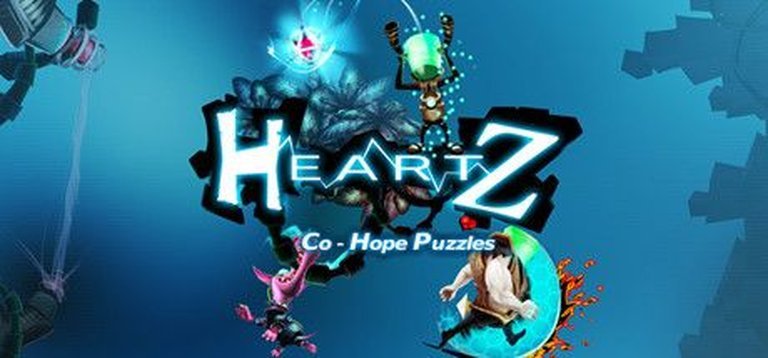
Description
HeartZ: Co-Hope Puzzles is a vibrant and challenging platform-puzzle game set in a sci-fi/futuristic world, where players must navigate through intricately designed levels filled with traps, enemies, and mysteries. The game supports solo play or local co-op for up to three players, with each level dynamically adjusting to the number of participants. Players can utilize a variety of quirky abilities—like kicking, teleporting, or even farting—to overcome obstacles and outsmart Dr. Nylus’ forces in a colorful yet unforgiving environment.
Gameplay Videos
Where to Buy HeartZ: Co-Hope Puzzles
PC
HeartZ: Co-Hope Puzzles Cracks & Fixes
HeartZ: Co-Hope Puzzles Guides & Walkthroughs
HeartZ: Co-Hope Puzzles Reviews & Reception
metacritic.com (80/100): The whole package is certainly worth the asking price, and certainly deserving of a place in any Indie game fans collection.
thexboxhub.com : HeartZ: Co-Hope Puzzles is a charming and quirky new indie title developed by Upper Byte and published by Neko Entertainment.
gamepressure.com (88/100): A 2D platform game by French studio Upper Byte, focusing on a co-op mode.
steambase.io (88/100): HeartZ: Co-Hope Puzzles has earned a Player Score of 88 / 100.
HeartZ: Co-Hope Puzzles: A Masterclass in Cooperative Puzzle-Platforming
Introduction: A Hidden Gem in the Puzzle-Platformer Pantheon
In the crowded landscape of indie puzzle-platformers, HeartZ: Co-Hope Puzzles (2016) stands as a testament to the power of clever design, cooperative gameplay, and unapologetic charm. Developed by French studio Upper Byte and published by Neko Entertainment, this game is a love letter to classic platformers like The Lost Vikings, reimagined for the modern era with a vibrant aesthetic and a focus on local multiplayer. While it may not have achieved the mainstream acclaim of titles like Portal 2 or Overcooked, HeartZ carves out its own niche with its unique blend of humor, challenge, and ingenious level design.
This review will dissect HeartZ in exhaustive detail, exploring its development history, narrative and thematic depth, gameplay mechanics, artistic and auditory design, critical reception, and lasting legacy. By the end, we’ll determine whether this underappreciated gem deserves a place alongside the greats of the genre—or if it remains a charming but flawed experiment.
Development History & Context: The Birth of a Cooperative Vision
The Studio Behind the Game: Upper Byte’s Journey
Upper Byte, the development team behind HeartZ, is a small French studio with a knack for innovative platformers. Their previous title, Wooden Sen’SeY (2014), was a critically acclaimed action-platformer that showcased their ability to blend tight mechanics with artistic flair. HeartZ represents a shift in focus—from solo action to cooperative puzzle-solving—a transition that reflects the studio’s ambition to explore new gameplay dynamics.
The game was developed using the Unity engine, a choice that allowed the team to iterate quickly and ensure cross-platform compatibility (Windows, macOS, Linux, and Xbox One). The collaboration with Neko Entertainment, a publisher known for supporting indie titles, provided the resources needed to refine HeartZ into a polished experience.
The Gaming Landscape in 2016: A Golden Age for Indies
HeartZ launched in June 2016, a year that saw the indie scene flourishing with titles like Inside, Firewatch, and Stardew Valley. The puzzle-platformer genre was particularly competitive, with games like The Witness and Stephen’s Sausage Roll pushing the boundaries of environmental storytelling and mechanical complexity. Against this backdrop, HeartZ distinguished itself by prioritizing local cooperative play—a design choice that harkened back to the couch multiplayer golden age of the ’90s while feeling fresh in an era dominated by online experiences.
Technological Constraints and Design Philosophy
Despite its modern visuals, HeartZ adheres to a 2D side-scrolling perspective, a deliberate nod to classic platformers. The game’s technical requirements are modest (a dual-core CPU and 2GB of RAM), ensuring accessibility for a wide audience. This simplicity allowed the developers to focus on mechanical depth rather than graphical fidelity, a philosophy that aligns with the game’s emphasis on cooperative problem-solving.
Narrative & Thematic Deep Dive: A Lighthearted Tale with Dark Undertones
Plot Overview: Dr. Nylus and the Test Subjects
HeartZ’s story is deliberately minimalist, serving as a framework for its gameplay rather than a deep narrative experience. The premise is straightforward: Dr. Nylus, a mad scientist with world-domination aspirations, has captured three test subjects—Spittle, Brainy, and Punch—and forces them to navigate a series of deadly traps. The trio must escape his laboratory, outsmarting his minions and dismantling his machinations along the way.
While the plot is thin, it’s delivered with a whimsical, cartoonish tone that contrasts with the game’s punishing difficulty. Cutscenes between acts provide just enough context to keep players engaged, but the real storytelling happens through environmental design and character abilities, which reveal the personalities of the three protagonists.
Character Analysis: The Triumvirate of Skills
Each character in HeartZ is defined by their unique abilities, which are essential for progressing through the game’s puzzles:
-
Spittle (The Dog)
- Abilities: Can squeeze through tight spaces, dash mid-air, and temporarily resist electricity.
- Personality: Agile and nimble, Spittle is the “scout” of the group, often used to reach areas the others can’t.
- Thematic Role: Represents adaptability and quick thinking.
-
Brainy (The Teleporter)
- Abilities: Can teleport short distances, bypassing obstacles and activating switches from afar.
- Personality: The strategist, Brainy’s teleportation is crucial for solving spatial puzzles.
- Thematic Role: Embodies intelligence and foresight.
-
Punch (The Brute)
- Abilities: Can break through walls, move heavy objects, and grant temporary heat resistance to nearby allies.
- Personality: The muscle of the group, Punch is all about raw power.
- Thematic Role: Symbolizes strength and perseverance.
The interplay between these characters is where HeartZ shines. The game’s puzzles are designed to force cooperation, requiring players to switch between characters (in single-player) or coordinate their actions (in multiplayer) to succeed.
Themes: Cooperation, Sacrifice, and the Absurdity of Science
Beneath its colorful exterior, HeartZ explores several themes:
- Cooperation vs. Individualism: The game’s core mechanic—requiring players to work together—mirrors its thematic focus on teamwork. Solo players must constantly switch perspectives, reinforcing the idea that no single approach is sufficient.
- The Ethics of Experimentation: Dr. Nylus’ laboratory is filled with traps that are as absurd as they are deadly, satirizing the trope of the “mad scientist” while also critiquing unethical research.
- Resilience in the Face of Failure: The game’s comically violent death animations (characters turning into hot dogs, chicken legs, or exploding) underscore a darkly humorous take on perseverance.
Gameplay Mechanics & Systems: A Puzzle-Platformer’s Dream
Core Gameplay Loop: Traps, Puzzles, and Precision Platforming
HeartZ is, at its heart, a puzzle-platformer with a heavy emphasis on cooperative mechanics. Each level is a self-contained gauntlet of traps, switches, and environmental hazards that must be navigated using the trio’s unique abilities. The game’s structure is divided into acts, each culminating in a boss fight against one of Dr. Nylus’ creations.
Key mechanics include:
– Character-Specific Obstacles: Certain areas are color-coded (pink for Spittle, green for Brainy, yellow for Punch), requiring the corresponding character to interact with them.
– Environmental Puzzles: Players must manipulate levers, move platforms, and avoid traps like crushing machines, lasers, and electrified floors.
– Dynamic Switching (Single-Player): In solo mode, players can instantly switch between characters, adding a layer of strategic depth.
– Local Co-Op Chaos: Multiplayer introduces chaotic fun, as players must communicate and coordinate to avoid disaster.
Combat and Enemy Design: Minimal but Effective
Combat in HeartZ is secondary to puzzle-solving but still plays a role. Enemies include:
– Dr. Nylus’ Minions: Basic foes that can be dispatched with well-timed jumps or attacks.
– Machines and Turrets: Require environmental manipulation (e.g., redirecting lasers) to disable.
– Boss Fights: Each act ends with a boss that tests the player’s mastery of the game’s mechanics.
The combat is simple but effective, serving as a palate cleanser between the game’s more cerebral puzzles.
Progression and Replayability
- Collectibles: Hidden throughout levels, these unlock cosmetic upgrades and achievements.
- Difficulty Curve: The game starts deceptively easy but ramps up quickly, introducing complex puzzles that require precise timing and coordination.
- Replay Value: While the campaign is relatively short (6-10 hours), the game’s co-op mode and speedrunning potential add longevity.
UI and Controls: A Mixed Bag
The game’s UI is clean and functional, with clear indicators for character abilities and puzzle elements. However, the control scheme has been a point of contention:
– Analog-Only Movement: The game lacks D-pad support, which may frustrate purists who prefer the precision of digital inputs.
– Hitbox Issues: Some players have reported oversensitive hit detection, leading to unfair deaths.
World-Building, Art & Sound: A Vibrant, Deadly Playground
Visual Design: A Cartoonish Nightmare
HeartZ’s art style is a colorful, hand-drawn aesthetic that belies the game’s brutal difficulty. The laboratory setting is filled with whimsical yet deadly contraptions, from giant hammers to electrified floors. The character designs are equally charming, with Spittle, Brainy, and Punch each having distinct silhouettes that make them instantly recognizable.
The game’s animations are fluid and expressive, particularly in the death sequences, which are both hilarious and grotesque (e.g., characters being squashed into pancakes or fried like bacon).
Sound Design and Music: A Playful Soundtrack
The audio design complements the visuals perfectly:
– Sound Effects: Crunchy, satisfying noises for jumps, teleports, and environmental interactions.
– Music: A lighthearted, upbeat score that contrasts with the game’s deadly traps, reinforcing its tongue-in-cheek tone.
Atmosphere: A Laboratory of Chaos
The game’s setting—a mad scientist’s lab—is brought to life through environmental storytelling. Each act introduces new themes (e.g., industrial zones, biological experiments) that keep the visuals fresh. The checkpoint system is generous, ensuring that frustration never overshadows the fun.
Reception & Legacy: A Cult Classic in the Making?
Critical Reception: Praise for Co-Op, Criticism for Controls
HeartZ received generally positive reviews, with critics praising its:
– Innovative co-op mechanics (TheXboxHub called it “a fun and friendly return to one of gaming’s greatest genres”).
– Charming art style and humor (Steam users highlighted the “mischievously designed levels”).
– Accessible yet challenging gameplay (Metacritic’s aggregated score reflects a solid but not groundbreaking reception).
However, criticisms included:
– Hitbox inconsistencies (some deaths feel unfair).
– Lack of online multiplayer (a missed opportunity in 2016).
– Short campaign length (though replayability mitigates this).
Commercial Performance and Community
The game’s commercial success was modest, but it developed a dedicated fanbase, particularly among:
– Speedrunners (the game’s precise mechanics lend themselves to optimization).
– Co-op enthusiasts (local multiplayer remains a selling point).
– Indie platformer fans (those who appreciate its Lost Vikings inspirations).
Influence and Legacy
While HeartZ didn’t spawn a franchise, its design philosophy—focusing on asymmetrical cooperative puzzles—has influenced later titles like Moving Out and Tools Up!. Its legacy lies in proving that local co-op still has a place in modern gaming.
Conclusion: A Flawed but Brilliant Co-Op Experience
HeartZ: Co-Hope Puzzles is a hidden gem that deserves more recognition. Its clever puzzle design, charming presentation, and emphasis on cooperation make it a standout in the puzzle-platformer genre. While it suffers from minor technical flaws and a short campaign, its strengths far outweigh its weaknesses.
Final Verdict: 8.5/10 – A Must-Play for Co-Op Enthusiasts
For fans of The Lost Vikings, Portal 2, or Overcooked, HeartZ is a delightful challenge that rewards teamwork and creativity. It may not have redefined the genre, but it perfected a specific, underappreciated niche—and that’s worth celebrating.
Where to Buy:
– Steam ($9.99)
– Xbox Store ($9.99)
Recommended For:
✅ Local co-op fans
✅ Puzzle-platformer enthusiasts
✅ Players who enjoy The Lost Vikings or Trine
Avoid If:
❌ You dislike precision platforming
❌ You prefer deep narrative experiences
❌ You lack friends for co-op (though solo is viable)
In the end, HeartZ is a testament to the power of cooperative play—a game that’s greater than the sum of its parts, much like the trio of heroes at its core. Don’t let this one slip under your radar.