
- Release Year: 2019
- Platforms: PlayStation 4, Windows, Xbox One
- Publisher: No Pest Production
- Developer: No Pest Production
- Genre: Action
- Perspective: Side view
- Game Mode: Single-player
- Gameplay: Platform
- Setting: Fantasy, Medieval
- Average Score: 79/100
Description
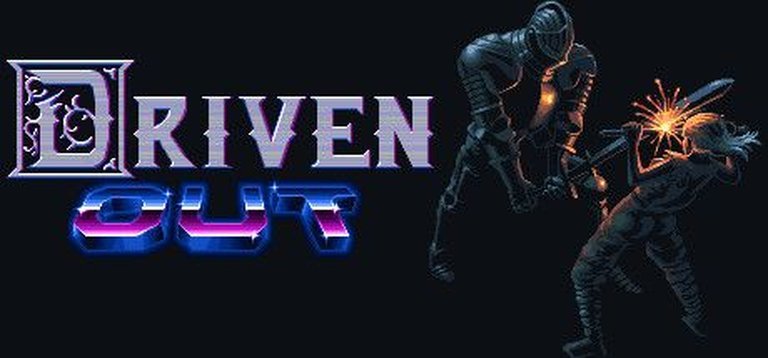
Driven Out is a 2D side-view hack-and-slash game set in a medieval fantasy world. The game follows an unnamed peasant woman whose life is upended when a mysterious artifact falls from the sky, drawing the attention of a hostile black knight. After seizing his sword, she embarks on a relentless journey, battling through waves of increasingly bizarre enemies—from armored knights to giant beetles, crow-like creatures, and even a fire-breathing dragon. With a focus on precise combat, parrying, and counterattacks, the game blends action-packed gameplay with a surreal, darkly whimsical tone.
Gameplay Videos
Where to Buy Driven Out
PC
Driven Out Cracks & Fixes
Driven Out Guides & Walkthroughs
Driven Out Reviews & Reception
metacritic.com (67/100): The core gameplay of Driven Out proves solid and satisfying, and is enhanced by some super nostalgic retro sensibilities.
store.steampowered.com (90/100): Driven Out will kick your ass, and you will love it.
saveorquit.com : The mechanics of the fights are fairly simple, but how we use them against each enemy can vary quite a lot.
culturedvultures.com (90/100): Driven Out will kick your ass, and you will love it.
Driven Out: A Brutal, Beautiful, and Brilliant Retro Revival
Introduction
In an era where games often prioritize accessibility, hand-holding, and loot-driven progression, Driven Out stands as a defiant throwback to the punishing, skill-based action games of yesteryear. Developed by the Swedish indie studio No Pest Productions and released in October 2019, this 2D side-scrolling hack-and-slash game is a love letter to the 16-bit era, wrapped in a brutal combat system that demands precision, patience, and perseverance. With its deliberate, parry-focused gameplay, stunning pixel art, and a rogue’s gallery of bizarre and deadly foes, Driven Out carves out a niche for itself in the modern indie landscape. But is its relentless difficulty a testament to old-school design, or does it risk alienating players in pursuit of purity? This review will dissect Driven Out from every angle—its development, narrative, mechanics, world-building, reception, and legacy—to determine its place in gaming history.
Development History & Context
The Studio and Vision
No Pest Productions, a small indie studio based in Sweden, is the brainchild of developer Jens Kolhammar, who served as both the publisher and lead designer for Driven Out. The studio’s ethos revolves around creating games that emphasize skill, challenge, and retro aesthetics, and Driven Out is a manifestation of that philosophy. Kolhammar’s vision was clear: craft a game that strips away modern conveniences like character progression, loot systems, and hand-holding tutorials, leaving only raw, unfiltered combat where player skill is the sole determinant of success.
The game was built using GameMaker, a popular engine for 2D indie games, which allowed the small team to focus on tight mechanics and polished visuals without the overhead of a more complex engine. This choice reflects the studio’s indie roots and its commitment to efficiency and creativity over technical extravagance.
Technological Constraints and Design Choices
Driven Out’s development was shaped by both creative ambition and practical limitations. The decision to embrace a 16-bit retro aesthetic was not merely stylistic but also a way to optimize performance and ensure fluid animations, which are critical for a game so reliant on precise timing. The 2D side-scrolling perspective, reminiscent of classics like Castlevania and Ninja Gaiden, was chosen to emphasize the game’s combat-focused design, where every pixel of enemy movement matters.
The game’s seamless world, devoid of loading screens, was a technical achievement for a small team. This design choice enhances immersion, allowing players to traverse diverse environments without interruption. However, it also presented challenges in managing memory and asset streaming, which the team overcame through careful optimization.
The Gaming Landscape in 2019
Driven Out arrived at a time when the indie scene was flourishing, with games like Hollow Knight, Dead Cells, and Blasphemous proving that 2D action games could still captivate audiences. The “Souls-like” genre had also permeated indie development, with titles like Salt and Sanctuary and The End is Nigh embracing punishing difficulty and methodical combat.
Yet, Driven Out distinguished itself by eschewing many modern indie tropes. While games like Dead Cells blended roguelike elements with progression systems, Driven Out offered no character upgrades, no loot, and no permanent progression. Your skill with the sword was the only currency that mattered. This purist approach was both a strength and a potential liability, as it alienated players accustomed to the dopamine hits of leveling up or unlocking new gear.
Narrative & Thematic Deep Dive
Plot: From Peasant to Warrior
Driven Out’s narrative is minimalist, almost to the point of being nonexistent, yet it effectively sets the stage for its brutal gameplay. The game opens with an unnamed peasant woman tending to her farm when a mysterious witchcraft contraption falls from the sky. Before she can investigate, a black knight arrives, intent on claiming the artifact. In a stroke of luck (or fate), the knight stumbles, dropping his sword, which the peasant picks up and uses to defend herself.
What follows is a surreal, almost dreamlike journey through a world in upheaval. The peasant, now armed with a sword and the magical device, is driven out of her home and thrust into a land teeming with fantastical and nightmarish creatures. The narrative unfolds not through dialogue or cutscenes but through environmental storytelling and the sheer absurdity of the enemies she faces.
Themes: Survival, Adaptation, and the Absurd
-
From Nobody to Nightmare: The protagonist’s transformation from a helpless farmer to a warrior capable of slaying werewolves, crow-men, and dragons is a classic underdog story. Her lack of combat experience is reflected in the game’s mechanics—she has only three hit points, and her attacks are slow and deliberate. Yet, through sheer determination, she overcomes increasingly absurd challenges.
-
The Absurdity of Conflict: Driven Out’s world is a surreal collage of medieval knights, werewolves, frog warriors, and even alien invaders. The game’s random events plot (as TV Tropes describes it) eschews traditional storytelling in favor of a series of escalating, bizarre encounters. This absurdity is intentional, reinforcing the idea that the protagonist’s journey is less about narrative coherence and more about the trial-by-fire experience of survival.
-
The Fragility of Progress: The witchcraft contraption, which allows players to place checkpoints, is both a blessing and a curse. It can be destroyed by enemies, forcing players to restart from the last boss. This mechanic underscores the game’s theme of impermanence—nothing is guaranteed, and every victory is precarious.
-
The Illusion of Choice: While the game offers branching paths and multiple areas to explore, the lack of a traditional narrative or character development means that these choices are purely mechanical. The protagonist remains a cipher, and the world’s lore is left ambiguous. This minimalism is a double-edged sword: it allows players to project their own interpretations onto the experience, but it also leaves the world feeling hollow for those seeking depth.
Characters and Enemies: A Rogue’s Gallery of the Bizarre
Driven Out’s cast of enemies is one of its most compelling features. The game’s best feature, as noted by GameCritics, is its varied and expansive rogue’s gallery, which includes:
- Black Knights: The initial foes, clad in armor that is ironically useless against the protagonist’s sword.
- Werewolves: Half-naked men who transform into beasts, embodying the game’s theme of hidden danger.
- Crow-Men: Bird-like humanoids wielding axes, adding a gothic horror element.
- Armored Bears and Fencing Frogs: Absurd yet deadly creatures that highlight the game’s surreal tone.
- Dragon Warriors and Alien Invaders: Late-game enemies that escalate the absurdity to cosmic levels.
Each enemy type has unique attack patterns, forcing players to adapt their strategies constantly. The game’s boss fights are particularly memorable, such as the giant werewolf that leaps over the player and the armored gorilla that relies on brute force.
Dialogue and World-Building: The Power of Silence
Driven Out features no dialogue, no text, and no exposition. The protagonist is unnamed, as are all the enemies and locations. This minimalist approach is a deliberate choice, reinforcing the game’s focus on gameplay over narrative. However, it also means that the world lacks the richness of games like Dark Souls, where environmental storytelling is layered with cryptic lore.
The absence of dialogue is compensated by the visual storytelling—the shift from a blue sky to a blood-red one after entering the church, the sudden appearance of werewolves, and the surreal transitions between areas all contribute to a sense of a world in chaos. Yet, without any context, these moments feel more like atmospheric set pieces than parts of a cohesive narrative.
Gameplay Mechanics & Systems
Core Gameplay Loop: Read, React, Repeat
Driven Out’s gameplay is built around a deliberate, parry-focused combat system that rewards precision and punishes hesitation. The core loop can be broken down as follows:
- Observe: Study the enemy’s attack animations and patterns.
- React: Block or parry in the correct direction (high, mid, or low).
- Counter: Strike during the enemy’s recovery frames.
This loop is repeated ad nauseam, with each enemy type introducing new variations and complexities. The game’s difficulty stems from its unforgiving timing—mistiming a block or parry can result in a swift death, as the protagonist has only three hit points.
Combat Mechanics: The Art of the Parry
The combat system is deceptively simple but deeply nuanced:
- Three Attack Directions: High, mid, and low strikes, each with distinct animations.
- Three Block Directions: Corresponding blocks that must be timed precisely.
- Parrying: A perfectly timed block stuns the enemy, allowing for a counterattack. Some enemies are immune to parries, adding layers of strategy.
- No Dodge or Roll: Unlike games like Dark Souls, there is no evasion mechanic. Players must rely solely on blocking and parrying.
This system is Nintendo Hard, as TV Tropes notes, requiring twitch reflexes and pattern recognition. The lack of a dodge mechanic forces players to engage with the combat system fully, making every encounter a test of skill.
Character Progression: The Illusion of Growth
Driven Out subverts modern RPG conventions by offering no character progression. There are:
- No level-ups
- No new weapons or armor
- No skill trees or upgrades
The only “progression” comes from the player’s increasing mastery of the combat system. This design choice is bold and divisive—it appeals to purists who crave skill-based challenges but may frustrate players accustomed to tangible rewards.
The Checkpoint System: A Double-Edged Sword
The witchcraft contraption is the game’s sole concession to modern design, allowing players to place checkpoints. However, it is fragile and limited:
- Two Charges: Players can place only two checkpoints between boss fights.
- Destructible: Enemies can attack and destroy the contraption, forcing a restart from the last boss.
- State Memory: Checkpoints remember enemy health states only after the player dies, adding a layer of strategy to their placement.
This system is brilliant in theory but fiddly in practice. As noted by Save or Quit, the checkpoint mechanics can feel annoying and counterintuitive, especially when backtracking through large areas. The need to strategically place checkpoints adds tension but can also lead to frustration when a poorly placed checkpoint results in repeated deaths.
Enemy AI and Behavior: Smart and Unforgiving
The enemies in Driven Out are not mindless foes—they exhibit behaviors that keep players on their toes:
- Attack Patterns: Each enemy type has unique, often randomized attack sequences.
- Tactical Awareness: Some enemies will target the checkpoint if left unprotected.
- Environmental Interaction: Enemies like the mage heron spawn minions, while others, like the necromancer, raise undead werewolves.
The game’s difficulty curve is steep, with later enemies introducing faster attacks, combo strings, and unblockable moves. The dragon warriors, for example, wield dual daggers with rapid, unpredictable strikes, while the alien invaders fire slow lasers that must be parried.
Boss Fights: Trials of Skill and Patience
The boss fights in Driven Out are the pinnacle of its combat design, each requiring a different approach:
- The Black Knight (First Boss): A straightforward duel that teaches players the basics of parrying.
- The Giant Werewolf: A fast, aggressive foe that leaps and swipes, demanding quick reflexes.
- The Armored Gorilla: A brute-force enemy that relies on overwhelming strength.
- The Mage Heron: A tennis boss that spawns minions, forcing players to parry projectiles back at it.
- The Necromancer: A fight that tests endurance, as the boss constantly summons undead werewolves.
Each boss fight is a test of mastery, with no shortcuts or cheeses. Defeating a boss is incredibly satisfying, but the journey to victory is often frustrating and grueling.
UI and Feedback: Minimalist and Effective
The UI in Driven Out is clean and unobtrusive, with only essential information displayed:
- Health Bar: Three hit points, represented by bubbles.
- Checkpoint Charge: A cyan bar indicating remaining charges.
- Enemy Health: Displayed above foes, with bosses having additional health bubbles.
The lack of clutter keeps the focus on the combat, but the absence of a pause menu or options (such as video/resolution settings) is a notable oversight, as criticized by Too Much Gaming.
World-Building, Art & Sound
Setting: A Surreal Medieval Nightmare
Driven Out’s world is a seamless, side-scrolling environment divided into distinct areas, each with its own theme and enemy types:
- The Farm and Village: The starting area, populated by knights and inquisitors.
- The Church: A gothic setting filled with werewolves and necromancers.
- The Forest: Home to crow-men, armored bears, and druids.
- The Monkey Caves: A surreal area with sword-wielding primates and a gorilla boss.
- The Alien Invasion: A late-game twist featuring robotic enemies and laser-wielding foes.
The world’s design is non-linear, allowing players to explore areas in different orders. However, the lack of a map or clear objectives means that progression can feel aimless at times.
Visual Direction: A Masterclass in Pixel Art
Driven Out’s 16-bit retro aesthetic is one of its strongest assets. The game’s visuals are a love letter to the SNES era, with:
- Fluid Animations: Enemy attacks are clearly telegraphed, with distinct wind-ups and recovery frames.
- Vibrant Environments: Each area has a unique color palette and architectural style, from the lush greens of the forest to the eerie reds of the church.
- Detailed Sprites: Enemies are meticulously designed, with exaggerated proportions that emphasize their threat.
The art style is both nostalgic and modern, avoiding the pitfalls of overly simplistic retro throwbacks. As Cultured Vultures notes, the background art and environments are delightful and distinctive, making each new area feel like a fresh challenge.
Sound Design: Atmospheric and Immersive
The sound design in Driven Out is understated but effective:
- Combat Sounds: The clang of metal, the thud of impacts, and the whoosh of parries are all satisfying and clear.
- Ambient Music: The soundtrack is moody and atmospheric, with tracks that shift dynamically during boss fights.
- Enemy Cues: Some enemies have audio tells, such as the hiss of a fireball or the flutter of wings, aiding in reaction timing.
The music, while not as memorable as the visuals, complements the gameplay without overpowering it. The druid fight music and forest of frogs track are standout pieces, as noted by Save or Quit.
Reception & Legacy
Critical Reception: A Divisive Masterpiece
Driven Out received a mixed but generally positive reception, with critics praising its tight combat, beautiful visuals, and challenging gameplay while criticizing its steep difficulty curve and lack of narrative depth.
- Cultured Vultures (9/10): “Driven Out will kick your ass, and you will love it.” The review highlights the game’s addictive combat and retro charm.
- Northern-Gamer (5/5): Praises the 16-bit graphics and rewarding mechanics, despite the frustration.
- GameCritics (8.5/10): Commends the varied enemy designs and skill-based combat.
- Xbox Tavern (53/100): Criticizes the lack of story and repetitive gameplay, noting that the challenge can grow old quickly.
On Metacritic, the game holds a metascore of “tbd” due to limited reviews, but user scores are generally positive, with many players appreciating its old-school difficulty.
Commercial Performance: A Niche Success
Driven Out was not a commercial blockbuster, but it found a dedicated audience among fans of hardcore action games. Its Steam reception is Very Positive (83%), with over 200 user reviews praising its challenge and aesthetics.
The game’s price point ($14.99) and demo availability helped it gain traction, and its inclusion in bundles (such as A Virtue Driven Bastard’s Collection) expanded its reach.
Influence and Legacy: A Cult Classic in the Making
While Driven Out did not spawn a franchise or revolutionize the genre, it has influenced the indie scene in subtle ways:
- Proving the Viability of Pure Skill-Based Games: In an era of progression systems and loot, Driven Out demonstrated that a game could succeed on mechanics alone.
- Inspiring Minimalist Narratives: Its lack of dialogue and story showed that environmental and gameplay-driven storytelling could be effective, even if divisive.
- Reviving Interest in Parry-Focused Combat: Games like Sifu and Wo Long: Fallen Dynasty have since embraced parry-heavy combat, and Driven Out’s design may have contributed to this trend.
Driven Out is unlikely to be remembered as a landmark title, but it has earned its place as a cult classic—a game that demands respect for its uncompromising vision.
Conclusion: A Flawed but Brilliant Gem
Driven Out is a game of contradictions. It is brutally difficult yet fair, minimalist yet rich in detail, frustrating yet rewarding. Its lack of narrative and progression will alienate some, but its tight combat, stunning visuals, and varied enemies will captivate those who crave a pure test of skill.
The Verdict
8.5/10 – A Masterclass in Retro Challenge
Driven Out is not for everyone. It is a niche game that demands patience, precision, and perseverance. But for those willing to embrace its punishing design, it offers one of the most satisfying combat experiences in modern indie gaming. Its legacy will be as a cult classic—a game that dares to be difficult in an era of accessibility, and succeeds because of it.
Final Recommendation:
– Play It If: You love Souls-like difficulty, parry-focused combat, and retro aesthetics.
– Avoid It If: You prefer narrative depth, character progression, or forgiving gameplay.
Driven Out is a testament to the power of pure gameplay, and for that, it deserves to be remembered and respected.
Additional Resources
- Steam Page: Driven Out on Steam
- Official Website: No Pest Productions
- TV Tropes Entry: Driven Out (Video Game)
- Metacritic Reviews: Driven Out Reviews
Driven Out is a game that punishes, but also rewards. It is not for the faint of heart, but for those who rise to its challenge, it is an unforgettable experience.