
- Release Year: 2003
- Platforms: Windows
- Publisher: Cenega Poland Sp. z o.o.
- Genre: Special edition
- Game Mode: Single-player
- Average Score: 75/100
Description
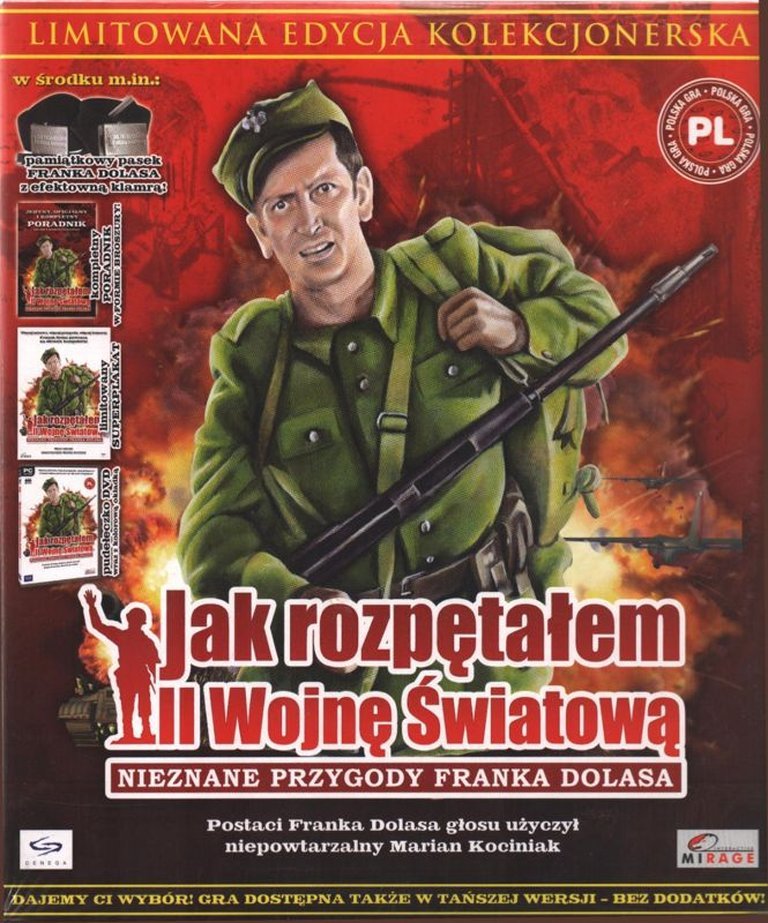
Jak rozpętałem II Wojnę Światową: Nieznane przygody Franka Dolasa is a comedic adventure game based on the Polish film and novel, following the misadventures of Franciszek Dolas, a Polish soldier who accidentally believes he caused World War II. The game blends humor and wartime chaos as Dolas navigates various fronts—from German POW camps to the Mediterranean—while trying to redeem himself. The special edition includes physical extras like a belt, poster, and guide.
Jak rozpętałem II Wojnę Światową: Nieznane przygody Franka Dolasa Guides & Walkthroughs
Jak rozpętałem II Wojnę Światową: Nieznane przygody Franka Dolasa Reviews & Reception
gry-online.pl (60/100): Jak rozpętałem II wojnę światową: Nieznane przygody Franka Dolasa (lub też World Wide War 43) to gra z gatunku cRPG, przygotowana przez studio Alien Artefact, znane nam do tej pory ze znakomitej Another War.
komputerswiat.pl : Duża dawka dobrego humoru towarzyszy nam wraz z pokonywaniem kolejnych przeszkód i jest chyba najmocniejszą stroną gry.
myabandonware.com (90/100): In 2003, Techland Sp. z o.o., Kalypso Media GmbH, Cenega Poland Sp. z o.o. publishes Jak rozpętałem II Wojnę Światową: Nieznane przygody Franka Dolasa on Windows. This role-playing (rpg) game is now abandonware and is set in a licensed title, world war ii, comedy, war and movies themes.
codziennyekspert.pl : Frank Dolas to postać, która zyskała uznanie czytelników na całym świecie. Jego niezwykłe przygody stały się inspiracją dla wielu osób, wprowadzając elementy edukacyjne i rozwijając zainteresowanie historią, geografią oraz kulturą świata.
Jak rozpętałem II Wojnę Światową: Nieznane przygody Franka Dolasa – Review
Introduction
In the annals of Polish gaming history, few titles are as uniquely positioned as Jak rozpętałem II Wojnę Światową: Nieznane przygody Franka Dolasa. Released in 2003 by Mirage Interactive and published by Cenega Poland, this game is a curious blend of comedy, wartime adventure, and role-playing mechanics. It draws inspiration from the iconic 1969 Polish film Jak rozpętałem drugą wojnę światową, a comedic take on the misadventures of Franek Dolas, a Polish soldier who inadvertently finds himself at the center of World War II. The game, however, carves its own path, offering a satirical, often absurd journey through the war’s lesser-known theaters.
This review aims to dissect the game’s development, narrative, gameplay, and legacy, providing a comprehensive analysis of its place in gaming history. While the game may not have achieved widespread international acclaim, its cultural significance and unique approach to storytelling make it a fascinating subject for exploration.
Development History & Context
The Studio and Vision
Jak rozpętałem II Wojnę Światową: Nieznane przygody Franka Dolasa was developed by Mirage Interactive, a Polish studio known for its work on titles like Another War and Mortyr. The game was part of a broader trend in the early 2000s where Polish developers sought to create games that resonated with local audiences while also appealing to international markets. The choice of Franek Dolas as the protagonist was a deliberate nod to Polish pop culture, leveraging the enduring popularity of the 1969 film.
The game’s development was influenced by the technological constraints of the era. Running on a modified version of the engine used in Another War, it featured isometric graphics and a turn-based combat system, which were common in RPGs of the time. The studio’s vision was to create a game that balanced humor, adventure, and strategy, offering players a fresh take on the wartime genre.
The Gaming Landscape of 2003
The early 2000s were a transitional period for the gaming industry. While 3D graphics were becoming the norm, many developers still relied on 2D and isometric perspectives for RPGs and strategy games. Titles like Baldur’s Gate II and Fallout 2 had set high standards for narrative depth and player agency, and Jak rozpętałem II Wojnę Światową aimed to carve out its own niche within this landscape.
In Poland, the gaming scene was burgeoning, with studios like CD Projekt (later CD Projekt Red) and Techland beginning to make their mark. Jak rozpętałem II Wojnę Światową was part of this wave, offering a distinctly Polish flavor that resonated with local players. Its release in August 2003 was met with moderate commercial success, though it struggled to gain traction outside of Poland due to its niche appeal and language barriers.
Narrative & Thematic Deep Dive
Plot Overview
The game follows Franek Dolas, a hapless Polish soldier who, through a series of comedic misadventures, finds himself embroiled in the chaos of World War II. Unlike the film, which is a straightforward comedic narrative, the game takes a more absurdist approach. Franek’s journey begins when he is shipwrecked on an ice floe in the Arctic, only to be rescued by a German U-boat. From there, his adventures take him across North Africa, the Middle East, and Europe, as he navigates the complexities of wartime alliances and betrayals.
The game’s plot is divided into three acts, each set in a different theater of the war. Franek’s primary goal is to survive and, ideally, redeem himself for the chaos he inadvertently causes. Along the way, he encounters a cast of eccentric characters, from a camel named Leon to a mysterious Arab chieftain who may or may not be Osama bin Laden’s father. The narrative is filled with satirical jabs at wartime propaganda, political alliances, and the absurdity of war itself.
Characters and Dialogue
Franek Dolas is the game’s beating heart, a lovable everyman whose misfortunes are both tragic and comedic. His character is defined by his resilience and unwavering optimism, even in the face of overwhelming odds. The supporting cast is equally memorable, with each character bringing a unique flavor to the story. For example:
- Leon the Camel: Franek’s loyal companion, who serves as both a mode of transport and a source of comic relief.
- Osama’s Father: A mysterious figure who appears briefly but leaves a lasting impression, hinting at the game’s satirical edge.
- German Officers: Often portrayed as bumbling and incompetent, reinforcing the game’s comedic tone.
The dialogue is sharp and witty, filled with references to Polish culture and history. However, the humor can be hit-or-miss, particularly for non-Polish players who may not grasp the nuances of the jokes. The game’s reliance on cultural references is both a strength and a weakness, as it limits its appeal to a broader audience.
Themes
At its core, Jak rozpętałem II Wojnę Światową is a satire of war and the absurdity of human conflict. The game pokes fun at the grand narratives of heroism and sacrifice, instead focusing on the chaotic, often ridiculous experiences of an ordinary soldier. Franek’s journey is a commentary on the futility of war, where alliances shift, loyalties are tested, and survival often depends on sheer luck.
The game also explores themes of identity and belonging. Franek is constantly caught between different factions, never fully aligning with any side. His struggle to find his place in the war mirrors the broader existential questions faced by soldiers in real conflicts. The game’s humor serves as a coping mechanism, allowing players to engage with these heavy themes in a lighter, more accessible way.
Gameplay Mechanics & Systems
Core Gameplay Loop
Jak rozpętałem II Wojnę Światową is a hybrid of RPG and adventure game mechanics. Players control Franek as he navigates through various environments, completing quests, solving puzzles, and engaging in combat. The game features a turn-based combat system, where players must strategically position their characters and use a variety of weapons and abilities to overcome enemies.
The gameplay is divided into several key components:
- Exploration: Franek travels across 150 different locations, from Arctic wastelands to North African deserts. Each location is richly detailed, with hidden secrets and interactive elements.
- Questing: The game features a mix of main story quests and side missions, many of which are optional but offer valuable rewards.
- Combat: Turn-based battles require players to manage Franek’s health, ammunition, and special abilities. The combat system is reminiscent of classic RPGs like Fallout, with a focus on tactical positioning.
- Character Progression: Franek can develop his skills and abilities as he gains experience. The game offers three main character classes (e.g., Soldier, Scout, Engineer) and seven subclasses, each with unique strengths and weaknesses.
Combat and Character Progression
The combat system is one of the game’s standout features. Players can choose from over 50 different weapons, ranging from pistols and rifles to flamethrowers and anti-tank guns. Each weapon has distinct properties, and players must consider factors like accuracy, range, and ammunition availability when engaging in battle.
Franek’s progression is tied to a skill tree that allows players to customize his abilities. For example, players can invest in skills like “Sneaking,” “First Aid,” or “Demolitions,” each of which unlocks new tactical options. The game also features a morale system, where Franek’s mental state affects his performance in combat. Low morale can lead to decreased accuracy and slower reaction times, adding an extra layer of strategy to the gameplay.
UI and Innovations
The game’s UI is functional but somewhat dated by modern standards. The isometric perspective can make navigation tricky, particularly in densely populated areas. However, the game includes a useful “active pause” feature, allowing players to freeze the action and issue commands to their party members.
One of the game’s most innovative features is its humor-driven mechanics. For example, Franek can use absurd abilities like “Telling a Joke” to distract enemies or “Stinky Socks” to repel foes. These mechanics reinforce the game’s comedic tone and provide players with creative ways to overcome challenges.
World-Building, Art & Sound
Setting and Atmosphere
The game’s world is a sprawling, often surreal representation of World War II. Franek’s journey takes him through a variety of environments, each with its own distinct atmosphere. The Arctic levels are cold and desolate, while the North African deserts are vast and unforgiving. The game’s art style is a mix of realistic and cartoonish, with exaggerated character designs that emphasize the comedic tone.
The game’s setting is one of its strongest assets. The developers took liberties with historical accuracy, blending real-world locations with fictional elements. For example, Franek’s encounter with Osama’s father is a clear anachronism, but it serves the game’s satirical purposes. The world feels alive and dynamic, with NPCs who react to Franek’s actions and a day-night cycle that affects gameplay.
Visual Direction
The visuals in Jak rozpętałem II Wojnę Światową are a product of their time. The isometric perspective and 2D sprites give the game a retro feel, but the attention to detail is impressive. Each location is meticulously designed, with environmental storytelling that enhances the narrative. For example, the German U-boat levels are claustrophobic and tense, while the desert levels are open and expansive.
The character designs are exaggerated and expressive, fitting the game’s comedic tone. Franek’s animations are particularly well-done, conveying his emotions and reactions with humor and charm. The game’s color palette is muted, reflecting the wartime setting, but it uses bright accents to highlight important objects and characters.
Sound Design
The sound design is functional but unremarkable. The game features a mix of ambient noise, voice acting, and a forgettable soundtrack. The voice acting is particularly weak, with stiff delivery and limited emotional range. However, the game’s sound effects are well-implemented, with realistic gunfire, explosions, and environmental sounds that immerse players in the action.
One notable aspect of the sound design is the use of humor. For example, Franek’s “Stinky Socks” ability is accompanied by a comical sound effect that underscores the absurdity of the mechanic. These touches add to the game’s charm and reinforce its comedic tone.
Reception & Legacy
Critical and Commercial Reception
Jak rozpętałem II Wojnę Światową received mixed reviews upon release. Critics praised its humor, unique setting, and innovative mechanics, but criticized its clunky UI, weak voice acting, and repetitive gameplay. The game’s reception was particularly polarized in Poland, where its cultural references resonated strongly with local audiences but left others cold.
Commercially, the game performed modestly. It found a niche audience among Polish gamers and RPG enthusiasts, but its limited international appeal prevented it from becoming a breakout hit. The game’s lack of an English localization further hindered its global reach, though fan translations have since emerged.
Evolution of Reputation
Over time, Jak rozpętałem II Wojnę Światową has gained a cult following, particularly among fans of Polish gaming and wartime comedies. Its unique blend of humor and strategy has earned it a place in the pantheon of underrated RPGs. The game is often cited as an example of Poland’s growing influence in the gaming industry during the early 2000s.
The game’s legacy is also tied to its cultural significance. It remains one of the few Polish games to tackle the subject of World War II with humor and satire, offering a fresh perspective on a well-worn genre. Its influence can be seen in later Polish RPGs, such as The Witcher series, which also blend deep storytelling with a distinctively Polish sensibility.
Conclusion
Jak rozpętałem II Wojnę Światową: Nieznane przygody Franka Dolasa is a game that defies easy categorization. It is at once a comedic adventure, a tactical RPG, and a satirical commentary on war. Its strengths lie in its unique setting, innovative mechanics, and sharp humor, while its weaknesses are rooted in its dated UI, weak voice acting, and niche appeal.
For Polish gamers and fans of wartime comedies, the game is a hidden gem, offering a fresh and often hilarious take on a familiar subject. For others, its cultural references and absurdist humor may prove challenging. Regardless, the game’s place in Polish gaming history is secure, and its legacy continues to inspire new generations of developers.
Final Verdict: A cult classic that blends humor, strategy, and satire in a uniquely Polish package. While not without its flaws, Jak rozpętałem II Wojnę Światową is a game that deserves recognition for its bold creativity and enduring charm. 7.5/10