
- Release Year: 2010
- Platforms: Windows
- Publisher: Big Fish Games, Inc
- Developer: Blue Tea Games
- Genre: Adventure
- Perspective: 1st-person
- Game Mode: Single-player
- Gameplay: Hidden object, Puzzle elements
- Setting: Fantasy, Scottish
- Average Score: 81/100
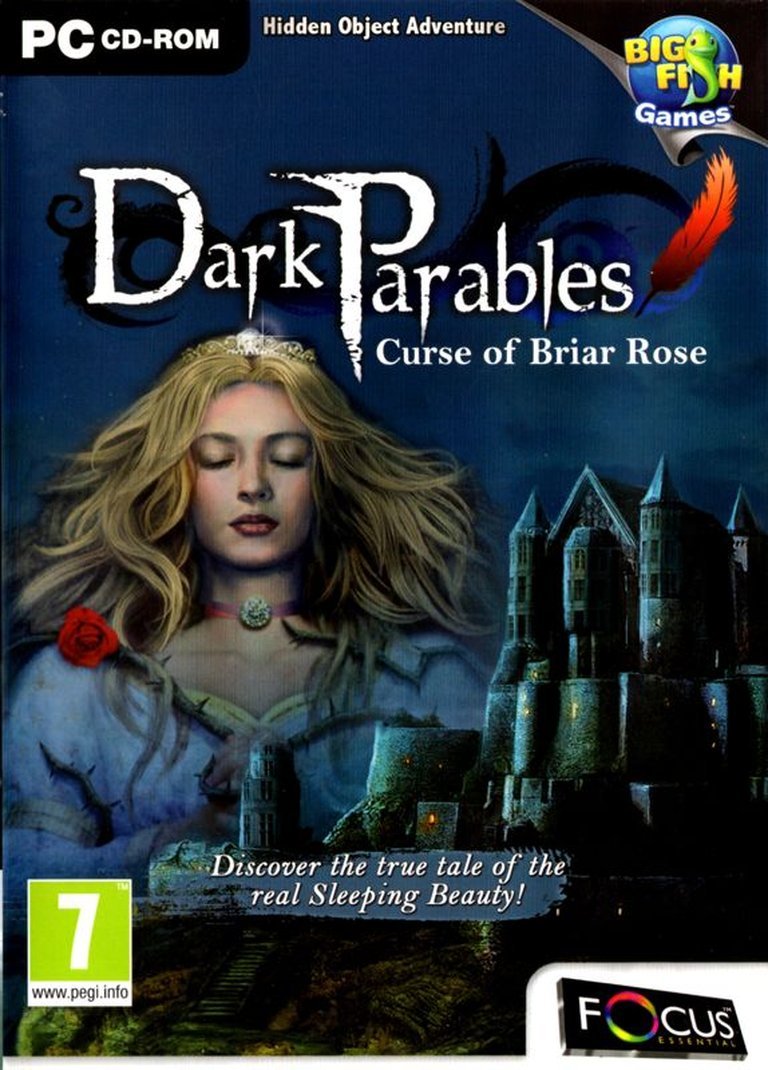
Description
Dark Parables: Curse of Briar Rose is a hidden object and adventure game set in a reimagined version of the Sleeping Beauty fairy tale. Players take on the role of a private investigator tasked with uncovering the source of a mysterious vine infestation surrounding a castle in Scotland. The game blends exploration, puzzle-solving, and hidden object scenes as the player navigates the castle grounds, reassembles tools, and unravels the secrets behind Briar Rose’s eternal slumber. With a mix of point-and-click mechanics and self-contained puzzles, the game offers a fantasy adventure with a dark twist on a classic tale.
Gameplay Videos
Where to Buy Dark Parables: Curse of Briar Rose
PC
Dark Parables: Curse of Briar Rose Free Download
Dark Parables: Curse of Briar Rose Guides & Walkthroughs
Dark Parables: Curse of Briar Rose Reviews & Reception
metacritic.com (78/100): A great & Atmospheric Point & Click / HO Game that I can recommend to anybody that loves a good story or those Kind of Games.
store.steampowered.com (82/100): Very Positive (82% of 94 user reviews for this game are positive).
mobygames.com (83/100): A hidden object and adventure game with simple puzzles, taking place in an alternate version of the Sleeping Beauty fairy tale.
thebookandbeautyblog.com : This is an older game and by far the clunkiest of the series, but still very enjoyable to play.
gamezebo.com : Dark Parables: Curse of Briar Rose is a hidden object game that follows the same general pattern throughout your journey.
Dark Parables: Curse of Briar Rose: A Masterful Reimagining of Sleeping Beauty
Introduction
Dark Parables: Curse of Briar Rose (2010) is not just a hidden object adventure game—it is a hauntingly beautiful reimagining of the Sleeping Beauty fairy tale, woven into a dark, atmospheric mystery. Developed by Blue Tea Games and published by Big Fish Games, this title stands as the inaugural entry in the Dark Parables series, a franchise that would later become synonymous with gothic storytelling, intricate puzzles, and immersive world-building. At its core, Curse of Briar Rose challenges the player to unravel the truth behind a cursed princess who remains asleep despite the prince’s kiss, while a sinister vine infestation threatens to consume an entire city. With its blend of point-and-click adventure mechanics, hidden object scenes, and a narrative steeped in folklore, the game carves out a niche that appeals to both casual gamers and enthusiasts of darker, more mature fairy tale retellings.
This review will dissect Dark Parables: Curse of Briar Rose in exhaustive detail, exploring its development history, narrative depth, gameplay mechanics, artistic direction, and lasting legacy. By the end, we will determine whether this game is a mere footnote in the hidden object genre or a landmark title that redefined storytelling in casual gaming.
Development History & Context
The Studio and Creative Vision
Blue Tea Games, the studio behind Dark Parables: Curse of Briar Rose, was a relatively small but ambitious developer specializing in hidden object and adventure games. Founded in 2008, the studio quickly gained a reputation for crafting visually rich, narrative-driven experiences that stood out in the crowded casual gaming market. The Dark Parables series was conceived as a way to explore classic fairy tales through a darker, more mature lens, blending elements of mystery, horror, and fantasy. Steven Zhao, the game’s designer and writer, sought to create a universe where fairy tales were not just bedtime stories but living, breathing histories with real consequences.
The decision to begin the series with Sleeping Beauty was strategic. The tale of Briar Rose is one of the most recognizable fairy tales in Western culture, making it an ideal starting point for a series that would later incorporate other classic stories. However, Zhao and his team were not content with a simple retelling. Instead, they sought to subvert expectations by presenting a world where the prince’s kiss failed to break the curse entirely, leaving the princess in a perpetual slumber and the kingdom in a state of decay. This twist allowed the game to explore themes of unfinished business, the weight of legacy, and the consequences of incomplete resolutions.
Technological Constraints and Design Choices
Released in 2010, Curse of Briar Rose was developed during a transitional period in the casual gaming industry. The rise of digital distribution platforms like Big Fish Games and the increasing popularity of hidden object games (HOGs) created both opportunities and challenges. The game was built using Clickteam’s The Games Factory 2, a tool that allowed for rapid development but also imposed certain limitations on graphical fidelity and gameplay complexity.
Despite these constraints, Blue Tea Games managed to create a visually stunning experience. The game’s art style is a blend of hand-drawn illustrations and digital painting, resulting in a gothic, storybook aesthetic that feels both timeless and eerie. The environments are richly detailed, with each location in the castle and its surroundings meticulously designed to evoke a sense of decay and mystery. The use of muted colors—deep blues, greens, and grays—reinforces the game’s melancholic tone, while occasional splashes of red and gold highlight key objects and clues.
The soundtrack, composed by SomaTone Interactive Audio, plays a crucial role in establishing the game’s atmosphere. The music is a mix of orchestral and ambient tracks, with haunting melodies that underscore the game’s darker themes. The sound design is equally impressive, with subtle environmental noises—creaking doors, distant whispers, and the rustling of leaves—adding to the immersion.
The Gaming Landscape in 2010
At the time of its release, Curse of Briar Rose entered a market dominated by hidden object games that often prioritized quantity over quality. Many titles in the genre were criticized for their repetitive gameplay, lack of narrative depth, and over-reliance on formulaic puzzles. Blue Tea Games sought to differentiate Dark Parables by emphasizing storytelling and world-building, elements that were often secondary in other HOGs.
The game’s success can be attributed to its ability to appeal to a broader audience. While it retained the core mechanics of the genre—hidden object scenes, inventory-based puzzles, and point-and-click navigation—it elevated these elements by embedding them within a compelling narrative. This approach resonated with players who were looking for more than just a mindless click-fest; they wanted a game that challenged them intellectually and emotionally.
Narrative & Thematic Deep Dive
Plot Summary and Structure
Dark Parables: Curse of Briar Rose begins with a premise that immediately subverts the traditional Sleeping Beauty narrative. A thousand years ago, a prince kissed the cursed princess Briar Rose, lifting the curse from the kingdom and causing the rampant briars to recede. However, the princess herself remained asleep, trapped in an eternal slumber. Now, in the present day, the briars have returned, threatening to engulf the city of Edinburgh. The player assumes the role of a detective tasked with uncovering the source of the vine infestation and, ultimately, awakening Briar Rose.
The game’s narrative unfolds through a series of interconnected puzzles and hidden object scenes, with the player gradually piecing together the truth behind the curse. The story is divided into chapters, each of which introduces new locations, characters, and challenges. The pacing is deliberate, with the game taking its time to build tension and mystery. Key plot points are revealed through environmental storytelling, dialogue, and the occasional cutscene, all of which contribute to a sense of discovery.
Characters and Dialogue
The cast of Curse of Briar Rose is relatively small but memorable. The player’s character, the detective, is a silent protagonist, allowing the player to project themselves into the role. Briar Rose, the cursed princess, is a tragic figure whose fate drives the narrative forward. The game also introduces a roster of supporting characters, including the Wicked Fairy Godmother, the Frog Prince, and the mysterious Ivy Green, each of whom plays a role in the unfolding mystery.
The dialogue in Curse of Briar Rose is sparse but effective. The game relies more on visual storytelling than exposition, with much of the narrative conveyed through environmental details and the player’s interactions with objects. When dialogue does appear, it is often cryptic, adding to the game’s air of mystery. The voice acting, while not always polished, is serviceable and helps to bring the characters to life.
Themes and Symbolism
At its core, Dark Parables: Curse of Briar Rose is a story about the consequences of incomplete resolutions and the power of forgotten histories. The game explores several key themes:
-
The Weight of Legacy: The curse of Briar Rose is not just a personal tragedy but a burden that has been passed down through generations. The player’s journey is not just about awakening the princess but about confronting the legacy of the past and the mistakes that have been made.
-
The Power of Memory: The game’s narrative is deeply concerned with the idea of memory and forgetting. The briars that threaten to consume the city are a physical manifestation of the past’s refusal to stay buried. The player’s role as a detective is, in many ways, that of an archaeologist, uncovering the truth beneath layers of time and obfuscation.
-
The Subversion of Fairy Tales: Curse of Briar Rose challenges the traditional fairy tale narrative by presenting a world where happy endings are not guaranteed. The prince’s kiss, which should have been the culmination of the story, is revealed to be a failure, setting the stage for a darker, more complex tale.
-
The Duality of Nature: The game’s setting—a castle overrun by thorny vines—serves as a powerful symbol of the duality of nature. The briars are both beautiful and deadly, a reminder of the delicate balance between life and decay.
These themes are reinforced through the game’s visual and auditory design. The gothic architecture of the castle, the eerie soundtrack, and the haunting sound effects all contribute to a sense of unease and mystery, inviting the player to delve deeper into the story.
Gameplay Mechanics & Systems
Core Gameplay Loop
Dark Parables: Curse of Briar Rose is, at its heart, a point-and-click adventure game with hidden object and puzzle elements. The core gameplay loop revolves around exploring the castle and its surroundings, solving puzzles, and collecting items to progress the story. The game is divided into chapters, each of which introduces new locations and challenges.
The player navigates the environment by clicking on exit hotspots, which are typically located at the edges of the screen or on obvious features like doors and staircases. Objects collected during the game are stored in an inventory at the bottom of the screen, from which they can be dragged and dropped onto the environment to solve puzzles or unlock new areas.
Hidden Object Scenes
Hidden object scenes are a central mechanic in Curse of Briar Rose. These scenes are triggered when the player clicks on a sparkling area, indicating that there are items to be found. Unlike traditional hidden object games, where the goal is to find a list of unrelated items, Curse of Briar Rose tasks the player with reassembling fragmented objects. For example, the player might need to find the pieces of a broken key or a shattered statue, which are then combined into a usable item.
This approach to hidden object scenes is both innovative and challenging. It requires the player to think critically about the items they are collecting, as each piece must be logically placed to form the final object. The hint system, which highlights the location of one piece at a time, is a helpful tool for players who get stuck, though it does take time to recharge after each use.
Puzzles and Inventory Management
In addition to hidden object scenes, Curse of Briar Rose features a variety of self-contained puzzles that block progress until they are solved. These puzzles range from simple sliding tile games to more complex logic challenges, such as the marble puzzles that require the player to maneuver balls into their corresponding slots.
Inventory management is another key aspect of the gameplay. The player must collect and combine items to solve puzzles and unlock new areas. For example, a hammer might be used to break a glass jar, while a key might open a locked door. The game does an excellent job of ensuring that items are used in logical ways, though some puzzles can be frustratingly obscure.
The Inspect System and Cursed Morphing Objects
One of the most innovative features of Curse of Briar Rose is the Inspect system, which allows the player to view a list of active objectives and locations. This system is particularly useful for players who get stuck, as it provides hints about where to go next and what items are needed. However, using the Inspect system disables the hint function for a short period, adding a layer of strategy to the gameplay.
The game also introduces a unique collectible system in the form of Cursed Morphing Objects. These are items scattered throughout the environment that change form when clicked. For example, a cup might transform into a bottle, or a sign might alter its text. Collecting these objects does not affect the main story but does recharge the player’s hint meter, providing an incentive for exploration.
Difficulty and Replayability
Curse of Briar Rose is designed to be accessible to players of all skill levels. The game features a hint system that can be used to bypass particularly challenging puzzles, though this comes at the cost of temporarily disabling the hint function. The game also includes a Hard Mode, which removes the hint and skip functions entirely, providing a greater challenge for experienced players.
Replayability is enhanced by the inclusion of the Collector’s Edition, which features additional puzzles, concept art, and a bonus chapter. The game’s narrative is also rich enough to warrant multiple playthroughs, as players may discover new details and connections upon revisiting the story.
World-Building, Art & Sound
Setting and Atmosphere
The world of Dark Parables: Curse of Briar Rose is a masterclass in gothic atmosphere. The game is set in and around a decaying castle in Scotland, a location that is both beautiful and foreboding. The castle’s architecture is a mix of medieval and Victorian styles, with towering spires, crumbling stone walls, and ornate stained glass windows. The surrounding environment is equally detailed, with overgrown gardens, misty graveyards, and eerie forests adding to the sense of isolation and mystery.
The game’s art direction is one of its strongest assets. The environments are rendered in a style that blends hand-drawn illustrations with digital painting, resulting in a look that is both timeless and modern. The use of color is particularly effective, with muted blues, greens, and grays creating a melancholic tone, while occasional splashes of red and gold draw the player’s attention to key objects and clues.
Visual Design and Animation
The visual design of Curse of Briar Rose is characterized by its attention to detail. Each location in the game is meticulously crafted, with environmental storytelling playing a key role in the narrative. For example, the overgrown vines that cover the castle are not just a visual motif but a symbol of the curse’s lingering power. Similarly, the stained glass windows in the chapel depict scenes from the Sleeping Beauty story, providing subtle hints about the game’s plot.
The game’s animations are simple but effective. Characters move fluidly, and environmental effects—such as rustling leaves and flickering torches—add to the immersion. The game’s use of light and shadow is particularly noteworthy, with dynamic lighting creating a sense of depth and atmosphere.
Sound Design and Music
The soundtrack of Curse of Briar Rose, composed by SomaTone Interactive Audio, is a standout feature of the game. The music is a mix of orchestral and ambient tracks, with haunting melodies that underscore the game’s darker themes. The main theme, “Curse of Briar Rose,” is a particularly memorable piece, evoking a sense of mystery and melancholy.
The sound design is equally impressive, with subtle environmental noises—creaking doors, distant whispers, and the rustling of leaves—adding to the immersion. The game’s voice acting, while not always polished, is serviceable and helps to bring the characters to life. The use of sound effects is particularly effective in the game’s puzzle sequences, where the clinking of marbles or the turning of gears provides auditory feedback that enhances the gameplay experience.
Reception & Legacy
Critical and Commercial Reception
Upon its release in 2010, Dark Parables: Curse of Briar Rose was met with generally positive reviews from critics. The game’s atmospheric storytelling, innovative gameplay mechanics, and stunning visual design were widely praised. Critics particularly appreciated the game’s subversion of the traditional Sleeping Beauty narrative, as well as its emphasis on exploration and discovery.
The game holds an average critic score of 83% on MobyGames, based on three reviews. Adventurespiele awarded the game a 90%, praising its graphics, varied gameplay, and atmospheric soundtrack. JayIsGames also gave the game a 90%, highlighting its moody atmosphere, challenging puzzles, and engaging narrative. GadgetSpeak was slightly less enthusiastic, awarding the game a 70% and noting its heavy emphasis on hidden object gameplay.
Commercially, Curse of Briar Rose was a success, helping to establish the Dark Parables series as a major player in the hidden object genre. The game’s popularity led to the release of a Collector’s Edition, which included additional puzzles, concept art, and a bonus chapter. The success of Curse of Briar Rose also paved the way for future entries in the series, including The Exiled Prince (2011) and Rise of the Snow Queen (2012).
Evolution of the Series
The Dark Parables series has evolved significantly since the release of Curse of Briar Rose. Later entries in the series have expanded on the gameplay mechanics introduced in the first game, incorporating more complex puzzles, deeper narratives, and richer visual design. The series has also explored a wider range of fairy tales, including The Frog Prince, Snow White, and Cinderella, each of which is reimagined through the lens of dark fantasy.
Despite these changes, the core elements of the Dark Parables series—atmospheric storytelling, innovative gameplay, and a focus on exploration—remain consistent. The series has developed a dedicated fanbase, with players praising its ability to blend classic fairy tales with modern gaming sensibilities.
Influence on the Genre
Dark Parables: Curse of Briar Rose has had a significant influence on the hidden object genre. The game’s emphasis on narrative and world-building helped to elevate the genre beyond its reputation as a casual, mindless pastime. By demonstrating that hidden object games could be both intellectually engaging and emotionally resonant, Curse of Briar Rose inspired other developers to explore more ambitious storytelling in their own games.
The game’s success also contributed to the rise of the “dark fairy tale” subgenre, which has since become a staple of the hidden object and adventure game markets. Titles like Grim Legends, Mystery Case Files, and Enigmatis owe a debt to Dark Parables, both in terms of their narrative approach and their visual design.
Conclusion
Dark Parables: Curse of Briar Rose is a landmark title in the hidden object genre, a game that successfully blends atmospheric storytelling, innovative gameplay, and stunning visual design. Its reimagining of the Sleeping Beauty fairy tale is both respectful and subversive, offering a narrative that is rich in themes of legacy, memory, and the consequences of incomplete resolutions. The game’s mechanics—hidden object scenes, inventory-based puzzles, and the Inspect system—are well-executed and provide a satisfying challenge for players of all skill levels.
The world of Curse of Briar Rose is a masterclass in gothic atmosphere, with meticulously crafted environments, haunting music, and immersive sound design. The game’s art direction is particularly noteworthy, blending hand-drawn illustrations with digital painting to create a visual style that is both timeless and modern.
While the game is not without its flaws—some puzzles can be frustratingly obscure, and the voice acting is occasionally uneven—its strengths far outweigh its weaknesses. Dark Parables: Curse of Briar Rose is a game that rewards exploration, critical thinking, and a willingness to engage with its darker themes.
In the broader context of video game history, Curse of Briar Rose stands as a testament to the potential of the hidden object genre. It demonstrated that these games could be more than just a collection of mindless puzzles; they could be vehicles for compelling storytelling and immersive world-building. The game’s influence can be seen in the many titles that have followed in its wake, and its legacy continues to resonate with players and developers alike.
For those who have yet to experience Dark Parables: Curse of Briar Rose, it is a journey well worth taking. Whether you are a fan of hidden object games, a lover of dark fairy tales, or simply someone who appreciates a well-crafted narrative, this game offers an experience that is both haunting and unforgettable. It is a reminder that even the most familiar stories can be reimagined in ways that are fresh, exciting, and deeply resonant.
Final Verdict: 9/10 – A Masterful Reimagining of a Classic Tale