
- Release Year: 2013
- Platforms: Linux, Macintosh, Nintendo Switch, Ouya, Windows
- Publisher: Last Dimension
- Developer: Last Dimension
- Genre: Action
- Perspective: Side view
- Game Mode: Single-player
- Gameplay: Platform, Shooter
- Setting: Futuristic, Sci-fi
- Average Score: 69/100
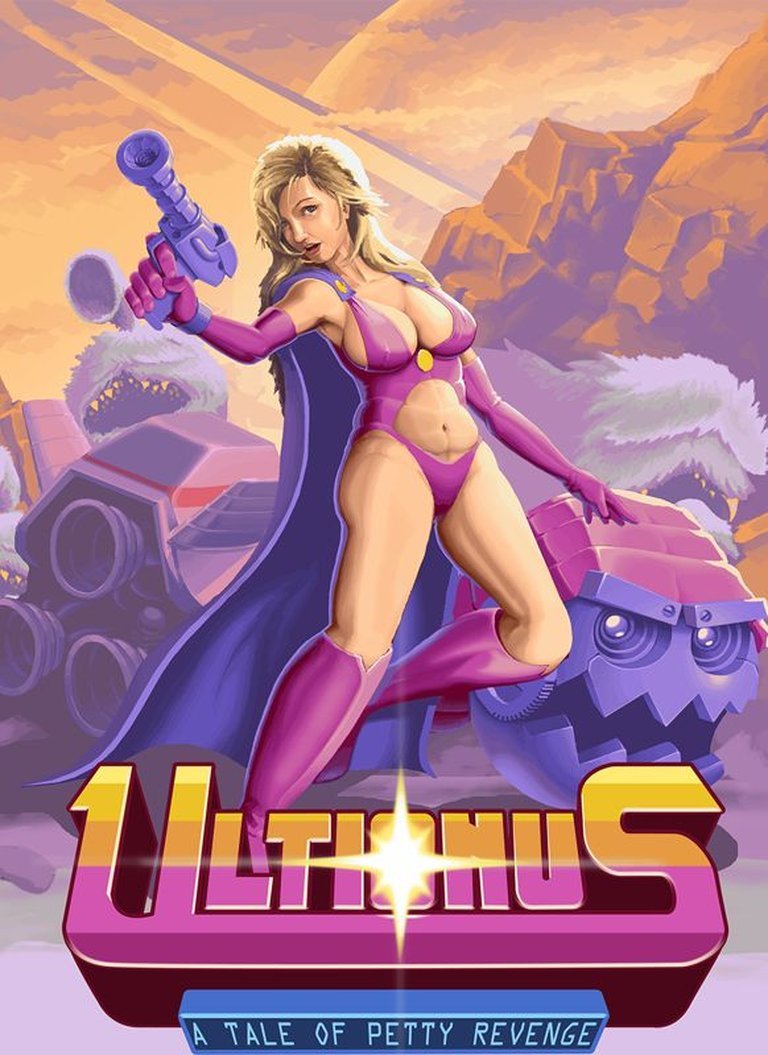
Description
Ultionus: A Tale of Petty Revenge is a retro-styled platform shooter with scrolling shoot ’em up segments, inspired by 80’s and 90’s home computer games. After being humiliated on Spacebook by the Space Prince, galactic hero Selena S embarks on a quest for revenge, battling through multi-layered caves, dungeons, and fortresses filled with relentless enemies. Players can discover hidden upgrades and access secret shops to enhance Selena’s abilities as they progress toward the final showdown with the Space Prince.
Gameplay Videos
Where to Buy Ultionus: A Tale of Petty Revenge
PC
Ultionus: A Tale of Petty Revenge Guides & Walkthroughs
Ultionus: A Tale of Petty Revenge Reviews & Reception
metacritic.com (69/100): Playing Ultionus it’s like recovering a time-capsule from the ’90s: a solid shooter, compelling and challenging, even if not one of the best of its genre.
honestgamers.com : Easy on the eyes, hard on the joystick.
mashthosebuttons.com : Ultionus is all about blasting things in one way or another.
goldplatedgames.com : Ultionus definitely suffers from this sort of short-sighted design, and then goes and layers a bunch of other terrible ideas on top of it, like some kind of foul garbage lasagna.
Ultionus: A Tale of Petty Revenge: A Retro Revenge Fantasy
Introduction
In the vast cosmos of indie games, few titles wear their influences as proudly—or as problematically—as Ultionus: A Tale of Petty Revenge. Released in 2013 by Last Dimension, this 2D platform shooter is a love letter to the home computer arcade games of the late 1980s and early 1990s, particularly Phantis (aka Game Over II), a Spanish title that never quite escaped its niche. But Ultionus isn’t just a nostalgic throwback; it’s a game that grapples with its own identity, oscillating between homage and pastiche, between reverence and ridicule. At its core, it’s a story about disproportionate retribution—Serena S, a galactic heroine, embarks on a violent crusade against a Space Prince who trolled her on Spacebook. The premise is absurd, the execution is flawed, and yet, there’s something undeniably charming about its unapologetic embrace of retro aesthetics and petty vengeance.
This review will dissect Ultionus from every angle: its development history, its narrative and thematic underpinnings, its gameplay mechanics, its world-building and art style, its reception, and its legacy. By the end, we’ll determine whether Ultionus is a forgotten gem, a cautionary tale, or something far more complicated.
Development History & Context
The Studio and the Vision
Ultionus was developed by Last Dimension, a small indie studio led by Andrew Bado, a pixel artist with a deep appreciation for the golden age of home computer gaming. Bado’s vision was clear: to recreate the look, feel, and challenge of classic titles like Phantis, Halloween Harry, Astro Marine Corps, and Duke Nukem 2. The game was built using GameMaker, a tool that allowed Bado to focus on design rather than engine development.
The game’s development was relatively swift. It first appeared on Steam Greenlight in December 2013 and was released just two months later in February 2014. This rapid turnaround was partly due to the game’s modest scope—seven stages of tight, challenging gameplay—but also reflected Bado’s familiarity with the source material. Ultionus wasn’t just inspired by Phantis; it was a direct remake in spirit, lifting everything from the protagonist’s design to the level structure.
Technological Constraints and Design Choices
Ultionus is a game that deliberately limits itself. The protagonist, Serena S, cannot move and shoot simultaneously, a design choice lifted straight from Phantis. This mechanic, common in 1980s computer games, feels archaic by modern standards. The slow rate of fire, the floaty jumps, and the inability to aim diagonally without compromising movement all contribute to a deliberate clunkiness. Bado didn’t just want to evoke the aesthetics of retro games; he wanted to replicate their feel, warts and all.
The game’s visuals are a different story. While the mechanics are intentionally retro, the pixel art is polished and vibrant, a far cry from the blocky sprites of the Amstrad CPC or ZX Spectrum. Andrew Bado’s experience with WayForward and GameLoft shines through in the detailed environments and fluid animations. The game’s soundtrack, composed by Jake “Virt” Kaufman, is a masterclass in chiptune, blending the melodic sensibilities of PC-98 and Genesis composers with a modern sensibility.
The Gaming Landscape in 2013-2014
Ultionus arrived during a renaissance of retro-inspired indie games. Titles like Shovel Knight (2014), Cuphead (2017), and Odallus: The Dark Call (2015) were proving that there was a market for games that wore their influences on their sleeves. However, Ultionus stood apart in its uncompromising difficulty and its unapologetic camp. While other retro revivals sought to refine or modernize classic mechanics, Ultionus doubled down on the jank, the grind, and the sheer pettiness of its premise.
The game’s Steam release was met with mixed reactions. Some players embraced its challenges and its humor, while others found it frustrating and outdated. The Ouya version, released in 2014, fared slightly better, with critics praising its retro charm but bemoaning its short length and high price point.
Narrative & Thematic Deep Dive
The Plot: A Tale of Petty Revenge
The story of Ultionus is as simple as it is ridiculous:
- Serena S, a galactic heroine, saves the universe (again).
- She posts about her triumphs on Spacebook (a thinly veiled parody of Facebook).
- The Space Prince, a foppish, blonde warlord, trolls her with a sexist remark: “What is it? A woman should be quietly eating in a corner of the house, so she roams around!”
- Enraged, Serena embarks on a one-woman crusade to hunt down the Space Prince and kick him in the groin.
The narrative is delivered through minimalist cutscenes and text crawls, with the bulk of the storytelling happening in the opening and ending sequences. There’s no dialogue during gameplay, and the characters are barely more than caricatures. Serena is a blonde, buxom action girl in a purple thong leotard, while the Space Prince is a smug, effete villain who gets his comeuppance in the most literal way possible.
Themes: Disproportionate Retribution and Internet Culture
Ultionus is, at its core, a satire of internet culture and the toxicity of online spaces. The Space Prince isn’t just a troll; he’s a symbol of misogyny, a man who feels threatened by a woman’s accomplishments and responds with petty insults. Serena’s reaction—violent, over-the-top revenge—is equally disproportionate, but the game frames it as justified. The true ending even includes a Spoof Aesop:
“The moral of the story is that one day, trolls might just piss off someone who can totally wreck their shit. Until then, keep trollin’.”
This is not a game that takes itself seriously. It’s a farce, a parody of revenge narratives, and a commentary on how easily people escalate conflicts online. The fact that Serena’s quest is entirely trivial (she’s not saving the galaxy; she’s avenging a social media slight) underscores the absurdity of internet outrage culture.
Characters: Archetypes and Stereotypes
- Serena S: The Action Girl protagonist, designed to be both empowering and objectified. Her breast physics are a running joke, and her Game Over screen features her ass in the air, a deliberate nod to the male gaze in classic action games. Yet, she’s also competent, determined, and unapologetically violent.
- The Space Prince: The smug, effeminate villain, a stereotype of toxic masculinity disguised as aristocracy. His final fate—a groin kick—is both humiliating and cathartic.
- Balzac: Serena’s robot companion, a bouncing spherical head who serves as both comic relief and a mechanic for the true ending. Rescuing Balzac in each level unlocks the final stage and the good ending, where he saves Serena from the Space Prince’s forces.
Dialogue and Tone
The game’s writing is minimalist, relying on over-the-top camp and deliberate cheese. The Spacebook interface is a stylized 8-bit parody, complete with blocky text and crude graphics. The ending song, “Wandering” by Luke “A_Rival” Esquivel, is a chiptune house track that feels like a victory lap for Serena’s petty revenge.
Gameplay Mechanics & Systems
Core Gameplay Loop
Ultionus is a hybrid of platforming and shoot ‘em up, with seven stages that alternate between:
- Side-scrolling platform shooter (5 stages)
- Horizontal shoot ‘em up (2 stages)
The platforming stages are the meat of the game, requiring players to:
- Jump and shoot through multi-layered caves, dungeons, and fortresses.
- Dodge relentless enemy waves while dealing with slow, deliberate controls.
- Find hidden coins to unlock shops where upgrades can be purchased.
The shoot ‘em up stages (Stage 0 and Stage 6) are fast-paced, score-attack segments that break up the platforming.
Combat and Movement
- Serena cannot move and shoot at the same time, a deliberate throwback to Phantis.
- Shooting has a slight delay, making rapid fire impossible without upgrades.
- Jumping is floaty, requiring precise timing to avoid enemies and hazards.
- Diagonal shots are possible, but only at 45-degree angles, limiting aiming flexibility.
These mechanics force players to adapt to a slow, methodical playstyle, which can be frustrating for modern audiences but faithful to the source material.
Character Progression and Upgrades
Ultionus features a light RPG element in the form of upgrades, which are purchased in hidden shops using points earned from killing enemies.
- Offensive Upgrades:
- Explosive Bullets: Adds splash damage.
- Rapid Fire: Reduces delay between shots.
- Triple Shot: Fires three bullets at once (though not continuously).
- Defensive Upgrades:
- Anti-Gravity Ring: Increases jump height.
- Cloak, Bracelet, Hat: Increases defense (with no functional difference between them).
The shop system is easily missable, as players must find a hidden coin in each level to unlock it. This encourages exploration, but the lack of a map can make it tedious.
Difficulty and Balance
Ultionus is notoriously difficult, especially on Normal mode, where players have only nine lives to complete the game. Easy mode grants infinite lives but reduces the challenge significantly.
- Enemies respawn infinitely, forcing players to keep moving.
- Bosses have complex patterns that require memorization and precision.
- Checkpoints are sparse, punishing mistakes harshly.
The true ending requires rescuing Balzac in every level, adding another layer of challenge for completionists.
UI and Controls
The UI is minimalist, with no map, no health bar, and only a score counter. The controls are simple (jump, shoot, crouch) but unforgiving.
- Keyboard controls are responsive but require practice.
- Controller support is spotty, especially on Linux and macOS.
World-Building, Art & Sound
Setting and Atmosphere
Ultionus takes place across seven distinct stages, each with its own theme and aesthetic:
- Prologue (Space Shooter): A short intro stage where Serena’s ship is shot down.
- Snow Field: A frozen wasteland with yeti enemies and slippery platforms.
- Cave: A dark, claustrophobic dungeon with guerrilla-style enemies.
- Jungle (Dinosaur Ride): A forced-scrolling stage where Serena rides a dinosaur-like creature.
- Volcano: A lava-filled cavern with instant-death traps.
- Palace: A mechanical fortress with moving platforms and mid-bosses.
- Escape (Final Shooter): A space shoot ‘em up against the Space Prince’s mecha.
Each stage is visually distinct, with lush pixel art and detailed backgrounds. The color palette is vibrant, evoking the Amiga and Genesis era.
Visual Direction
Andrew Bado’s pixel art is the star of the show, with:
- Large, expressive sprites for Serena and enemies.
- Fluid animations, especially for bosses and environmental hazards.
- Parallax scrolling and detailed backgrounds that give the world depth.
The character design is deliberately campy, with Serena’s ill-fitting swimsuit and the Space Prince’s effeminate villainy playing into the game’s satirical tone.
Sound Design and Music
The soundtrack, composed by Jake “Virt” Kaufman, is a chiptune masterpiece, blending:
- Genesis-style FM synthesis for melodic tracks.
- PC-98-inspired percussion for rhythmic intensity.
- House and techno influences in the ending theme.
Standout tracks include:
- “Inner Sanctum”: A moody, atmospheric piece for the Palace stage.
- “Boss Theme”: A fast-paced, aggressive track that ramps up the tension.
- “Wandering” (Ending Theme): A chiptune house anthem that celebrates Serena’s victory.
The sound effects are simple but effective, with crunchy gunfire and satisfying enemy death cries.
Reception & Legacy
Critical Reception
Ultionus received mixed reviews upon release, with critics praising its art, music, and retro charm but criticizing its clunky controls and punishing difficulty.
- Day of the OUYA (89%): “Every retro gamer will love the awesome colorful artwork… but the price of $9.99 is way too high for a game you finish in about one hour.”
- Mash Those Buttons (76%): “Always exciting due to ever-shifting environments, enemies, bosses, and music.”
- Rear View Reviews (60%): “A fairly solid platformer that hearkens back to a simpler time… but the difficulty can be punishing.”
- HonestGamers (60%): “Easy on the eyes, hard on the joystick… the unlimited lives will see you through to the end in under an hour.”
- Gold-Plated Games (20%): “I have a hard time understanding what the creator was trying to accomplish here, but I don’t think they could have made something less fun if they tried.”
Commercial Performance
Ultionus was not a commercial success, selling modestly on Steam, Ouya, and itch.io. Its Nintendo Switch port (2022) gave it a second life, but it remains a niche title.
Legacy and Influence
Ultionus is not a game that redefined the genre, but it carved out a unique space as a deliberately retro, unapologetically campy revenge fantasy. Its influence can be seen in later indie titles that embrace jank as a design choice, such as:
- Odallus: The Dark Call (2015)
- Cuphead (2017)
- Blasphemous (2019)
It also proved that there’s an audience for games that don’t smooth out the rough edges of retro design.
Conclusion: A Flawed but Fascinating Relic
Ultionus: A Tale of Petty Revenge is a game of contradictions:
- It’s beautifully crafted but deliberately clunky.
- It’s a love letter to retro gaming but a satire of internet culture.
- It’s short and simple but punishingly difficult.
It’s not a game for everyone. If you’re looking for tight controls, modern sensibilities, or deep storytelling, you’ll likely bounce off it. But if you’re a retro enthusiast who appreciates the jank, a completionist who loves a challenge, or a fan of campy, over-the-top revenge stories, Ultionus has something to offer.
Final Verdict: 7/10 – A Flawed Gem
Ultionus is not a masterpiece, but it’s a fascinating artifact—a game that embraces its flaws as part of its identity. It’s a time capsule of an era when games were hard, weird, and unapologetic, and in that sense, it succeeds wildly.
Should You Play It?
– Yes, if you love retro platformers and don’t mind jank.
– Yes, if you enjoy campy, over-the-top stories.
– No, if you prefer modern controls and accessibility.
Ultionus is a game that knows exactly what it is—and in a world of polished, focus-tested AAA titles, that’s refreshing.
Final Score: 7/10 – “A Tale of Petty Revenge, Told with Style and Jank”