
- Release Year: 2019
- Platforms: Windows
- Publisher: RewindApp
- Developer: RewindApp
- Genre: Action
- Perspective: 1st-person
- Game Mode: Single-player
- Gameplay: Shooter
- Average Score: 76/100
Description
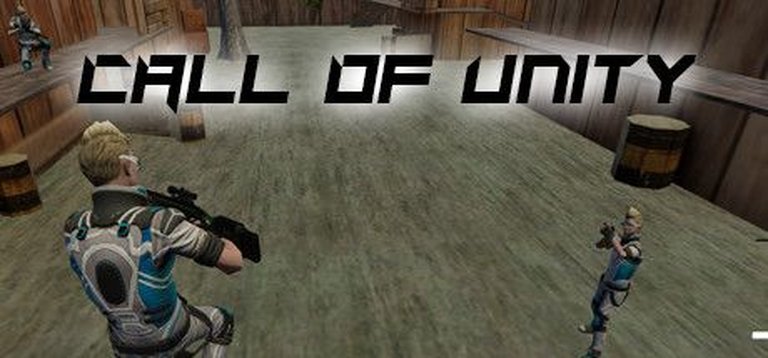
Call of Unity is a first-person shooter developed and published by RewindApp, released on May 11, 2019, for Windows. The game is built using the Unity engine and offers direct control gameplay, focusing on action-packed shooting mechanics. While details about its premise and setting are sparse, it is part of the broader landscape of indie shooters, likely featuring fast-paced combat and immersive gameplay. The title shares its name with other games like Assassin’s Creed: Unity but stands as a distinct entry in the shooter genre.
Where to Buy Call of Unity
PC
Call of Unity Guides & Walkthroughs
Call of Unity Reviews & Reception
gamevalio.com (76/100): Could be worth it if it’s your style. Not a must-buy, but fans of the genre won’t be disappointed.
steambase.io (77/100): Call Of Unity has earned a Player Score of 77 / 100.
store.steampowered.com (76/100): Mostly Positive (76% of the 260 user reviews for this game are positive).
Call of Unity: A Forgotten Gem in the Shadows of Assassin’s Creed
Introduction
In the vast, ever-expanding universe of video games, few titles have sparked as much curiosity—and confusion—as Call of Unity. Released in 2019 by the obscure studio RewindApp, this first-person shooter has lingered in the digital shadows, often mistaken for or overshadowed by its namesake, Assassin’s Creed: Unity. Yet, Call of Unity is a distinct, albeit modest, entry in the world of indie shooters, offering a raw, unpolished, but oddly charming experience. This review aims to dissect Call of Unity in its entirety, exploring its development, gameplay, reception, and the peculiar niche it carves in gaming history.
Development History & Context
The Studio Behind the Game
RewindApp, the developer and publisher of Call of Unity, is a relatively unknown entity in the gaming industry. Unlike Ubisoft, the powerhouse behind Assassin’s Creed: Unity, RewindApp operates on a much smaller scale, with Call of Unity being one of its few notable releases. The studio’s lack of a prominent portfolio or industry presence suggests that Call of Unity was likely a passion project or an experimental venture rather than a calculated commercial endeavor.
Technological Constraints and Design Philosophy
Call of Unity was built using the Unity engine, a popular choice among indie developers for its accessibility and versatility. However, the game’s minimalist approach to design and mechanics reflects the constraints of a small team working with limited resources. The game’s Steam description highlights its simplicity: four game modes (Deathmatch, Domination, Team Deathmatch, and Gun Game), five weapons, three maps, and basic AI opponents. There are no grand narratives, no open worlds, and no intricate systems—just pure, unadulterated shooting.
The gaming landscape in 2019 was dominated by sprawling open-world titles, battle royales, and narrative-driven experiences. Call of Unity’s release into this environment was akin to a whisper in a hurricane. It didn’t aim to compete with the likes of Call of Duty or Battlefield; instead, it offered a stripped-down, almost retro take on the first-person shooter genre, harkening back to the simplicity of early 2000s multiplayer shooters like Quake or Unreal Tournament.
The Naming Conundrum
One of the most intriguing aspects of Call of Unity is its name. The deliberate (or perhaps accidental) similarity to Assassin’s Creed: Unity has led to widespread confusion. A quick search for Call of Unity on gaming forums or databases often yields results for Ubisoft’s 2014 title, burying RewindApp’s game under a mountain of misinformation. This naming overlap has likely contributed to the game’s obscurity, as players and critics alike may have dismissed it as a knockoff or a mod rather than a standalone title.
Narrative & Thematic Deep Dive
The Absence of Story
Call of Unity is, at its core, a multiplayer-focused shooter with no narrative ambitions. There are no characters to speak of, no plot twists, and no lore to uncover. The game’s Steam description succinctly captures its essence: “Soldier Unity prepare for battle! Grab a weapon from the arsenal and go conquer Unity’s battlefields!” This lack of storytelling is not necessarily a flaw but rather a conscious design choice. Call of Unity is unapologetically about gameplay, stripping away the cinematic fluff that dominates modern shooters.
Themes of Simplicity and Nostalgia
While Call of Unity lacks a traditional narrative, it evokes themes of simplicity and nostalgia. The game’s barebones presentation and straightforward mechanics are reminiscent of the early days of online multiplayer shooters, where the focus was on pure competition rather than elaborate set pieces or storylines. In an era where games are increasingly complex and narrative-driven, Call of Unity stands as a throwback to a time when shooters were defined by their gameplay alone.
The game’s title, Call of Unity, could also be interpreted as a commentary on the unity of players in a shared virtual space. Multiplayer games, at their best, foster a sense of community and camaraderie, and Call of Unity’s emphasis on team-based modes like Team Deathmatch and Domination aligns with this idea. However, the game’s lack of robust online infrastructure or a dedicated player base means this thematic potential remains largely unrealized.
Gameplay Mechanics & Systems
Core Gameplay Loop
Call of Unity’s gameplay is as straightforward as it gets. Players choose from one of four game modes, select a weapon, and jump into the action. The game modes are standard fare for the genre:
– Deathmatch: A free-for-all where the last player standing wins.
– Domination: Teams compete to control specific points on the map.
– Team Deathmatch: Two teams battle to reach a set number of kills.
– Gun Game: A progressive mode where players advance by getting kills with different weapons.
The weapons available are equally basic: the FAL (a rifle), a sniper rifle, a shotgun, and two unnamed firearms. Grenades are also included, adding a touch of tactical depth. The maps, of which there are only three, are small and unremarkable, designed for quick, chaotic skirmishes rather than strategic, large-scale battles.
Combat and Controls
The combat in Call of Unity is functional but far from refined. The shooting mechanics are serviceable, with weapons feeling adequately powerful but lacking the satisfying feedback of more polished shooters. The controls are direct and responsive, though the movement lacks the fluidity and weight of modern FPS titles. There’s no advanced parkour, no intricate melee system, and no cover mechanics—just point, shoot, and hope for the best.
The AI opponents, while present, are rudimentary at best. They follow predictable patterns and offer little challenge, making them suitable for practice but not much else. The game’s multiplayer mode is where the real action is intended to be, but the lack of a dedicated player base means that finding matches can be difficult, if not impossible.
Character Progression and Customization
Call of Unity offers no character progression or customization systems. There are no unlockable weapons, no skill trees, and no cosmetic upgrades. Players are given the same tools from the start, and the only progression comes from improving one’s own skills through repeated play. This lack of progression may disappoint players accustomed to the RPG-like elements of modern shooters, but it also ensures that the gameplay remains balanced and focused on pure skill.
UI and Presentation
The game’s user interface is minimalist to a fault. Menus are sparse, with little in the way of visual flair or polish. The HUD during gameplay is equally barebones, displaying only the essentials: health, ammunition, and a mini-map. While this simplicity keeps the focus on the action, it also makes the game feel unfinished or rushed.
World-Building, Art & Sound
Visual Design and Atmosphere
Call of Unity’s visual design is unremarkable but functional. The game’s environments are generic, with little attention paid to detail or atmosphere. The maps are functional battlegrounds rather than immersive worlds, lacking the environmental storytelling or aesthetic appeal of more ambitious titles. The character models are similarly basic, with no distinct personalities or designs to speak of.
The game’s art style is best described as “utilitarian.” There’s no attempt at realism or stylization—just a straightforward, no-frills approach to visual design. This aesthetic aligns with the game’s overall philosophy of simplicity, but it also means that Call of Unity lacks the visual identity that could have made it stand out.
Sound Design and Music
The sound design in Call of Unity is equally underwhelming. Weapon sounds are generic, with little variation or impact. The lack of ambient noise or environmental effects further contributes to the game’s sterile atmosphere. There is no original soundtrack to speak of, and the absence of music during gameplay makes the experience feel hollow.
Reception & Legacy
Critical and Commercial Reception
Call of Unity has received virtually no critical attention, and its commercial performance is equally obscure. The game’s Steam page lists it at a bargain-bin price of $1.99 (often discounted to $0.55), reflecting its indie status and lack of mainstream appeal. There are no Metascore ratings, no major reviews, and no significant sales data available. The game’s reception, or lack thereof, is a testament to its obscurity.
Player reviews on Steam are sparse but generally mixed. Some players appreciate the game’s simplicity and nostalgic charm, while others criticize its lack of depth and polish. The most common sentiment is one of indifference—Call of Unity is neither a masterpiece nor a disaster but rather a forgettable curiosity.
Influence and Legacy
Call of Unity’s legacy, if it can be called that, is one of obscurity. The game has had no discernible influence on the shooter genre or the industry as a whole. It is not a cult classic, nor is it a cautionary tale. Instead, it exists as a footnote in gaming history, a reminder of the thousands of indie titles that are released each year, only to fade into obscurity.
The game’s most enduring impact may be its unintentional role as a source of confusion. Due to its similar name, Call of Unity often appears in searches for Assassin’s Creed: Unity, leading unsuspecting players to a game that bears no resemblance to Ubisoft’s historical epic. This naming overlap has likely done more to hinder the game’s visibility than any of its actual flaws.
Conclusion: A Forgotten Experiment
Call of Unity is a game that defies easy categorization. It is not a bad game, nor is it a particularly good one. It is, instead, a curiosity—a relic of a time when shooters could be simple, unadorned experiences. In an industry increasingly dominated by sprawling open worlds, cinematic narratives, and live-service models, Call of Unity stands as a testament to the power of simplicity.
Yet, simplicity alone is not enough to elevate a game to greatness. Call of Unity’s lack of polish, depth, and identity ensures that it remains a forgotten experiment rather than a celebrated classic. It is a game that exists on the fringes of the industry, neither revolutionary nor reviled, but simply there.
For players seeking a no-frills, nostalgic shooter experience, Call of Unity may offer a brief diversion. For everyone else, it is little more than a footnote—a reminder of the countless indie games that slip through the cracks of gaming history. In the grand tapestry of video games, Call of Unity is a single, barely noticeable thread. But even the most obscure games have their place, and Call of Unity’s place is as a humble, unassuming relic of a bygone era.
Final Verdict: 5/10 – A forgettable but inoffensive experiment in simplicity.