
- Release Year: 1999
- Platforms: Android, Arcade, Dreamcast, GameCube, iPad, iPhone, OnLive, PlayStation 2, PlayStation 3, PlayStation Now, Windows, Xbox 360, Xbox One
- Publisher: Acclaim Entertainment, Inc., Activision Value Publishing, Inc., Empire Interactive Europe Ltd., SEGA Enterprises Ltd., SEGA Europe Ltd., SEGA of America, Inc., Tec Toy Indústria de Brinquedos S.A.
- Developer: Hitmaker
- Genre: Driving, Racing
- Perspective: Behind view
- Game Mode: Single-player
- Gameplay: Arcade, Open world driving
- Setting: Fantasy, Post-apocalyptic
- Average Score: 64/100
Description
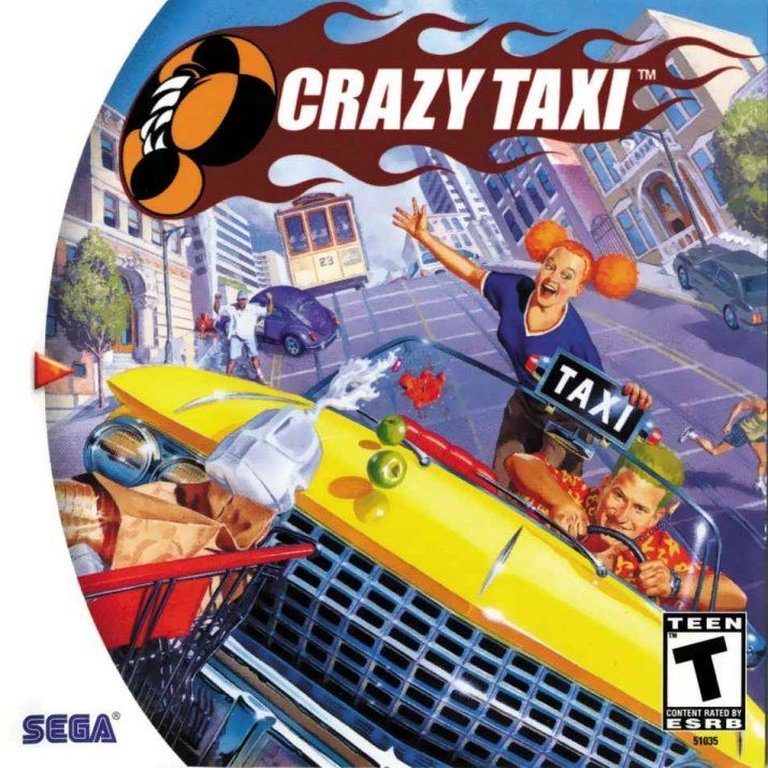
Crazy Taxi is a fast-paced arcade-style racing game where players take on the role of a reckless taxi driver navigating through bustling city streets, sidewalks, and even underwater to deliver passengers to their destinations as quickly as possible. The game features vibrant, chaotic environments filled with traffic and pedestrians, encouraging players to perform wild stunts, disregard traffic rules, and maximize speed to earn higher fares and tips. With multiple game modes, including Arcade and Crazy Box, players can choose from different cabs and drivers, each with unique attributes, while enjoying a high-energy soundtrack featuring bands like The Offspring and Bad Religion.
Gameplay Videos
Where to Buy Crazy Taxi
PC
Crazy Taxi Cracks & Fixes
Crazy Taxi Patches & Updates
Crazy Taxi Mods
Crazy Taxi Guides & Walkthroughs
Crazy Taxi Reviews & Reception
metacritic.com (59/100): The underlying game has aged brilliantly.
imdb.com (70/100): Crazy arcade fun
Crazy Taxi Cheats & Codes
PC
Enter these at the driver/car selection screen
| Code | Effect |
|---|---|
| [Ctrl]+[Alt]+[Shift]+F8 | Another day level. |
| [Ctrl]+[Alt]+[Shift]+F9 | Bike taxi (cycle-rickshaw). |
| [Ctrl]+[Alt]+[Shift]+F7 | Expert mode. |
| [Ctrl]+[Alt]+[Shift]+F6 | No arrows. |
| [Ctrl]+[Alt]+[Shift]+F5 | No destination marks. |
| [Ctrl]+[Alt]+[Shift]+F2 | Reset system during game. |
| [Ctrl]+[Alt]+[Shift]+F10 | Have more moneys. |
Crazy Taxi: A Definitive Retrospective
Introduction
Few games capture the sheer, unadulterated joy of arcade gaming quite like Crazy Taxi. Released in 1999 by Sega’s Hitmaker studio, this frenetic, neon-drenched driving game became an instant classic, embodying the spirit of late-’90s arcade culture while pushing the boundaries of what a racing game could be. Crazy Taxi wasn’t just about speed—it was about chaos, personality, and an infectious energy that made it impossible to put down. Over two decades later, its legacy endures, not just as a relic of its time but as a testament to the power of simple, well-executed game design.
This review will dissect Crazy Taxi in exhaustive detail, exploring its development history, gameplay mechanics, cultural impact, and enduring influence. We’ll examine why it resonated so deeply with players, how it evolved across platforms, and what lessons it offers to modern game design. Whether you’re a nostalgic fan or a curious newcomer, this deep dive will illuminate why Crazy Taxi remains one of the most beloved arcade experiences of all time.
Development History & Context
The Studio and the Vision
Crazy Taxi was developed by Hitmaker, a Sega subsidiary known for its arcade innovations. The team, led by director Kenji Kanno and producer Hisao Oguchi, sought to create a game that broke away from the rigid structures of traditional racing titles. Inspired by the fast-paced, high-score-chasing nature of arcade culture, they envisioned a game where players could experience the thrill of reckless driving without the constraints of realism.
The game’s development was driven by a desire to capture the “daily life and routine” of a taxi driver—albeit one operating in a hyper-stylized, over-the-top world. Kanno wanted players to feel the adrenaline of navigating a bustling city, the satisfaction of pulling off daring maneuvers, and the frustration of racing against the clock. The result was a game that felt both familiar and revolutionary, blending the accessibility of arcade racers with the depth of a score-attack challenge.
Technological Constraints and Innovations
Crazy Taxi debuted on the Sega NAOMI arcade hardware, a powerful board capable of rendering detailed 3D environments with smooth frame rates. The game’s vibrant, cartoonish aesthetic was a deliberate choice, allowing the team to prioritize speed and fluidity over photorealism. The NAOMI’s capabilities enabled the game’s signature features:
– Dynamic city environments filled with traffic, pedestrians, and shortcuts.
– A loose, arcade-style physics engine that rewarded reckless driving.
– A time-based scoring system that encouraged players to chain together risky maneuvers.
When porting Crazy Taxi to the Dreamcast in 2000, the team faced the challenge of maintaining the arcade experience while adding content to justify a home release. The Dreamcast version introduced:
– A second city (“Original Mode”), expanding the gameplay variety.
– The Crazy Box, a series of mini-games designed to teach players advanced techniques.
– Enhanced visuals and audio, including a full soundtrack featuring The Offspring and Bad Religion.
The Dreamcast port was a critical success, proving that Crazy Taxi could thrive outside the arcade. Subsequent ports to the PlayStation 2, GameCube, and Windows followed, though these versions often suffered from technical limitations (e.g., reduced frame rates, altered soundtracks) that diluted the experience.
The Gaming Landscape of 1999–2000
Crazy Taxi arrived at a pivotal moment in gaming history. The late ’90s saw a resurgence of arcade-style games, driven by the success of titles like Tony Hawk’s Pro Skater and Sega Rally Championship. The Dreamcast, Sega’s final console, was positioned as a haven for arcade-perfect ports, and Crazy Taxi became one of its defining titles.
The game’s release also coincided with the rise of product placement in gaming. Crazy Taxi was one of the first games to feature real-world brands prominently, with locations like Pizza Hut, KFC, and Tower Records integrated into its cities. This not only added authenticity but also became a defining (and later controversial) aspect of the game’s identity.
Narrative & Thematic Deep Dive
Plot and Characters
Crazy Taxi is not a story-driven game, but its characters and setting are central to its charm. Players choose from four cabbies, each with distinct personalities:
– Axel: A punk rocker with a rebellious attitude.
– B.D. Joe: A laid-back hip-hop enthusiast.
– Gena: A no-nonsense, efficient driver.
– Gus: A grizzled, experienced cabbie.
The game’s “narrative” unfolds through the interactions between the drivers and their passengers. Each fare is a mini-story, with passengers ranging from tourists to businesspeople, each with their own quirks and destinations. The dialogue is exaggerated and often humorous, reinforcing the game’s over-the-top tone.
Themes: Chaos, Freedom, and Capitalism
At its core, Crazy Taxi is a celebration of controlled chaos. The game rewards players for embracing recklessness—speeding through red lights, jumping over traffic, and narrowly avoiding collisions. This theme of freedom within structure is central to its appeal. Players are given a clear objective (deliver passengers on time) but are encouraged to achieve it in the most outrageous way possible.
The game also subtly critiques consumer culture. The city is a playground of capitalism, filled with chain stores and advertisements. Passengers are often obsessed with reaching these locations, reinforcing the idea of a society driven by materialism. The game’s soundtrack, featuring punk and alternative rock, further underscores this rebellious tone.
Dialogue and Voice Acting
The voice acting in Crazy Taxi is deliberately exaggerated, with characters shouting catchphrases like “Let’s make some crazy money!” and “Yeah, yeah, yeah, yeah!” (a nod to The Offspring’s song). While some critics found this grating, it became a defining part of the game’s identity. The announcer’s enthusiastic commentary (“Crazy! Crazy! Crazy!”) and the passengers’ quirky requests added to the game’s chaotic charm.
Gameplay Mechanics & Systems
Core Gameplay Loop
Crazy Taxi’s gameplay is deceptively simple:
1. Pick up a passenger (indicated by a dollar sign above their head).
2. Drive to their destination before the timer runs out.
3. Earn tips by performing stunts (near-misses, jumps, drifts).
4. Extend the timer by delivering passengers quickly.
The genius of Crazy Taxi lies in how it layers complexity onto this simple premise. Players must:
– Navigate a sprawling city with multiple shortcuts and obstacles.
– Master the physics engine, which allows for absurd maneuvers like driving underwater or jumping over buildings.
– Balance speed and precision, as reckless driving can lead to lost time or failed deliveries.
Combat and Progression
While Crazy Taxi isn’t a combat game, it features a form of indirect competition through its scoring system. Players are graded on their performance (D to S rank), encouraging replayability. The Crazy Box mini-games further deepen the experience by teaching advanced techniques, such as:
– Crazy Drift: A tight turn that boosts speed.
– Crazy Dash: A burst of acceleration.
– Crazy Jump: Launching the taxi off ramps.
These mechanics are not just flashy—they’re essential for high scores. Mastering them transforms Crazy Taxi from a simple driving game into a score-attack challenge.
UI and Feedback
The game’s UI is minimal but effective:
– A green arrow points toward the destination.
– A timer counts down for each passenger.
– A fare meter tracks earnings.
The feedback is immediate and satisfying. Near-misses trigger a “Crazy!” announcement, while successful deliveries are met with cheers and cash sounds. This constant reinforcement keeps players engaged, even during repetitive tasks.
Innovations and Flaws
Crazy Taxi’s most significant innovation was its time-based scoring system, which rewarded players for both speed and style. However, the game’s physics engine was polarizing. Some loved its arcade-like looseness, while others found it frustratingly unpredictable. Collision detection could be finicky, and the lack of a damage model (the taxi is indestructible) removed a layer of tension.
The game’s longevity was also a point of contention. While the arcade version thrived on short, intense sessions, the home ports struggled to maintain interest over extended play. The addition of the Crazy Box helped, but many players found the experience repetitive after mastering the core mechanics.
World-Building, Art & Sound
Setting and Atmosphere
Crazy Taxi’s cities are vibrant, sun-soaked caricatures of California, with steep hills, beaches, and bustling downtown areas. The environments are filled with detail, from the neon signs of fast-food joints to the pedestrians diving out of the way of your taxi. The game’s art style is deliberately exaggerated, with bright colors and cartoonish proportions that enhance its arcade feel.
The cities are designed to encourage exploration. Shortcuts, ramps, and hidden paths reward players who stray from the main roads. The Original Mode city, added in the Dreamcast version, expanded this with a more urban setting, offering a nice contrast to the arcade’s coastal vibe.
Visual Direction
The game’s visuals were groundbreaking for their time. The Dreamcast version ran at a smooth 60 FPS, a rarity in 2000. The pop-in and draw distance issues were minor, thanks to the game’s stylized aesthetic. The character models, while simple, were expressive, and the taxi designs were iconic.
Later ports (especially the PlayStation 2 and GameCube versions) suffered from reduced frame rates and lower-resolution textures, which detracted from the experience. The Xbox 360 and PlayStation 3 re-releases attempted to modernize the visuals but were hampered by the loss of the original soundtrack and branding.
Sound Design
The soundtrack is one of Crazy Taxi’s most defining features. The Dreamcast version featured tracks from The Offspring (“All I Want”) and Bad Religion (“Inner Logic”), which perfectly complemented the game’s rebellious tone. The PC version replaced these with lesser-known bands, while the Xbox 360/PS3 versions removed the licensed music entirely, a decision that disappointed many fans.
The sound effects are equally important. The screech of tires, the crash of metal, and the announcer’s enthusiastic shouts create a sensory overload that immerses players in the chaos. The voice acting, while divisive, adds personality to the game’s world.
Reception & Legacy
Critical and Commercial Reception
Crazy Taxi was a critical darling upon release. The Dreamcast version holds a 90% average on GameRankings, with critics praising its addictive gameplay, vibrant visuals, and punk-rock energy. Publications like IGN and GameSpot hailed it as one of the best arcade ports of its generation.
Commercially, the game was a huge success. The Dreamcast version sold over 1.1 million copies, while the PlayStation 2 port moved another 1 million. The game’s popularity led to multiple sequels (Crazy Taxi 2, Crazy Taxi 3: High Roller) and spin-offs (Crazy Taxi: Fare Wars).
However, later ports received mixed reviews. The GameCube and PC versions were criticized for their lack of innovation, while the Xbox 360/PS3 re-releases were panned for their removed soundtrack and outdated visuals.
Influence on the Industry
Crazy Taxi’s impact extends beyond its sales figures. It redefined the arcade racing genre, proving that a driving game could be fast, fun, and accessible without sacrificing depth. Its time-based scoring system influenced later games like Burnout and Need for Speed: Underground.
The game also popularized product placement in gaming. While earlier games had featured real-world brands, Crazy Taxi integrated them seamlessly into its world, setting a precedent for future titles.
Perhaps most importantly, Crazy Taxi became a cultural touchstone. Its punk-rock aesthetic, chaotic gameplay, and rebellious spirit resonated with a generation of gamers. Even today, it’s remembered as one of the Dreamcast’s defining titles and a high-water mark for arcade gaming.
Legal Battles and Clones
Crazy Taxi’s success spawned imitators, most notably The Simpsons: Road Rage (2001). Sega sued Fox Interactive for patent infringement, alleging that Road Rage copied Crazy Taxi’s mechanics. The case was settled out of court, but it highlighted the game’s influence.
Other clones, like Taxi Chaos (2021), have attempted to recapture Crazy Taxi’s magic, but none have matched its sheer personality and polish.
Conclusion: A Timeless Arcade Classic
Crazy Taxi is more than just a driving game—it’s a celebration of arcade culture, a testament to clever design, and a cultural artifact of its time. Its addictive gameplay, vibrant world, and rebellious spirit have ensured its place in gaming history.
While later ports and sequels struggled to recapture the magic of the original, the Dreamcast version remains the definitive experience. Its smooth frame rate, punk-rock soundtrack, and chaotic energy make it a must-play for any fan of arcade gaming.
Final Verdict: 9/10 – A Masterpiece of Arcade Design
Crazy Taxi isn’t perfect—its repetitive nature and occasional frustrations hold it back from true greatness. But its sheer fun factor, innovative mechanics, and enduring charm make it one of the most important games of its era. Whether you’re a nostalgic fan or a curious newcomer, Crazy Taxi is a wild ride worth taking.
Key Takeaways:
– Innovative Gameplay: Crazy Taxi redefined arcade racing with its time-based scoring and chaotic physics.
– Cultural Impact: Its punk-rock aesthetic and product placement set new standards for gaming.
– Enduring Legacy: Despite flawed ports, the original remains a high-water mark for arcade gaming.
– Must-Play: The Dreamcast version is the definitive experience, offering the best balance of speed, style, and fun.
Crazy Taxi isn’t just a game—it’s a time capsule of an era, a love letter to arcade culture, and a reminder of why gaming is so magical. Let’s make some crazy money! 🚖💨