
- Release Year: 2017
- Platforms: Android, Linux, Macintosh, Windows
- Publisher: Bit Bionic LLC
- Developer: Bit Bionic LLC
- Genre: Action
- Perspective: Top-down
- Game Mode: Single-player
- Gameplay: In-game achievements
- Setting: Futuristic, Sci-fi
- Average Score: 86/100
Description
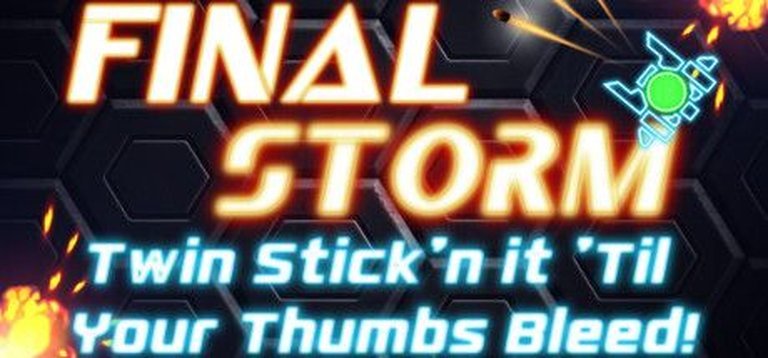
Final Storm is a top-down, 2D scrolling action game set in a sci-fi/futuristic universe. Developed by Bit Bionic LLC and released in 2017, the game features direct control mechanics where players navigate through intense combat scenarios, utilizing weapons and shields in a fast-paced, space-themed environment. Built with the Godot engine, the game incorporates a variety of Creative Commons assets for its visuals, sounds, and music, offering a dynamic and immersive experience for solo players across multiple platforms, including Windows, Linux, Mac, and Android.
Final Storm Patches & Updates
Final Storm Guides & Walkthroughs
Final Storm Reviews & Reception
steambase.io (86/100): Final Storm has earned a Player Score of 86 / 100.
Final Storm: A Bullet Hell Love Letter to Arcade Shooters
Introduction
In the crowded landscape of indie twin-stick shooters, Final Storm (2017) emerges as a lean, mean, and unapologetically old-school arcade experience. Developed by Brandon Forrester under the Bit Bionic LLC banner, this cross-platform title distills the essence of bullet hell gameplay into a bite-sized, high-intensity package. With its minimalist narrative, punishing difficulty, and relentless action, Final Storm carves out a niche for itself as a pure, unfiltered celebration of the genre’s core mechanics. This review explores the game’s development, design philosophy, gameplay systems, and legacy, arguing that while it may lack the depth of its contemporaries, its precision and focus make it a standout title for fans of classic arcade shooters.
Development History & Context
The One-Man Army Behind the Storm
Final Storm is the brainchild of Brandon Forrester, a solo developer who handled programming, graphics, sound, and animations—essentially every facet of the game’s creation. This one-person development approach is both a testament to Forrester’s versatility and a reflection of the indie game scene’s democratization in the mid-2010s. The game’s existence is also a product of the open-source and Creative Commons communities, with Forrester leveraging assets from platforms like OpenGameArt.org to expedite development. Artists such as Lamont Miller (space ships), Ram Zorkot (weapon and shield graphics), and Alexandr Zhelanov (music) contributed their work under permissive licenses, allowing Forrester to focus on refining the gameplay rather than creating every asset from scratch.
Technological Foundations: The Godot Engine
Final Storm was built using the Godot Engine, an open-source game engine that was gaining traction among indie developers for its lightweight nature and flexibility. Godot’s 2D capabilities were particularly well-suited for a top-down shooter like Final Storm, enabling smooth performance and efficient development. The engine’s scripting language, GDScript, allowed Forrester to iterate quickly on mechanics, a crucial factor given the game’s tight development cycle.
The Gaming Landscape of 2017
The year 2017 was a golden era for indie games, with titles like Cuphead, Hollow Knight, and Stardew Valley dominating discussions. However, the twin-stick shooter genre was also thriving, thanks to games like Nuclear Throne (2015) and Enter the Gungeon (2016), which had redefined the genre with roguelike elements and deep progression systems. Final Storm arrived in this competitive space but chose a different path: it eschewed complex narratives and procedural generation in favor of pure, score-chasing arcade action. This deliberate minimalism set it apart, offering a no-frills experience for players seeking instant gratification.
Narrative & Thematic Deep Dive
A Story That Doesn’t Exist (And That’s Okay)
Final Storm makes no pretenses about its narrative ambitions. The game’s Steam description bluntly states:
“Let’s be honest, you’re not looking at this game for depth of story or the latest cutting edge VR experience. You’re looking at this because you want to shoot stuff! You want to shoot lots of stuff!”
This self-awareness is refreshing. The “plot,” such as it is, revolves around a lone spaceship trapped in a hostile arena, fighting wave after wave of enemies in a desperate bid for survival. There are no cutscenes, no dialogue, and no lore dumps—just the implicit understanding that the player is a doomed warrior fighting against insurmountable odds. This narrative vacuum is intentional, allowing the gameplay to take center stage.
Themes: Futility, Skill, and the Arcade Mentality
While Final Storm lacks a traditional story, it does convey themes through its gameplay and presentation:
- Futility and Persistence: The game’s endless waves and inevitable death reinforce the idea of fighting against an unwinnable battle. Yet, the score system and power-ups provide small victories, encouraging players to persist despite the futility.
- Skill as Survival: There is no luck or randomness in Final Storm—only raw skill determines how long a player lasts. This purity of design harkens back to classic arcade games like Galaga or Robotron: 2084, where mastery was the sole path to success.
- The Arcade Mentality: The game’s short play sessions (5-10 minutes) and high-score chasing evoke the quarter-munching arcade cabinets of the 1980s. It’s designed to be played in bursts, with each attempt offering a chance to improve.
The Absence of Characters and Dialogue
Final Storm features no named characters, no voice acting, and no text beyond the minimal UI. The player’s ship is a faceless vessel, and the enemies are generic foes with no backstory. This absence of personality might seem like a weakness, but it’s actually a strength—the game’s focus is entirely on the mechanics, and the lack of distractions ensures that the player’s attention remains on the action.
Gameplay Mechanics & Systems
Core Gameplay Loop: Shoot, Dodge, Die, Repeat
Final Storm’s gameplay is a masterclass in simplicity. The core loop consists of:
- Surviving Waves: Enemies spawn in increasingly dense formations, firing bullets in intricate patterns. The player must weave through the chaos while returning fire.
- Collecting Power-Ups: Killing enough enemies drops power-ups in the center of the arena. These disappear after 10 seconds, adding a risk-reward element to the gameplay.
- Dying and Retrying: Death is inevitable, but each attempt is a chance to improve reflexes and strategies.
Combat and Movement
- Twin-Stick Controls: The left stick moves the ship, while the right stick aims and fires. This control scheme is industry-standard for the genre, ensuring accessibility for veterans.
- Bullet Patterns: Enemies fire bullets in predictable but challenging patterns, requiring players to memorize and adapt. The game’s difficulty ramps up quickly, with later waves featuring overlapping patterns that demand precise movement.
- Hitbox Precision: The player’s ship has a small hitbox, allowing for tight dodges between bullets. This precision is essential for surviving the later waves.
Power-Ups: Temporary Relief in a Sea of Bullets
Final Storm features five power-ups, each designed to give the player a temporary edge:
- Energy Shield: A passive shield that absorbs three hits. Crucial for surviving dense bullet patterns.
- Tri Shot: Fires three bullets in a 30-degree spread, increasing coverage.
- Side Shot: Fires bullets to the left and right of the ship, providing flank protection.
- Freeze Wave (Active): Temporarily freezes enemies, halting their movement and bullets for six seconds.
- Laze-Blade (Active): Unleashes a spinning laser that deals massive damage for six seconds.
The power-ups are well-balanced, offering both offensive and defensive options. The active abilities (Freeze Wave and Laze-Blade) are particularly impactful, providing brief moments of respite in an otherwise relentless assault.
Boss Waves: The Ultimate Test
Every few waves, Final Storm introduces a boss enemy. These encounters are designed to test the player’s mastery of movement and pattern recognition. Bosses have distinct attack phases, requiring players to adapt their strategies on the fly. The lack of health bars or visual cues means players must rely on memorization and reflexes—a callback to classic arcade boss fights.
UI and Feedback
The game’s UI is minimalist but effective:
- Score and Multiplier: The score is displayed prominently, with a multiplier that increases as the player survives longer.
- Power-Up Icons: Active power-ups are shown near the health meter, providing clear feedback on what abilities are available.
- Health Meter: A simple bar indicates remaining health, with no regenerative mechanics.
The UI’s simplicity ensures that the player’s focus remains on the action, with no unnecessary distractions.
Control Schemes: Gamepad vs. Keyboard and Mouse
Final Storm is designed with gamepad controls in mind, and the Steam description explicitly warns that keyboard and mouse controls are “REALLY hard.” The game supports X-Input controllers, including Xbox 360 and generic gamepads. The controls are as follows:
-
Gamepad:
- Left Stick: Movement
- Right Stick: Aim/Fire
- Right Trigger/Bumper: Freeze Wave
- Left Trigger/Bumper: Laze-Blade
- START: Pause
-
Keyboard and Mouse:
- WASD/Arrows: Movement
- LMB: Fire
- Space: Freeze Wave
- RMB/CTRL: Laze-Blade
- ESC: Pause
The gamepad controls are intuitive and responsive, while the keyboard and mouse setup feels clunky by comparison. This disparity highlights the game’s arcade roots, where precise analog movement is essential for survival.
World-Building, Art & Sound
Setting: A Hostile Arena in the Void
Final Storm’s setting is deliberately abstract. The game takes place in a small, enclosed arena floating in space, with no indication of where or when the action is occurring. The background features a starfield and occasional planetary bodies, but these are purely aesthetic—they serve no gameplay purpose. This minimalist approach reinforces the game’s focus on mechanics over narrative.
Visual Design: Retro-Futurism Meets Bullet Hell
The game’s art style is a blend of retro-futurism and modern pixel art. The player’s ship and enemies are rendered in a clean, colorful 2D style, with bright neon accents that stand out against the dark background. Bullet patterns are clearly visible, with distinct colors for different enemy types. The explosions and particle effects are satisfying, adding visual feedback to the player’s actions.
The use of Creative Commons assets is evident in the ship and weapon designs, but Forrester’s integration of these elements is seamless. The game’s visual identity is cohesive, despite its disparate sources.
Sound Design: A Symphony of Chaos
The sound design in Final Storm is functional but effective. The game features:
- Weapon Sounds: Laser fire and explosions are punchy and distinct, providing auditory feedback for the player’s actions.
- Music: The soundtrack, composed by Alexandr Zhelanov, is a high-energy mix of electronic and orchestral tracks. The music is fast-paced and intense, matching the game’s frantic gameplay.
- Ambient Noise: The absence of ambient noise ensures that the player’s focus remains on the action. There are no distractions—just the sounds of bullets, explosions, and the player’s own weapons.
The soundtrack is a standout feature, with tracks that enhance the game’s arcade feel. The music is looped seamlessly, ensuring that the player remains immersed in the action without noticeable transitions.
Reception & Legacy
Critical and Commercial Reception
Final Storm received little critical attention upon release, with no reviews listed on Metacritic or major gaming outlets. This lack of coverage is not uncommon for small indie titles, particularly those that eschew narrative depth in favor of pure gameplay. However, the game has garnered a modest but dedicated fanbase, as evidenced by its 86/100 Steambase Player Score (based on 7 user reviews as of January 2026). Players praise the game’s tight controls, challenging gameplay, and satisfying power-ups, while criticisms typically focus on its lack of content and repetitive nature.
The Game’s Retirement and Legacy
In June 2023, developer Brandon Forrester announced the retirement of Final Storm after six years on Steam. In a Steam community post, Forrester stated:
“After 6 years of being on Steam, I will be retiring Final Storm. This game was an indie project and a fantastic experience, however, I will be retiring the company and will no longer supply support to the game. I deeply appreciate everyone who supported this game. Thank you.”
The game’s retirement marks the end of its commercial availability, but its legacy lives on as a testament to the power of focused, minimalist game design. Final Storm proves that a game doesn’t need a complex narrative or procedurally generated content to be engaging—it just needs tight mechanics and a clear vision.
Influence on the Genre
While Final Storm may not have directly influenced major titles, its design philosophy aligns with a broader trend in indie games: the return to arcade-style simplicity. Games like Vampire Survivors (2022) and Halls of Torment (2022) have similarly embraced minimalist design, focusing on tight gameplay loops and high-score chasing. Final Storm’s emphasis on skill-based progression and short play sessions foreshadowed this trend, making it a precursor to the modern wave of arcade-inspired indie games.
Conclusion: A Storm Worth Weathering
Final Storm is not a game for everyone. It lacks the narrative depth of Hades, the procedural generation of Enter the Gungeon, or the roguelike progression of Nuclear Throne. What it offers instead is a pure, unadulterated arcade experience—one that demands skill, rewards persistence, and delivers adrenaline-pumping action in bite-sized bursts.
In an era where games are increasingly complex and narrative-driven, Final Storm stands as a reminder of the power of simplicity. It is a love letter to the arcade shooters of yesteryear, distilled into a modern indie package. While its retirement from digital storefronts is a loss for fans of the genre, its legacy endures as a testament to the enduring appeal of high-score chasing and bullet-hell mastery.
Final Verdict: 7.5/10 – A lean, mean shooting machine that delivers exactly what it promises: relentless action, tight controls, and a pure arcade experience. Not for the faint of heart, but a must-play for twin-stick shooter aficionados.
Additional Notes
- Platforms: Windows, macOS, Linux, Android (2017)
- Engine: Godot
- Developer: Bit Bionic LLC (Brandon Forrester)
- Genre: Twin-Stick Shooter, Bullet Hell, Arcade
- Price at Launch: Commercial (exact price not specified)
- Notable Features: Cross-platform support, gamepad-optimized controls, Creative Commons assets.
Final Storm may not have left a massive footprint in gaming history, but for those who seek the thrill of the arcade, it remains a hidden gem worth uncovering.