
- Release Year: 2021
- Platforms: Windows
- Publisher: N7T-GAMES
- Developer: N7T-GAMES
- Genre: Action, Strategy, Tactics
- Perspective: 1st-person
- Game Mode: Single-player
- Gameplay: Real-time strategy (RTS), Shooter
- Setting: Fantasy
- Average Score: 93/100
Description
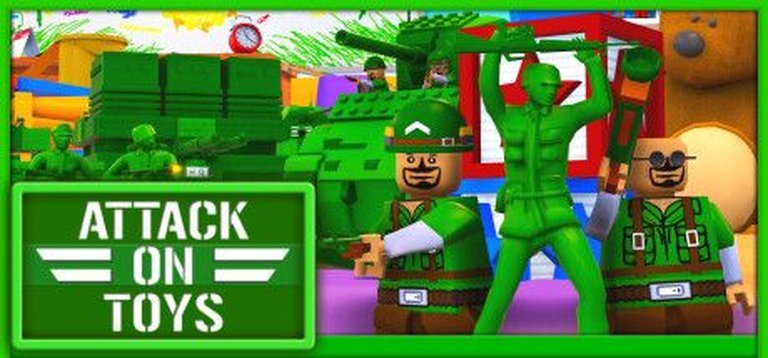
Attack on Toys is a real-time strategy and action game set in a whimsical fantasy world where toy soldiers wage war in everyday environments. Players engage in tactical battles with a mix of shooter and RTS mechanics, controlling multiple units from a dynamic camera perspective. Inspired by classic toy-based warfare games, it blends nostalgic charm with modern gameplay, offering both direct control and strategic command in a playful yet competitive setting.
Gameplay Videos
Where to Buy Attack on Toys
PC
Attack on Toys Free Download
Attack on Toys Mods
Attack on Toys Guides & Walkthroughs
Attack on Toys Reviews & Reception
store.steampowered.com (93/100): Relive Your Childhood Toys comes to life! Build your Army Toys, make battle scenario, watch the Toys battling each other, and customize your play with Attack on Toys Toy Box.
steambase.io (93/100): Attack on Toys has earned a Player Score of 93 / 100. This score is calculated from 1,122 total reviews which give it a rating of Very Positive.
steamcommunity.com : This game is really nice! Try it! I tried the itch.io version of this game and i can easily say that Attack on Toys is really promising! I like a lot the hybrid fps/rts game conept.
gamevalio.com (93/100): A solid title that managed to please most of its audience. Some players have reservations, but the general consensus is positive. Good choice if you enjoy this style of game.
Attack on Toys Cheats & Codes
Windows
Hold ‘Z’ and press the specified key to activate the cheat.
| Code | Effect |
|---|---|
| Z + C | Give plastic coins |
| Z + Left Ctrl | Replenish HP |
| Z + Tab | Give ammo to current weapon |
| Z + Q | Disable Item Weapon Restriction |
| Z + V | Disable Driveable Restriction |
| Z + R | Force respawn if stuck |
Attack on Toys: A Nostalgic Hybrid of Strategy and Action
Introduction
Attack on Toys is a charming and ambitious indie game that blends the tactical depth of real-time strategy (RTS) with the visceral excitement of third-person shooters (TPS). Developed by the one-person studio N7T-GAMES, this title invites players to relive the whimsy of childhood imaginative play, where toy soldiers wage war across household battlegrounds. Released in Early Access in September 2021, Attack on Toys has steadily evolved through community feedback, offering a unique sandbox experience that balances nostalgia with innovative gameplay mechanics.
At its core, Attack on Toys is a love letter to classic toy-based warfare games like Army Men, but it carves its own niche by integrating modern design sensibilities and player-driven creativity. The game’s premise is simple yet endlessly engaging: command an army of plastic toy soldiers, build and customize your forces, and engage in strategic battles across diverse environments. Whether you’re defending your headquarters from waves of invaders or clashing with rival toy factions in skirmishes, the game’s hybrid gameplay loop keeps players invested.
This review will dissect Attack on Toys in meticulous detail, exploring its development history, narrative and thematic elements, gameplay mechanics, artistic direction, and its reception within the gaming community. By the end, we’ll determine whether this indie gem is a fleeting novelty or a lasting contribution to the strategy and action genres.
Development History & Context
The Birth of a Passion Project
Attack on Toys began as a humble school project in July 2018, conceived by the solo developer behind N7T-GAMES. What started as a modest experiment in game design quickly blossomed into a full-fledged passion project, driven by a deep affection for childhood toys and the strategic games of yesteryear. The developer’s vision was clear: to create a game that captured the magic of imagining toy soldiers coming to life, while also offering a robust and engaging gameplay experience.
The game’s journey from a classroom assignment to a Steam Early Access title is a testament to the power of iterative development and community engagement. Initially released as a free game, Attack on Toys relied on player feedback to refine its mechanics, expand its content, and polish its presentation. The transition to Steam in September 2021 marked a significant milestone, providing the game with a broader audience and the resources needed to accelerate its development.
Technological Constraints and Innovations
Developed using the Unity engine, Attack on Toys leverages the flexibility and accessibility of this popular game development tool. Unity’s robust features allowed the solo developer to implement a wide range of mechanics, from real-time strategy elements to third-person shooting, all within a cohesive and performant framework. However, the game’s development was not without its challenges. As a one-person project, N7T-GAMES faced the daunting task of balancing multiple disciplines, including programming, art, design, and community management.
One of the most notable innovations in Attack on Toys is its “Toy-Box” mode, a sandbox feature that empowers players to create and share their own custom levels. This mode not only extends the game’s replayability but also fosters a sense of community-driven creativity. The integration of Steam Workshop support further enhances this aspect, allowing players to download and play user-generated content seamlessly.
The Gaming Landscape at Launch
Attack on Toys entered the gaming market at a time when indie titles were flourishing, thanks in part to platforms like Steam that democratized game distribution. The Early Access model, which allows developers to release unfinished games and refine them based on player feedback, has become a popular approach for indie studios. This model was particularly well-suited for Attack on Toys, as it enabled the developer to iterate on the game’s design in response to community input.
At the time of its release, Attack on Toys stood out for its unique blend of genres. While RTS and TPS games are well-established, few titles attempt to merge the two as seamlessly as Attack on Toys does. This hybrid approach, combined with the game’s nostalgic theme, helped it carve out a distinct identity in a crowded marketplace.
Narrative & Thematic Deep Dive
A World of Living Toys
Attack on Toys transports players to a miniature world where childhood toys spring to life, engaging in epic battles across familiar household settings. The game’s narrative is minimal but effective, focusing on the timeless conflict between rival toy factions. Players assume the role of a commander, leading their army of plastic soldiers through various missions and scenarios.
The game’s lore is delivered primarily through its “Toy-Box” mode and in-game descriptions, which hint at a larger world of toy warfare. While Attack on Toys does not feature a traditional campaign with a linear story, the developer has expressed plans to introduce more narrative content in future updates. For now, the game’s appeal lies in its sandbox nature, allowing players to craft their own stories through custom battles and scenarios.
Themes of Nostalgia and Imagination
At its heart, Attack on Toys is a celebration of childhood imagination. The game taps into the universal experience of playing with toys, where ordinary objects become the stages for grand adventures. This theme is reinforced by the game’s art style, which emulates the look and feel of classic plastic army men, complete with vibrant colors and exaggerated proportions.
The game also explores themes of strategy and resource management, challenging players to think critically about their tactical decisions. Whether it’s positioning troops for optimal coverage or managing limited resources to build defenses, Attack on Toys encourages players to engage with its systems on a deeper level.
Characters and Factions
While Attack on Toys does not feature deeply developed characters in the traditional sense, it offers a variety of toy soldier types, each with unique roles and abilities. From basic infantry to specialized units like snipers and medics, the game provides a diverse roster of troops that players can customize and deploy. The factions in Attack on Toys are primarily distinguished by their color schemes, with each army representing a different “nation” of toy soldiers.
The game’s focus on customization extends to the player’s avatar, allowing for personalization of equipment and appearance. This feature, while not narrative-driven, enhances the player’s connection to their army, fostering a sense of ownership and investment in their toy soldiers’ success.
Gameplay Mechanics & Systems
Core Gameplay Loop
Attack on Toys blends real-time strategy and third-person shooting into a cohesive and engaging gameplay loop. Players begin by selecting a mission or scenario, which can range from defending a headquarters against waves of enemies to engaging in skirmishes against rival toy factions. The game’s hybrid nature means that players must balance macro-level strategy with micro-level action, switching between commanding their army and directly controlling individual units.
The core gameplay loop revolves around resource management, base building, and tactical combat. Players must gather “plastic coins,” the game’s primary resource, to construct buildings, recruit troops, and upgrade their defenses. This resource is obtained by defeating enemies, completing objectives, and capturing territory, adding a layer of strategic depth to the gameplay.
Combat and Unit Control
Combat in Attack on Toys is dynamic and fast-paced, with players able to switch between a third-person perspective for direct control and a top-down strategic view for commanding their army. This dual-perspective approach allows for a high degree of tactical flexibility, as players can issue orders to their troops while also engaging in combat themselves.
The game features a variety of unit types, each with distinct roles and abilities. Infantry units form the backbone of the player’s army, while specialized troops like snipers, medics, and engineers provide additional tactical options. Vehicles, including tanks, jeeps, and helicopters, add another layer of complexity, requiring players to manage both ground and air units effectively.
Progression and Customization
Attack on Toys includes a progression system that allows players to level up their toy soldiers, unlocking new abilities and equipment. This system adds a sense of long-term investment, as players can tailor their army to suit their preferred playstyle. The game also features a robust customization system, enabling players to personalize their troops’ appearance and loadout.
The “Toy-Box” mode is one of the game’s standout features, offering a sandbox environment where players can design and share their own custom levels. This mode includes a wide range of tools for terrain editing, object placement, and scenario scripting, making it a powerful tool for creative expression. The integration of Steam Workshop support further enhances this aspect, allowing players to download and play user-generated content.
Multiplayer and Cooperative Play
While Attack on Toys is primarily a single-player experience, it includes local and online multiplayer modes that support split-screen and cooperative play. These modes allow players to team up with friends or compete against each other in custom battles. The game’s multiplayer functionality is still in development, with the developer focusing on expanding and refining these features based on community feedback.
World-Building, Art & Sound
A Miniature World Brought to Life
Attack on Toys excels in its world-building, creating a vibrant and immersive miniature universe where toys come to life. The game’s environments are meticulously designed to evoke the feeling of playing with toys in a real-world setting, with levels set in locations like backyards, kitchens, and attics. These settings are filled with interactive objects and hazards, adding depth and variety to the gameplay.
The art style of Attack on Toys is a highlight, blending the nostalgic charm of classic plastic army men with modern graphical techniques. The game’s visuals are colorful and detailed, with a focus on exaggerated proportions and expressive animations. The toy soldiers themselves are rendered with a plastic-like sheen, enhancing the game’s thematic consistency.
Sound Design and Atmosphere
The game’s sound design complements its visuals, with a mix of playful and intense audio cues that enhance the gameplay experience. The sound of toy soldiers marching, the clatter of plastic weapons, and the explosive impacts of toy artillery all contribute to the game’s immersive atmosphere. The soundtrack, while not a central focus, provides a fitting backdrop to the action, with upbeat and energetic tracks that match the game’s tone.
Reception & Legacy
Critical and Commercial Reception
Attack on Toys has been well-received by players, with a “Very Positive” rating on Steam based on over 1,000 user reviews. Critics and players alike have praised the game for its innovative hybrid gameplay, nostalgic charm, and robust customization options. The game’s Early Access model has allowed it to evolve based on community feedback, resulting in a product that resonates with its audience.
Commercially, Attack on Toys has found a niche audience, with its affordable price point and active development making it an attractive option for fans of strategy and action games. The game’s success is a testament to the power of indie development, demonstrating that a solo developer can create a compelling and polished experience with the right vision and community support.
Influence and Future Prospects
While Attack on Toys is still in Early Access, its influence on the indie gaming scene is already evident. The game’s hybrid gameplay approach has inspired other developers to explore similar mechanics, and its emphasis on community-driven content has set a precedent for player engagement in indie titles.
Looking ahead, Attack on Toys has the potential to become a landmark title in the strategy and action genres. With continued development and community support, the game could expand its narrative content, refine its multiplayer features, and introduce new gameplay modes. The developer’s commitment to listening to player feedback ensures that Attack on Toys will continue to evolve in exciting and unexpected ways.
Conclusion
Attack on Toys is a remarkable achievement for a solo developer, offering a unique and engaging blend of real-time strategy and third-person shooting. The game’s nostalgic theme, innovative gameplay mechanics, and robust customization options make it a standout title in the indie gaming landscape. While it is still in Early Access, the game’s active development and community-driven approach ensure that it will continue to improve and expand.
For fans of strategy games, action titles, or anyone who fondly remembers playing with toy soldiers, Attack on Toys is a must-play experience. Its charming world, dynamic combat, and creative sandbox modes provide endless hours of entertainment, and its potential for future growth makes it a game worth watching. As Attack on Toys continues to evolve, it has the opportunity to leave a lasting legacy in the gaming industry, proving that even the smallest projects can make a big impact.