
- Release Year: 2022
- Platforms: Nintendo Switch, Windows
- Publisher: AVI Games, HH Games, Ocean Media d.o.o.
- Developer: AVI Games
- Genre: Puzzle
- Perspective: 1st-person
- Game Mode: Single-player
- Gameplay: Hidden object, Point and select
- Setting: Crime, Detective, Mystery
- Average Score: 67/100
Description
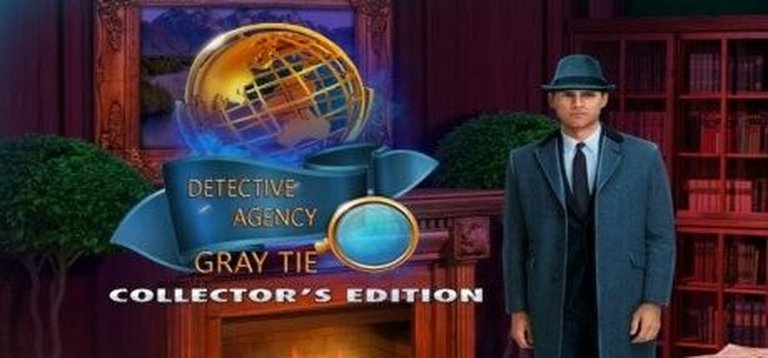
In ‘Detective Agency Gray Tie: Collector’s Edition,’ players step into the shoes of detective Amanda to solve the case of a stolen antique statuette. Set in the picturesque locations of Amsterdam, the game combines hidden object scenes, clever puzzles, and a gripping detective narrative. With a first-person perspective and point-and-select interface, players explore stylized 2D environments, uncover clues, and unravel a mystery filled with crime and intrigue.
Gameplay Videos
Where to Buy Detective Agency Gray Tie: Collector’s Edition
PC
Detective Agency Gray Tie: Collector’s Edition Patches & Updates
Detective Agency Gray Tie: Collector’s Edition Guides & Walkthroughs
Detective Agency Gray Tie: Collector’s Edition Reviews & Reception
monstercritic.com (67/100): Has a reasonable variety of puzzles, and a light narrative, but doesn’t distinguish itself from being quite generic
gadgetspeak.com : Your role in the game is that of a female detective called Amanda. You have been charged with the task of catching the thief and restoring the stolen treasure to its rightful place.
steambase.io (68/100): Detective Agency Gray Tie – Collector’s Edition has earned a Player Score of 68 / 100.
opencritic.com (67/100): Has a reasonable variety of puzzles, and a light narrative, but doesn’t distinguish itself from being quite generic
Detective Agency Gray Tie: Collector’s Edition – A Forensic Examination of a Hidden Object Curiosity
Introduction: The Case of the Missing Masterpiece
In the sprawling metropolis of casual gaming, where hidden object adventures proliferate like clues in a detective’s notebook, Detective Agency Gray Tie: Collector’s Edition (2022) emerges as a modest yet meticulously crafted entry. Developed by AVI Games and published under the banners of HH-Games and Ocean Media, this title invites players to don the deerstalker of Detective Amanda, tasked with unraveling the theft of an ancient statuette from the eccentric collector Gino Grasso. At first glance, the game appears to be another drop in the ocean of point-and-click mysteries, but beneath its unassuming surface lies a curious artifact—a game that is both a product of its time and a reflection of the evolving tastes of the casual gaming audience.
This review will dissect Gray Tie with the precision of a forensic analyst, examining its development context, narrative structure, gameplay mechanics, aesthetic design, reception, and legacy. By the end, we will determine whether this title is a forgotten gem, a disposable diversion, or something more intriguing: a snapshot of a genre in transition.
Development History & Context: The Anatomy of a Casual Game
The Studio Behind the Badge
AVI Games, the developer of Detective Agency Gray Tie, is a name that resonates within the hidden object (HO) and casual gaming spheres. While not a household name like Big Fish Games or Artifex Mundi, AVI Games has carved a niche for itself by producing titles that adhere to the classic HO formula while occasionally experimenting with narrative and presentation. Their portfolio includes other detective-themed games, such as Detective Agency (2009), but Gray Tie represents a more polished, modern iteration of their craft.
The game was built using the Unity engine, a choice that reflects the studio’s pragmatic approach. Unity’s accessibility and cross-platform capabilities allowed AVI Games to deploy Gray Tie across Windows, Nintendo Switch, and PlayStation 5, ensuring maximum reach in a market where casual gamers span multiple devices.
The Casual Gaming Landscape in 2022
By the time Gray Tie launched on October 30, 2022, the hidden object genre had undergone significant evolution. The golden age of HO games—roughly the late 2000s to early 2010s—had seen an explosion of titles, many of which followed a rigid template: static scenes, lists of objects, and occasional mini-games. However, by the 2020s, player expectations had shifted. Audiences craved:
– More interactive environments (e.g., The Room series).
– Deeper narratives (e.g., Chinatown Detective Agency).
– Hybrid gameplay blending HO with adventure or puzzle elements.
Gray Tie arrives at a crossroads. It is unapologetically traditional in its structure, yet it attempts to modernize with additional mini-games, bonus content, and a light narrative thread. This tension between tradition and innovation is the game’s defining characteristic.
Technological Constraints and Design Philosophy
The game’s system requirements are remarkably modest:
– OS: Windows 98/7/8/10 (though Steam later dropped support for pre-Windows 10 systems).
– Processor: 1 GHz or higher.
– RAM: 256 MB.
– Storage: 500 MB.
These specs reveal a game designed for accessibility, targeting low-end PCs and laptops—a smart move for a casual audience. The fixed/flip-screen perspective and 2D visuals further emphasize its roots in classic HO design, eschewing the 3D exploration of contemporaries like Gray Matter (2010).
The Collector’s Edition moniker is not merely marketing fluff. It includes:
– 8 additional locations with new puzzles.
– 8 unique mini-games.
– Downloadable wallpapers and soundtracks.
– Exclusive achievements.
This approach mirrors the collector’s culture prevalent in casual gaming, where players are incentivized to purchase premium editions for bonus content—a trend that has since become ubiquitous in the industry.
Narrative & Thematic Deep Dive: The Faceless Thief and the Detective’s Dilemma
Plot Summary: A Statuette, a Detective, and a City of Canals
The premise of Gray Tie is straightforward:
– Gino Grasso, a wealthy collector, has his prized statuette stolen by a shadowy figure known only as the Faceless One.
– Detective Amanda, a seasoned investigator with a no-nonsense demeanor, is called in to solve the case.
– The trail leads Amanda and her assistant through Amsterdam’s canals, a ruined castle, and a chemistry lab, each location harboring clues and hidden objects.
The narrative is linear and episodic, with each chapter unfolding in a new location. The story is light on dialogue, relying instead on environmental storytelling and the occasional text-based exchange between Amanda and her assistant. This minimalist approach is both a strength and a weakness:
– Strength: It keeps the focus on gameplay, avoiding the overwritten, melodramatic plots that plague some HO games.
– Weakness: The lack of character development or motivational depth makes the story feel perfunctory.
Themes: The Illusion of Agency
At its core, Gray Tie explores themes of observation, deduction, and the illusion of control:
1. The Faceless Thief as a Metaphor:
– The antagonist’s lack of identity mirrors the player’s own anonymity in the game. Like the thief, the player is an invisible force, manipulating the environment without leaving a trace.
– The thief’s elusiveness also serves as a narrative device, allowing for sequels (Detective Agency Gray Tie 2 was released in 2023).
-
The Detective’s Role:
- Amanda is a competent but distant protagonist, embodying the idealized detective archetype—logical, unemotional, and efficient.
- The game subverts the player’s agency by making Amanda the active investigator, while the player assumes the role of her assistant. This dynamic is reinforced by the point-and-select interface, which positions the player as an observer rather than a participant.
-
The Nature of Hidden Object Games:
- Gray Tie is, at its heart, a game about looking. The act of scanning scenes for objects is a metaphor for detective work, but it also highlights the artificiality of the genre.
- The sparkle hints (which indicate interactive zones) and colored item lists (green for tasks, pink for hidden objects) break the fourth wall, reminding players that they are engaging in a constructed puzzle rather than a realistic investigation.
Dialogue and Characterizations: The Silence of the Detectives
The game’s dialogue is sparse and functional, serving primarily to advance the plot rather than develop characters. Amanda and her assistant exchange brief, expository lines, such as:
– “The thief must have gone this way.”
– “We need to find the key to unlock this door.”
This minimalist scripting is typical of the genre, but it leaves the characters feeling underdeveloped. The Faceless One, in particular, remains a cipher, his motives and identity left unexplored—a missed opportunity to add narrative weight to the proceedings.
Gameplay Mechanics & Systems: The Puzzle of Repetition
Core Gameplay Loop: Find, Solve, Repeat
Gray Tie adheres to the classic hidden object formula, structured around a three-part loop:
1. Hidden Object Scenes:
– Players are presented with a static, illustrated environment (e.g., a study, a canal, a lab).
– A list of items appears at the bottom of the screen, which the player must locate within the scene.
– Items are categorized by color:
– White: Standard objects.
– Green: Requires an interaction (e.g., opening a drawer).
– Pink: Hidden behind other objects or requiring multiple steps to uncover.
-
Mini-Games and Puzzles:
- After completing an HO scene, players encounter a mini-game, such as:
- Spot the Difference.
- Jigsaw Puzzles.
- Maze Navigation.
- Lockpicking.
- These puzzles are simple but varied, ensuring that the gameplay doesn’t become monotonous.
- After completing an HO scene, players encounter a mini-game, such as:
-
Progression and Rewards:
- Completing scenes and puzzles unlocks new locations.
- Raccoons (a recurring collectible) and extra items can be found in each scene, adding a light meta-layer of completionism.
- The Collector’s Edition introduces bonus scenes and mini-games, extending replayability.
Innovations and Flaws
While Gray Tie is fundamentally traditional, it incorporates several modern touches:
– Dynamic Item Lists: Instead of displaying all items at once, the game cycles through them, preventing screen clutter.
– Interactive Sparkles: The asterisk-shaped hints (referred to as “sparkles” in-game) guide players to zoomable areas, reducing frustration.
– Bonus Content: The Collector’s Edition adds substantial post-game content, a rarity in casual titles.
However, the game is not without its flaws:
– Repetitive Structure: The find-solve-progress loop becomes predictable after a few hours.
– Lack of Challenge: The mini-games are too easy, and the hidden object scenes lack complexity.
– Limited Player Agency: The linear progression and lack of branching paths make the game feel railroaded.
UI and Accessibility
The user interface is clean and intuitive, with:
– A hint system that recharges over time.
– Adjustable difficulty (though options are limited).
– Full controller support (on Switch and PS5).
The game’s accessibility features are basic but effective, catering to casual players who may not be familiar with complex controls.
World-Building, Art & Sound: The Aesthetics of Investigation
Setting and Atmosphere: Amsterdam as a Character
Gray Tie’s Amsterdam setting is one of its strongest assets. The game romanticizes the city, depicting:
– Picturesque canals lined with tulips and bicycles.
– Gloomy castles with crumbling stone walls.
– Mysterious labs filled with bubbling beakers and arcane symbols.
The art style is stylized and vibrant, with a hand-painted aesthetic that evokes storybook illustrations. This whimsical tone contrasts with the serious premise, creating a cognitive dissonance that is oddly charming.
Visual Design: The Beauty of Simplicity
The game’s 2D visuals are detailed and colorful, with:
– Richly textured environments that reward close inspection.
– Exaggerated perspectives that emphasize depth.
– Subtle animations (e.g., flickering candles, rippling water).
The character designs are minimalist, with Amanda and her assistant rendered in a semi-realistic style that blends with the cartoonish backgrounds.
Sound Design: The Silence of the Detectives
The audio experience is understated but effective:
– Ambient tracks set the mood for each location (e.g., eerie strings for the castle, jazzy tunes for Amsterdam).
– Sound effects are subtle (e.g., the click of a lock, the rustle of papers).
– Voice acting is absent, with dialogue delivered via text boxes.
The lack of voice acting is a double-edged sword:
– Pro: It allows players to focus on the visuals and gameplay.
– Con: It reduces immersion, making the world feel less alive.
Reception & Legacy: The Verdict of the Jury
Critical Reception: A Mixed Bag
Gray Tie’s reception has been tepid but not damning:
– Steam: 68/100 Player Score (Mixed), with 13 positive and 6 negative reviews.
– PlayStation Store: 3.4/5 based on 47 ratings.
– OpenCritic: 6.7/10 (Nindie Spotlight), criticized for being “quite generic.”
Common praises include:
– Beautiful visuals.
– Relaxing gameplay.
– Good value in the Collector’s Edition.
Common criticisms include:
– Too short (2-3 hours).
– Lack of innovation.
– Repetitive structure.
Commercial Performance: A Niche Success
The game’s pricing strategy has been aggressive, with frequent discounts:
– Steam: Originally $4.99, often on sale for $0.99.
– PlayStation: $14.99, but frequently discounted to $0.74.
This budget-friendly approach has likely boosted sales, appealing to casual players looking for a quick, inexpensive diversion.
Legacy: A Footnote or a Foundation?
Gray Tie is unlikely to be remembered as a landmark title, but it serves as:
1. A Time Capsule: It captures the transition period of HO games, bridging the gap between old-school static scenes and modern interactive adventures.
2. A Gateway Game: Its accessibility and simplicity make it a good introduction to the genre for newcomers.
3. A Franchise Starter: The sequel (Gray Tie 2) suggests that AVI Games sees potential in the Detective Amanda character, though whether the series will evolve remains to be seen.
Conclusion: The Final Case Report
Detective Agency Gray Tie: Collector’s Edition is a competent, if unremarkable, hidden object game that excels in execution but lacks ambition. It is:
– Aesthetically pleasing, with gorgeous hand-drawn environments.
– Mechanically sound, with a smooth, if repetitive, gameplay loop.
– Narratively lightweight, with a serviceable but forgettable story.
Final Verdict:
– For Casual Players: A solid, relaxing experience worth picking up on sale.
– For HO Enthusiasts: A familiar but well-crafted entry in the genre.
– For Adventure Gamers: Too simplistic to hold attention.
Score: 6.5/10 – “A Polished but Predictable Puzzle.”
Gray Tie is not a masterpiece, but it is a respectable craftsmanship—a game that knows its audience and delivers exactly what they expect. In a world where hidden object games are often dismissed as disposable, Detective Agency Gray Tie stands as a testament to the enduring appeal of a well-made puzzle. Whether it will be remembered beyond its release remains a mystery as elusive as the Faceless One himself.
Case Closed. 🕵️♀️