
- Release Year: 2004
- Platforms: Windows
- Publisher: 1C Company, Digital Jesters Ltd., Focus Home Interactive SAS, Global Software Publishing Ltd., Monte Cristo Multimedia, Pointsoft GmbH
- Developer: Monte Cristo Multimedia
- Genre: Strategy, Tactics
- Perspective: Diagonal-down
- Game Mode: Single-player
- Gameplay: Business simulation, City building, Combat, Managerial, Resource Management
- Setting: Medieval
- Average Score: 73/100
Description
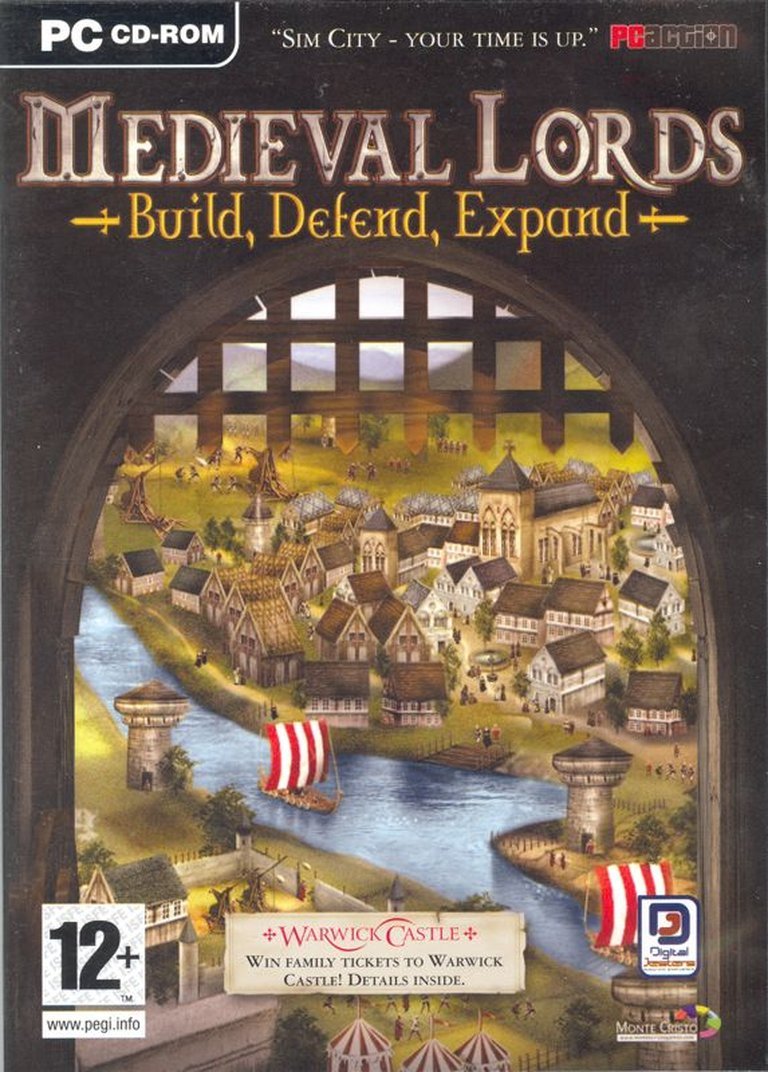
Medieval Lords: Build, Defend, Expand is a medieval-themed city-building strategy game where players construct and manage a thriving town while ensuring the needs of their citizens are met. The game features a 3D engine and a SimCity-like approach to urban planning, with roads automatically connecting buildings and zones of influence affecting nearby structures. Players must balance resources, address needs like hunger, security, and religion, and defend their town from threats by constructing walls and managing military strength. The game emphasizes expansion, taxation, and strategic placement to grow a prosperous medieval settlement.
Gameplay Videos
Medieval Lords: Build, Defend, Expand Free Download
Medieval Lords: Build, Defend, Expand Patches & Updates
Medieval Lords: Build, Defend, Expand Mods
Medieval Lords: Build, Defend, Expand Reviews & Reception
metacritic.com (80/100): An incredible game. I would say it’s a must have for every RTS fan out there.
gamewatcher.com : Medieval Lords provides good entertainment along those lines, and play is interesting enough to keep you busy for some time, while building your kingdom.
mobygames.com (67/100): A city building game in the tradition set by the series created by Impressions which begun with Caesar.
Medieval Lords: Build, Defend, Expand Cheats & Codes
PC
During the game press (shift)+(ctrl)+(alt)+c, it may need to be pressed a few times, then a console will come up.
| Code | Effect |
|---|---|
| setgold X | Your gold into whatever u set X to |
| addfood_500 | Self explanitory |
| freetechno | Adds all techs, unlocks all buildings |
| addmoney_100000 | Adds 100000 Money |
| addmoneytechnofood | Add Money, Tech and Food |
| addmoregold # | Add # of Gold |
| addtroopstomouse | Add Army of Swordsmen |
| addtroopstomouse_cavalry | Add Army of Cavalry |
| addtroopstomouse_enemy | Add Army of Archers |
| addtroopstomouse_enemytoground | Add Camp to Army |
| cheat_construction | Build All Buildings Without Buildtime |
| destroy_speedtree_objects | Remove All Trees |
| freeprice | Everything is Free |
| general_energy | Heal General |
Medieval Lords: Build, Defend, Expand – A Flawed but Fascinating Medieval City-Builder
Introduction: A SimCity for the Middle Ages
Medieval Lords: Build, Defend, Expand (2004) is a city-building strategy game developed by Monte Cristo Multimedia, positioning itself as a medieval-themed successor to classics like SimCity and Caesar III. It promised a fresh take on the genre with its 3D engine, free-form construction, and a blend of urban management and military strategy. However, its reception was mixed—praised for its innovative design but criticized for its shallow combat and technical shortcomings.
This review explores the game’s development, mechanics, narrative, and legacy, assessing whether it stands as a forgotten gem or a missed opportunity in the city-building canon.
Development History & Context: Monte Cristo’s Medieval Ambition
The Studio Behind the Game
Monte Cristo Multimedia, a French developer known for City Life and 7 Sins, sought to carve a niche in the city-building genre with Medieval Lords. The game was part of a broader trend in the early 2000s to blend management sims with historical settings, following titles like Stronghold and Lords of the Realm.
Technological Constraints & Design Choices
- 3D Engine Innovation: Unlike its grid-based predecessors, Medieval Lords used a 3D engine, allowing players to zoom into their cities and observe villagers up close—a rarity in 2004.
- Free-Form Construction: Buildings could be placed anywhere, with roads automatically generating to connect them, a departure from the rigid grids of SimCity.
- StarForce DRM: The game’s use of the controversial StarForce copy protection scheme alienated some players, contributing to its mixed reception.
The Gaming Landscape in 2004
The mid-2000s were a transitional period for city-builders. SimCity 4 (2003) had set a high bar, while The Sims 2 (2004) dominated the life-sim market. Medieval Lords arrived amid stiff competition, offering a medieval twist but lacking the depth of contemporaries like Rome: Total War.
Narrative & Thematic Deep Dive: A Kingdom in Your Hands
Plot & Campaign Structure
The game’s campaign spans ten scenarios, each tasking players with expanding their medieval kingdom while managing resources, diplomacy, and warfare. The narrative is minimal, focusing on gameplay rather than storytelling.
Themes & Atmosphere
- Feudal Management: Players embody a medieval lord, balancing taxation, food production, and religious needs to keep peasants content.
- Survival & Expansion: The game emphasizes the harsh realities of the Middle Ages—disease, invasions, and resource scarcity are constant threats.
- First-Person Exploration: A unique feature allows players to walk through their cities in first-person, immersing them in the world they’ve built.
Characters & Dialogue
While the game lacks deep character development, the villagers’ needs (hunger, security, leisure) drive progression. The absence of a strong narrative or memorable NPCs, however, makes the experience feel mechanical.
Gameplay Mechanics & Systems: Building a Kingdom, Brick by Brick
Core Gameplay Loop
- Resource Management: Players must ensure food, water, and goods are produced and distributed efficiently.
- Urban Planning: Buildings project “zones of influence,” affecting nearby structures (e.g., a church boosts morale).
- Military Strategy: Combat is simplified—armies clash based on numbers rather than tactics, a frequent criticism.
Innovations & Flaws
- Pros:
- Free-Form Building: The lack of a grid system allows for organic city growth.
- First-Person Mode: A novel way to inspect your kingdom.
- Environmental Factors: Terrain (rivers, forests) impacts gameplay, adding depth.
- Cons:
- Shallow Combat: Battles lack tactical depth, reducing warfare to a numbers game.
- Repetitive Missions: The campaign’s scenarios feel formulaic over time.
- Technical Issues: Bugs and performance hiccups plagued the release.
UI & Accessibility
The interface is functional but clunky, with some critics noting that the camera controls could be unwieldy. The lack of a multiplayer mode also limited replayability.
World-Building, Art & Sound: A Living Medieval Tapestry
Visual Design
- 3D Aesthetic: The game’s 3D engine was ambitious for its time, though textures and animations now feel dated.
- Atmospheric Details: Villagers go about their daily routines, adding life to the world.
Sound & Music
- Ambient Soundtrack: The medieval-inspired score enhances immersion.
- Sound Effects: The clatter of hooves, market chatter, and battle cries create a bustling atmosphere.
Reception & Legacy: A Divided Kingdom
Critical Reception
- Praise: Reviewers applauded the game’s innovative building system and atmospheric presentation.
- Criticism: The combat system and lack of depth in diplomacy were widely panned.
Commercial Performance
Medieval Lords sold modestly, overshadowed by more polished competitors. Its legacy is that of a cult classic—flawed but fondly remembered by fans of niche city-builders.
Influence on Later Games
While not a direct influence, its free-form building mechanics foreshadowed later titles like Banished and Frostpunk.
Conclusion: A Noble Experiment with Flawed Execution
Medieval Lords: Build, Defend, Expand is a fascinating relic of early 2000s city-building. Its 3D engine and free-form construction were ahead of their time, but its shallow combat and repetitive missions hold it back. For fans of medieval management sims, it’s worth a play—just don’t expect the depth of Crusader Kings or Stronghold.
Final Verdict: 6.5/10 – A bold but uneven attempt to merge SimCity with medieval warfare. Its innovations are noteworthy, but its flaws are hard to overlook.
Would you like additional details on any specific aspect of the game?