
- Release Year: 1998
- Platforms: Macintosh, Windows
- Publisher: Blizzard Entertainment Inc.
- Developer: Blizzard Entertainment Inc.
- Genre: Strategy, Tactics
- Perspective: Top-down
- Game Mode: LAN, Online PVP, Single-player
- Gameplay: Fog of war, Real-time strategy (RTS)
- Setting: Futuristic, Sci-fi
- Average Score: 91/100
Description
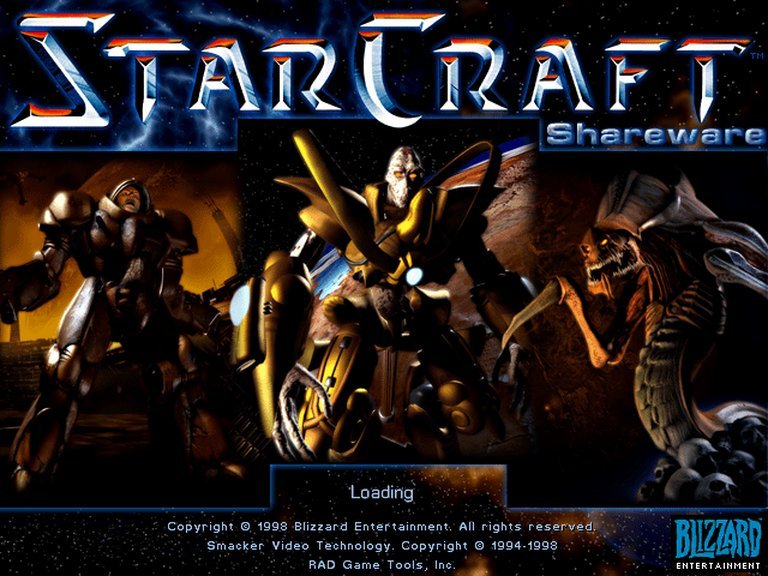
The ‘StarCraft (Demo Version)’ is a prequel to the full game, featuring a unique short campaign called ‘Loomings.’ Players assume the role of a Confederate Alpha Squadron Lieutenant sent to the fringe colony of Chau Sara to combat Sons of Korhal rebels, only to face an unexpected invasion by the alien Zerg. The demo includes a tutorial and three missions (with two additional missions in the CD version), introducing key gameplay mechanics and setting the stage for the larger conflict in the retail release.
Gameplay Videos
StarCraft (Demo Version) Cracks & Fixes
StarCraft (Demo Version) Patches & Updates
StarCraft (Demo Version) Mods
StarCraft (Demo Version) Guides & Walkthroughs
StarCraft (Demo Version) Reviews & Reception
lovecinemaandvideogames.substack.com : A classic of the real-time strategy genre, a game that not only defined a generation but likely laid the very groundwork for what would become esports.
metacritic.com (88/100): One of those rare games that is not overly complex, but provides a challenging and fun gaming experience.
ign.com (95/100): Starcraft holds up beautifully after two years and is still perhaps the paragon of real time strategy games.
StarCraft (Demo Version) Cheats & Codes
PC
Press [Enter] during gameplay and type one of the following codes; press [Enter] again to allow the cheat to take effect.
| Code | Effect |
|---|---|
| show me the money | Minerals and gas increased by 10,000 |
| whats mine is mine | Minerals increased by 500 |
| breathe deep | Vespene gas increased by 500 |
| something for nothing | Everything upgraded |
| operation cwal | Faster building and instant upgrades |
| the gathering | Unlimited psionic ability |
| power overwhelming | Indestructible buildings and ships |
| war aint what it used to be | Remove fog of war |
| food for thought | Ignore supply limit when building units |
| black sheep wall | Full map |
| noglues | Opponent has no psionics |
| modify the phase variance | Build anything |
| medieval man | Free upgrades to units |
| there is no cow level | Mission skip |
| ophelia | Enable mission select |
| terran | Terran mission select |
| zerg | Zerg mission select |
| protoss | Protoss mission select |
| staying alive | Continue after mission completed |
| man over game | Win game |
| game over man | Lose game |
StarCraft (Demo Version): A Pivotal Prelude to a Sci-Fi Masterpiece
Introduction: The Spark That Ignited a Galaxy
In the annals of video game history, few titles have left as indelible a mark as StarCraft. Released in 1998, Blizzard Entertainment’s real-time strategy (RTS) magnum opus didn’t just redefine a genre—it transcended it, weaving a tapestry of deep lore, asymmetrical gameplay, and competitive multiplayer that would echo through the decades. Yet, before the full game’s release, there was the StarCraft Demo Version, a tantalizing glimpse into the universe that would captivate millions. This review delves into the demo’s significance, its narrative depth, gameplay innovations, and its enduring legacy as both a standalone experience and a harbinger of what was to come.
The StarCraft Demo Version, also known as StarCraft Shareware, was more than a mere teaser. It was a self-contained prequel campaign titled Loomings, offering players a unique narrative that set the stage for the events of the retail game. Released on June 23, 1998, for Windows and later for Macintosh in 1999, the demo served as a critical marketing tool and a testament to Blizzard’s commitment to storytelling and gameplay polish. Whether downloaded from the nascent internet or distributed via shareware CDs, the demo provided an accessible entry point into the StarCraft universe, albeit with some limitations compared to its full counterpart.
This review will explore the demo’s development context, its narrative and thematic richness, the intricacies of its gameplay mechanics, and its lasting influence on the RTS genre and beyond. By examining the demo through the lens of its historical significance and its role in shaping StarCraft’s legacy, we can appreciate how even a “small” slice of this monumental game could leave such a profound impact.
Development History & Context: Forging a Legend
The Birth of a Genre Titan
The late 1990s were a golden age for real-time strategy games. Titles like Command & Conquer, Warcraft II, and Age of Empires had already cemented the genre’s appeal, but Blizzard Entertainment was poised to push the boundaries further. Following the success of Warcraft II: Tides of Darkness (1995), the studio turned its gaze to the stars, aiming to craft a sci-fi RTS that would surpass its fantasy predecessor in both scope and innovation.
Development on StarCraft began in earnest in 1995, with a team led by executive producer Allen Adham and senior designers James Phinney and Chris Metzen. The project was ambitious from the outset, seeking to differentiate itself from Warcraft II by introducing three distinct factions—the Terrans, Zerg, and Protoss—each with unique units, structures, and playstyles. This asymmetrical design was a radical departure from the symmetrical factions of most RTS games at the time, requiring meticulous balancing and a deep understanding of each race’s identity.
The demo version of StarCraft was conceived as both a marketing tool and a way to gauge player interest. Drawing inspiration from the Warcraft II demo, which had successfully whetted appetites for the full game, Blizzard aimed to create a self-contained experience that would immerse players in the StarCraft universe while leaving them hungry for more. The result was Loomings, a prequel campaign that introduced players to the conflict on the fringe colony of Chau Sara, where the Terrans first encountered the Zerg and the enigmatic Protoss.
Technological Constraints and Innovations
The late 1990s were a period of rapid technological advancement, but game development still faced significant constraints. The StarCraft demo was released in two forms: a downloadable version and a CD-ROM version. The downloadable demo was limited by the slow internet speeds of the era, which necessitated a smaller file size. As a result, it included only a tutorial and three missions, with reduced unit quotes and no full intro movie. The CD-ROM version, by contrast, offered a more complete experience, featuring two additional missions and higher-quality assets.
Despite these limitations, the demo showcased several technical innovations that would become hallmarks of the full game. The use of pre-rendered sprites and backgrounds, created with 3D Studio Max, gave StarCraft a visual fidelity that surpassed many of its contemporaries. The isometric perspective, a departure from the top-down view of Warcraft II, allowed for more detailed environments and tactical depth. Additionally, the demo featured advanced AI scripting, particularly in the indoor mission Den of the Beast, where doors automatically closed when no units were nearby—a feature that would later appear in the Brood War expansion.
The Gaming Landscape of 1998
The release of the StarCraft demo in June 1998 coincided with a pivotal moment in gaming history. The RTS genre was flourishing, with titles like StarCraft, Age of Empires, and Total Annihilation vying for dominance. Multiplayer gaming was also on the rise, thanks in part to the proliferation of internet connectivity and services like Blizzard’s own Battle.net. The demo’s inclusion of a multiplayer map, Byways, underscored the importance of competitive play in StarCraft’s design.
Moreover, the demo’s release came at a time when shareware and demo versions were essential tools for game marketing. With no digital storefronts like Steam or the App Store, developers relied on physical media and internet downloads to reach potential players. The StarCraft demo’s success in this regard is evident in its widespread distribution and the anticipation it generated for the full game, which would release just three months later.
Narrative & Thematic Deep Dive: The Loomings of War
Plot Overview: A Prelude to Chaos
The StarCraft demo’s campaign, Loomings, serves as a prequel to the events of the retail game, offering players a glimpse into the early stages of the conflict between the Terrans, Zerg, and Protoss. The story begins on the fringe colony of Chau Sara, where the player assumes the role of a Confederate Alpha Squadron Lieutenant. The colony’s Magistrate enlists the player’s help in dealing with a cell of Sons of Korhal rebels, a terrorist group led by the charismatic and ruthless Arcturus Mengsk.
However, the situation quickly spirals out of control as an unknown alien force—the Zerg—launches a devastating attack on Confederate forces. The arrival of the Cerberus Recon Squad, a mysterious black ops unit, further complicates matters. The Cerberus Commander asserts authority over the Magistrate, much to the latter’s displeasure, and together with the player, they must fend off the Zerg invasion.
The demo’s narrative is tightly focused, offering a self-contained story that introduces key characters and factions while setting the stage for the larger conflict. The inclusion of General Duke, a prominent figure in the full game, as a hero unit in one mission adds a layer of continuity and foreshadowing. Additionally, the demo’s indoor mission, Den of the Beast, provides a unique gameplay experience that would later be expanded upon in Brood War.
Characters and Dialogue: Building a Universe
One of the StarCraft demo’s strengths lies in its characterizations and dialogue. Despite its brevity, the demo manages to establish distinct personalities for its key figures, from the authoritarian Cerberus Commander to the beleaguered Magistrate. The interactions between these characters, as well as the player’s own role as a Confederate officer, create a sense of immersion and urgency.
The demo also introduces players to the broader StarCraft universe through its mission briefings and in-game dialogue. The mention of the Sons of Korhal, the Zerg’s alien nature, and the Protoss’ eventual intervention all serve to build anticipation for the full game’s narrative. Moreover, the demo’s use of hero units, such as the Firebat and Goliath heroes, adds a layer of depth to the gameplay, allowing players to experience the unique abilities of these elite units.
Themes: Power, Betrayal, and Survival
At its core, the StarCraft demo explores themes of power, betrayal, and survival. The Confederate forces, led by the Cerberus Commander, represent the oppressive and often ruthless nature of the Terran government. The Sons of Korhal, by contrast, embody the struggle for freedom and resistance against tyranny. The Zerg, meanwhile, serve as an existential threat, their relentless assault on Chau Sara underscoring the fragility of human civilization in the face of an alien menace.
The demo’s narrative also touches on the theme of betrayal, particularly in the relationship between the Cerberus Commander and the Magistrate. The Commander’s assertion of authority over the Magistrate, despite the latter’s legitimate governance of Chau Sara, highlights the political intrigue and power struggles that define the StarCraft universe. This theme would later be explored in greater depth in the full game, particularly in the character of Arcturus Mengsk, whose betrayal of his allies becomes a central plot point.
Gameplay Mechanics & Systems: A Masterclass in RTS Design
Core Gameplay Loops: Strategy and Tactics
The StarCraft demo’s gameplay is a masterclass in RTS design, offering a refined and polished experience that would set the standard for the genre. At its heart, the game revolves around resource management, base building, and tactical combat, with each of the three factions—the Terrans, Zerg, and Protoss—offering unique units and structures that require distinct strategies.
In the demo, players are introduced to the Terran faction, which serves as a middle ground between the technologically advanced Protoss and the swarm-based Zerg. The Terrans’ units are versatile and flexible, with access to a range of military technologies, including tanks and nuclear weapons. The demo’s missions guide players through the basics of resource gathering, unit production, and combat, with the tutorial mission providing a gentle introduction to the game’s mechanics.
Combat and Unit Diversity: Asymmetry in Action
One of the StarCraft demo’s most innovative features is its asymmetrical faction design. While the demo focuses exclusively on the Terrans, it hints at the broader diversity of the full game’s factions. The Terran units available in the demo, such as Marines, Firebats, and Goliaths, each have distinct roles and strengths, requiring players to carefully consider their unit composition and tactics.
The demo also introduces players to the concept of hero units, which are more powerful versions of standard units with unique abilities. In the demo, players can control hero versions of the Firebat and Goliath, as well as General Duke in his Siege Tank form. These units add a layer of depth to the gameplay, allowing players to experiment with different strategies and playstyles.
UI and Controls: Intuitive and Accessible
The StarCraft demo’s user interface (UI) and controls are a testament to Blizzard’s commitment to accessibility and polish. The game’s point-and-click controls are intuitive and responsive, allowing players to easily select and command units. The UI is clean and uncluttered, with clear indicators for resource levels, unit health, and build queues.
The demo also features a robust mission briefing system, which provides players with objectives, background information, and strategic advice. These briefings are delivered through a combination of text and voice acting, adding to the game’s immersive atmosphere. Additionally, the demo’s inclusion of a tutorial mission ensures that even newcomers to the RTS genre can quickly grasp the game’s mechanics.
Innovative Systems: Fog of War and AI Scripting
The StarCraft demo introduces several innovative systems that would become staples of the RTS genre. One of the most notable is the fog of war, which limits the player’s visibility to areas that have been explored by their units. This mechanic adds a layer of tension and strategy to the gameplay, as players must carefully scout the map and manage their units’ positions to avoid ambushes.
The demo also showcases advanced AI scripting, particularly in the indoor mission Den of the Beast. In this mission, doors automatically open and close based on the player’s unit movements, and Terran Beacons disappear once used. These features, which were not present in the retail version of StarCraft, demonstrate the demo’s role as a testing ground for new ideas and mechanics.
World-Building, Art & Sound: Crafting an Immersive Universe
Setting and Atmosphere: A Galaxy at War
The StarCraft demo’s world-building is a testament to Blizzard’s ability to craft immersive and compelling universes. The game’s setting, the Koprulu Sector, is a distant part of the Milky Way galaxy where three intelligent species—the Terrans, Zerg, and Protoss—are locked in a brutal struggle for dominance. The demo’s missions take place on the fringe colony of Chau Sara, a remote outpost that serves as the first battleground in this galactic conflict.
The demo’s environments are richly detailed, with a mix of industrial Terran structures, alien Zerg hives, and futuristic Protoss technology. The isometric perspective allows for a high level of visual fidelity, with pre-rendered sprites and backgrounds that bring the world to life. The demo’s indoor mission, Den of the Beast, is particularly noteworthy for its atmospheric design, with dimly lit corridors and ominous alien structures that create a sense of tension and dread.
Visual Direction: A Feast for the Eyes
The StarCraft demo’s visual direction is a standout feature, showcasing Blizzard’s commitment to artistic excellence. The game’s pre-rendered sprites and backgrounds, created using 3D Studio Max, are a significant step forward from the hand-drawn graphics of Warcraft II. The isometric perspective allows for a greater level of detail and depth, with environments that feel alive and dynamic.
The demo’s unit designs are equally impressive, with each faction’s units possessing distinct visual identities. The Terrans, for example, are characterized by their industrial, militaristic aesthetic, while the Zerg are defined by their organic, alien forms. The demo’s use of hero units, such as General Duke in his Siege Tank form, adds a layer of visual variety and excitement to the gameplay.
Sound Design: A Symphony of War
The StarCraft demo’s sound design is a crucial component of its immersive atmosphere. The game’s soundtrack, composed by Glenn Stafford, Derek Duke, and Jason Hayes, is a masterful blend of orchestral and electronic elements, with each faction possessing its own unique musical themes. The Terran themes, for example, are characterized by their militaristic, industrial sound, while the Zerg themes are defined by their eerie, alien tones.
The demo’s voice acting is equally impressive, with professional actors bringing the game’s characters to life. The interactions between the Cerberus Commander, the Magistrate, and other key figures are delivered with conviction and emotion, adding to the game’s narrative depth. Additionally, the demo’s unit responses, such as the iconic “You wanna piece of me, boy?” from the Terran Marine, have become iconic in their own right, contributing to the game’s enduring legacy.
Reception & Legacy: A Demo That Defined a Genre
Critical and Commercial Reception
The StarCraft demo was released to widespread acclaim, with critics and players alike praising its polished gameplay, immersive narrative, and innovative features. The demo’s success was a key factor in the anticipation and eventual success of the full game, which would go on to sell over 11 million copies worldwide.
The demo’s reception was particularly positive in South Korea, where the RTS genre was already gaining traction. The inclusion of a multiplayer map, Byways, underscored the importance of competitive play in StarCraft’s design, and the demo’s release helped to fuel the game’s eventual dominance in the South Korean esports scene.
Influence on Subsequent Games and the Industry
The StarCraft demo’s influence on the RTS genre and the broader gaming industry cannot be overstated. The demo’s asymmetrical faction design, advanced AI scripting, and immersive world-building set a new standard for RTS games, inspiring countless imitators and innovators in the years that followed.
The demo’s success also demonstrated the power of shareware and demo versions as marketing tools. By offering players a self-contained, high-quality experience, Blizzard was able to generate significant anticipation for the full game, ensuring its commercial success. This approach would later be adopted by other developers, with demo versions becoming a staple of game marketing in the late 1990s and early 2000s.
The Demo’s Enduring Legacy
The StarCraft demo’s legacy extends far beyond its role as a marketing tool. The demo’s narrative, Loomings, has been embraced by fans as a canonical part of the StarCraft universe, with its events and characters referenced in later games and expansions. The demo’s inclusion of unique features, such as the automatic door mechanics in Den of the Beast, would later be incorporated into the Brood War expansion, further cementing its place in the StarCraft canon.
Moreover, the demo’s release as an add-on for the full game, under the title Precursor Campaign, ensured that its content remained accessible to players long after the demo’s initial release. This commitment to preserving and expanding the demo’s content underscores Blizzard’s dedication to its fanbase and its desire to create a cohesive and immersive universe.
Conclusion: A Demo That Transcended Its Purpose
The StarCraft demo is more than just a prelude to one of the greatest RTS games of all time—it is a masterpiece in its own right. With its tightly focused narrative, polished gameplay, and innovative features, the demo offers a self-contained experience that stands on its own merits while also serving as a tantalizing glimpse into the broader StarCraft universe.
The demo’s success is a testament to Blizzard’s commitment to quality and its ability to craft immersive, engaging experiences. From its asymmetrical faction design to its advanced AI scripting, the demo showcases the innovations that would define the StarCraft series and influence the RTS genre for years to come. Moreover, the demo’s narrative, Loomings, has become a canonical part of the StarCraft universe, with its events and characters referenced in later games and expansions.
In the annals of video game history, the StarCraft demo occupies a unique and revered place. It is a reminder of a time when demos were not just marketing tools, but fully realized experiences that could captivate and inspire players. As such, the StarCraft demo is not just a relic of the past, but a timeless classic that continues to resonate with players and developers alike.
Final Verdict: 9.5/10 – A Masterful Prelude to a Legendary Saga
The StarCraft demo is a triumph of game design, offering a polished, engaging, and innovative experience that stands the test of time. Whether you’re a longtime fan of the series or a newcomer to the RTS genre, the demo is a must-play experience that offers a glimpse into the universe that would define a generation of gamers.