
- Release Year: 2016
- Platforms: Gloud, PlayStation 4, Windows, Xbox One
- Publisher: Internet URL S.A.
- Developer: OPQAM
- Genre: Action
- Perspective: Top-down
- Game Mode: Single-player
- Gameplay: Aviation, Flight, Shooter
- Setting: Futuristic, Sci-fi
- Average Score: 61/100
Description
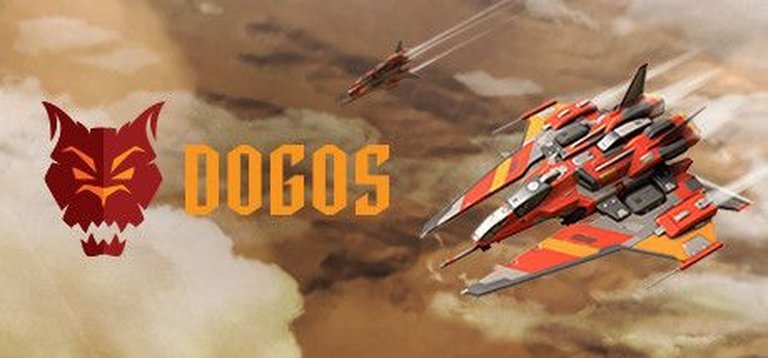
Dogos is a fast-paced, top-down 2D shooter set in a sci-fi universe, where players engage in intense aerial combat with a 360-degree camera perspective. Developed by OPQAM, the game builds on its predecessor, Project Root, offering improved visuals, action-packed gameplay, and bullet-hell mechanics, though it retains some balancing issues in difficulty and enemy health.
Gameplay Videos
Where to Buy Dogos
PC
Dogos Cracks & Fixes
Dogos Patches & Updates
Dogos Guides & Walkthroughs
Dogos Reviews & Reception
metacritic.com (63/100): Dogos is a fun top-down shooter with customizable difficulty levels and some interesting mechanics.
opencritic.com (59/100): DOGOS is close to being a fantastic free-roaming shooter and only held back by a few small issues and a giant glaring one.
Dogos: A Flawed but Ambitious Evolution of the Shoot ‘Em Up
Introduction: The Legacy of a Niche Experiment
Dogos (2016), developed by the Argentine studio OPQAM, is a game that dares to ask: What if a classic shoot ’em up (shmup) broke free from its 2D constraints and embraced the open world? The result is a fascinating, if uneven, hybrid—a game that straddles the line between innovation and overreach. While it never quite achieves the greatness of its inspirations (R-Type, Xevious, Axelay), Dogos remains a curious artifact of indie ambition, a title that pushes against the boundaries of its genre even as it stumbles over its own design choices.
This review will dissect Dogos in exhaustive detail, examining its development history, narrative shortcomings, gameplay mechanics, artistic direction, and its place in the broader shmup canon. By the end, we’ll determine whether Dogos is a bold step forward or a cautionary tale of what happens when a small team bites off more than it can chew.
Development History & Context: The Rise of OPQAM and the Shadow of Project Root
From Project Root to Dogos: A Studio’s Redemption Arc
OPQAM, a four-person team based in Buenos Aires, first entered the gaming scene with Project Root (2015), a top-down shooter that attempted to blend open-world exploration with twin-stick shooting. The reception was brutal. Critics lambasted its sluggish pacing, weak weaponry, and tedious level design. PlayStation Country famously scored it a 2/10, calling it “utterly devoid of fun.”
Dogos, then, was OPQAM’s chance at redemption. In interviews, studio head Pablo Testa acknowledged the failures of Project Root while outlining Dogos as a refined, more focused experience. Key improvements included:
– Shorter, tighter levels (down from Project Root’s hour-long slogs).
– Checkpoints and a level map to mitigate frustration.
– Better weapon balance (though ground combat remained a weak point).
– Dynamic camera modes to accommodate different gameplay scenarios (boss fights, open areas, etc.).
Yet, Dogos was not just an iterative upgrade—it was a technological statement. Unlike most indie shmups, which rely on engines like Unity or Unreal, OPQAM built Dogos on a custom engine, optimized for performance and frame rate stability. This decision, while ambitious, reflected the team’s old-school ethos and desire for full control over their vision.
The Gaming Landscape in 2016: A Crowded Shmup Revival
Dogos arrived during a renaissance of the shmup genre, fueled by indie developers and retro enthusiasts. Games like:
– Geometry Wars 3: Dimensions (2014)
– Nuclear Throne (2015)
– Assault Android Cactus (2015)
– Velocity 2X (2014)
had already proven that the genre could thrive in the modern era. However, Dogos distinguished itself by rejecting pure bullet-hell mechanics in favor of a 3D open-world structure—a risky gambit that alienated purists while intriguing those hungry for innovation.
Technological Constraints & Design Philosophy
OPQAM’s custom engine allowed for:
– 60 FPS at 1080p, a necessity for a fast-paced shooter.
– Dynamic lighting and particle effects, giving Dogos a polished (if somewhat generic) sci-fi aesthetic.
– Modular level design, enabling non-linear exploration.
However, the engine’s limitations also became apparent:
– Ground combat felt clunky, with imprecise targeting that frustrated players.
– Boss fights lacked feedback, with no health bars or clear weak points.
– The open-world structure often felt hollow, with repetitive enemy spawns and little meaningful interaction.
In hindsight, Dogos was a victim of its own ambition—a game that tried to be both a classic shmup and an open-world shooter, succeeding at neither but carving out a niche identity in the process.
Narrative & Thematic Deep Dive: A Story That Fails to Take Flight
Plot Summary: Desmond Phoenix and the War Against the Zeetnuks
Dogos positions itself as a sci-fi epic, but its narrative is little more than a flimsy excuse for shooting aliens. The premise:
– 50 years prior, Earth was invaded by the Zeetnuks, a biomechanical alien race that consumed the planet’s resources.
– The Human Resistance reverse-engineered Zeetnuk technology to create the KZ-72 and KZ-15 ships (nicknamed “DOGOS”).
– Desmond Phoenix, the last surviving DOGOS pilot, must fight back against the invasion.
The story is delivered through pre-mission briefings and in-game journal entries, which PlayStation Country aptly described as reading like “the musings of a teenager.” The dialogue is stiff, the characters are one-dimensional, and the stakes never feel urgent.
Themes: A Missed Opportunity for Depth
Dogos flirted with interesting themes but failed to explore them meaningfully:
1. Humanity’s Last Stand – The game could have delved into desperation and survival, but Desmond’s personality is as generic as his name.
2. Technological Assimilation – The DOGOS ships are built from alien tech, yet the game never grapples with the ethical implications.
3. The Loneliness of War – Desmond is the last pilot, but the game never makes his isolation feel poignant.
Instead, Dogos treats its narrative as an afterthought, a common pitfall in shmups but a missed opportunity given its open-world aspirations.
Voice Acting & Presentation: A Step Up, But Still Weak
While Project Root had no voice acting, Dogos attempted to add spoken dialogue—with mixed results. The performances are stiff and unnatural, undermining any attempt at emotional weight. The sound design, however, is a highlight, with pulsing electronic tracks that elevate the action.
Gameplay Mechanics & Systems: Innovation Meets Frustration
Core Gameplay Loop: A Shmup in Open World Clothing
Dogos’ most defining feature is its hybrid gameplay:
– Twin-stick shooting (left stick moves, right stick aims).
– 3D open-world navigation (players can fly freely in any direction).
– Dynamic camera modes (switching between top-down, chase cam, and locked perspectives).
This fusion creates moments of exhilaration—soaring through canyons, dodging enemy fire, and unleashing screen-filling explosions. However, the execution is uneven:
What Works:
✅ Flight Mechanics – The sense of freedom in movement is Dogos’ greatest strength. Unlike traditional shmups, which restrict players to a single plane, Dogos allows for vertical and horizontal maneuvering, adding depth to dogfights.
✅ Weapon Variety – Players unlock homing missiles, lasers, bombs, and EMP blasts, each with distinct tactical uses.
✅ Difficulty Options – Four settings (including an “infinite lives” mode) make the game accessible to newcomers while offering a challenge for veterans.
What Doesn’t Work:
❌ Ground Combat is a Chore – Targeting ground enemies feels imprecise and unsatisfying, a carryover issue from Project Root.
❌ Boss Fights Lack Feedback – Without health bars or clear weak points, battles devolve into mindless attrition.
❌ Repetitive Level Design – The “open world” is an illusion; most levels are linear corridors with occasional branching paths.
❌ Unbalanced Difficulty Spikes – Some sections (like the “Overtrain” boss fight) are brutally unfair, punishing players for the game’s own design flaws.
Progression & Replayability: A Shallow Experience
Dogos attempts to encourage replayability through:
– Secondary objectives (time trials, enemy kill quotas).
– Ship customization (different loadouts and skins).
– Alternative routes in some levels.
However, these features feel tacked on. The lack of a scoring system or online leaderboards (a staple of the genre) further diminishes long-term appeal.
UI & Controls: Functional but Uninspired
The HUD is clean but basic, displaying health, ammo, and a mini-map. The control scheme is responsive, though the lack of controller remapping is a notable omission.
World-Building, Art & Sound: A Mixed Bag of Polish and Repetition
Visual Design: A Generic Sci-Fi Aesthetic
Dogos’ art style is competent but unremarkable:
– Detailed 3D models for ships and enemies.
– Dynamic lighting and particle effects that enhance explosions.
– Varied environments (canyons, alien bases, urban ruins).
However, the game suffers from:
– Repetitive textures (many levels blend together).
– Lack of visual identity (it could be mistaken for any mid-2010s indie shmup).
– Underwhelming boss designs (most are forgettable mechanical constructs).
Sound Design & Music: The Game’s Strongest Asset
Where Dogos truly shines is in its audio presentation:
– Pulsing electronic soundtrack that perfectly complements the action.
– Satisfying weapon sounds (lasers, explosions, and engine hums).
– Ambient noise that enhances immersion.
The music, in particular, is catchy and energetic, evoking classic arcade shmups while feeling modern.
Atmosphere: A Missed Opportunity for Immersion
Despite its open-world aspirations, Dogos fails to create a living, breathing world. There are no NPCs, no environmental storytelling, and no sense of a larger conflict. The game feels empty, like a shooting gallery rather than a warzone.
Reception & Legacy: A Game That Divided Critics and Players
Critical Reception: “A Step Forward, But Not Enough”
Dogos received mixed reviews, with critics praising its ambition while noting its flaws:
| Publication | Score | Verdict |
|---|---|---|
| Video Chums | 7.2/10 | “A big step up from Project Root… hardcore genre fans shouldn’t miss it.” |
| 4Players.de | 65/100 | “Solid action, but ground combat is still clunky… lacks boss variety.” |
| IGN Spain | 6/10 | “An interesting proposal for fans, but not a revolution.” |
| ZTGD | 6/10 | “Overcomplicates its genre roots… lacks diversity.” |
| Metacritic (Xbox) | 63/100 | “Mixed or Average” |
Common praises:
✔ Improved over Project Root.
✔ Fun, fast-paced action.
✔ Great soundtrack.
Common criticisms:
✖ Repetitive level design.
✖ Frustrating ground combat.
✖ Uninspired boss fights.
Player Reception: A Niche Audience
On Steam, Dogos holds a Mixed (51% positive) rating, with players divided:
– Fans of shmups appreciated its innovative camera and open-world elements.
– Casual players found it too repetitive and frustrating.
Legacy: Did Dogos Influence the Genre?
Dogos did not spawn imitators, nor did it redefine the shmup. However, it proved that indie developers could experiment with genre conventions, paving the way for later hybrids like Axiom Verge 2 (2021) and Everspace 2 (2023).
OPQAM, unfortunately, has not released a new game since Dogos, leaving its legacy as a flawed but fascinating experiment.
Conclusion: A Flawed Gem Worth Exploring (With Caveats)
Dogos is not a great game, but it is an interesting one. It represents the ambition of a small studio pushing against the limits of its genre, even if the execution falls short. Its open-world shmup hybrid design remains unique, and its soundtrack and flight mechanics are genuinely enjoyable.
Final Verdict: 6.5/10 – “A Bold Experiment That Doesn’t Quite Land”
Who Should Play It?
✔ Shmup enthusiasts looking for something different.
✔ Players who enjoy experimental indie games.
✔ Fans of fast-paced, arcade-style action.
Who Should Avoid It?
✖ Those who dislike repetitive gameplay.
✖ Players frustrated by imprecise controls.
✖ Anyone expecting a deep narrative or RPG elements.
Dogos is not a masterpiece, but it is a testament to indie creativity—a game that dared to ask, “What if?” even when the answer wasn’t perfect. For that alone, it deserves recognition in the annals of shmup history.
Final Thought:
If Dogos had focused on tightening its combat, refining its boss fights, and adding more meaningful progression, it could have been a modern classic. Instead, it remains a curious footnote—a game that tried to fly too close to the sun and got singed, but still managed to leave a trail of smoke worth following.