
- Release Year: 1991
- Platforms: DOS, FM Towns, PC-98, SEGA CD, TurboGrafx CD, Windows
- Publisher: Data West
- Developer: Data West
- Genre: Adventure
- Perspective: 1st-person
- Game Mode: Single-player
- Gameplay: Conversations, Evidence Collection, Menu-based interaction
- Setting: Detective, Mystery
Description
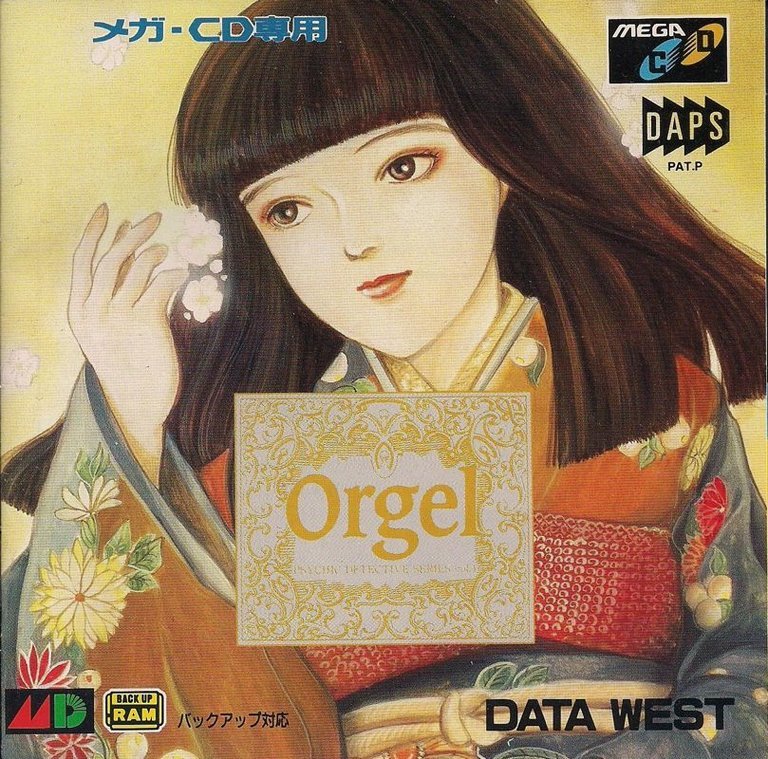
In ‘Psychic Detective Series Vol.4: Orgel’, private investigator Katsuya Furuyagi, who has the unique ability to journey into people’s minds, is approached by a mysterious woman in mourning. She claims that a cherished family doll has been stolen by the devil himself. Furuyagi travels to the countryside to unravel this eerie mystery, engaging in conversations, gathering evidence, and exploring a menu-based adventure without traditional puzzles. The game blends detective storytelling with anime/manga aesthetics in a first-person perspective.
Gameplay Videos
Psychic Detective Series Vol.4: Orgel Cheats & Codes
NEC PC Engine CD-ROM2
Enter codes at the title screen.
| Code | Effect |
|---|---|
| Right, Down, Down, I, Right, I | Sound test |
Psychic Detective Series Vol.4: Orgel: A Masterclass in Atmospheric Mystery
Introduction: The Forgotten Gem of Early ’90s Adventure Gaming
In the annals of video game history, certain titles slip through the cracks, overshadowed by their more commercially successful contemporaries. Psychic Detective Series Vol.4: Orgel (1991) is one such game—a haunting, dialogue-driven adventure that pushed the boundaries of narrative storytelling in the early ’90s. Developed by Data West and initially released for the FM Towns, Orgel is the fourth entry in the Psychic Detective series, a franchise that blended detective fiction with supernatural intrigue. While it may not have achieved the mainstream recognition of Myst or King’s Quest, Orgel stands as a testament to the power of atmospheric storytelling and the potential of interactive fiction.
This review will dissect Orgel in exhaustive detail, exploring its development history, narrative depth, gameplay mechanics, and lasting legacy. By the end, it will become clear why Orgel deserves a place in the pantheon of classic adventure games, even if it remains a cult favorite rather than a household name.
Development History & Context: The Birth of a Niche Masterpiece
The Studio Behind the Mystery
Data West, the studio behind Orgel, was a relatively small but ambitious developer in the late ’80s and early ’90s. Specializing in adventure games with a focus on narrative and atmosphere, Data West carved out a niche for itself in the Japanese gaming market. The Psychic Detective series was their flagship franchise, and Orgel represents the pinnacle of their creative vision during this era.
The game was directed by Kazuo Fujita, who also served as the series’ general director and primary writer. Fujita’s influence is palpable in Orgel’s meticulously crafted script and its blend of psychological horror and detective fiction. The art direction was helmed by Yoshiko Miyamoto, whose anime-inspired character designs and eerie backgrounds lent the game a distinct visual identity. Notably, the game’s animation was produced by Kyoto Animation Co., Ltd., a studio that would later become legendary for its work in anime.
Technological Constraints and Innovations
Orgel was originally released on the FM Towns, a Japanese home computer known for its advanced multimedia capabilities, including CD-ROM support and high-quality audio. The FM Towns’ hardware allowed Data West to incorporate voice acting, animated cutscenes, and detailed backgrounds—features that were still relatively rare in adventure games of the time.
The game’s menu-based interaction system was a deliberate choice, reflecting the limitations of early ’90s point-and-click interfaces while also streamlining the player’s focus on dialogue and evidence collection. Unlike contemporary Western adventures like Monkey Island, which emphasized puzzles and inventory-based problem-solving, Orgel prioritized conversation and deduction, making it a precursor to later narrative-driven games like Phoenix Wright: Ace Attorney.
The Gaming Landscape of 1991
1991 was a transitional year for adventure games. In the West, The Secret of Monkey Island (1990) had redefined the genre with its humor and accessibility, while Myst (1993) was still on the horizon. In Japan, the market was dominated by visual novels and horror-adventure hybrids, with titles like Sweet Home (1989) and Clock Tower (1995) setting the stage for survival horror.
Orgel arrived at a time when Japanese developers were experimenting with psychological storytelling and supernatural themes, and it stands as a bridge between the text-heavy adventures of the ’80s and the more cinematic experiences of the mid-’90s. Its release on multiple platforms—including the TurboGrafx CD, SEGA CD, and later Windows—demonstrates its enduring appeal, even as the gaming world shifted toward 3D graphics and action-oriented gameplay.
Narrative & Thematic Deep Dive: A Haunting Tale of Dolls and Demons
Plot Summary: The Case of the Vanishing Orgel
Orgel begins with a mysterious woman in mourning attire entering the office of Katsuya Furuyagi, a private investigator with psychic abilities. She claims that a family heirloom—a beautiful doll named “Orgel”—has been stolen, and she suspects demonic forces are at play. Furuyagi, ever the skeptic, travels to the countryside to investigate, only to uncover a web of family secrets, occult rituals, and psychological trauma.
The narrative unfolds through conversations with eccentric characters, each with their own motives and hidden agendas. The game’s pacing is deliberate, with long stretches of dialogue interspersed with moments of supernatural horror. The story’s climax reveals a twist involving possession, generational curses, and the true nature of the Orgel doll, making it one of the most thematically rich entries in the Psychic Detective series.
Character Analysis: A Cast of Broken Souls
- Katsuya Furuyagi: The protagonist, a psychic detective whose abilities allow him to read minds and perceive hidden truths. His dry wit and professional demeanor contrast with the increasingly bizarre events he encounters.
- The Mourning Woman (Kyōko Kagefuji): The client whose family is cursed by the Orgel doll. Her grief and paranoia drive the narrative forward.
- Hidesato Kagefuji: A sinister patriarch with a dark past, whose obsession with the occult fuels the game’s central conflict.
- Chinako Kagefuji: A tragic figure whose fate is intertwined with the Orgel’s curse.
- Midori Kikuoka: A mysterious woman with her own connection to the supernatural.
The game’s voice acting (a rarity in 1991) brings these characters to life, with performances that range from melancholic to unnerving. The dialogue is dense with subtext, requiring players to pay close attention to tone, repetition, and contradictions—a hallmark of Japanese mystery writing.
Themes: Madness, Memory, and the Supernatural
Orgel explores several recurring themes:
1. The Unreliable Nature of Memory: Characters’ recollections are fragmented and contradictory, forcing Furuyagi (and the player) to piece together the truth.
2. Generational Curses: The Orgel doll symbolizes inherited trauma, with each generation of the Kagefuji family suffering under its influence.
3. The Blurring of Reality and Illusion: Furuyagi’s psychic abilities allow him to perceive hidden truths, but they also make him question his own sanity.
4. The Horror of the Mundane: The game’s scares come not from jump scares, but from slow-burning dread—a creaking floorboard, a doll’s vacant stare, a whispered confession.
The game’s title, Orgel, refers not just to the doll but also to the German word for “organ” (the musical instrument), hinting at themes of mechanical precision and eerie harmony—a metaphor for the Kagefuji family’s rigid, doomed existence.
Gameplay Mechanics & Systems: A Detective’s Toolkit
Core Gameplay Loop: Conversation as Investigation
Orgel eschews traditional adventure game puzzles in favor of a dialogue-driven investigation system. Players spend the majority of their time:
– Interviewing characters about various topics.
– Collecting evidence (letters, photographs, and other items) that can be examined in an inventory.
– Cross-referencing information to uncover contradictions or hidden meanings.
The menu-based interface allows players to select topics of conversation, with options branching based on previously gathered evidence. This system rewards careful listening and note-taking, as seemingly innocuous details can later become crucial.
The Psychic Mechanic: A Unique Twist
Furuyagi’s psychic abilities are more than just flavor—they directly impact gameplay. At key moments, players can:
– Read a character’s thoughts, revealing hidden motives or lies.
– Perceive supernatural phenomena, such as ghosts or cursed objects.
– Enter a “trance state” to relive past events, providing critical backstory.
This mechanic sets Orgel apart from other detective games of the era, as it blurs the line between player agency and narrative revelation.
Inventory and Evidence Management
While Orgel lacks traditional puzzles, its evidence system is robust. Players can:
– Store and examine items (e.g., a torn photograph, a diary page).
– Combine evidence to form new conclusions.
– Present evidence during conversations to challenge characters or unlock new dialogue options.
The lack of “traditional” puzzles may disappoint fans of Myst-style gameplay, but Orgel’s focus on deductive reasoning makes it a precursor to modern narrative adventures like Her Story or The Vanishing of Ethan Carter.
UI and Navigation: A Product of Its Time
The game’s first-person perspective and static backgrounds are reminiscent of early Myst-style adventures, but the menu-driven interaction feels more akin to a visual novel. Navigation is point-and-click, with players moving between locations via a simple map system.
The lack of a “walking” mechanic (common in Western adventures) streamlines the experience, keeping the focus on dialogue and evidence. However, the absence of a “save anywhere” feature (a limitation of the era) can make progression frustrating, as players must rely on fixed save points.
World-Building, Art & Sound: Crafting an Atmosphere of Dread
Setting: A Gothic Countryside Mystery
Orgel takes place in a rural Japanese estate, far removed from the bustling cities of other detective games. The setting is claustrophobic and isolated, with:
– A decaying mansion filled with antique furniture and eerie portraits.
– A forested area shrouded in mist, where supernatural encounters occur.
– A local village with suspicious inhabitants who may know more than they let on.
The anime/manga art style (a hallmark of Data West’s games) gives the world a distinctly Japanese aesthetic, blending gothic horror with traditional folklore.
Visual Design: Hand-Drawn Horror
The game’s backgrounds are meticulously detailed, with pre-rendered 2D art that creates a sense of oppressive atmosphere. Key visual elements include:
– The Orgel doll itself, with its uncanny, lifelike appearance.
– Shadowy figures lurking in the periphery of the screen.
– Surreal dream sequences that distort reality.
The character portraits are expressive, with exaggerated facial expressions that convey emotion without relying on animation. The limited color palette (due to hardware constraints) actually enhances the game’s moody, monochromatic tone.
Sound Design: A Symphony of Silence and Screams
The audio design is one of Orgel’s strongest aspects, with:
– A haunting, minimalist soundtrack composed by Yasuhito Saito, featuring piano motifs and dissonant strings.
– Ambient sounds (creaking doors, distant whispers) that heighten tension.
– Voice acting that, while limited by 1991 standards, adds a layer of immersion rare for the time.
The lack of music during key scenes creates an unsettling silence, making the rare musical cues (such as the Orgel doll’s eerie melody) all the more impactful.
Reception & Legacy: The Cult Following of a Forgotten Classic
Critical Reception: A Niche Masterpiece
Upon release, Orgel received moderate acclaim in Japanese gaming circles, praised for its storytelling and atmosphere but criticized for its slow pacing and lack of traditional gameplay. Western audiences, however, remained largely unaware of the game due to its Japan-exclusive release (until later ports).
Modern retrospectives (such as those on MobyGames and VNDB) highlight Orgel as a cult classic, with fans praising its:
– Deep, layered narrative.
– Innovative use of psychic mechanics.
– Unsettling atmosphere.
However, its lack of puzzles and linear structure have made it a divisive title, with some players finding it too passive compared to contemporary adventures.
Influence on Later Games
While Orgel never achieved mainstream success, its dialogue-driven investigation system and psychological themes influenced later titles, including:
– Phoenix Wright: Ace Attorney (2001): The evidence presentation mechanic in Orgel foreshadows Ace Attorney’s courtroom battles.
– Fatal Frame / Project Zero (2001): The supernatural horror and Japanese folklore elements in Orgel predate Fatal Frame’s ghostly photography.
– Danganronpa (2010): The mystery-solving and character interrogation in Orgel share DNA with Danganronpa’s class trials.
Preservation and Modern Availability
Thanks to abandonware sites like MyAbandonware and Archive.org, Orgel has been preserved for modern audiences. The 2020 DOS re-release and fan translations (though unofficial) have helped introduce the game to a new generation of players.
However, its obscurity remains a barrier—Orgel is a game best appreciated by patients of slow-burn horror and narrative depth, rather than those seeking action or puzzles.
Conclusion: A Haunting, Flawed Masterpiece
Psychic Detective Series Vol.4: Orgel is not a game for everyone. Its deliberate pacing, lack of traditional puzzles, and dense dialogue will alienate players accustomed to faster, more interactive experiences. Yet, for those willing to immerse themselves in its world, Orgel offers a richly atmospheric, thematically complex mystery that lingers long after the credits roll.
Final Verdict: 8.5/10 – A Cult Classic Deserving of Rediscovery
- Narrative & Themes: 10/10 – A masterclass in psychological horror and detective fiction.
- Gameplay: 7/10 – Innovative but overly linear; lacks the interactivity of modern adventures.
- Art & Sound: 9/10 – Haunting visuals and audio that create an unforgettable atmosphere.
- Legacy: 8/10 – Influential but underappreciated, with a dedicated cult following.
Orgel is a time capsule of early ’90s adventure gaming, showcasing what the medium could achieve when storytelling took precedence over mechanics. While it may never achieve the fame of Myst or Monkey Island, its bold narrative choices and eerie atmosphere ensure its place in the hidden canon of gaming history.
For fans of slow-burn horror, detective stories, and psychological depth, Psychic Detective Series Vol.4: Orgel is an essential experience—one that proves some of the best games are the ones that slip through the cracks.