
- Release Year: 2010
- Platforms: Windows
- Publisher: Encore Software, Inc.
- Genre: Compilation
- Game Mode: Single-player
- Gameplay: Card Games
Description
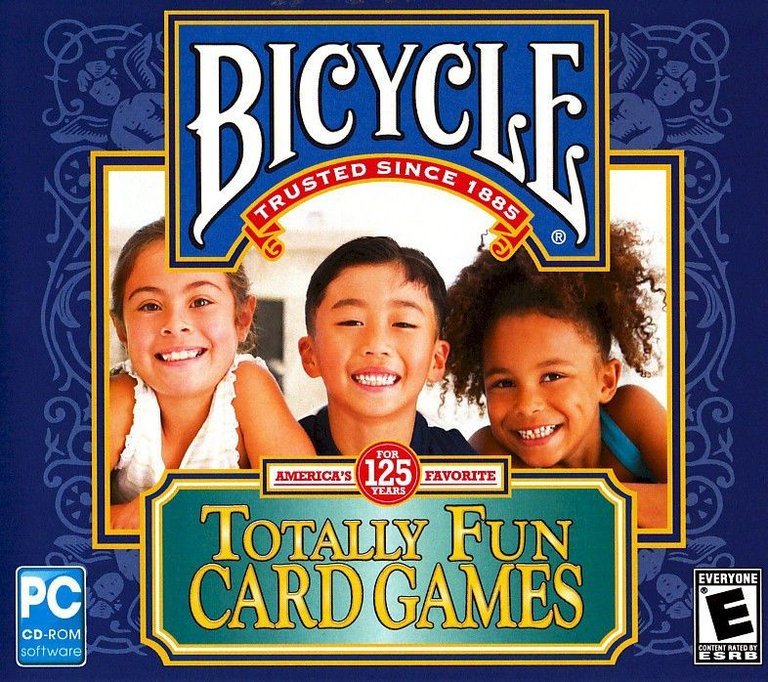
Bicycle Totally Fun Card Games is a 2010 compilation designed for kids, featuring five classic card games: Hearts, War, Go Fish, Old Maid, and Crazy 8’s. The game offers a playful and educational experience with in-game tutorials to help young players learn and improve their skills. Players can choose from various fun environments like a kid’s room, kitchen, or backyard, and customize their gameplay options for endless entertainment.
Bicycle Totally Fun Card Games: A Nostalgic Digital Card Compilation for the Younger Generation
Introduction: The Digital Evolution of Classic Card Games
In the vast landscape of video games, where high-definition graphics and complex narratives often dominate, Bicycle Totally Fun Card Games (2010) stands as a charming anomaly—a digital homage to the timeless appeal of traditional card games. Developed by Zone 2 Media and published by Encore Software, this compilation is a love letter to the analog past, repackaged for a digital generation. Targeted primarily at children, the game serves as both an educational tool and a playful diversion, introducing young players to the joys of card-playing through five classic games: Hearts, War, Go Fish, Old Maid, and Crazy 8’s.
At its core, Bicycle Totally Fun Card Games is more than just a collection of mini-games; it is a cultural artifact that bridges the gap between physical and digital play. Released during a time when casual and family-friendly gaming was gaining traction, this title reflects the industry’s growing interest in accessible, non-violent entertainment. Yet, despite its modest ambitions, the game’s legacy is often overlooked in broader discussions of video game history. This review seeks to rectify that oversight by dissecting the game’s development, design, and impact, arguing that Bicycle Totally Fun Card Games is a noteworthy example of how traditional games can be adapted for modern audiences without losing their essence.
Development History & Context: The Birth of a Digital Card Compilation
The Studio and the Vision
Bicycle Totally Fun Card Games was developed by Zone 2 Media GmbH, a studio with a history of creating licensed and family-oriented software. The game was published by Encore Software, Inc., a company known for its budget-friendly compilations and educational titles. The collaboration between these two entities was not incidental; Encore had previously released several Bicycle-branded games, including Bicycle Card Games (2001) and Bicycle Casino Games (2001), establishing a niche in digital card game adaptations.
The vision behind Bicycle Totally Fun Card Games was straightforward: to create a kid-friendly, easy-to-learn digital adaptation of classic card games. The developers aimed to preserve the simplicity and accessibility of physical card games while adding a layer of digital interactivity. This was achieved through intuitive controls, colorful visuals, and optional tutorials that guided young players through the rules of each game. The inclusion of the Bicycle brand—a name synonymous with playing cards since 1885—lent the game an air of authenticity, reinforcing its connection to the physical card-playing experience.
Technological Constraints and Design Choices
Released in 2010, Bicycle Totally Fun Card Games was designed for Windows PCs, a platform that was (and remains) a hub for casual and family-oriented gaming. The game’s technical requirements were minimal, reflecting its target audience of children and families who might not have access to high-end gaming hardware. The use of CD-ROM as the distribution medium further underscores the game’s positioning as a budget-friendly, accessible product.
The development team faced the challenge of translating the tactile experience of card games into a digital format. To address this, they incorporated several key design choices:
– Customizable Environments: Players could choose from five different backgrounds (e.g., a kid’s room, kitchen, or backyard), adding a personal touch to the experience.
– Oversized Cards: The digital cards were designed to be large and easy to read, catering to younger players who might struggle with smaller text.
– Voice Acting and Sound Effects: The game featured voice acting for in-game characters, who would react to wins, losses, and other events, enhancing the sense of interaction.
– Save Functionality: Players could save their progress, a feature that acknowledged the intermittent nature of children’s play sessions.
The Gaming Landscape of 2010
The early 2010s were a period of transition in the gaming industry. While AAA titles dominated the market, there was a growing interest in casual and family-friendly games, fueled by the success of platforms like the Nintendo Wii and the rise of mobile gaming. Bicycle Totally Fun Card Games fit neatly into this trend, offering a low-stakes, non-competitive experience that appealed to parents and children alike.
The game’s release also coincided with a broader cultural shift toward digital entertainment. As physical card games began to compete with digital alternatives, titles like Bicycle Totally Fun Card Games served as a bridge, introducing younger generations to classic games in a format they were increasingly familiar with. However, the game’s lack of online multiplayer—a feature that was becoming more common even in casual games—limited its appeal to local play, a decision that reflected both technological constraints and the developers’ focus on simplicity.
Narrative & Thematic Deep Dive: The Absence of Story and the Power of Play
The Non-Narrative Experience
Unlike many video games that rely on intricate plots or character development, Bicycle Totally Fun Card Games is devoid of traditional narrative elements. There are no protagonists, no antagonists, and no overarching story. Instead, the game’s “narrative” is defined by the rules and mechanics of the card games themselves. This absence of story is not a flaw but a deliberate design choice, one that aligns with the game’s educational and recreational goals.
The thematic core of Bicycle Totally Fun Card Games lies in its celebration of play as a social and cognitive activity. Each game in the compilation teaches children valuable skills:
– Go Fish and Old Maid encourage memory and pattern recognition.
– War introduces basic strategic thinking and probability.
– Hearts and Crazy 8’s require more advanced planning and adaptability.
By focusing on these mechanics rather than a constructed narrative, the game emphasizes the inherent joy of play—a theme that resonates with the timeless appeal of card games.
The Role of Aesthetics and Atmosphere
While the game lacks a traditional narrative, it compensates with a whimsical, child-friendly aesthetic that reinforces its themes of fun and learning. The customizable environments—such as a cozy kitchen or a sunny backyard—create a sense of familiarity and comfort, making the digital experience feel more personal and inviting. The oversized cards and bright colors further enhance this atmosphere, ensuring that the game is visually engaging without being overwhelming.
The inclusion of voice acting adds a layer of personality to the experience. The NPCs (non-player characters) react to the player’s moves with cheerful exclamations or playful taunts, creating a sense of interaction that mimics the social dynamics of physical card games. This auditory feedback is crucial in maintaining engagement, especially for younger players who might otherwise find the games repetitive.
Gameplay Mechanics & Systems: Deconstructing the Digital Card Experience
Core Gameplay Loops
Bicycle Totally Fun Card Games is structured around five distinct card games, each with its own set of rules and objectives. Below is a breakdown of the core mechanics for each game:
-
Bicycle Hearts
- Objective: Avoid collecting hearts and the Queen of Spades, as these cards carry penalty points. The player with the lowest score wins.
- Mechanics: Players take turns playing cards, following suit if possible. The game introduces strategic decision-making, as players must balance between taking penalty cards and forcing opponents to do the same.
- Digital Adaptation: The game includes tutorials that explain the rules and strategies, making it accessible to beginners.
-
Bicycle War
- Objective: Win all the cards by playing higher-ranked cards than the opponent.
- Mechanics: A simple game of chance where players flip cards simultaneously. The player with the higher card wins the round.
- Digital Adaptation: The game features animated card flips and sound effects to heighten the excitement of each reveal.
-
Bicycle Go Fish
- Objective: Collect sets of four matching cards (e.g., four Kings) by asking opponents for specific cards.
- Mechanics: Players take turns asking for cards they need to complete their sets. If the opponent has the card, they must hand it over; otherwise, the player “goes fishing” by drawing from the deck.
- Digital Adaptation: The game includes hints and suggestions for younger players, helping them learn the rules.
-
Bicycle Old Maid
- Objective: Avoid being left with the “Old Maid” card (a single unmatched card) at the end of the game.
- Mechanics: Players take turns drawing cards from each other’s hands, trying to form pairs. The player left with the Old Maid loses.
- Digital Adaptation: The game uses colorful, cartoonish card designs to make the Old Maid card visually distinct and memorable.
-
Bicycle Crazy 8’s
- Objective: Be the first to discard all cards by matching the rank or suit of the top card on the discard pile.
- Mechanics: Players can play any card that matches the top card’s rank or suit. Eights are wild and can be played at any time, allowing the player to change the suit.
- Digital Adaptation: The game highlights valid moves, reducing frustration for younger players.
User Interface and Accessibility
The game’s user interface (UI) is designed with simplicity in mind. The main menu allows players to select their preferred game, adjust settings, and choose from the available environments. Once in a game, the UI is minimalistic, with large, clearly labeled buttons and intuitive drag-and-drop mechanics for playing cards.
One of the game’s strengths is its accessibility features:
– Tutorials: Each game includes optional tutorials that explain the rules and provide tips.
– Visual and Auditory Feedback: Cards are easy to read, and sound effects reinforce actions (e.g., a “swoosh” when a card is played).
– Save Functionality: Players can save their progress, allowing for short, manageable play sessions.
Innovations and Flaws
While Bicycle Totally Fun Card Games excels in accessibility, it is not without its flaws:
– Lack of Online Multiplayer: The game is limited to local play, which restricts its social potential in an era where online gaming was becoming ubiquitous.
– Repetitive AI: The NPCs follow predictable patterns, which can make the games feel repetitive over time.
– Limited Customization: While players can choose from different environments and card backs, there is little depth to the customization options.
Despite these limitations, the game’s innovations lie in its successful adaptation of physical card games into a digital format that is both educational and entertaining. The inclusion of tutorials and accessibility features makes it a valuable tool for introducing children to card games, while the customizable environments add a layer of personalization that enhances replayability.
World-Building, Art & Sound: Crafting a Digital Playground
Visual Design and Atmosphere
Bicycle Totally Fun Card Games employs a bright, cartoonish art style that is immediately appealing to its target audience. The game’s visual design is characterized by:
– Oversized Cards: The cards are large and easy to read, with clear, bold text and vibrant colors.
– Themed Environments: Players can choose from five different backgrounds, each with its own distinct aesthetic (e.g., a kid’s bedroom, a kitchen, or a backyard). These environments are rendered in a simple but effective 2D style, with cheerful colors and playful details.
– Character Design: The NPCs are represented by cheerful, cartoonish avatars that react to the player’s moves with exaggerated expressions and animations.
The visual design serves a dual purpose: it creates an inviting atmosphere while also ensuring that the game is accessible to younger players. The lack of complex 3D graphics or realistic textures is not a drawback but a deliberate choice that aligns with the game’s casual, family-friendly ethos.
Sound Design and Music
The game’s sound design is minimal but effective. Key elements include:
– Voice Acting: The NPCs are voiced by a small cast of actors who provide cheerful, exaggerated reactions to in-game events. For example, a player might hear “Yes! I got a match!” or “Oh no, not the Old Maid!” These voice lines add personality to the game and reinforce the social aspect of card-playing.
– Sound Effects: Simple but satisfying sound effects accompany actions like drawing a card, playing a card, or winning a round. These effects provide auditory feedback that enhances the tactile feel of the game.
– Background Music: The game features light, upbeat background music that complements the cheerful visuals. The music is unobtrusive, ensuring that it does not distract from the gameplay.
While the sound design is not groundbreaking, it serves its purpose well, creating an immersive and engaging experience for young players.
Reception & Legacy: A Modest Impact with Lasting Appeal
Critical and Commercial Reception
Bicycle Totally Fun Card Games received little critical attention upon its release, a fate shared by many budget-friendly, family-oriented titles. The game was not reviewed by major gaming outlets like IGN or Metacritic, and there are no recorded critic scores or user reviews on platforms like MobyGames or Metacritic. This lack of coverage is not necessarily indicative of the game’s quality but rather reflects the broader trend of casual and educational games being overlooked in favor of more high-profile releases.
Commercially, the game was likely a modest success, given its budget pricing and the strength of the Bicycle brand. The game’s appeal to parents and educators—who might see it as a tool for teaching children card games in a digital format—would have contributed to its sales. However, without concrete sales data, it is difficult to assess its commercial performance with certainty.
Evolution of Reputation
In the years since its release, Bicycle Totally Fun Card Games has faded into obscurity, overshadowed by more ambitious digital card games like Hearthstone or Gwent. However, its legacy lives on in the broader context of digital adaptations of traditional games. The game’s emphasis on accessibility, education, and family-friendly design has influenced subsequent titles in the genre, particularly those aimed at younger audiences.
The game’s lack of online multiplayer and its reliance on local play have dated it somewhat, but its core mechanics remain sound. For parents and educators looking to introduce children to card games, Bicycle Totally Fun Card Games remains a viable option, albeit one that is increasingly difficult to find in the digital marketplace.
Influence on Subsequent Games
While Bicycle Totally Fun Card Games did not spawn a direct sequel or franchise, its approach to digital card games has had a subtle but measurable impact on the industry. Key elements of its design—such as tutorials, customizable environments, and accessibility features—have become standard in many modern digital card games. Additionally, the game’s focus on educational value has paved the way for similar titles that blend learning with play.
The Bicycle brand itself has continued to explore digital adaptations, with later titles like Bicycle Skat (2010) and Bicycle Canasta (2010) following a similar formula. These games, while not as widely recognized as Bicycle Totally Fun Card Games, demonstrate the enduring appeal of the brand and its commitment to bringing traditional card games to digital audiences.
Conclusion: A Small but Significant Piece of Gaming History
Bicycle Totally Fun Card Games is not a game that will be remembered for its groundbreaking mechanics, its narrative depth, or its technical innovation. Instead, its significance lies in its faithful and accessible adaptation of classic card games for a digital audience. By focusing on simplicity, education, and family-friendly design, the game succeeds in its core mission: to introduce children to the joys of card-playing in a format that is both engaging and easy to understand.
In the grand tapestry of video game history, Bicycle Totally Fun Card Games is a modest thread—a small but meaningful contribution to the genre of digital card games. Its legacy is not one of critical acclaim or commercial dominance but of quiet, enduring appeal. For the children who played it, the game may have served as a gateway to a lifelong love of card games, both digital and physical. For historians and enthusiasts, it stands as a reminder of the importance of preserving and adapting traditional games for new generations.
Final Verdict: Bicycle Totally Fun Card Games is a charming, well-executed compilation that achieves its goals with simplicity and grace. While it may not be a must-play for all gamers, it is a valuable title for families and educators, and it deserves recognition as a thoughtful adaptation of classic card games for the digital age.
Score: 7/10 – A solid, family-friendly compilation that excels in accessibility and educational value, though limited by its lack of online multiplayer and repetitive AI.