
- Release Year: 2014
- Platforms: Windows
- Publisher: Immanitas Entertainment GmbH, S.A.D. Software Vertriebs- und Produktions GmbH
- Developer: Prosto Games Ltd.
- Genre: Action
- Perspective: 1st-person
- Game Mode: Single-player
- Gameplay: Business simulation, Managerial, Time management
- Average Score: 71/100
Description
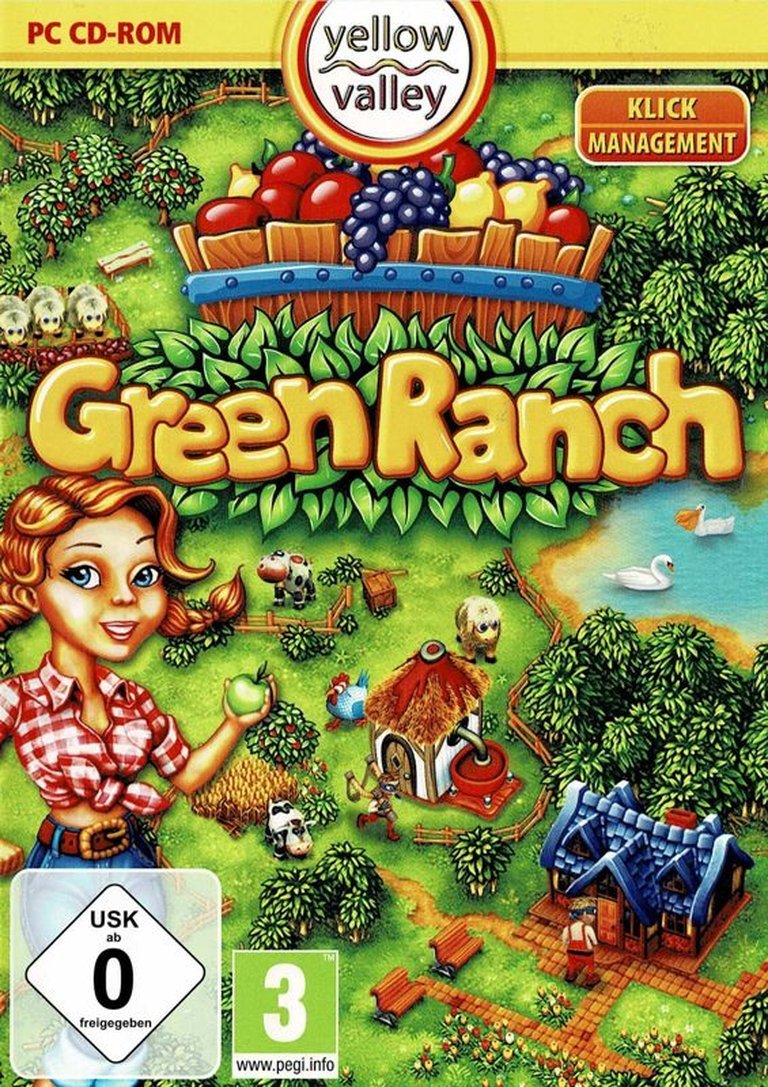
Green Ranch is a first-person managerial and business simulation game where players help Emily restore her farm to prevent it from becoming a chemical waste site. The game involves growing wheat, feeding animals, producing goods, and thwarting the villainous Mr. Big and his lackeys. With 41 levels, 12 unique buildings, and 6 special bonuses, players must manage time efficiently, earn awards, and collect bonuses to enhance their farm’s prosperity. The game features colorful graphics, an original soundtrack, and a mix of action and strategy as players work to create a thriving, unique farm.
Where to Buy Green Ranch
PC
Green Ranch Guides & Walkthroughs
Green Ranch Reviews & Reception
steambase.io (71/100): Green Ranch has earned a Player Score of 71 / 100.
store.steampowered.com : A very addictive Time Management game settled in the famous farming genre with beautiful graphics, an easy to learn but hard to master gameplay and tons of levels and missions to keep players of all ages entertained for a wonderful – and really – long time.
raijin.gg (71/100): Green Ranch holds a 71.21% positive rating on Steam, based on 66 player reviews. This places the game in the mostly positive category, indicating generally favorable reception.
Green Ranch: A Forgotten Gem of Time Management and Farming Simulations
Introduction: The Overlooked Charm of a Niche Classic
In the vast, sunlit fields of the farming simulation genre, where giants like Stardew Valley and Harvest Moon cast long shadows, Green Ranch (2014) emerges as a modest yet surprisingly engaging time management game. Developed by Prosto Games Ltd. and published by Immanitas Entertainment GmbH, this title blends the pastoral allure of farm life with the urgent, strategic pacing of a business simulator. At its core, Green Ranch is a game about resistance—both against the encroaching industrialization symbolized by the villainous Mr. Big and against the player’s own tendency to dismiss it as just another casual farm game.
With its 41 levels, 12 unique buildings, and a first-person perspective that was uncommon for farming sims at the time, Green Ranch carves out a niche identity. It’s a game that rewards quick thinking, efficient resource management, and a touch of environmental activism—all wrapped in a colorful, cartoonish aesthetic that belies its underlying depth. Yet, despite its charm, Green Ranch remains a largely overlooked title, buried beneath the weight of more mainstream farming simulators.
This review seeks to rediscover and recontextualize Green Ranch, examining its development, gameplay mechanics, narrative themes, and legacy. Was it a pioneering experiment in blending time management with farming? Or was it a flawed but ambitious attempt that deserved more attention? Let’s dig into the soil of this underappreciated game and see what grows.
Development History & Context: A Game Born in the Shadows of Giants
The Studio Behind the Scenes: Prosto Games Ltd. and Immanitas Entertainment
Green Ranch was developed by Prosto Games Ltd., a studio with a portfolio primarily consisting of casual and time management games. Their work often catered to the browser and mobile markets, with titles like Rolling Ranch (2011) and Gourmet Ranch (2010) sharing thematic DNA with Green Ranch. The publisher, Immanitas Entertainment GmbH, has a similar focus, specializing in family-friendly, accessible games with broad appeal.
The collaboration between these two entities suggests a deliberate attempt to capitalize on the farming simulation trend while differentiating themselves through time management mechanics. Unlike the relaxed, open-ended gameplay of Stardew Valley or FarmVille, Green Ranch adopts a mission-based structure, where players must complete objectives under time constraints—a design choice that aligns with Prosto Games’ expertise.
Technological Constraints and Design Philosophy
Released in 2014, Green Ranch was developed during a transitional period in gaming. The indie revolution was in full swing, with titles like Stardew Valley (2016) and Slime Rancher (2016) redefining what farming sims could be. However, Green Ranch opted for a more traditional, arcade-like approach, likely due to:
- Hardware Limitations: The game’s minimum system requirements (1.8 GHz CPU, 512 MB RAM, 120 MB VRAM) reflect its lightweight, accessible design, ensuring it could run on older PCs and potentially on low-end devices.
- Market Positioning: By blending farming with time management, the developers aimed to attract fans of both genres, creating a hybrid experience that was easy to pick up but challenging to master.
- Narrative Urgency: The environmental conflict (fighting Mr. Big’s industrialization) provided a clear, motivating goal—something many farming sims lacked at the time.
The Gaming Landscape in 2014: A Crowded Pasture
When Green Ranch launched, the farming simulation genre was dominated by two major trends:
- Social and Mobile Farming Games (FarmVille, Hay Day) – These were free-to-play, microtransaction-driven experiences that thrived on Facebook and mobile platforms.
- Relaxed, Story-Driven Farming Sims (Harvest Moon, Rune Factory) – These offered deep storytelling and relationship-building but lacked the urgency of time management.
Green Ranch attempted to bridge these two worlds by offering:
– A structured, goal-oriented experience (appealing to time management fans).
– A light environmental narrative (adding stakes beyond mere profit).
– A first-person perspective (a rarity in farming games at the time).
However, its lack of multiplayer, open-ended gameplay, or deep customization meant it struggled to stand out in a market that was rapidly evolving toward more immersive, player-driven experiences.
Narrative & Thematic Deep Dive: The Battle for the Green Ranch
Plot Summary: A David vs. Goliath Farming Tale
Green Ranch follows Emily, a young farmer tasked with restoring her family’s farm while fending off the corporate machinations of Mr. Big, a villainous industrialist who wants to turn the land into a chemical waste site. The premise is simple but effective, tapping into real-world anxieties about:
– Corporate greed vs. small-scale farming.
– Environmental degradation.
– The struggle to maintain tradition in a modernizing world.
The game’s 41 levels unfold as a series of missions, each requiring Emily to:
– Grow crops (wheat, etc.).
– Feed and care for animals.
– Produce goods (cheese, wool, etc.).
– Defend the farm from Mr. Big’s lackeys.
Characters & Dialogue: Minimalist Storytelling
Green Ranch is not a narrative-driven game in the traditional sense. Instead, it relies on:
– A clear antagonist (Mr. Big) to provide motivation and conflict.
– Brief, functional dialogue that explains objectives without delving into deep character development.
– A silent protagonist (Emily) who serves as the player’s avatar.
This minimalist approach keeps the focus on gameplay rather than story, which aligns with its time management roots. However, it also means the game lacks emotional depth—players won’t form attachments to NPCs or feel deeply invested in the world beyond the mechanical satisfaction of completing tasks.
Themes: Environmentalism and the Struggle for Sustainability
Despite its lighthearted presentation, Green Ranch engages with surprisingly relevant themes:
- Anti-Corporate Activism – Mr. Big represents unchecked industrialization, and the player’s role is to resist his efforts through sustainable farming.
- Eco-Friendly Gameplay – The game rewards efficient, clean production, reinforcing the idea that small-scale farming can be profitable and ethical.
- Time as a Resource – The time management mechanics mirror the real-world pressures farmers face: balancing productivity with sustainability.
While these themes are not explored in depth, they provide a subtle layer of meaning beneath the game’s arcade-like surface.
Gameplay Mechanics & Systems: A Hybrid of Farming and Time Management
Core Gameplay Loop: Efficiency Under Pressure
Green Ranch is, at its heart, a time management game disguised as a farming sim. The core loop involves:
- Planting and Harvesting Crops – Players must grow wheat and other crops within time limits.
- Feeding Animals – Cows, chickens, and other livestock require regular care to produce goods.
- Processing Goods – Raw materials (milk, wool, eggs) are turned into sellable products (cheese, yarn, etc.).
- Defending the Farm – Mr. Big’s henchmen periodically attack, requiring the player to fend them off using special abilities.
This loop is repetitive but satisfying, with each level introducing new buildings, bonuses, and challenges to keep things fresh.
Combat & Special Bonuses: A Unique Twist
Unlike most farming sims, Green Ranch includes light combat mechanics:
– Mr. Big’s lackeys attempt to sabotage the farm, forcing the player to click on them to repel their advances.
– Special bonuses (such as bees, storms, and speed boosts) can be activated to gain temporary advantages.
This action-element sets Green Ranch apart from its peers, adding a layer of urgency that most farming games lack.
Progression & UI: Functional but Unremarkable
- Level-Based Progression – Players unlock new buildings and abilities as they advance, but there’s no open-ended sandbox mode.
- Point-and-Click Interface – The first-person perspective is novel but clunky, with some players finding the fixed flip-screen visuals restrictive.
- Awards & Achievements – The game rewards efficiency with trophies and bonuses, reinforcing its time management focus.
Flaws in the System
While Green Ranch is competently designed, it suffers from:
– Repetitive Gameplay – The lack of variety in tasks can make later levels feel grindy.
– Limited Customization – Unlike Stardew Valley, there’s no farm layout editing or deep personalization.
– Shallow Combat – The defense mechanics are too simplistic to feel meaningful.
World-Building, Art & Sound: A Colorful but Shallow Pasture
Visual Design: Cartoonish Charm with Limitations
Green Ranch adopts a bright, cartoonish art style that is:
– Visually appealing but not particularly detailed.
– Functional—icons and buildings are easy to identify at a glance.
– Dated—the fixed flip-screen perspective feels archaic compared to modern farming sims.
The first-person view is an interesting choice, but it limits immersion—players never see Emily or interact with the world in a truly embodied way.
Sound & Music: Pleasant but Forgettable
- The soundtrack is upbeat and cheerful, fitting the game’s lighthearted tone.
- Sound effects (animal noises, machinery) are functional but not memorable.
- No voice acting—dialogue is text-only, which fits the casual nature of the game.
Atmosphere: A Farm Under Siege
The game’s atmosphere is defined by:
– A sense of urgency (thanks to Mr. Big’s threats).
– A rewarding progression (watching the farm grow).
– A lack of true immersion (due to the abstract, menu-driven gameplay).
Reception & Legacy: A Game That Slipped Through the Cracks
Critical & Commercial Reception: Mixed but Mostly Positive
Green Ranch received little critical attention upon release, but player reviews (particularly on Steam) are mostly positive (71/100). Common praises include:
✅ Addictive time management gameplay.
✅ Charming, easy-to-learn mechanics.
✅ A refreshing twist on the farming genre.
Criticisms focus on:
❌ Repetitive missions.
❌ Lack of depth in storytelling and customization.
❌ Outdated visuals and clunky controls.
Legacy: A Minor Footnote in Farming Sim History
Green Ranch did not spawn a franchise or redefine the genre, but it paved the way for later hybrids like:
– Ranch Simulator (2021) – A more realistic, open-world take on ranching.
– Skystead Ranch (2025) – A sci-fi farming sim with time management elements.
Its biggest contribution was proving that farming games could incorporate urgency and conflict without losing their charm.
Conclusion: A Flawed but Fascinating Experiment
Green Ranch is not a masterpiece, but it is a fascinating experiment—a game that dared to blend farming with time management in an era dominated by relaxed, open-ended sims. Its environmental themes, urgent gameplay, and first-person perspective make it stand out, even if its repetitive missions and shallow customization hold it back.
Final Verdict: 7/10 – A Hidden Gem for Time Management Fans
Who Should Play It?
✔ Fans of time management games (Diner Dash, Cooking Mama).
✔ Casual gamers looking for a light, addictive experience.
✔ Farming sim enthusiasts who want something different.
Who Should Skip It?
✖ Players seeking deep storytelling or open-world freedom.
✖ Those who dislike repetitive, mission-based gameplay.
✖ Fans of modern, visually rich farming sims (Stardew Valley, Story of Seasons).
Green Ranch may not be a classic, but it’s a worthy curiosity—a game that tried something new and, in many ways, succeeded. If you’re willing to look past its flaws, you’ll find a charming, challenging, and surprisingly engaging little farm under siege.
And in the end, isn’t that what farming is all about? 🌾🐄