
- Release Year: 1999
- Platforms: Windows
- Publisher: AIM Productions NV, Bethesda Softworks LLC, Buka Entertainment
- Developer: Gromada Inc.
- Genre: Action
- Perspective: Top-down
- Game Mode: LAN, Single-player
- Gameplay: Puzzle elements, Shooter, Tank, Vehicular
- Setting: Futuristic, Sci-fi
- Average Score: 72/100
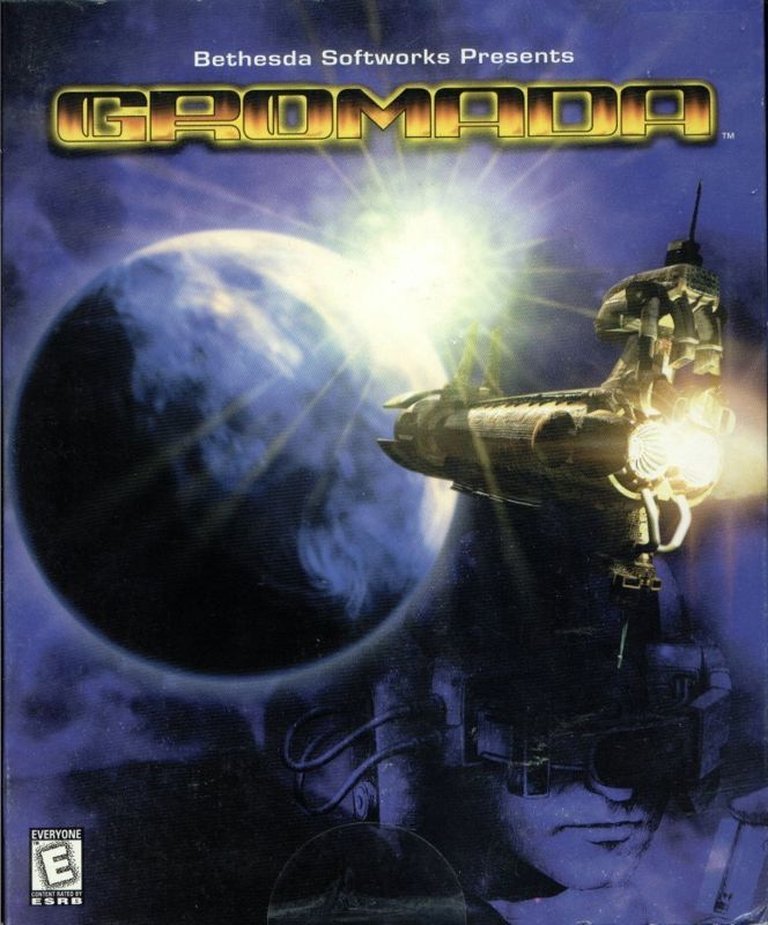
Description
Gromada is a top-down action game set on an artificial planet designed as a massive factory for battle machines. Players control Kassandra, a powerful and upgradeable tank, to combat mysterious alien forces that have seized control of the planet’s war units. The game features 25 non-linear missions across 20 animated arenas filled with robots, tanks, helicopters, and other combat vehicles. With puzzle elements and multiplayer support, players must reclaim Gromada by destroying enemy forces in a sci-fi setting.
Gameplay Videos
Gromada Free Download
Gromada Cracks & Fixes
Gromada Reviews & Reception
en.wikipedia.org (85/100): All the categories—sound, graphics, gameplay, controls, story, and even entertainment—are simple enough for kids to enjoy but still interesting enough to keep older gamers intrigued and working their way through each arena of Gromada.
ign.com (63/100): Gromada’s not bad, it’s true, but there’s just no pep in its step, no sizzle in its deadly shenanigans.
retro-replay.com : Gromada delivers a dynamic blend of action and strategy, inviting players to master a vast arsenal of battle machines.
Gromada Cheats & Codes
PC
Enter one of the codes during game play.
| Code | Effect |
|---|---|
| cheatw | Win mission |
| cheata | Full ammunition |
| cheati | Invincibility |
Gromada: A Forgotten Relic of the Late ’90s Arcade Shooter Renaissance
Introduction: The Tank That Time Forgot
In the twilight of the 20th century, as the gaming world hurtled toward the 3D revolution, a peculiar artifact emerged from the Russian development scene: Gromada. A top-down arcade shooter with a sci-fi twist, it arrived in 1999 like a relic from an alternate timeline—one where the Cold War never ended, and tanks still ruled the battlefield. Developed by the eponymous Gromada Inc. and published by Bethesda Softworks in the West, Gromada was a game of contradictions: a budget-friendly, accessible shooter with surprising depth, a Russian-made title that flirted with Western markets, and a critical darling that faded into obscurity almost as quickly as it arrived.
This review is not just an examination of Gromada as a game, but a postmortem of its place in history—a snapshot of an era when arcade shooters were gasping for air, and developers like Buka Entertainment were scrambling to carve out a niche. Was Gromada a hidden gem, or a flawed experiment that deserved its fate? Let’s dissect it piece by piece.
Development History & Context: The Birth of a Russian Tank
The Studio Behind the Steel
Gromada Inc. was a small Russian developer, and Gromada was their namesake project—a bold move for a studio looking to make its mark. The game’s development began in the late ’90s, a time when Russia’s gaming industry was still finding its footing. The team, led by Eugene Pastukhov (Chief Designer) and Vitaly Maltsev (Programmer), was a tight-knit group of 15, including 3D artists, musicians, and even a dedicated scriptwriter (Oleg Yavoruk), a rarity for an arcade shooter.
The game’s premise was simple: an artificial planet, Gromada, serves as a testing ground for military hardware. When aliens invade, only one tank—Kassandra—remains under human control. The player’s mission? Reclaim the planet, one explosive battle at a time.
Technological Constraints & Design Philosophy
Gromada was built for the Pentium 90 MHz era, with 16 MB of RAM as the minimum requirement—a far cry from the system-hogging behemoths of today. The developers had to work within tight constraints, which influenced the game’s design:
– Top-down perspective: A deliberate throwback to classics like Tanktics and Fire Fight, but with a modern twist.
– Mouse-controlled tank movement: A risky choice that divided critics.
– Pre-rendered 3D environments: The game’s arenas were fully animated, with flora, fauna, and environmental effects like fire and smoke.
The team’s ambition was clear: create an accessible shooter that could appeal to both casual players and hardcore gamers. As Pete Hines (Bethesda’s marketing lead at the time) later noted, Gromada was positioned as a “child’s first strategy game”—a gateway drug for younger players to ease into more complex titles.
The Gaming Landscape of 1999
Gromada launched into a crowded market:
– First-person shooters (Quake III Arena, Unreal Tournament) dominated the multiplayer scene.
– Real-time strategy games (StarCraft, Age of Empires II) were refining the genre.
– Arcade shooters were fading, with only a few holdouts (Slave Zero, Chase Ace 2).
In this environment, Gromada was an anomaly—a hybrid of arcade action and light strategy, with puzzle elements and vehicular combat. It wasn’t quite a Tanktics clone, nor was it a full-fledged RTS. Instead, it occupied a strange middle ground, which may explain its polarizing reception.
Narrative & Thematic Deep Dive: A Planet at War
Plot & Setting: The Gromada Conflict
The game’s story is minimal but effective:
– Gromada is an artificial planet, a militarized factory world where battle machines are tested.
– Aliens invade, seizing control of all military hardware—except Kassandra, a prototype tank with upgradeable weaponry.
– The player must reclaim the planet through 25 non-linear missions, battling 20 enemy types across 20 distinct arenas.
The narrative is delivered through brief text descriptions before each mission, with no voice acting—a cost-cutting measure that also lent the game a retro feel. The scriptwriter, Oleg Yavoruk, crafted a world that felt lived-in, despite its simplicity.
Themes: Isolation, Survival, and the Cost of War
Beneath the explosions and tank battles, Gromada explores:
– The loneliness of a lone warrior: Kassandra is the last hope, a single machine against an alien horde.
– The dehumanization of war: The planet is a factory for death, and the player is both liberator and destroyer.
– The absurdity of conflict: The game’s tone is darkly comedic at times, with over-the-top weaponry and cartoonish enemy designs.
The game’s Russian roots also shine through in its gritty, industrial aesthetic—a far cry from the polished sci-fi of Western titles.
Gameplay Mechanics & Systems: Kassandra’s Arsenal
Core Gameplay Loop: Destroy, Upgrade, Repeat
Gromada’s gameplay revolves around:
1. Mission selection (non-linear progression).
2. Combat (destroying enemy units, structures, and turrets).
3. Upgrade management (customizing Kassandra between missions).
Combat & Controls: A Love-Hate Relationship
- Mouse-controlled movement: A divisive choice. Some found it intuitive, others clunky.
- Weapon variety: Machine guns, lasers, anti-air cannons, and self-guided rockets.
- Ammo management: A light strategy element—running out mid-mission was a real threat.
Mission Design: Puzzle-Like Challenges
Missions often required:
– Finding keys to unlock areas.
– Destroying specific targets (e.g., mortars that only take damage while firing).
– Navigating teleporters and minefields.
Multiplayer: A Missed Opportunity?
The game included LAN and modem multiplayer, but it was barely utilized. The lack of online play (a rarity even in 1999) limited its longevity.
Flaws & Frustrations
- No mid-mission saves: A brutal oversight in an era where save-anywhere was becoming standard.
- Pathfinding issues: Kassandra’s AI sometimes got stuck on terrain.
- Repetitive sound design: Explosions and gunfire lacked punch.
World-Building, Art & Sound: A Planet on Fire
Visual Design: A Sci-Fi Wasteland
- Pre-rendered 3D environments: Detailed but static—a compromise for the era’s hardware.
- Alien flora & fauna: Strange, organic structures that gave the planet a unique identity.
- Explosions & destruction: The game’s pyrotechnics were its biggest selling point.
Sound & Music: A Mixed Bag
- Rustam Mulachanov’s soundtrack: Atmospheric but forgettable.
- Sound effects: Muted and repetitive, a common criticism.
Reception & Legacy: A Game Caught Between Eras
Critical Reception: Praise and Backlash
Gromada’s reviews were all over the map:
– Game Industry News (GiN): 90% – “A pleasant diversion that satisfies those who seek an absorbing arcade shooter.”
– IGN: 63% – “No pep in its step, no sizzle in its deadly shenanigans.”
– PC Player (Germany): 47% – “A classic-simple 2D shooter with a slightly tactical component.”
The game was nominated for “Family Entertainment Game of the Year” by GiN, but it never broke into the mainstream.
Commercial Performance & Obscurity
- Budget pricing helped sales in Russia, but Western markets were lukewarm.
- Lack of marketing from Bethesda (compared to their RPG juggernauts) doomed it to obscurity.
Legacy: A Cult Following?
Today, Gromada is remembered by:
– Retro gaming enthusiasts who appreciate its quirky charm.
– Russian gaming historians as a pioneering title from the country’s early dev scene.
It influenced later hybrid shooters (JetStrike, Super Stardust), but its true legacy is as a time capsule—a game that tried to bridge the gap between arcade action and strategy, and almost succeeded.
Conclusion: A Tank Worth Remembering?
Gromada was not a masterpiece, but it was not a failure either. It was a flawed experiment, a game that dared to be different in an era that demanded conformity. Its accessibility made it a great entry point for younger gamers, while its depth gave hardcore players something to chew on.
Final Verdict: 7/10 – A Forgotten Gem with Rough Edges
- Pros: Unique setting, satisfying combat, non-linear missions.
- Cons: Clunky controls, repetitive sound, no mid-mission saves.
Gromada deserves a place in gaming history—not as a revolutionary title, but as a bold, imperfect relic of a time when developers were still figuring out what the future of shooters would look like. If you stumble upon it in a bargain bin or a retro gaming archive, give it a shot. Just don’t expect Quake-level polish.
For history, it’s worth playing. For fun, it’s worth remembering.