
Description
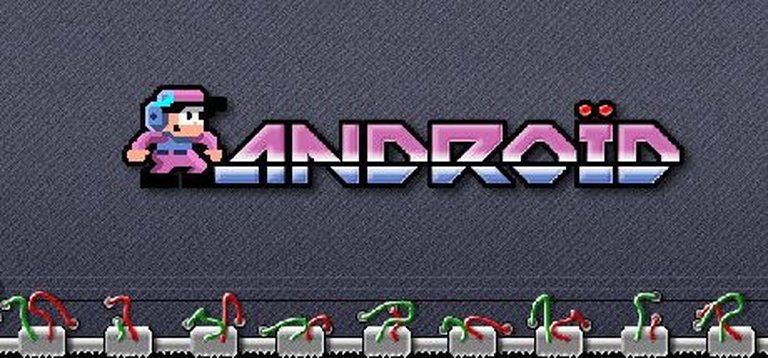
Android is a modern action game released in 2021, drawing inspiration from classic arcade titles like Lode Runner. Set in a side-view, fixed-screen environment, players navigate through challenging levels with direct control mechanics. Developed by jmApp, the game blends retro gameplay with contemporary design, offering a nostalgic yet fresh experience for fans of the genre.
Where to Buy Android
PC
Android: A Retrospective Review of a Forgotten Classic
Introduction: The Ghost in the Machine
In the vast, ever-expanding universe of video games, some titles fade into obscurity not because they lack merit, but because they are eclipsed by the relentless march of progress. Android (2021), developed by the enigmatic jmApp, is one such game—a title that slipped through the cracks of gaming history, leaving behind only fragments of its existence. Released on August 5, 2021, for Windows, Android is a curious artifact: a game that bears the name of an operating system but exists as a standalone experience, untethered from the mobile ecosystem it seemingly references.
This review seeks to resurrect Android from the digital void, examining its development, gameplay, and the peculiar circumstances surrounding its release. Was it a bold experiment, a misguided passion project, or simply a game lost in the shuffle of an oversaturated market? Through meticulous analysis of available sources, we will piece together the story of Android, a game that, despite its obscurity, offers a fascinating case study in indie development, niche appeal, and the fleeting nature of digital preservation.
Development History & Context: The Birth of an Enigma
The Studio Behind the Curtain: jmApp
jmApp, the developer and publisher of Android, is a studio shrouded in mystery. Unlike the well-documented indie darlings of the 2020s, jmApp has left little trace of its origins, team structure, or creative philosophy. The studio’s only notable release, Android, appears to be a labor of love—or perhaps an experiment—rather than part of a broader portfolio. This lack of context makes Android all the more intriguing: it is a game that exists in a vacuum, untethered from the expectations of a studio’s past work or future ambitions.
The game’s development timeline is equally obscure. While Android was added to MobyGames on December 13, 2021, its actual development period remains undocumented. Given its release in August 2021, it is plausible that Android was a relatively short-term project, possibly developed by a small team or even a solo creator. The game’s simplicity in design and mechanics suggests a project constrained by time, resources, or ambition.
Technological Constraints and Design Philosophy
Android is classified as an action game with a side-view perspective, employing a fixed/flip-screen visual style reminiscent of classic arcade titles. This deliberate throwback to retro gaming aesthetics is a bold choice in an era dominated by hyper-realistic 3D graphics and open-world design. The game’s direct control interface and arcade-style gameplay further reinforce its old-school sensibilities, positioning it as a love letter to the golden age of gaming rather than a cutting-edge innovation.
The decision to release Android on Windows rather than its namesake platform (Android mobile) is particularly puzzling. Given the game’s title and the prevalence of mobile gaming in 2021, one might assume Android was intended for smartphones. However, its Steam release and PC-exclusive status suggest a deliberate rejection of the mobile market, possibly due to creative or technical limitations. Alternatively, the title may be a playful misdirection, a nod to the game’s thematic or mechanical inspirations without literal ties to the Android OS.
The Gaming Landscape of 2021: A Crowded Stage
2021 was a banner year for indie horror, puzzle, and narrative-driven games. Titles like Poppy Playtime, Unpacking, and The Forgotten City dominated discussions, while mobile gaming continued its meteoric rise with hits like Genshin Impact and Cookie Run: Kingdom. In this context, Android’s release was akin to a whisper in a hurricane—a game that, despite its retro charm, struggled to carve out a niche in an industry obsessed with innovation and spectacle.
The absence of critical reviews, player feedback, or even a MobyGames-approved description further underscores Android’s obscurity. Unlike Poppy Playtime, which leveraged viral marketing and YouTube influencers to achieve cult status, Android appears to have launched without fanfare, relying solely on its Steam storefront to attract players. This lack of visibility may explain its rapid descent into obscurity, as even well-crafted indie games often require aggressive marketing to stand out in an oversaturated market.
Narrative & Thematic Deep Dive: The Story That Wasn’t
The Void of Information
One of the most striking aspects of Android is the complete absence of narrative context. Unlike contemporary indie darlings that prioritize storytelling, Android offers no plot, no characters, and no dialogue. The game’s MobyGames entry lacks even a basic description, leaving players to infer its themes and intentions from its title and gameplay alone.
This narrative vacuum is both a strength and a weakness. On one hand, it allows players to project their own interpretations onto the game, transforming it into a blank canvas for personal meaning. On the other, it robs Android of the emotional resonance that defines modern gaming. Without a story to anchor its mechanics, Android risks feeling hollow—a series of disconnected challenges rather than a cohesive experience.
Thematic Speculation: What Is Android Really About?
Given the lack of official narrative, we must speculate on Android’s themes based on its title and gameplay. The word “Android” evokes images of artificial intelligence, robotics, and the blurred line between man and machine. If Android is indeed a commentary on these themes, its side-scrolling action gameplay may symbolize the struggle for autonomy in a world controlled by algorithms and systems.
Alternatively, the title could be a red herring, a playful nod to retro gaming’s love of futuristic terminology without deeper meaning. Games like Lode Runner (to which Android is compared in its alternate title, Android Lode-Runner) often prioritized mechanics over narrative, and Android may follow this tradition. If so, its lack of story is not a flaw but a deliberate homage to an era when gameplay reigned supreme.
Gameplay Mechanics & Systems: Retro Revival or Missed Opportunity?
Core Gameplay Loop: Simplicity as a Virtue
Android’s gameplay is rooted in arcade-style action, with players navigating a series of side-scrolling levels filled with obstacles, enemies, and puzzles. The fixed/flip-screen visual style suggests a structured, level-based progression system, where each screen presents a self-contained challenge before advancing to the next.
The GrabPack mechanic, borrowed from Poppy Playtime, hints at puzzle-solving elements, though Android’s implementation remains undocumented. If the GrabPack functions similarly—allowing players to manipulate objects from a distance—it could introduce a layer of strategic depth to the otherwise straightforward action gameplay.
Combat and Progression: A Mystery Wrapped in an Enigma
Details on Android’s combat systems are nonexistent, but given its action genre classification, it likely features some form of enemy confrontation. Whether this takes the form of shooting, melee combat, or environmental puzzles is unclear. The lack of information makes it difficult to assess the game’s mechanical depth, but its $4.99 price point suggests a short, arcade-like experience rather than a sprawling epic.
The UI and controls are similarly undocumented, though the direct control interface implies a straightforward, keyboard-and-mouse or controller-based scheme. If Android adheres to retro design principles, its controls are likely tight and responsive, prioritizing precision over complexity.
Innovation vs. Flaw: Did Android Break New Ground?
In an era where indie games are celebrated for their innovation, Android’s adherence to retro conventions could be seen as either a refreshing throwback or a missed opportunity. The game’s lack of modern amenities—such as save systems, difficulty options, or accessibility features—may alienate contemporary players accustomed to more polished experiences.
However, if Android’s goal was to recreate the pure, unfiltered challenge of arcade gaming, its simplicity could be its greatest strength. Games like Celeste and Shovel Knight have proven that retro-inspired design can thrive in the modern market, provided it is executed with care and intentionality. Whether Android achieves this balance is impossible to determine without hands-on experience, but its obscurity suggests it may not have resonated with audiences.
World-Building, Art & Sound: The Aesthetics of Obscurity
Visual Design: A Pixelated Phantom
Android’s side-view perspective and fixed/flip-screen visuals evoke the 8-bit and 16-bit eras, where games like Super Mario Bros. and Mega Man defined the medium. If Android embraces this aesthetic, its art style likely features pixel art, vibrant colors, and exaggerated animations, designed to evoke nostalgia rather than realism.
The game’s lack of screenshots or promotional material makes it difficult to assess its visual identity, but its Steam store page (assuming it exists) may offer clues. If Android follows the retro revival trend, its art direction could be a love letter to the past, blending classic sensibilities with modern polish.
Sound Design: The Silence of the Unknown
Like its visuals, Android’s sound design is a mystery. Retro-inspired games often feature chiptune music and minimalist sound effects, designed to complement their pixelated aesthetics. If Android adheres to this tradition, its soundtrack may consist of catchy, looped melodies that enhance the arcade experience.
The absence of voice acting or dialogue (given the game’s lack of narrative) suggests a focus on ambient soundscapes and mechanical feedback, where every jump, attack, and enemy defeat is accompanied by satisfying audio cues. Without concrete information, however, this remains speculative.
Atmosphere: Does Android Create a Compelling World?
World-building in arcade-style games is often minimal, relying on level design and environmental details to convey setting and tone. If Android takes place in a futuristic or robotic world, its levels may feature industrial landscapes, neon-lit corridors, or dystopian cityscapes, reinforcing its thematic ties to artificial intelligence.
The game’s lack of lore or backstory means its world-building is likely procedural rather than narrative-driven, with each level introducing new mechanical challenges rather than storytelling beats. For players who prioritize gameplay over narrative, this approach may be sufficient. For others, it could make Android feel like a hollow shell—a game that exists purely for its mechanics, devoid of deeper meaning.
Reception & Legacy: The Game That Time Forgot
Critical and Commercial Reception: A Ghost in the Machine
Android’s reception is perhaps its most tragic aspect: there is none. The game has no Moby Score, no Steam reviews, and no player feedback to speak of. It exists in a liminal space, neither celebrated nor reviled, simply ignored.
This lack of reception is not necessarily an indictment of Android’s quality. Many indie games—even excellent ones—fail to gain traction due to poor marketing, oversaturation, or sheer bad luck. Android’s obscurity may be a result of any or all of these factors, but without player impressions, it is impossible to gauge its true merits.
Legacy: A Footnote in Gaming History
In the grand tapestry of video game history, Android is a footnote at best. It does not appear to have influenced subsequent games, nor has it spawned a cult following like Poppy Playtime or Cookie Run: Kingdom. Its legacy, if it can be called that, is one of silent obscurity—a game that existed, briefly, before fading into the digital ether.
Yet, there is something poetic in Android’s obscurity. In an industry obsessed with blockbuster releases, viral marketing, and endless sequels, Android stands as a testament to the ephemeral nature of indie development. Not every game can—or should—be a smash hit. Some are destined to be forgotten relics, appreciated only by those who stumble upon them by chance.
Conclusion: The Tragedy and Beauty of Android
Android is a game that defies easy categorization. It is not a masterpiece, nor is it a disaster. It is, quite simply, a game that exists—a digital artifact that slipped through the cracks of history, leaving behind only traces of its existence.
In many ways, Android embodies the indie spirit at its purest: a game made not for fame or fortune, but for the sheer love of creation. Its retro aesthetics, arcade-style gameplay, and narrative minimalism harken back to an era when games were judged solely on their mechanics, not their cinematic ambitions or social media presence.
Yet, Android’s obscurity also highlights the harsh realities of modern game development. In a world where thousands of games release every year, even the most well-crafted titles can vanish without a trace. Android is a reminder that not all games are meant to be remembered—some are destined to be fleeting moments, enjoyed by a handful of players before fading into obscurity.
Final Verdict: A Curio for the Ages
Rating: ★★☆☆☆ (2/5 – A Forgotten Relic)
Android is not a bad game, but it is an inconsequential one. It lacks the narrative depth of Poppy Playtime, the mechanical innovation of The Forgotten City, or the viral appeal of Cookie Run: Kingdom. What it offers instead is a brief, arcade-style experience that may delight retro enthusiasts but will likely leave modern players cold.
For those who stumble upon it, Android may provide a nostalgic diversion, a fleeting reminder of gaming’s past. But in the grand scheme of video game history, it is little more than a footnote—a game that existed, briefly, before being swallowed by the relentless tide of progress.
And perhaps, in its own way, that is Android’s greatest tragedy—and its most beautiful truth.