
- Release Year: 2011
- Platforms: Windows
- Publisher: Trion Worlds, Inc.
- Genre: Special edition
- Game Mode: Online PVP
- Average Score: 84/100
Description
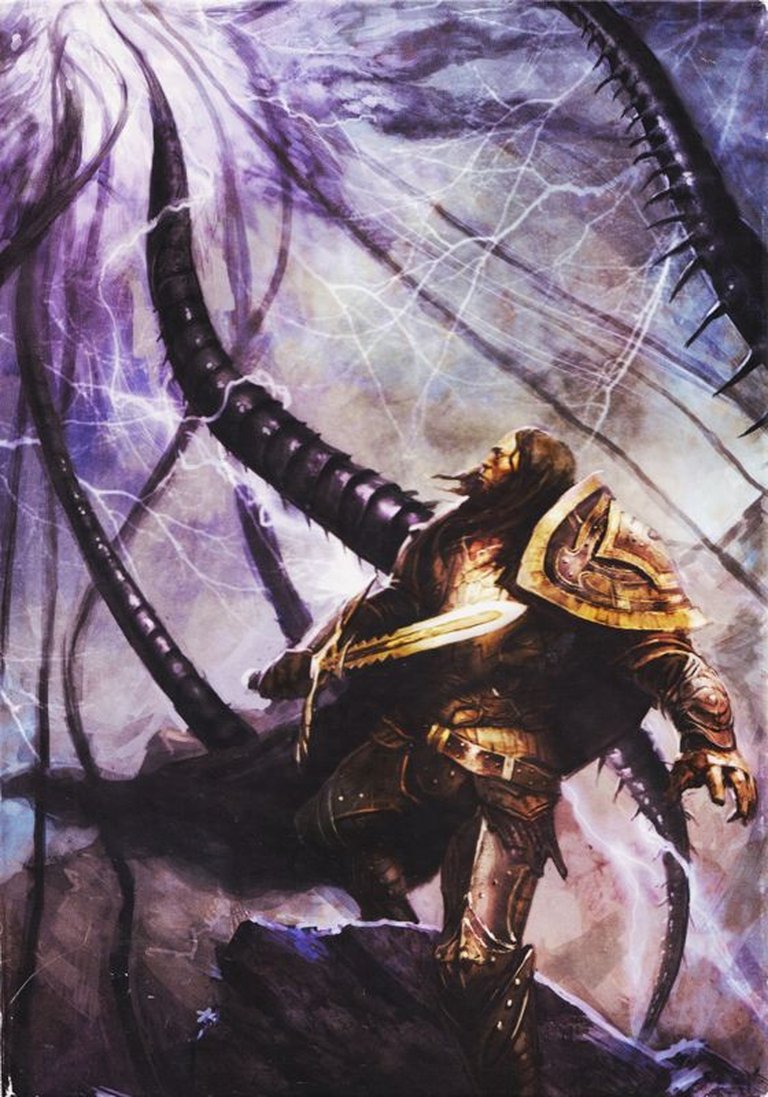
Rift: Collector’s Edition is a special edition of the fantasy MMORPG Rift, set in the world of Telara, where players battle dynamic rifts and the forces of the Blood Storm, a dragon alliance seeking to conquer the realm. As the Ascended—resurrected warriors—players choose between the Guardians or Defiant factions to combat elemental invasions and restore balance. The Collector’s Edition includes exclusive physical extras like a mouse pad, soundtrack, comic book, and more.
Rift: Collector’s Edition Mods
Rift: Collector’s Edition Guides & Walkthroughs
Rift: Collector’s Edition Reviews & Reception
metacritic.com (84/100): Taking the best aspects of the games that came before it, improving on them and adding its own unique elements has Rift poised to be a long term power in the MMOG community.
ign.com : Quality compensates for a lack of originality.
metacritic.com (84/100): Taking the best aspects of the games that came before it, improving on them and adding its own unique elements has Rift poised to be a long term power in the MMOG community.
monstercritic.com (84/100): For fans of WoW, Rift is a familiar yet refreshing new adventure, and Telara welcomes anyone even a little fed up with Azeroth.
Rift: Collector’s Edition Cheats & Codes
PC
Enter codes in the game’s redemption interface.
| Code | Effect |
|---|---|
| CFCZEJ9NJ2GH92EJRP77 | Unlocks Seraphim’s Habiliment Costume |
| DJXRHNZ6Q39ETPRMXKL7 | Unlocks Ascended Essentials Pack |
| CMW6HCMQNNN27X6GNWWE | Unlocks Benevolent Frame |
| 6TDETRE7FGJ6EQWG932J | Unlocks Companion Pet Sera & Dimension Item Bundle |
| 96F6H3MF6PGCR3YLPFP9 | Unlocks Angelic Drape Cape |
| C79RJ6M7XHZWNF69XJRD | Unlocks Lucky Dice Portrait Bag |
| 7XDLTNG3HQKZWQ3PYYT9 | Unlocks Lucky Staff |
Rift: Collector’s Edition: A Defining Moment in MMORPG History
Introduction
In the pantheon of massively multiplayer online role-playing games (MMORPGs), few titles have left as indelible a mark as Rift. Released in 2011 by Trion Worlds, Rift emerged during a pivotal era in the genre, challenging the dominance of World of Warcraft while carving out its own identity through innovation, polish, and a dynamic world unlike anything players had seen before. The Collector’s Edition of Rift not only encapsulated the game’s ambitious vision but also served as a tangible testament to its cultural impact, bundling a wealth of physical extras that celebrated its lore, artistry, and musical grandeur.
This review aims to dissect Rift: Collector’s Edition with the precision of a historian and the passion of a journalist who lived through its rise. We will explore its development context, narrative depth, gameplay mechanics, artistic achievements, and lasting legacy. Through this analysis, we will argue that Rift was not merely a “WoW killer” but a bold evolution of the MMORPG formula—one that redefined player agency, world dynamism, and class customization in ways that still resonate today.
Development History & Context
The Birth of Trion Worlds and a $50 Million Gamble
Rift was the brainchild of Trion Worlds, a studio founded in 2006 with the explicit goal of revolutionizing the MMO genre. Led by CEO Lars Buttler and a team of industry veterans, Trion sought to leverage cutting-edge technology and a player-first philosophy to create a game that could stand toe-to-toe with World of Warcraft. The development budget for Rift exceeded $50 million, a staggering sum for an unproven studio, reflecting both the ambition and the risk inherent in challenging Blizzard’s juggernaut.
The game’s development was marked by an extensive alpha and beta testing phase, which began in 2010 and culminated in a series of stress tests that fine-tuned the game’s server infrastructure. Trion’s use of the Gamebryo engine—a middleware solution known for its flexibility—allowed the team to craft a visually stunning world while ensuring stability, a rarity for MMOs at launch. The engine’s support for dynamic events and large-scale battles proved crucial to Rift’s defining feature: its eponymous rifts.
The MMORPG Landscape in 2011
By 2011, the MMORPG genre was dominated by World of Warcraft, which had spent nearly seven years refining its formula. Competitors like Warhammer Online: Age of Reckoning and Star Wars: The Old Republic had attempted to dethrone it, with mixed success. Into this landscape stepped Rift, marketed aggressively as a “WoW killer”—a label that, while reductive, underscored its potential to disrupt the status quo.
What set Rift apart was its dynamic world system. Unlike the static quest hubs of WoW, Rift’s Telara was a living, breathing world where elemental rifts could open spontaneously, spewing forth hordes of invaders that players had to repel. This system was not merely a gimmick; it was a fundamental shift in how MMOs approached world design, emphasizing player agency and emergent gameplay over scripted content.
The Collector’s Edition: A Celebration of Craftsmanship
The Collector’s Edition of Rift, released on April 13, 2011, was more than a mere bundle of extras—it was a love letter to the game’s fans and a statement of intent. Priced at a premium, it included:
- A 128-page hardcover comic book that expanded on Telara’s lore, offering players a deeper dive into the world’s history and factions.
- A soundtrack CD featuring the game’s orchestral score, composed by the renowned Inon Zur (Fallout 3, Dragon Age).
- A double-sided poster depicting the game’s factions and key locations.
- A Rift-branded USB drive, a practical yet thematically appropriate inclusion.
- A mouse pad and quick-start guide, rounding out the physical package.
These extras were not mere trinkets; they were carefully curated to enhance the player’s connection to Telara, reinforcing the game’s identity as a narrative-driven, immersive experience.
Narrative & Thematic Deep Dive
The World of Telara: A Cosmic Battleground
At the heart of Rift lies Telara, a world situated at the nexus of six elemental planes: Air, Fire, Water, Earth, Life, and Death. Each plane is governed by a dragon-deity, a primordial force of nature that seeks to consume Telara for its vast reserves of sourcestone, a mystical resource that amplifies their power. The most formidable of these deities is Regulos, the Dragon of Death, whose return to Telara shatters the Ward, a magical barrier that had long protected the world from planar invasions.
The game’s backstory is steeped in cosmic horror and high fantasy, drawing inspiration from Lovecraftian themes and classical mythology. The dragons are not mere monsters; they are eldritch abominations, beings of such immense power that their true forms defy comprehension. Regulos, in particular, is portrayed as an omnicidal maniac, offended by the very existence of life itself. His return heralds the Blood Storm, an alliance of the dragon-deities bent on consuming Telara and, by extension, the entire universe.
Factions: Guardians vs. Defiant
Players in Rift align with one of two factions, each with a distinct philosophy and origin story:
-
The Guardians: Devout followers of the Vigil, Telara’s native gods, the Guardians are resurrected warriors who believe in divine intervention. Their ranks include:
- High Elves: Wise and pious, they serve as the Vigil’s chosen people.
- Mathosians: A warrior culture of humans from the northern reaches of Telara.
- Dwarves: Stoic and unyielding, they uphold the traditions of their ancestors.
The Guardians’ narrative is one of faith and tradition, but their rigid adherence to doctrine often blinds them to the Defiant’s pragmatic approach.
-
The Defiant: A faction of rebels and innovators, the Defiant reject the Vigil’s authority, placing their faith in technology and science. Their members include:
- Eth: A technologically advanced human culture from the southern deserts.
- Bahmi: A proud warrior race descended from humans and air spirits.
- Kelari: Dark elves who practice animism and cabalistic magic.
The Defiant’s origin story is one of desperation and ingenuity. Hailing from a Bad Future where Regulos has already triumphed, they use a time machine to send their champions back to the past, armed with the knowledge and technology needed to avert catastrophe.
Themes: Faith vs. Science, Fate vs. Free Will
Rift’s narrative is a philosophical battleground, exploring themes of faith versus science, destiny versus free will, and the cost of survival. The Guardians embody blind faith, trusting in the Vigil’s plan even as the world crumbles around them. The Defiant, by contrast, represent rationalism and adaptability, willing to embrace forbidden knowledge to save Telara.
This dichotomy is not merely academic; it drives the game’s faction conflict, which plays out in both PvE and PvP contexts. The Guardians and Defiant are not merely rivals—they are ideological opposites, each convinced that the other’s methods will doom Telara. This tension is exacerbated by the game’s time-travel narrative, which raises questions of predestination and paradox. Are the Defiant’s actions fated to fail, or can they truly change the course of history?
Characters and Dialogue: A Mixed Bag
While Rift’s lore is rich and its world-building ambitious, its characterization and dialogue are somewhat uneven. The game’s main antagonists, such as Regulos and the other dragon-deities, are compelling in their cosmic malevolence, but many of the NPCs and quest-givers lack depth. The writing often falls into the trap of MMO tropes, with characters delivering exposition-heavy dialogue that does little to flesh out their personalities.
That said, there are standout moments. The Defiant’s starting zone, set in the ruins of a post-apocalyptic Meridian, is a masterclass in environmental storytelling. The desperation of the survivors, the remnants of a once-great civilization, and the looming threat of Regulos create a palpable sense of urgency that drives the player forward. Similarly, the Guardian’s tutorial, which culminates in a battle against the Shade of Regulos, is a cinematic triumph, blending gameplay and narrative seamlessly.
Gameplay Mechanics & Systems
The Soul System: A Revolution in Class Customization
At the core of Rift’s gameplay is the Soul System, a modular class system that allows players to mix and match abilities from different “souls” (essentially sub-classes) to create unique builds. Unlike traditional MMOs, where players are locked into a single class, Rift’s system offers unprecedented flexibility, enabling players to switch roles on the fly.
Each of the game’s four Callings (Warrior, Cleric, Rogue, Mage) has access to eight souls, each with its own talent tree. Players can allocate points into these trees to unlock abilities, and they can save multiple builds (called “roles”) to switch between them outside of combat. For example, a Cleric could create one role focused on healing, another on tanking, and a third on damage-dealing, all without needing to respec or create a new character.
This system was revolutionary for its time, offering a level of customization that few MMOs could match. It also encouraged experimentation, as players could easily swap between roles to adapt to different situations. However, it was not without its flaws. The sheer number of possible combinations could be overwhelming for newcomers, and some souls were poorly balanced, leading to certain builds dominating the meta.
Dynamic Events: The Rift System
The game’s namesake feature, the Rift System, is where Rift truly shines. Rifts are dynamic, procedural events that occur spontaneously across Telara. When a rift opens, it spews forth elemental invaders that march toward key locations, such as towns or quest hubs. Players must band together to close the rift before the invaders overrun the area.
Rifts are multi-stage events, with each stage escalating in difficulty. Players are rewarded based on their contribution (e.g., damage dealt, healing provided, buffs applied), and successful completion grants unique loot, including planarite, a currency used to purchase powerful gear.
What makes the Rift System so compelling is its emergent gameplay. Rifts can open anywhere, at any time, forcing players to adapt their strategies on the fly. They also interact with each other; for example, a Fire Rift and a Water Rift might spawn near each other, leading to elemental conflicts that players can exploit. This dynamism ensures that no two playthroughs are alike, keeping the world feeling alive and unpredictable.
Combat and Progression
Combat in Rift is fast-paced and tactical, with an emphasis on positioning, crowd control, and resource management. The game’s tab-targeting system will be familiar to MMO veterans, but the Soul System adds depth, allowing for hybrid builds that blend different playstyles.
Progression is linear but rewarding. Players level up by completing quests, closing rifts, and participating in dungeons and raids. The game’s endgame content is robust, featuring 10-man and 20-man raids, expert-mode dungeons, and PvP warfronts (battlegrounds). The Storm Legion expansion (2012) introduced Dimensions, a form of player housing, further enriching the endgame experience.
UI and Quality-of-Life Features
Rift’s user interface (UI) is clean and intuitive, with a customizable action bar, mini-map, and quest tracker that make navigation and combat manageable. The game also features public grouping, a revolutionary mechanic that allows players to instantly join forces when near a rift or invasion, eliminating the need for manual group formation.
Other quality-of-life features include:
– A wardrobe system, allowing players to customize their appearance without sacrificing stats.
– Dyeable armor, enabling further personalization.
– A mentoring system, which scales high-level players down to lower levels for group content.
These features, while seemingly minor, contribute to Rift’s player-friendly design, making it accessible to both veterans and newcomers.
World-Building, Art & Sound
Telara: A World of Contrasts
Telara is a visually stunning world, blending lush forests, arid deserts, and towering mountains with eldritch horrors and ancient ruins. The game’s art direction is cohesive yet diverse, with each zone boasting a distinct aesthetic that reflects its lore and factional allegiance.
- Silverwood, the Guardian starting zone, is a verdant forest teeming with life, but it is also under siege by the forces of Regulos, creating a tense, atmospheric experience.
- Freemarch, the Defiant starting zone, is a war-torn landscape, scarred by battle and littered with the remnants of a fallen civilization.
- Sanctum and Meridian, the faction capitals, are architectural marvels, showcasing the Guardians’ divine grandeur and the Defiant’s technological prowess.
The world is further enriched by its dynamic events, which can alter the landscape in real-time. A peaceful village might suddenly be overrun by death rifts, transforming it into a nightmarish battleground. This fluidity ensures that Telara never feels static, reinforcing the game’s theme of chaos and instability.
Sound Design: A Symphony of Chaos
The sound design in Rift is immersive and atmospheric, with a dynamic soundtrack that adapts to the player’s actions. Composer Inon Zur delivers a sweeping orchestral score that blends epic fantasy themes with haunting melodies, perfectly capturing the game’s tone.
- The Guardian theme is majestic and uplifting, reflecting their faith in the Vigil.
- The Defiant theme is gritty and industrial, underscoring their reliance on technology.
- The rift events are accompanied by pulsing, urgent music, heightening the sense of danger and excitement.
The ambient sounds are equally impressive, from the howling winds of the Plane of Air to the guttural roars of the dragon-deities. The voice acting, while not always stellar, is serviceable, with key characters delivering memorable performances.
Reception & Legacy
Critical Acclaim and Commercial Success
Rift was met with widespread critical acclaim upon its release, earning an 84/100 on Metacritic and praise for its innovative gameplay, dynamic world, and polished presentation. Critics lauded the Soul System as a game-changer, offering unparalleled customization, and the Rift System was hailed as a masterstroke of emergent design.
- IGN called it “the most bug-free and out-of-the-gate high-quality MMO ever created.”
- PC Gamer praised its “absolutely colossal” scope and “room to grow within the traditional MMO format.”
- GameSpy declared it “Blizzard’s best competition in years.”
Commercially, Rift was a runway success, attracting over 1 million players within its first six months and generating $100 million in revenue by January 2012. Its free-to-play transition in 2013 further expanded its audience, cementing its place as a major player in the MMO landscape.
Awards and Industry Impact
Rift’s impact was recognized with multiple industry awards, including:
– Best New Online Game and Best Online Technology at the 2011 Game Developers Conference.
– Best PC Persistent World/MMO Game of 2011 from IGN.
– Game of the Year 2011 from MMORPG.com.
Its influence can be seen in subsequent MMOs, such as:
– Guild Wars 2 (2012), which adopted dynamic events inspired by Rift’s rift system.
– The Elder Scrolls Online (2014), which embraced flexible class roles akin to the Soul System.
– Final Fantasy XIV (2013), which refined its job system to offer greater customization.
The Decline and Revival
Despite its initial success, Rift’s popularity waned in the mid-2010s, as newer MMOs and changing player expectations shifted the landscape. The game’s transition to free-to-play and the launch of expansions (Storm Legion, Nightmare Tide, Starfall Prophecy) kept it alive, but it never regained its former glory.
However, Rift experienced a resurgence with the launch of Rift Prime in 2018, a “vanilla” server that offered a fresh start for players. The server was a massive success, setting new records for event participation and proving that the game’s core mechanics remained compelling. Though Rift Prime was shut down in 2019, its success demonstrated the enduring appeal of Rift’s design.
The Collector’s Edition: A Lasting Memento
The Collector’s Edition of Rift has since become a coveted artifact among MMO enthusiasts. Its physical extras, particularly the hardcover comic and soundtrack, are highly sought-after, often fetching high prices on secondary markets. For many players, the Collector’s Edition represents not just a game, but a piece of MMO history—a snapshot of a time when Rift dared to challenge the status quo.
Conclusion: A Masterpiece of Its Era
Rift: Collector’s Edition is more than a game; it is a testament to the power of innovation in the MMORPG genre. At a time when many developers were content to emulate World of Warcraft, Trion Worlds dared to dream bigger, crafting a world that was dynamic, immersive, and endlessly customizable.
Its Soul System redefined class flexibility, its Rift System revolutionized emergent gameplay, and its narrative depth elevated it above mere fantasy tropes. While its characterization and dialogue were not always stellar, its world-building, art, and sound design created an unforgettable experience that still resonates today.
In the annals of MMO history, Rift stands as a bridge between eras—a game that honored the past while paving the way for the future. Its legacy is evident in the dynamic events of Guild Wars 2, the flexible roles of Final Fantasy XIV, and the player-driven narratives of modern MMOs. For those who experienced it at its peak, Rift was not just a game; it was a revolution.
Final Verdict: 9/10 – A Timeless Classic
Rift: Collector’s Edition is a must-own for MMO historians and enthusiasts alike. Its innovative mechanics, rich lore, and stunning presentation make it a landmark title, and its physical extras elevate it to the status of a collector’s treasure. While its later years were marked by decline, its initial impact cannot be overstated. For those seeking a dynamic, customizable, and immersive MMO experience, Rift remains a worthy alternative to Azeroth—one that dared to rift the fabric of the genre itself.