
- Release Year: 2015
- Platforms: Linux, Macintosh, Windows
- Publisher: Alientrap Games Inc.
- Developer: Alientrap Games Inc.
- Genre: Special edition
- Perspective: Side-scrolling
- Game Mode: Hotseat, Single-player
- Gameplay: Action, Mythology-based combat, Platformer
- Setting: Ancient Greece, Mythological
- Average Score: 95/100
Description
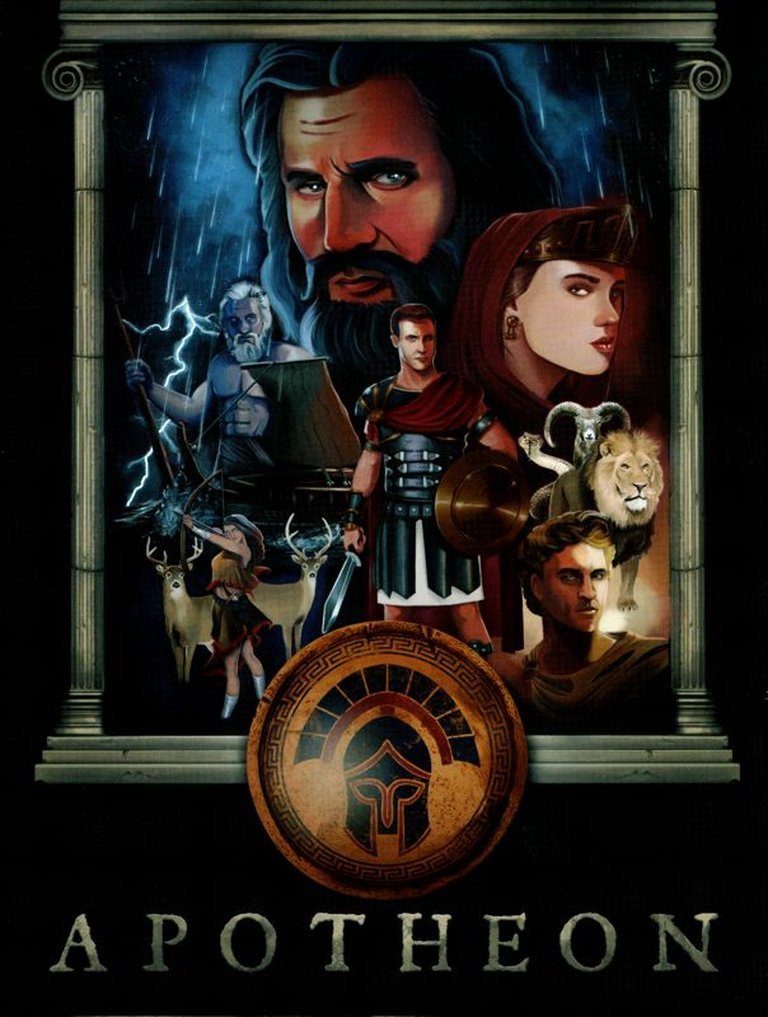
Apotheon (Limited Edition) is a visually striking 2D action-platformer set in the world of Ancient Greek mythology, where players take on the role of Nikandreos, a young warrior who battles the Olympian gods with the aid of Hera. The game features a unique art style inspired by black-figure pottery, blending fast-paced combat with exploration across a mythological landscape. This special edition includes physical extras like a soundtrack, poster, world map, and more, packaged in a collector’s box.
Where to Buy Apotheon (Limited Edition)
PC
Apotheon (Limited Edition) Cracks & Fixes
Apotheon (Limited Edition) Patches & Updates
Apotheon (Limited Edition) Mods
Apotheon (Limited Edition) Guides & Walkthroughs
Apotheon (Limited Edition) Reviews & Reception
mystificationzine.com : Apotheon is less of an artsy-fartsy video game and more of a metroidvania-lite thanks to semi-branching paths and an emphasis on exploration and discovery with side-quests expanding the playthrough.
metacritic.com (95/100): The game more than backs up its aesthetic prowess with rewarding combat and exploration systems in place.
opencritic.com (95/100): It’s sure to capture the attention of anyone who sees it in action. Thankfully, the game more than backs up its aesthetic prowess with rewarding combat and exploration systems in place.
Apotheon (Limited Edition) Cheats & Codes
PC
Within Steam, right-click Apotheon, then select Properties -> ‘Set Launch’ options. Add ‘-dev’ (without quotation marks) then click OK. After that, press ~ (tilde) any time when in-game to bring up the console and enter any of the following codes:
| Code | Effect |
|---|---|
| noclip | Fly through the level |
| god | God mode |
| help | List all console commands |
| givecoin XXXXXX | Add XXXXXX amount of gold |
| notarget | Enemies ignore you |
Apotheon (Limited Edition): A Divine Masterpiece of Myth and Artistry
Introduction: The Gods Descend Upon Gaming
In the pantheon of indie games, few titles have dared to ascend the heights of Apotheon (Limited Edition), a game that seamlessly blends the grandeur of Greek mythology with the precision of Metroidvania gameplay. Released in 2015 by Alientrap, this limited edition is not just a game—it’s a meticulously crafted artifact, a love letter to ancient Greek art, and a bold reimagining of what a 2D action-adventure can achieve. With its striking black-figure pottery aesthetic, a narrative steeped in classical lore, and a combat system that demands both strategy and reflexes, Apotheon stands as a testament to the power of indie innovation. Yet, beneath its divine veneer lies a game that, while visually breathtaking, grapples with the weight of its own ambition. This review will dissect every facet of Apotheon (Limited Edition), from its development history to its lasting legacy, to determine whether it truly earns its place among the gods of gaming.
Development History & Context: Forging a Modern Myth
The Birth of a Studio’s Vision
Alientrap, a Toronto-based indie studio founded in 2002 by Lee Vermeulen and Jesse McGibney, had already made waves with Capsized, a sci-fi Metroidvania that showcased their knack for fluid gameplay and atmospheric world-building. However, Apotheon represented a radical departure—a shift from the cosmic to the classical. The game’s genesis can be traced back to an abandoned concept for a Capsized sequel, which initially toyed with the idea of “space Greek mythology.” Recognizing the untapped potential of grounding their next project in the rich tapestry of ancient Greek lore, the team pivoted to create a game that would not only pay homage to the myths but also revive their visual language.
The Art of Revival: Black-Figure Pottery in Motion
The decision to adopt the black-figure pottery style—a technique prevalent in ancient Greece from the 6th to 4th centuries BCE—was nothing short of revolutionary. This art form, characterized by its silhouette-like figures and intricate detailing, was traditionally used to depict heroic deeds and divine interventions. By translating this aesthetic into a dynamic 2D platformer, Alientrap achieved something extraordinary: a game that feels like an artifact unearthed from antiquity, yet moves with the fluidity of modern animation. The challenge was immense—balancing historical fidelity with gameplay clarity—but the result is a visual masterpiece that immerses players in a world where every frame could be mistaken for a piece of museum-worthy pottery.
Technological Constraints and Creative Solutions
Developed using Microsoft XNA and MonoGame, Apotheon leveraged these frameworks to create a cross-platform experience that retained the precision of 2D platforming while incorporating RPG elements. The engine’s flexibility allowed for the seamless integration of Metroidvania mechanics, such as ability-gated progression and non-linear exploration, which were essential to the game’s design. However, the transition to PlayStation 4, handled by Sickhead Games, introduced technical hurdles, including the infamous crashes and bugs that plagued the console version at launch. These issues, while eventually patched, underscored the challenges of adapting a PC-centric engine to console hardware.
The Gaming Landscape of 2015: A Crowded Pantheon
Apotheon emerged during a golden age for indie games, a time when titles like Ori and the Blind Forest, Hollow Knight, and Axiom Verge were redefining the Metroidvania genre. The competition was fierce, but Apotheon carved out its niche by offering something none of its contemporaries could: a living piece of ancient art. While games like God of War had long mined Greek mythology for spectacle, Apotheon approached its source material with a scholar’s reverence and an artist’s eye. The limited edition, released in August 2015 through IndieBox, further cemented its status as a collector’s item, bundling the game with a DRM-free USB drive, a physical soundtrack, a mousepad, and a papyrus-style world map—each element designed to evoke the tactile allure of antiquity.
Narrative & Thematic Deep Dive: The Hubris of Gods and Men
The Plot: A Mortal’s Ascent to Divinity
Apotheon opens in the village of Dion, a once-thriving settlement now reduced to ruins under the wrath of the Olympian gods. Zeus, enraged by humanity’s arrogance, has withdrawn the divine gifts that sustained life on Earth—plunging the world into darkness, famine, and war. Enter Nikandreos, a young warrior whose name (derived from the Greek nikē, meaning “victory,” and andros, meaning “man”) foreshadows his destiny. After repelling a raid on Dion, Nikandreos is approached by Hera, Zeus’s vengeful wife, who tasks him with a divine mission: ascend Mount Olympus, slay the gods, and reclaim their powers to restore humanity.
The narrative unfolds as a series of mythic confrontations, each god representing a trial that tests Nikandreos’s resolve. From the cunning hunts of Artemis to the labyrinthine traps of Apollo, the game weaves a tapestry of encounters that feel plucked straight from Homeric legend. The story’s climax—a showdown with Zeus himself—culminates in a moral choice: spare Hera or strike her down, a decision that reflects the game’s central theme of hubris. The epilogue, where Nikandreos uses his newfound divine power to reshape the world, leaves players pondering whether he will repeat the gods’ mistakes or forge a new path.
Themes: The Fragility of Mortality and the Cost of Power
At its core, Apotheon is a meditation on the relationship between gods and mortals, a dynamic defined by exploitation, betrayal, and the inevitable cycle of rebellion. The game’s title, derived from the Greek apotheosis (elevation to godhood), hints at its central question: what does it mean to become a god? Nikandreos’s journey is not merely one of physical ascent but of moral transformation. As he strips the gods of their powers, he becomes increasingly godlike himself, raising the specter of whether he, too, will grow indifferent to mortal suffering.
The game also explores the theme of divine abandonment, a motif that resonates with classical tragedies. Zeus’s decision to withdraw the gods’ gifts mirrors the capriciousness of the Olympians in myth—beings who toy with mortal lives for their own amusement. Hera’s betrayal of her husband, while driven by personal vengeance, aligns her with Nikandreos’s cause, blurring the lines between ally and manipulator. The narrative’s ambiguity is its strength; there are no clear heroes or villains, only flawed beings caught in a cosmic struggle for dominance.
Characters: Gods as Flawed Antagonists
One of Apotheon’s most compelling achievements is its portrayal of the Olympian gods not as one-dimensional villains but as complex, often sympathetic figures. Artemis, the goddess of the hunt, is playful yet deadly, her battle with Nikandreos a dance of predator and prey. Apollo, the god of music and prophecy, is a hedonist who imprisons his rivals, including Helios, the sun god, in a fit of jealousy. Even Zeus, the ultimate antagonist, is not purely evil—his actions stem from a belief in divine order, however tyrannical.
The voice acting, while uneven, adds depth to these characters. SungWon Cho’s Zeus is appropriately thunderous, while Sonja Ball’s Hera drips with calculated malice. The dialogue, penned with the help of classical scholar Maciej Paprocki, strikes a balance between archaic grandeur and modern accessibility, ensuring that the mythic tone never feels overly pretentious.
Dialogue and World-Building: A Scholar’s Touch
The game’s commitment to authenticity extends to its world-building. Optional stone steles scattered throughout Olympus provide lore dumps on the gods, their domains, and their mythological significance. These texts, while not integral to the main narrative, enrich the experience for players eager to delve deeper into Greek mythology. The inclusion of figures like Aphrodite and Dionysus, who secretly aid Nikandreos, adds layers of political intrigue to the divine conflict, reinforcing the idea that Olympus is a realm of shifting alliances and hidden agendas.
Gameplay Mechanics & Systems: The Mortal Combat of a Would-Be God
Core Gameplay Loop: Exploration and Confrontation
Apotheon is, at its heart, a Metroidvania—a genre defined by its emphasis on exploration, ability-gated progression, and methodical combat. The game’s structure revolves around Nikandreos’s ascent through the realms of Olympus, each governed by a god whose defeat grants a new power. These abilities, such as Athena’s Aegis (which regenerates shield durability) or Hermes’ Caduceus (a grappling hook), are essential for unlocking new areas and overcoming environmental obstacles.
The game’s non-linear design encourages backtracking, a hallmark of the genre. The Agora and Acropolis serve as central hubs, with branching paths leading to the domains of individual gods. While the interconnectedness of these areas is not as labyrinthine as Super Metroid or Castlevania: Symphony of the Night, it offers enough complexity to reward curious players. Hidden chambers, destructible walls, and locked doors abound, ensuring that thorough exploration is both incentivized and necessary.
Combat: A Dance of Steel and Strategy
Combat in Apotheon is a deliberate, weighty affair. Nikandreos wields an arsenal of ancient Greek weapons, from swords and spears to bows and slings, each with distinct properties. Melee combat relies on precise timing and positioning, with a stamina system that prevents button-mashing. Shields can block attacks but degrade over time, adding a layer of resource management to encounters. The game’s physics-based combat, where weapons can be thrown and enemies can be knocked back, introduces a tactical depth that sets it apart from simpler hack-and-slash titles.
However, the combat system is not without its flaws. The controls, particularly on console, can feel unwieldy, with attacks sometimes failing to connect due to imprecise hitboxes. The lack of a dedicated lock-on system makes ranged combat frustrating, especially in boss fights where precision is paramount. These issues, while not game-breaking, undermine the otherwise satisfying crunch of battle.
Character Progression: The Spoils of Divine War
Progression in Apotheon is tied to the acquisition of divine powers and the upgrading of weapons and armor. Defeating gods grants permanent abilities, such as Poseidon’s trident (which allows underwater breathing) or Ares’ invulnerability (which reduces knockback). These powers are not merely tools for combat but keys to unlocking new areas, reinforcing the Metroidvania loop.
The game also features a crafting system, albeit a limited one. Players can forge health potions, armor repair kits, and explosive traps using resources gathered from fallen enemies and the environment. While this system adds a layer of preparation to boss fights, it is underutilized, with many craftable items feeling superfluous in the face of the game’s generous health and armor drops.
UI and Inventory Management: A Cluttered Pantheon
The user interface, while functional, is one of Apotheon’s weaker elements. The inventory system, which allows players to cycle through weapons and items, can be cumbersome, especially in the heat of combat. The lack of a quick-swap mechanism for weapons forces players to pause frequently, disrupting the flow of action. Additionally, the durability system, while thematically appropriate, can feel punitive, particularly when a favored weapon shatters mid-battle.
Boss Fights: Divine Trials
The boss encounters in Apotheon are the game’s highlight, each a unique test of skill and adaptability. Artemis’s hunt, where player and goddess alternately take the roles of hunter and prey, is a masterclass in dynamic gameplay. Poseidon’s battle, fought on a precarious boat amid crashing waves, demands constant movement and quick reflexes. Zeus’s final confrontation, a multi-phase gauntlet that culminates in a titanic clash, is a fitting climax to Nikandreos’s journey.
However, some boss fights suffer from the same control issues that plague the base combat. Ares’s battle, for instance, devolves into a slog due to the imprecision of ranged attacks, while Hades’s underworld duel is marred by awkward hit detection. These inconsistencies prevent the boss fights from reaching the heights of perfection achieved by games like Hollow Knight or Blasphemous.
Multiplayer: A Divine Duel
The limited edition includes a local 1v1 multiplayer mode, a welcome addition that allows players to test their skills against a friend. While this mode is barebones—lacking the depth of the single-player campaign—it offers a fun diversion, particularly for those eager to wield the powers of the gods in direct competition.
World-Building, Art & Sound: A Symphony of Sight and Sound
Setting and Atmosphere: A Living Myth
Apotheon’s world is a meticulously crafted homage to ancient Greece, from the crumbling ruins of Dion to the gilded halls of Olympus. Each realm is distinct, reflecting the domain of its governing deity. Artemis’s forest is a verdant hunting ground, teeming with mythical beasts, while Poseidon’s oceanic domain is a labyrinth of shipwrecks and storm-tossed waves. The underworld, ruled by Hades, is a shadowy expanse of rivers and caverns, its eerie glow casting long shadows that evoke the dread of the unknown.
The game’s commitment to its art style is unwavering. Every character, enemy, and environmental detail is rendered in the black-figure pottery aesthetic, a choice that lends the game a timeless quality. The monochromatic palette, punctuated by occasional splashes of color (such as the golden hue of Zeus’s lightning), creates a stark, dramatic contrast that heightens the game’s mythic tone.
Visual Direction: A Masterclass in Style
The visual design of Apotheon is nothing short of extraordinary. The decision to emulate ancient Greek pottery is not merely a gimmick but a fundamental aspect of the game’s identity. The characters move with a fluidity that belies their two-dimensional origins, their animations evoking the dynamic poses of classical sculpture. The backgrounds, too, are a marvel, with intricate patterns and architectural details that recall the friezes of the Parthenon.
The game’s use of light and shadow is particularly effective. The interplay of darkness and illumination—whether in the flickering torchlight of a dungeon or the blinding radiance of Apollo’s lyre—creates a sense of depth and atmosphere that is rare in 2D games. The occasional use of color, such as the crimson of blood or the azure of the sea, serves to highlight key moments, ensuring that the player’s attention is always drawn to the most critical elements of the scene.
Sound Design: The Music of the Spheres
The soundtrack of Apotheon, composed by Marios Aristopoulos, is a triumph of atmospheric composition. Drawing from ancient Greek musical theory, Aristopoulos employs irregular meters, chromatic scales, and reconstructed instruments such as the lyre and aulos to create a score that is both historically evocative and modernly cinematic. Tracks like “King of the Gods” and “Hades Underworld” are standout pieces, blending orchestral grandeur with electronic undertones to underscore the game’s epic scale.
The sound design extends beyond the music. The clatter of weapons, the roar of monsters, and the whisper of the wind all contribute to the game’s immersive atmosphere. The voice acting, while uneven, adds a layer of personality to the gods, with standout performances from SungWon Cho (Zeus) and Sonja Ball (Hera). The ambient sounds—such as the distant thunder in Zeus’s domain or the lapping waves in Poseidon’s realm—further enhance the sense of place, making Olympus feel like a living, breathing world.
Reception & Legacy: The Judgment of Critics and Players
Critical Reception: Praise and Criticism
Apotheon received generally favorable reviews upon its release, with critics lauding its art direction, soundtrack, and ambitious narrative. On Metacritic, the PC version holds a score of 78/100, while the PlayStation 4 version scored slightly lower at 76/100. Reviewers were unanimous in their praise for the game’s visual style, with many describing it as a “living work of art.” Bryan Vore of Game Informer called it “a damn fun game and one of my surprise early favorites of 2015,” while Patrick Hancock of Destructoid praised its “rewarding combat and exploration systems.”
However, the game was not without its detractors. Critics like Alex Carlson of Hardcore Gamer and Philippa Warr of Rock, Paper, Shotgun criticized the combat as shallow and the controls as unwieldy. The PlayStation 4 version, in particular, was marred by technical issues, including frequent crashes that disrupted the gameplay experience. These flaws, while not fatal, prevented Apotheon from achieving the universal acclaim of contemporaries like Ori and the Blind Forest or Hollow Knight.
Commercial Performance and Cultural Impact
While Apotheon did not achieve blockbuster sales, it found a dedicated audience among fans of Metroidvanias and Greek mythology. The limited edition, with its physical extras and collector’s appeal, became a sought-after item, further cementing the game’s status as a cult classic. Its influence can be seen in subsequent titles that blend historical aesthetics with modern gameplay, such as Hades (which also draws from Greek myth) and Tunic (which employs a similar art-book-inspired visual style).
The game’s soundtrack, in particular, has endured as one of its most celebrated aspects. Ranked among the best of 2015 by publications like Push Square and Paste Magazine, it continues to be praised for its innovative fusion of ancient and modern musical elements.
Evolution of Reputation: From Flawed Gem to Cult Classic
In the years since its release, Apotheon has undergone a critical reevaluation. While its technical shortcomings remain a point of contention, its artistic achievements have only grown in stature. The game is now frequently cited as a prime example of how indie developers can leverage historical art styles to create immersive, thematically rich experiences. Its narrative, once dismissed as simplistic, is now appreciated for its fidelity to classical themes and its willingness to grapple with moral ambiguity.
Conclusion: A Divine Experiment with Mortal Flaws
Apotheon (Limited Edition) is a game of contradictions—a visual masterpiece with clunky controls, a narrative steeped in mythic grandeur yet hampered by underdeveloped characters, a combat system that is both satisfying and frustrating. It is, in many ways, a victim of its own ambition, a game that reaches for the heavens but occasionally stumbles on its mortal limitations.
Yet, for all its flaws, Apotheon remains a singular achievement. Its art direction is a triumph, a testament to the power of indie creativity to breathe new life into ancient forms. Its soundtrack is a haunting, beautiful evocation of a lost world. Its narrative, while not without its missteps, offers a compelling exploration of the themes that have defined Western storytelling for millennia.
In the final analysis, Apotheon (Limited Edition) is not a perfect game, but it is an essential one—a bold, flawed, and unforgettable experiment that pushes the boundaries of what a Metroidvania can be. It is a game that demands to be experienced, not just for its gameplay, but for its artistry, its ambition, and its unshakable belief in the power of myth. For those willing to overlook its rough edges, Apotheon offers a journey worthy of the gods themselves.
Final Verdict: 8.5/10 – A Flawed Masterpiece, But a Masterpiece Nonetheless