
- Release Year: 2023
- Platforms: Nintendo Switch, PlayStation 4, PlayStation 5, Windows
- Publisher: Clouded Leopard Entertainment Inc.
- Developer: KENEI Design, Shueisha Inc.
- Genre: Action
- Perspective: 3rd-person
- Game Mode: Single-player
- Gameplay: Puzzle elements, RPG elements
- Setting: Fantasy
- Average Score: 63/100
Description
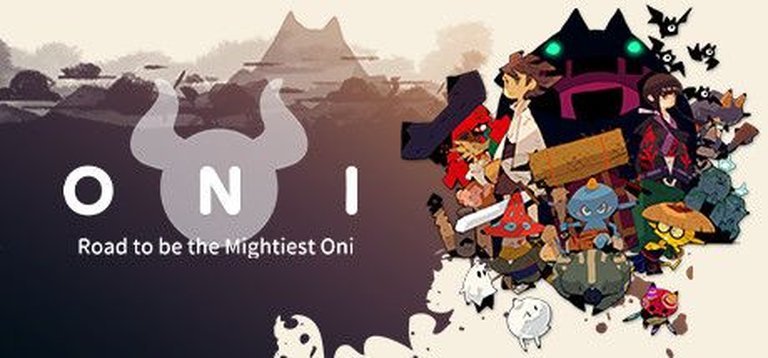
Oni: Road to be the Mightiest Oni is an action-adventure game set in a fantasy world inspired by anime and manga aesthetics. Players embark on a journey as Kuuta, a young oni, navigating a vibrant island filled with challenges, puzzles, and RPG elements. The game blends third-person combat with exploration, offering a mix of frenetic action and emotional storytelling, particularly through the bond between Kuuta and his companion, Kanna. With its striking visuals and immersive soundtrack, the game delivers a unique experience, though some reviews note performance issues on certain platforms.
Gameplay Videos
Where to Buy Oni: Road to be the Mightiest Oni
Oni: Road to be the Mightiest Oni Cracks & Fixes
Oni: Road to be the Mightiest Oni Guides & Walkthroughs
Oni: Road to be the Mightiest Oni Reviews & Reception
metacritic.com (80/100): A stunning adventure that offers a fresh twist on a classic story.
metacritic.com (70/100): ONI: Road to be the Mightiest Oni’s gameplay and structure perfectly suit portable play, which makes the Switch version’s current state even more disappointing.
metacritic.com (70/100): ONI: Road to Be the Mightiest Oni is a messy, yet clearly heartfelt, experience.
metacritic.com (20/100): A violently baseline 3D adventure game, with some nice lore and decent visuals that are wasted on a game that does nothing interesting with them.
opencritic.com : Oni: Road to be the Mightiest Oni was a pleasure to play overall.
opencritic.com (45/100): A mix of ideas that doesn’t quite work, accompanied by a soundtrack that completely breaks the aesthetics and immersion, as well as a somewhat simple and clumsy gameplay, all wrapped in a fantastic art direction, but full of constant frame drops.
opencritic.com (85/100): Despite the issues listed, ONI: Road to be the Mightiest Oni is a title with frantic action moments.
opencritic.com : Despite its heart and soul, this game gets bogged down in one of the most uninspired gameplay mechanics of the year.
opencritic.com (60/100): ONI: Road to Mightiest Oni has a gorgeous semi-open world with an emotionally driven soundtrack.
opencritic.com : Poignant but padded, ONI: Road to be the Mightiest Oni has charming art, beautiful music, and simple but fun gameplay.
opencritic.com (72/100): ONI : Road to be the Mightiest Oni is a different adventure and it feels that way.
opencritic.com (70/100): ONI: Road to Be the Mightiest Oni is a mostly charming little adventure game that suffers from repetitive design.
pockettactics.com : Oni: Road to be the Mightiest Oni is a stunning adventure that offers a fresh twist on a classic story.
thumbculture.co.uk : The game provides a rich, diverse and emotional story which draws you in.
infinitestart.com : With lovely artwork, calming music, and intense gameplay it has the potential to be something, but does it live up to it?
Oni: Road to be the Mightiest Oni Cheats & Codes
PC (V1.0.67)
Use the trainer functions by pressing the corresponding F keys.
| Code | Effect |
|---|---|
| F1 | INVISIBLE TO ANIMALS |
| F2 | Unlimited Player Attack |
Oni: Road to Be the Mightiest Oni – A Flawed but Charming Journey Through Myth and Combat
Introduction: A Fresh Take on a Classic Tale
Oni: Road to Be the Mightiest Oni is a game that dares to flip the script on one of Japan’s most beloved folktales. Instead of celebrating Momotaro, the peach-born hero who slays demons, it casts players as Kuuta, the last surviving oni of a massacred clan, seeking vengeance against the very hero who destroyed his people. Developed by the small but ambitious team at Kenei Design in collaboration with Shueisha Games, this action-adventure title blends third-person combat, light RPG mechanics, and a semi-open world into a visually striking but mechanically uneven experience.
At its core, Oni is a game about redemption, perseverance, and the cost of hatred, wrapped in a whimsical, storybook aesthetic that feels like stepping into a living manga. Yet, for all its charm, it stumbles in execution—repetitive missions, clunky combat, and technical hiccups hold it back from greatness. This review will dissect every facet of the game, from its narrative depth and artistic vision to its gameplay flaws and lasting impact, to determine whether it’s a hidden gem or a missed opportunity.
Development History & Context: A Small Team’s Big Ambition
The Studio Behind the Game
Oni: Road to Be the Mightiest Oni is the brainchild of Kenei Design, a tiny five-person studio that spent two years crafting a miniature world with maximalist ambition. Their goal? To make players feel like they’ve jumped into the pages of a childhood picture book, blending traditional Japanese folklore with modern indie sensibilities.
The game was published by Clouded Leopard Entertainment, a company known for localizing niche Japanese titles, and co-developed with Shueisha Games, the gaming arm of the manga giant behind Shonen Jump. This collaboration hints at the game’s manga-inspired art style and narrative structure, though it never fully capitalizes on its potential.
Technological Constraints & Design Philosophy
Given its small team and modest budget, Oni was built with simplicity in mind:
– A semi-open world divided into three distinct areas, each gated by invisible walls until the player completes trials.
– A dual-character combat system where players control both Kuuta (the oni warrior) and Kazemaru (his spirit companion) simultaneously.
– A minimalist progression system where mushrooms (currency) and spirits (health upgrades) are the primary collectibles.
The game’s technical limitations are evident:
– Performance issues (frame drops, texture pop-in) plague even the PS5 and PC versions, a surprising oversight in 2023.
– The Switch version suffers the most, with stuttering framerates and blurry visuals, making it the least ideal way to experience the game.
– The camera is often uncooperative, lacking proper locking-on mechanics, which makes combat feel clumsier than it should.
Despite these flaws, the developers’ passion for Japanese folklore and storytelling shines through, even if the execution doesn’t always match the vision.
Narrative & Thematic Deep Dive: A Tale of Vengeance and Redemption
Plot Summary: The Other Side of the Momotaro Legend
The game opens with a brutal retelling of the Momotaro myth—but from the oni’s perspective. Kuuta, the sole survivor of his demon clan, washes ashore on Kisejima, a mystical island where the spirits of fallen oni warriors linger. His goal? To absorb their power, grow stronger, and exact revenge on Momotaro, the hero who slaughtered his people.
Along the way, he meets:
– Kazemaru, a wind spirit who aids him in battle by extracting enemy souls.
– Kanna, a mysterious human girl who challenges Kuuta’s hatred of humanity.
– Zenisuke, a greedy merchant who sells weapons and upgrades in exchange for mushrooms.
– Baby Boar, a ridable pig who helps Kuuta traverse the island faster.
Themes: Hatred, Forgiveness, and the Cycle of Violence
The game’s central conflict isn’t just about Kuuta becoming stronger—it’s about whether he can let go of his vengeance. Through scattered memos, environmental storytelling, and conversations with Kanna, the game explores:
– The cost of hatred – Kuuta’s rage blinds him, but Kanna’s kindness forces him to question his path.
– The weight of legacy – The oni spirits he absorbs were once warriors like him, fallen to Momotaro’s blade.
– Humanity vs. monstrosity – Are oni truly evil, or are they victims of a one-sided legend?
Character Depth & Writing
While the premise is compelling, the execution is uneven:
– Kuuta is a silent protagonist, which makes his emotional arc harder to connect with.
– Kanna is the standout character, with genuine warmth and depth, but her relationship with Kuuta feels rushed.
– Kazemaru is underutilized—his role as a spirit companion is mechanically interesting but narratively shallow.
– Zenisuke is a one-note merchant, existing mostly as a gameplay function rather than a character.
The dialogue is minimal, relying on visual storytelling and environmental lore (found in memos and notes) to flesh out the world. This works sometimes, but the lack of voice acting (outside of a single, repetitive English ballad) makes the world feel less immersive than it could be.
Gameplay Mechanics & Systems: Innovative but Flawed Combat
Core Gameplay Loop: Trials, Spirits, and Mushrooms
The game’s structure is mission-based, with Kuuta completing trials to unlock new areas. These trials include:
– Combat challenges (defeat X enemies, survive waves).
– Escort missions (protect Zenisuke or guide spirits to safety).
– Tag-style chases (evade the unstoppable Kuron while carrying spirits).
Between trials, players explore Kisejima, gathering:
– Mushrooms (currency for weapons/upgrades).
– Spirits (health upgrades, but attracting Kuron’s attention).
– Treasure chests (containing rare items).
Combat: A Unique but Clunky System
The game’s biggest selling point is its dual-character combat:
– Kuuta attacks with a club, knocking souls out of enemies.
– Kazemaru extracts souls, which Kuuta must then destroy before they re-enter the enemy’s body.
This creates a rhythmic, almost puzzle-like combat flow:
1. Stun an enemy with Kuuta’s club.
2. Extract their soul with Kazemaru.
3. Destroy the soul before it returns.
Pros:
– Fresh and inventive—few games use a two-character combat system this way.
– Boss fights are creative, with unique mechanics for each.
Cons:
– Camera is a nightmare—no lock-on means hitting moving targets is frustrating.
– Enemy AI is dumb—they often just stand there, making combat too easy.
– Repetitive—most trials boil down to “hit, extract, destroy” with little variation.
Progression & Upgrades
- Weapons (bought from Zenisuke) offer different stats but similar movesets.
- Pants (yes, pants) provide passive buffs (health, speed, etc.).
- Special moves (unlocked by defeating bosses) add variety, but most are situational.
The lack of deep customization makes progression feel shallow—you’re mostly just grinding for mushrooms to buy slightly better gear.
World-Building, Art & Sound: A Beautiful but Hollow Island
Visual Design: A Living Storybook
The game’s art style is its strongest asset:
– Vibrant, cel-shaded environments that look like a moving manga.
– Expressive character designs—Kuuta’s oversized backpack and tiny legs make him endearing.
– Boss designs are creative, pulling from Japanese folklore (Komainu, Tengu, etc.).
Problems:
– The world is tiny—Kisejima is smaller than most Zelda dungeons, with invisible walls blocking progress.
– Texture pop-in and frame drops break immersion, especially on Switch.
– Lack of environmental variety—after a few hours, the island starts to feel samey.
Sound Design: A Missed Opportunity
- The soundtrack is polarizing:
- Some tracks are beautiful and atmospheric (lo-fi beats, traditional instruments).
- Others are jarringly modern (an English ballad plays on loop in the first area, clashing with the setting).
- No voice acting—characters mumble gibberish, which feels cheap for a narrative-driven game.
Reception & Legacy: A Cult Classic in the Making?
Critical Reception: Mixed but Appreciative
The game received moderate praise from critics:
– Praise for:
– Unique combat mechanics (Pocket Tactics, Nintendo Blast).
– Charming art style and emotional storytelling (Siliconera, 33bits).
– Short but sweet experience (Noisy Pixel).
– Criticism for:
– Repetitive missions (Siliconera, Thumb Culture).
– Technical issues (frame drops, camera problems).
– Lack of depth in gameplay (Infinite Start, Holygamerz).
Metacritic (Switch): 75% (critics) / 5.4 (users)
OpenCritic: 38% (mixed reviews)
Legacy: Will It Be Remembered?
Oni is not a masterpiece, but it’s not a failure either. It’s a flawed but ambitious indie game that tries something different—and for that, it deserves recognition.
- It won’t revolutionize action games, but its dual-character combat is worth experiencing.
- Its art style and storytelling make it memorable, even if the gameplay falters.
- It’s a cult classic in the making—the kind of game that finds its audience years later.
Conclusion: A Flawed Gem Worth Playing (With Caveats)
Final Verdict: 7/10 – “Good, but not great.”
Oni: Road to Be the Mightiest Oni is a game of contradictions:
– Beautiful art, but technical flaws.
– Innovative combat, but repetitive missions.
– Emotional storytelling, but underdeveloped characters.
Who should play it?
✅ Fans of Japanese folklore who want a fresh take on Momotaro.
✅ Indie game enthusiasts who appreciate unique mechanics.
✅ Players who enjoy short, atmospheric adventures (8-10 hours).
Who should avoid it?
❌ Those expecting deep combat or RPG mechanics.
❌ Players frustrated by repetitive gameplay.
❌ Anyone on Switch (the PC/PS5 versions run better).
Final Thoughts:
Oni is not a perfect game, but it’s a charming, flawed experiment—one that takes risks in a genre often dominated by safe, formulaic designs. If you can overlook its rough edges, you’ll find a heartfelt, visually stunning journey that sticks with you long after the credits roll.
Recommendation: Wait for a sale, but give it a chance—it’s better than its flaws suggest.
What are your thoughts on Oni: Road to Be the Mightiest Oni? Did its unique combat and storytelling win you over, or did its repetitiveness and technical issues ruin the experience? Share your thoughts in the comments!