
- Release Year: 2019
- Platforms: Nintendo Switch, Windows
- Publisher: Drageus Games S.A., Zotdinex
- Developer: SharkGame
- Genre: Action, Puzzle
- Perspective: Side view
- Game Mode: Single-player
- Gameplay: Platform
- Average Score: 50/100
Description
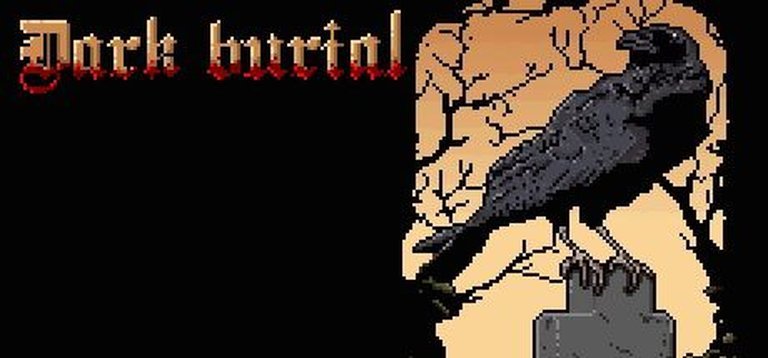
Dark Burial is a 2D side-scrolling action-platformer where players take on the role of a sentinel tasked with defending their land from a dark army of skeletons, witches, and other monstrous creatures. Armed with a versatile crossbow, players must navigate through 18 challenging levels filled with hazards, puzzles, and boss battles, all while trying to light signal fires to warn their people. The game features pixel-art visuals, a dark soundtrack, and a mix of platforming and combat mechanics, though reviews suggest its execution may not live up to its ambitious premise.
Gameplay Videos
Dark Burial Cracks & Fixes
Dark Burial Guides & Walkthroughs
Dark Burial Reviews & Reception
thexboxhub.com (60/100): It’s amazing what you can do with a crossbow.
metacritic.com (60/100): Dark Burial’s clever use of its multi-purpose crossbow will have you carefully traversing its grueling world which is quite a fun thing to do.
switchaboo.com (30/100): The aesthetic, along with its low price point, pulled me in, but its subpar controls, unreasonable difficulty spikes and lack of visual/audio variety had my left eye twitching within the game’s opening five minutes.
Dark Burial: A Retro Platformer’s Fleeting Spark in a Crowded Genre
Introduction: The Crossbow as a Swiss Army Knife
Dark Burial (2019) is a game that hinges entirely on the versatility of a single mechanic: the crossbow. Developed by the obscure Polish studio SharkGame and published by Drageus Games, it positions itself as a retro-styled puzzle-platformer where the player’s primary tool is not just a weapon but a Swiss Army knife of traversal and combat. You play as a lone sentinel tasked with lighting signal fires to warn your people of an encroaching dark army—a premise that evokes classic fantasy tropes but struggles to carve out its own identity.
At its core, Dark Burial is a game about precision, adaptation, and frustration. The crossbow can impale enemies, create makeshift platforms, trigger switches, and even manipulate environmental objects. This multi-functionality is the game’s greatest strength and its most glaring weakness. While the concept is undeniably clever, the execution is marred by clunky controls, imprecise aiming, and a lack of polish that relegates it to the realm of forgettable indie curiosities.
This review will dissect Dark Burial in exhaustive detail, examining its development context, narrative (or lack thereof), gameplay systems, artistic direction, and legacy. By the end, we’ll determine whether it’s a hidden gem worth excavating or a relic best left buried.
Development History & Context: A Budget Indie in a Saturated Market
The Studio Behind the Crossbow
Dark Burial was developed by SharkGame, a small Polish studio with a portfolio of modest, often overlooked titles like Skullbreaker and EmberStride. The game was published by Drageus Games, a publisher known for distributing budget indie titles across multiple platforms, including Dark Burial: Enhanced Edition (2023), which added four new levels and minor graphical tweaks.
The development cycle appears to have been short and constrained, with the game releasing on Windows in September 2019 before making its way to the Nintendo Switch in May 2020. The lack of substantial marketing or critical attention suggests a project born out of passion but limited by resources.
Technological and Design Constraints
Dark Burial is a 2D side-scrolling platformer with a pixel-art aesthetic, a choice that aligns with the retro revival trend of the late 2010s. However, unlike standout titles such as Celeste or Dead Cells, Dark Burial fails to leverage its art style into a cohesive or memorable experience.
Key technical limitations include:
– Imprecise aiming mechanics, where the crossbow’s trajectory feels floaty and unresponsive.
– A rigid one-hit-kill system that punishes players harshly for minor mistakes.
– Repetitive level design, with many stages feeling like slight variations of the same obstacles.
– A lack of depth in combat, where enemies follow predictable patterns with little strategic variety.
These issues are symptomatic of a game developed without extensive playtesting or iterative design, resulting in a product that feels unfinished rather than intentionally challenging.
The Gaming Landscape in 2019
Dark Burial entered a crowded and competitive indie market. In 2019, platformers like Hollow Knight (2017) and Blasphemous (2019) had already set high standards for atmosphere, mechanics, and narrative depth. Meanwhile, Celeste (2018) had redefined precision platforming, and Dead Cells (2018) had perfected roguelike combat.
Against this backdrop, Dark Burial struggled to stand out. Its lack of a compelling hook—beyond the crossbow gimmick—meant it was quickly overshadowed by more polished and ambitious titles. The game’s $4 price point (often discounted further) reflected its budget nature, but even at that cost, it faced stiff competition from free or higher-quality alternatives.
Narrative & Thematic Deep Dive: A Sentinel’s Silent Struggle
Plot Summary: Minimalism to a Fault
Dark Burial’s narrative is barebones, reduced to a single premise:
“A dark army approaches your lands. It is your duty as first witness and sentinel to report to your people as soon as possible.”
There are no cutscenes, no dialogue beyond a brief opening crawl, and no character development. The protagonist is a faceless sentinel, and the enemies are generic undead foes—skeletons, witches, and bats. The game’s lack of storytelling ambition is both a strength and a weakness:
– Strength: It avoids the pitfalls of poor writing or forced lore.
– Weakness: It fails to create any emotional or thematic resonance.
Themes: Isolation and Futility
Despite its narrative simplicity, Dark Burial inadvertently taps into themes of isolation and futility:
– The sentinel is alone, fighting against an unstoppable force.
– The crossbow, while versatile, is not enough to stem the tide of darkness.
– The act of lighting signal fires feels symbolic but hollow—a last-ditch effort to warn a doomed civilization.
These themes are never explored explicitly, but they linger in the game’s bleak pixel-art landscapes and somber soundtrack. The lack of dialogue or context makes the experience feel lonelier, as if the player is merely going through the motions of a predestined failure.
Missed Opportunities
Dark Burial could have elevated its narrative with:
– Environmental storytelling (e.g., ruined villages, remnants of past battles).
– A sense of urgency (e.g., a timer, dynamic enemy spawns).
– A twist or revelation (e.g., the sentinel is already dead, the signal fires are a trap).
Instead, the game squanders its potential, reducing its premise to a mechanical exercise rather than a compelling journey.
Gameplay Mechanics & Systems: The Crossbow’s Double-Edged Bolt
Core Gameplay Loop: Shoot, Platform, Repeat
Dark Burial’s gameplay revolves around three primary interactions:
1. Combat: Shooting enemies with the crossbow.
2. Platforming: Using arrows as temporary platforms or triggers.
3. Puzzle-Solving: Manipulating the environment (e.g., moving blocks, activating switches).
The crossbow is the sole tool for all these actions, which is both innovative and limiting.
Combat: Simple but Unrewarding
Enemies in Dark Burial fall into a few basic categories:
– Skeletons: Shoot projectiles or charge at the player.
– Bats: Fly in erratic patterns.
– Witches (Bosses): Teleport and cast spells.
Combat is straightforward—point, shoot, and dodge—but suffers from:
– Imprecise aiming, making it difficult to hit fast-moving targets.
– No combat depth—enemies have no weak points or varied behaviors.
– One-hit kills, which make combat feel more punishing than strategic.
The lack of melee attacks or secondary weapons means the crossbow is the only option, leading to repetitive and frustrating encounters.
Platforming: The Crossbow as a Tool
The most unique aspect of Dark Burial is using arrows as platforms or environmental triggers. For example:
– Shooting an arrow into a wall creates a foothold to reach higher areas.
– Shooting a hanging corpse turns it into a platform.
– Arrows can push blocks or activate switches.
This mechanic is creative in theory but flawed in execution:
– Aiming is inconsistent, making precise shots difficult.
– Arrows disappear when a new one is fired, limiting strategic planning.
– Physics feel unnatural, with the player character often moving too slowly or too floaty.
Level Design: Repetitive and Uninspired
The game features 18 levels (22 in the Enhanced Edition), but most follow the same structure:
1. Traverse a linear path filled with obstacles.
2. Shoot arrows to create platforms or kill enemies.
3. Reach the signal fire to complete the level.
Boss fights (against witches and giants) are underwhelming, relying on simple attack patterns that are easy to exploit. The lack of checkpoints within levels exacerbates the frustration, as dying sends the player back to the start.
Progression and Difficulty: A Steep but Unfair Curve
Dark Burial employs a lives system, but the punishment for failure is minimal—players can restart from any level via the menu. This undermines the tension, making the lives system feel pointless.
The difficulty spikes are inconsistent:
– Some levels are trivially easy.
– Others feature unfair enemy placements or precise platforming sections that feel cheap rather than challenging.
The Enhanced Edition attempts to address some of these issues with four new levels and slight graphical improvements, but the core problems remain.
World-Building, Art & Sound: A Bleak but Forgettable Aesthetic
Visual Design: Pixel-Art Mediocrity
Dark Burial adopts a dark, gothic pixel-art style, reminiscent of Castlevania or Ghosts ‘n Goblins. However, it lacks the detail and atmosphere of those classics.
Key visual elements:
– Monochromatic color palette (mostly blacks, grays, and deep reds).
– Generic enemy designs (skeletons, bats, witches).
– Repetitive backgrounds (castles, caves, forests).
The art style is functional but unremarkable, failing to create a distinct identity. The Enhanced Edition improves some textures, but the underlying blandness persists.
Sound Design: Repetitive and Underwhelming
The soundtrack consists of slow, melancholic tunes that fit the game’s tone but lack memorability. The sound effects (arrow shots, enemy deaths) are basic and unimpactful.
The lack of voice acting or ambient noise (e.g., wind, distant battles) makes the world feel empty and lifeless.
Atmosphere: A Missed Opportunity
Dark Burial could have been a haunting, atmospheric experience, but it fails to capitalize on its premise. The dark army is never seen in full force, the signal fires feel inconsequential, and the sentinel’s journey lacks urgency.
Compare this to games like Blasphemous or Salt and Sanctuary, which immerse players in their worlds through detailed environments and lore. Dark Burial, by contrast, feels hollow and mechanical.
Reception & Legacy: A Game Quickly Forgotten
Critical Reception: Mixed to Negative
Dark Burial received lukewarm reviews, with critics highlighting its innovative crossbow mechanics but criticizing its execution.
Key critiques from reviews:
– Video Chums (60%): “Dark Burial’s clever use of its multi-purpose crossbow will have you carefully traversing its grueling world which is quite a fun thing to do.”
– eShopper Reviews (42%): “Unfortunately, neither platforming nor combat in this game is especially fun… it’s hard to see much reason for players to bother with this game over countless better options.”
– TheXboxHub (3/5 for Enhanced Edition): “It’s got some fiddliness attached too, and lodging a bolt in exactly the right spot steals away some of that glee.”
– Switchaboo (30%): “Its subpar controls, unreasonable difficulty spikes, and lack of visual/audio variety had my left eye twitching within the game’s opening five minutes.”
The Metacritic score remains “tbd” due to insufficient reviews, but the consensus is clear: Dark Burial is a flawed experiment that doesn’t justify its existence in a crowded genre.
Commercial Performance: A Budget Title with Little Impact
Given its low price point ($4 or less), Dark Burial likely sold modestly but failed to gain traction. The Enhanced Edition (2023) attempted to revive interest, but by then, the game was already overshadowed by superior alternatives.
Legacy: A Footnote in Platformer History
Dark Burial’s only lasting contribution is its crossbow mechanic, which could have inspired future games if executed better. However, its lack of polish and innovation means it will likely be remembered as a minor curiosity rather than a landmark title.
Games that did the “multi-purpose tool” concept better:
– The Messenger (2018) – A ninja’s sword and time-travel mechanics.
– Axiom Verge (2015) – A vast array of weapons and abilities.
– Tunic (2022) – A sword that doubles as a key and a shield.
Conclusion: A Game Worth Exhuming?
Dark Burial is a game of contradictions:
– Innovative in concept (the crossbow’s versatility).
– Flawed in execution (clunky controls, repetitive design).
– Ambitious in theme (a lone sentinel’s desperate mission).
– Shallow in storytelling (no depth or payoff).
Final Verdict: 5/10 – A Flawed Experiment
Dark Burial is not a bad game, but it is not a good one either. It’s a budget title that tries something different but lacks the polish and depth to compete with the best in its genre.
Who Might Enjoy It?
– Completionists looking for an easy 100% (especially on Xbox).
– Retro platformer fans who can tolerate janky mechanics.
– Players who love gimmicky tools (the crossbow is undeniably fun in short bursts).
Who Should Avoid It?
– Those seeking a deep narrative or world.
– Players who dislike imprecise controls.
– Anyone expecting a challenge beyond artificial difficulty spikes.
Final Thought:
Dark Burial is like a rusty crossbow—it works, but not well enough to be reliable. It’s a game that could have been great with more time, resources, and care, but as it stands, it’s best left in the discount bin of gaming history.
Should You Play It?
Only if you find it for a dollar or less and have an afternoon to kill. Otherwise, there are far better platformers that deserve your time.
Dark Burial is a reminder that innovation alone isn’t enough—execution is everything. And in this case, the execution misses the mark.