
- Release Year: 2018
- Platforms: Windows
- Genre: Adventure
- Perspective: 1st-person
- Game Mode: Single-player
- Gameplay: Graphic adventure, Puzzle elements
- Setting: Western
- Average Score: 100/100
Description
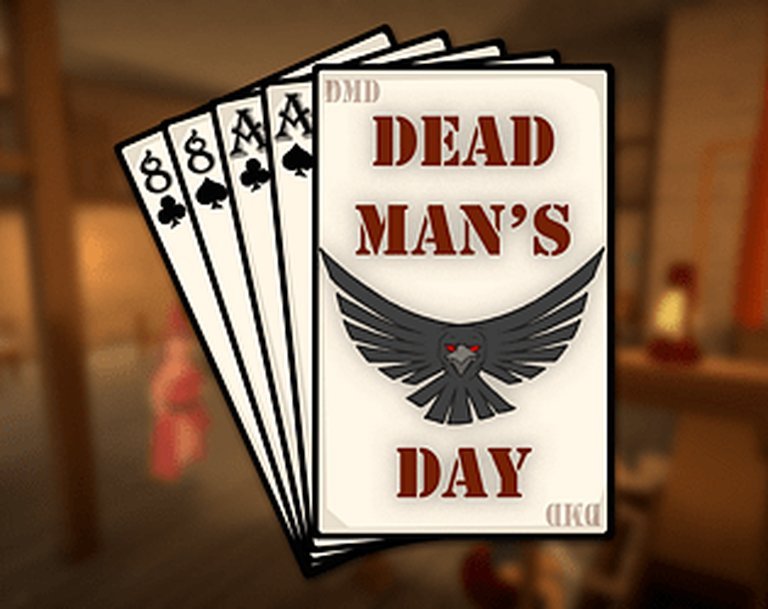
Dead Man’s Day is a short, student-developed first-person adventure game set in the Wild West, where the player takes on the role of a saloon owner trapped in a time loop after being killed by a debtor. The player must explore the saloon, interact with objects, and manipulate the actions of NPCs to alter the events leading to their death. Each time loop retains significant changes, allowing the player to progress closer to survival through environmental clues and responsive cutscenes.
Dead Man’s Day Reviews & Reception
fabian-kober.itch.io (100/100): A downloadable game for Windows
Dead Man’s Day Cheats & Codes
PC
Press [Esc] during game play to display the pause menu. Then, press ~ to display the console command prompt, which will be a bright line with an input prompt below the menu. Enter one of the following codes to activate the cheat function for the current level. Note: You will not be able to see what you are typing. Also, you must re-enter the cheats for each level as they get reset. Alternately, press [Tab] during game play. You will see a white line at the bottom of the screen where you can type in the codes, and be able to see what you are typing.
| Code | Effect |
|---|---|
| god | God mode |
| allweapons | All weapons |
| allammo | Maximum ammunition |
| loaded | All weapons and ammunition |
| fly | Flight mode |
| walk | Disable flight and no clipping |
| ghost | No clipping |
| amphibious | Stay underwater without damage |
| teleport | Teleport to area currently looked at |
| changesize [number] | Scale player size |
| changesize * | Restore default player |
| setspeed [number] | Set player speed |
| setjumpz [number] | Set maximum jump height |
| setgravity [number] | Set gravity |
| slomo n | Set slow motion factor |
| viewself | Set camera to behind view |
| freecamera [true or false] | Camera and pawn not rotated together when “True” |
| invisible [true or false] | Toggle invisibility |
| avatar [class name] | Possess a pawn of indicated class |
| summon [class name] | Summon requested class |
| killpawns | Kill all pawns and enemies |
Dead Man’s Day: A Time-Looping Western Adventure
Introduction
Dead Man’s Day is a short but intriguing student-developed game that blends the Wild West setting with a time-loop narrative, creating a unique puzzle-adventure experience. Released in 2018, this first-person adventure game challenges players to manipulate events in a saloon to avoid their untimely death. While it may not have garnered widespread attention, its clever mechanics and atmospheric setting make it a noteworthy entry in the indie game landscape.
Development History & Context
Dead Man’s Day was created by a team of six students from Hochschule Darmstadt, led by Fabian Kober, who served as the project lead, concept artist, programmer, and 3D artist. The game was developed using the Unity engine, showcasing the team’s ability to craft a polished experience within the constraints of a student project. The development process was documented on platforms like itch.io and MobyGames, highlighting the team’s dedication to bringing their vision to life.
The game’s premise—a saloon owner trapped in a time loop—draws inspiration from classic Western tropes and time-loop narratives, similar to films like Groundhog Day. The team’s focus on environmental storytelling and puzzle-solving reflects a desire to create an immersive experience without relying on traditional dialogue-heavy interactions.
Narrative & Thematic Deep Dive
The narrative of Dead Man’s Day is straightforward yet effective. The player assumes the role of a saloon owner who is killed by a debtor and subsequently trapped in a time loop, reliving the hours leading up to their death. The goal is to manipulate the environment and interactions within the saloon to alter the course of events and avoid the fatal shootout.
The game’s themes revolve around consequence, observation, and the butterfly effect. Each action the player takes—such as giving a bone to a dog to unblock a door—has ripple effects that can change the outcome of the day. The time-loop mechanic reinforces the idea that small changes can lead to significant consequences, a theme that resonates with classic Western narratives of fate and redemption.
Gameplay Mechanics & Systems
Dead Man’s Day is a first-person adventure game with a strong emphasis on puzzle-solving and environmental interaction. The core gameplay loop involves exploring the saloon, picking up objects, and using them to influence the behavior of NPCs. For example, giving a bone to a dog might prevent it from blocking a door, allowing the player to access new areas or interact with different characters.
The game’s progression system is tied to the time-loop mechanic. If the player achieves a significant change—such as preventing a character from entering the saloon—the change persists in subsequent loops, allowing the player to build toward the ultimate goal of survival. This system encourages experimentation and careful observation, as players must deduce the correct sequence of actions to alter the day’s events.
The UI is minimalistic, relying on environmental clues and animations rather than explicit dialogue or tutorials. This design choice enhances immersion but may pose a challenge for players who prefer more guided experiences.
World-Building, Art & Sound
The game’s setting—a Wild West saloon—is richly detailed, with a low-poly aesthetic that gives it a distinctive visual style. The saloon is filled with interactive objects, from bottles and cards to doors and furniture, all of which play a role in the puzzle-solving mechanics. The lighting and atmosphere contribute to the game’s tense, cinematic feel, evoking the mood of classic Western films.
The sound design complements the visuals, with ambient noises like the clinking of glasses, the shuffling of cards, and the distant hum of conversation creating a lively saloon environment. The music, composed by Lucca Riitano and Bernhard Lehner, enhances the game’s Western theme, though it remains understated to avoid overwhelming the player.
Reception & Legacy
Dead Man’s Day received limited critical attention, likely due to its status as a student project. However, it has been praised for its innovative use of the time-loop mechanic and its atmospheric setting. The game’s reception on platforms like itch.io and MobyGames suggests that it resonated with players who appreciated its unique blend of puzzle-solving and Western themes.
While it may not have had a significant commercial impact, Dead Man’s Day stands as a testament to the creativity of student developers. Its influence can be seen in the growing trend of indie games that experiment with time-loop mechanics and environmental storytelling.
Conclusion
Dead Man’s Day is a hidden gem in the indie game landscape, offering a fresh take on the Western genre through its time-loop narrative and puzzle-solving mechanics. While its short length and minimalistic design may not appeal to all players, its clever use of environmental interaction and atmospheric setting make it a memorable experience. For fans of adventure games and Western themes, Dead Man’s Day is a title worth exploring, showcasing the potential of student-developed projects to innovate within established genres.