
- Release Year: 2014
- Platforms: Windows
- Publisher: Heydeck Games
- Developer: Heydeck Games
- Genre: Simulation, Strategy, Tactics
- Perspective: Side view
- Game Mode: Single-player
- Gameplay: Business simulation, Managerial
- Average Score: 79/100
Description
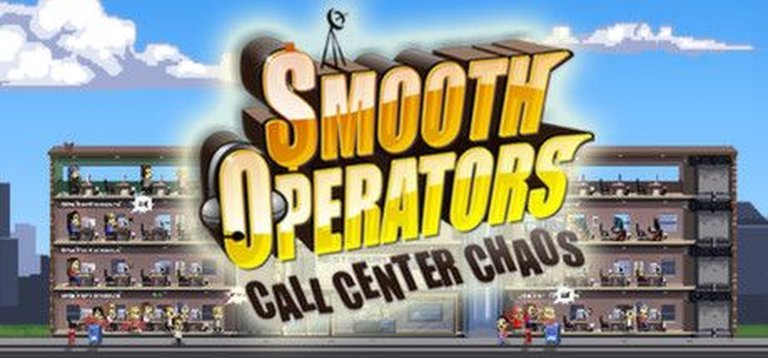
Smooth Operators: Call Center Chaos is a managerial simulation game where players take on the role of a CEO running a call center company. The goal is to lead the business to financial success by hiring employees, customizing office layouts, and upgrading facilities. Players must balance employee well-being with productivity, using tools like coaching, HR management, and project upgrades to keep operations running smoothly. The game features real-time strategy, 2D side-view visuals, and a mix of humor and challenge as players navigate the complexities of corporate management.
Gameplay Videos
Smooth Operators: Call Center Chaos Guides & Walkthroughs
Smooth Operators: Call Center Chaos Reviews & Reception
gamepressure.com (71/100): Smooth Operators: Call Center Chaos is a simulation and strategy game produced by Andreas Heydeck Games studio.
indiegamemag.com : Smooth Operators: Call Center Chaos manages to perfectly reflect what I always imagine trying to run an office building is like.
store.steampowered.com (87/100): Heydeck Games […] captures the overall madness very well in their workplace simulator.
Smooth Operators: Call Center Chaos Cheats & Codes
PC
Load a call center and select the ‘Enter Code’ option at the ‘Game’ menu.
| Code | Effect |
|---|---|
| dante | Adds $1,000,000 |
| becca | Everyone is happy |
| bengan | You can upgrade everything (if you haven’t unlocked it) |
| kyrksten | More Work Loads |
| gustafsson | Build up into the sky (Max building height unlocked) |
| reset | Reset the simulation |
| indiegamerchick | Everything is unlocked |
| snickerdoodle | Get a new contract |
| balbin | Employee’s work longer hours |
| all these birds | More Birds on screen |
| kill the birds | Sniper Mode |
Xbox 360
Load a call center, then select the ‘Enter Code’ option at the ‘Game’ menu.
| Code | Effect |
|---|---|
| dante | +$1 million |
| becca | All employees happy |
| bengan | All buildings and employees can be upgraded |
| kyrksten | Increase workload for clients on the next day |
| gustafsson | Can build to Level 40 |
| reset | Reset simulation |
| indiegamerchick | All items unlocked |
| snickerdoodle | Get new contract next day |
| balbin | Increase working hours for employees |
| all these birds | More birds |
| kill the birds | Sniper mode |
Smooth Operators: Call Center Chaos – A Masterclass in Micro-Management and Madness
Introduction: The Unlikely Appeal of Corporate Chaos
At first glance, Smooth Operators: Call Center Chaos (2013) seems like an absurd premise for a video game. Who would willingly simulate the soul-crushing tedium of managing a call center? Yet, beneath its pixelated veneer lies one of the most addictive, darkly humorous, and surprisingly deep business simulators of the early 2010s. Developed by the one-man Swedish studio Andreas Heydeck Games, this indie gem transforms the mundane into the manic, offering players a chance to experience the highs and lows of corporate bureaucracy without the real-world consequences.
This review will dissect Smooth Operators in exhaustive detail, exploring its development, narrative quirks, gameplay systems, and lasting legacy. By the end, it will be clear why this game remains a cult favorite among simulation enthusiasts and why its influence can still be felt in modern management sims.
Development History & Context: The Birth of a Call Center Simulator
The Studio Behind the Chaos
Andreas Heydeck, the sole developer behind Smooth Operators, was no stranger to indie game development. Prior to this project, he had gained recognition for the Meep series, a collection of quirky, physics-based puzzle games. However, Smooth Operators marked a significant departure from his previous work, venturing into the niche but growing genre of business simulation.
The game was initially released on Xbox Live Indie Games (XBLIG) in September 2012, a platform known for its experimental and often overlooked titles. Its success there led to a PC port in January 2013, distributed via Desura and later Steam, where it found a broader audience. The transition from console to PC was seamless, thanks to the game’s 2D, pixel-art aesthetic and simple control scheme, which relied heavily on point-and-click mechanics.
Technological Constraints and Design Philosophy
Developed using Microsoft XNA, Smooth Operators was constrained by the limitations of the engine and the hardware of the time. The XBLIG platform, in particular, imposed strict file size limits and performance caps, which Heydeck navigated by adopting a retro-inspired visual style. The game’s pixelated graphics and chiptune soundtrack were not just aesthetic choices but practical solutions to technical limitations.
Heydeck’s design philosophy was rooted in accessibility and addictiveness. He wanted to create a game that was easy to pick up but difficult to master, with a steep learning curve that rewarded persistence. The result was a game that, despite its simple premise, offered dozens of hours of gameplay for those willing to dive into its systems.
The Gaming Landscape in 2013
At the time of its release, the business simulation genre was dominated by titles like Tropico, RollerCoaster Tycoon, and Game Dev Tycoon. Smooth Operators stood out by focusing on a hyper-specific setting—the call center—a workplace that was (and still is) synonymous with stress, monotony, and corporate absurdity. The game’s humorous tone and satirical take on office culture resonated with players who had either worked in similar environments or simply enjoyed the dark comedy of watching virtual employees suffer.
The indie game boom of the early 2010s also played a crucial role in the game’s reception. Platforms like Steam Greenlight and Indie Royale provided visibility for smaller titles, and Smooth Operators benefited from being part of Indie Royale’s “The Indie Gamer Chick Bundle”, which showcased some of the best XBLIG ports of the era.
Narrative & Thematic Deep Dive: The Dark Comedy of Corporate Life
Plot: A Tale of Ambition and Despair
Smooth Operators doesn’t have a traditional narrative in the sense of a linear story or character arcs. Instead, it presents players with a sandbox of corporate survival, where the “plot” emerges from the player’s decisions and the chaotic reactions of their employees.
You begin as the CEO of a fledgling call center, tasked with hiring employees, managing resources, and expanding your business. The ultimate goal is financial success, but the journey is fraught with employee meltdowns, logistical nightmares, and moral dilemmas. Will you be a benevolent boss who prioritizes worker happiness, or a ruthless tycoon who squeezes every last drop of productivity from your staff?
Characters: The Unwitting Stars of the Show
The game’s “characters” are its employees, each with distinct roles, personalities, and needs. While they lack voice acting or deep backstories, their visual designs and animations convey their moods and frustrations in a way that’s both hilarious and oddly relatable.
- Call Center Agents: The backbone of your operation, these poor souls answer inbound and outbound calls, their happiness levels fluctuating based on workload, facilities, and management style.
- IT Guys: Dressed in t-shirts and shorts, they kick malfunctioning computers until they work again—a brutal yet effective troubleshooting method.
- Managers: Clad in suits and ties, they wave their arms and scream at employees to boost productivity, often at the cost of morale.
- Janitors: The unsung heroes who clean up trash and prevent the office from descending into squalor.
- Cheerleaders: Yes, cheerleaders. Their sole purpose is to boost morale by cheering on employees, because nothing says “professional workplace” like pom-poms and chants.
The game’s dark humor shines through in these absurd character designs, which satirize corporate culture while also making the simulation visually engaging.
Themes: The Absurdity of Modern Workplace Dynamics
Smooth Operators is, at its core, a satire of corporate life. It explores themes of:
– Exploitation vs. Empathy: Players must decide whether to prioritize profits or employee well-being, often finding that the two are mutually exclusive.
– Bureaucratic Inefficiency: The game mockingly highlights how red tape, poor planning, and mismanagement can cripple a business.
– The Illusion of Control: No matter how well you plan, random events (like birds flying into windows or employees quitting en masse) can derail your carefully laid strategies.
– The Grind of Modern Work: The game captures the monotony and stress of call center work, turning it into a darkly comedic experience.
Dialogue and Writing: Minimalist but Effective
The game’s writing is sparse, relying on tool-tips, notifications, and employee reactions to convey information. However, the dry, sarcastic tone of these messages adds to the game’s humorous charm. For example:
– “Employees are unhappy because the elevators are too slow.” (A relatable complaint for anyone who’s worked in a multi-story office building.)
– “The IT guy fixed the computer by kicking it.” (A brutally honest take on tech support.)
– “Cheerleaders have improved morale!” (Because why not?)
The lack of voice acting is compensated by the expressive animations and sound effects, which convey emotion without words.
Gameplay Mechanics & Systems: The Art of Micro-Management
Core Gameplay Loop: Build, Hire, Manage, Repeat
Smooth Operators is a real-time managerial simulation where players must:
1. Construct and Expand their call center by building floors, installing elevators, and adding facilities (bathrooms, break rooms, etc.).
2. Hire and Train Employees to handle inbound calls, outbound calls, and back-office tasks.
3. Monitor and Adjust employee happiness, productivity, and workload to maximize efficiency.
4. Balance the Budget by securing contracts, managing salaries, and upgrading facilities.
The game operates on a day-night cycle, with each in-game day ending with a financial summary that grades your performance. Fail to meet daily quotas, and your business spirals into debt. Ignore employee needs, and they’ll quit en masse, leaving you with a skeleton crew and a mountain of unfinished work.
Employee Management: The Heart of the Game
The most engaging (and frustrating) aspect of Smooth Operators is its employee management system. Each worker has:
– Happiness: Affected by workload, facilities, salaries, and vacations.
– Productivity: Influenced by happiness, management style, and office upgrades.
– Skills: Can be upgraded via training programs unlocked by Project Managers.
Players must constantly monitor these factors, as unhappy employees will:
– Take longer breaks
– Work slower
– Eventually quit
The game doesn’t hold your hand—there’s no tutorial or explicit guidance on how to optimize your workforce. Instead, players must experiment with different strategies, such as:
– Hiring Cheerleaders to boost morale.
– Scheduling Vacations to prevent burnout.
– Adjusting Work Hours to balance productivity and happiness.
Facility Management: The Logistics of Chaos
Beyond employees, players must manage the physical workspace:
– Elevators: Slow elevators cause bottlenecks, leading to employee frustration.
– Bathrooms: Too few bathrooms result in employees leaving to use the restroom elsewhere, wasting time.
– Break Rooms: Improve morale but take up valuable space.
– Office Upgrades: Faster computers, better chairs, and decorations can boost productivity.
The placement of these facilities is crucial—poorly designed layouts lead to inefficiencies, while well-planned offices can streamline operations.
Economic Systems: The Delicate Balance of Profit and Loss
The game’s economic model is brutally realistic:
– Income comes from completed call contracts, which scale with workforce size and efficiency.
– Expenses include salaries, facility upkeep, and upgrades.
– Debt accumulates quickly if income doesn’t outpace spending, leading to game over.
Players must secure new contracts via Account Managers, who negotiate deals that increase workload but also boost revenue. However, taking on too many contracts without adequate staff leads to overworked employees and plummeting morale.
Progression and Unlocks: The Slow Burn of Expansion
Progression in Smooth Operators is deliberately slow, forcing players to grind through early-game struggles before unlocking advanced features:
– Project Managers unlock new technologies (e.g., faster elevators, better computers).
– Human Resources allows for more efficient scheduling.
– New Employee Types (e.g., specialized call agents) become available as the business grows.
This gradual unlock system ensures that each playthrough feels unique, as players adapt their strategies based on what’s available.
UI and Controls: Functional but Flawed
The game’s UI is functional but lacks polish:
– Drop-down menus handle most interactions, which can feel clunky when managing large workforces.
– No bulk-management options—players must click on each employee individually to adjust salaries, schedules, or vacations.
– Limited filtering—there’s no easy way to sort employees by happiness or productivity, forcing players to hover over each one.
These UI limitations become more frustrating as the company grows, making late-game management a tedious chore.
Innovative (and Flawed) Systems
Smooth Operators introduces several unique mechanics that set it apart from other business sims:
– Killable Birds: A bizarre but oddly satisfying feature where birds flying into windows can be clicked to kill, providing a small morale boost to nearby employees. (Yes, this is as darkly comedic as it sounds.)
– Cheerleaders: A satirical take on corporate motivation, where hiring cheerleaders to pump up employees is a legitimate strategy.
– Random Events: Unexpected crises (e.g., power outages, employee strikes) keep players on their toes.
However, the game also suffers from design flaws:
– Lack of Save Scumming Prevention: Players can save and reload to avoid financial ruin, which undermines the challenge.
– Late-Game Grind: Unlocking advanced features takes too long, leading to repetitive gameplay in the mid-to-late stages.
– No Clear Win Condition: The game lacks a definitive endpoint, making it hard to know when you’ve “won.”
World-Building, Art & Sound: A Retro Aesthetic with Modern Charm
Setting and Atmosphere: The Call Center as a Dystopian Playground
Smooth Operators takes place in a generic corporate office building, but the game’s tone transforms it into a dystopian comedy. The pixel-art visuals and chiptune soundtrack evoke 16-bit era classics, while the gameplay mechanics satirize modern workplace culture.
The atmosphere is one of controlled chaos—employees scurry between floors, computers catch fire, and managers scream at underlings, all set to a peppy, upbeat soundtrack that contrasts with the on-screen madness.
Visual Design: Pixelated Perfection
The game’s 2D pixel-art style is both a limitation and a strength:
– Character Sprites: Each employee type has a distinct design, making it easy to identify roles at a glance.
– Office Layouts: The top-down perspective allows for clear visibility of facility placement and employee movement.
– Animations: Simple but expressive—IT guys kicking computers, managers waving arms, and cheerleaders cheering add personality to the simulation.
The retro aesthetic gives the game a timeless quality, ensuring it doesn’t feel dated despite its 2013 release.
Sound Design: Chiptune and Chaos
The soundtrack consists of upbeat chiptune tracks that loop seamlessly, providing a lighthearted backdrop to the on-screen chaos. The sound effects are minimalist but effective:
– Phone rings signal incoming calls.
– Computer beeps indicate malfunctions.
– Employee groans convey frustration.
The audio design complements the visual style, creating a cohesive retro experience.
Reception & Legacy: From Cult Hit to Indiegame Icon
Critical Reception: A Divisive but Beloved Gem
Smooth Operators received mixed but generally positive reviews upon release:
– Indie Game Magazine praised it as “digital crack” and nominated it for Xbox Indiegame of the Year.
– Indie Gamer Chick called it a “time sink” and Chick-Approved, highlighting its addictive gameplay.
– Steam Users gave it a 71% positive rating, with many lauding its depth but criticizing its UI quirks.
Critics and players alike agreed on its strengths:
– Addictive gameplay loop.
– Darkly humorous tone.
– Surprising depth for a call center simulator.
However, common complaints included:
– Tedious late-game management.
– Lack of tutorials.
– Repetitive grind.
Commercial Performance: A Niche Success
The game didn’t break sales records, but it found a dedicated fanbase among:
– Simulation enthusiasts.
– Indie game collectors.
– Players who enjoyed its satirical take on corporate life.
Its inclusion in the Indie Gamer Chick Bundle and Steam Greenlight success helped boost its visibility, ensuring it remained relevant in the indie scene.
Legacy and Influence: Paving the Way for Future Sims
Smooth Operators may not have revolutionized the genre, but it proved that niche simulations could find an audience. Its influence can be seen in later titles like:
– Software Inc. (2015) – A game development simulator with similar micro-management mechanics.
– Project Highrise (2016) – A modern take on SimTower, sharing Smooth Operators’ focus on logistics and employee happiness.
– Two Point Hospital (2018) – A humorous management sim that embraces absurdity, much like Smooth Operators.
The game’s dark humor and satirical edge also inspired later workplace simulators, proving that even mundane settings can be engaging when approached with creativity.
Conclusion: A Flawed but Brilliant Simulation
Smooth Operators: Call Center Chaos is a masterclass in turning the mundane into the magnificent. It takes a seemingly boring premise—managing a call center—and infuses it with humor, challenge, and depth. While its UI flaws and late-game grind hold it back from true greatness, its addictive gameplay and unique charm make it a standout title in the business simulation genre.
Final Verdict: 8.5/10 – A Cult Classic Worth Playing
- Pros:
- Addictive, deep gameplay.
- Darkly humorous and satirical.
- Surprisingly realistic economic model.
- Charming retro aesthetic.
- Cons:
- Tedious UI for large workforces.
- Slow progression in mid-game.
- Lack of clear win conditions.
Smooth Operators is not for everyone—it requires patience, strategy, and a tolerance for chaos. But for those who embrace its madness, it offers one of the most rewarding and uniquely entertaining management experiences in gaming.
Final Thought: If you’ve ever dreamed of running a call center (or just watching one burn to the ground), Smooth Operators is the perfect game for you. Just don’t blame us when you lose eight hours to its addictive chaos.
Would you like to see a sequel? Let us know in the comments! And if you’ve played Smooth Operators, share your most disastrous (or successful) call center stories below!