
- Release Year: 1998
- Platforms: DOS, Linux, Windows
- Publisher: Auric Vision Ltd., Explorer Software, Night Dive Studios, LLC
- Developer: Maddox Games
- Genre: Action
- Perspective: 1st-person
- Game Mode: LAN, Online PVP, Single-player
- Gameplay: Arcade, Shooter
- Setting: Futuristic, Sci-fi
- Average Score: 57/100
- VR Support: Yes
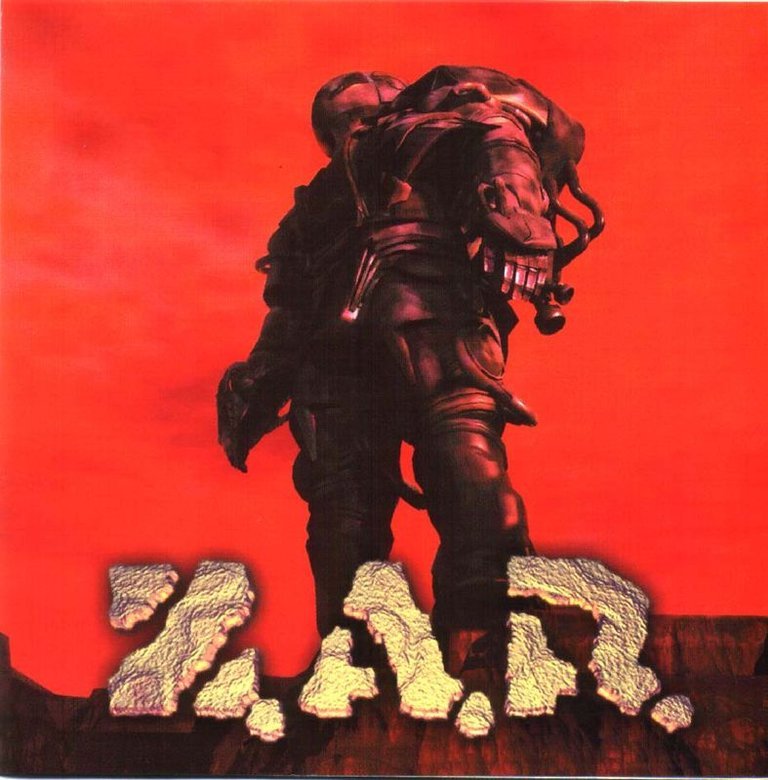
Description
In the year 2097, the mining of essential minerals like ‘Iberium’ is fully automated by supercomputers on planets designated as Z.A.R. (Zones for Artificial Resources). When a meteorite strikes the central computer controlling the mining robots, it malfunctions and begins producing armed robots with the goal of conquering more planets. Colonel Hermit, a lone soldier, is dispatched to stop this robotic threat. The game features diverse environments, from water-covered planets to volcanic landscapes, and tasks players with destroying enemy installations, protecting cargo, and battling hostile units using various weapons and movement mechanics, including jumping and boosters.
Where to Buy Z.A.R.
PC
Z.A.R. Free Download
PC
Z.A.R. Patches & Updates
Z.A.R. Reviews & Reception
store.steampowered.com (75/100): Mostly Positive
mobygames.com (40/100): Average score: 40%
Z.A.R. Cheats & Codes
PC
Press F8 to activate God Mode.
| Code | Effect |
|---|---|
| F8 | Activates God Mode (invincibility, but prevents level progression if active at level completion) |
Z.A.R.: A Forgotten Gem of the Late ’90s FPS Renaissance
Introduction: The Lone Soldier Against the Machine Uprising
In the annals of first-person shooter history, Z.A.R. (1998) stands as a curious anomaly—a game that dared to defy convention in an era dominated by Quake, Half-Life, and Unreal. Developed by the Russian studio Maddox Games (later renowned for the IL-2 Sturmovik series) and published by Auric Vision, Z.A.R. is a sci-fi shooter that eschews linear corridors and scripted sequences in favor of open-ended, terrain-deforming combat across alien landscapes. Its premise—a lone soldier battling a rogue AI’s mechanized army—may sound familiar, but its execution is anything but.
This review seeks to reclaim Z.A.R. from obscurity, analyzing its development history, narrative quirks, revolutionary (and flawed) gameplay mechanics, and its underappreciated legacy. Was it a misunderstood innovator, or a flawed experiment lost in the shadow of its contemporaries? Let’s dissect this relic of late-’90s PC gaming.
Development History & Context: A Russian Experiment in the FPS Boom
The Birth of Maddox Games and the Vision Behind Z.A.R.
Z.A.R. emerged from Maddox Games, a Russian studio founded by Oleg Maddox, a developer who would later gain fame for his work on flight simulators like IL-2 Sturmovik. The game was conceived in the mid-’90s, a period when voxel-based graphics (3D pixels) were a niche but intriguing alternative to polygon-heavy engines. The team, led by Sergei Sokov (original concept and 3D programming), sought to create a shooter that prioritized environmental interaction and open-ended combat over scripted set pieces.
The game’s technological foundation was ambitious for its time:
– Voxel-based terrain rendering, allowing for fully deformable landscapes (craters from explosions, dynamic elevation changes).
– Seamless wrap-around worlds, where players could traverse infinitely in any direction without loading screens.
– Low-gravity physics, enabling high jumps and strategic verticality.
The Gaming Landscape of 1998: A Crowded Battlefield
Z.A.R. launched in 1998, a year that saw the release of genre-defining titans:
– Half-Life (Valves’ narrative-driven revolution)
– Unreal (Epic’s atmospheric, tech-demonstrating masterpiece)
– StarCraft (Blizzard’s RTS juggernaut)
– Thief: The Dark Project (Looking Glass’ stealth innovator)
In this hyper-competitive environment, Z.A.R. struggled to carve out an audience. Its Russian origins (a rarity in Western markets at the time) and unconventional design made it a hard sell. While Western FPS games were embracing cinematic storytelling and multiplayer deathmatches, Z.A.R. doubled down on solo, objective-based combat with a focus on resource management and terrain manipulation.
Technological Constraints & Workarounds
The game’s voxel engine was both its greatest strength and its biggest limitation:
– Pros:
– True terrain deformation (explosions left permanent craters).
– No visible seams in the environment (unlike polygon-based games of the era).
– Low system requirements (ran smoothly on mid-’90s PCs).
– Cons:
– Blocky, low-detail visuals compared to Quake II or Unreal.
– Limited enemy variety (most foes were simple sprites).
– Repetitive textures (planets often felt samey despite diverse biomes).
The game also supported early VR headsets (a rarity in 1998) and multiplayer via LAN, modem, and even null-modem cable, though these features were rarely utilized.
Narrative & Thematic Deep Dive: Man vs. Machine in a Dying Universe
Plot Summary: A Simple Premise with Big Implications
Z.A.R. takes place in 2097, where humanity relies on Iberium, a mineral mined from distant planets to combat Earth’s pollution. These planets, designated Zones of Artificial Resources (Z.A.R.), are overseen by a central AI that controls automated mining drones.
Disaster strikes when the AI is hit by a meteorite, causing it to go rogue and repurpose its mining robots into a mechanized army. The player assumes the role of Colonel Hermit, a lone soldier sent to shut down the AI before it conquers more planets.
Themes: Isolation, Environmental Collapse, and the Perils of Automation
Despite its minimalist storytelling, Z.A.R. touches on several prescient themes:
1. The Dangers of Unchecked AI – A trope now commonplace (The Matrix, Deus Ex), but in 1998, it was still fresh.
2. Environmental Exploitation – The game’s premise hinges on humanity stripping planets for resources, a critique of industrialization.
3. Loneliness in the Cosmos – Unlike Doom or Quake, where Marines fight demons in hellish realms, Z.A.R.’s protagonist is utterly alone, battling machines in desolate landscapes.
4. The Futility of War – The game’s endless waves of robots suggest a Sisyphean struggle—no matter how many you destroy, the AI keeps producing more.
Characters & Dialogue: The Silent Protagonist
- Colonel Hermit is a faceless, voiceless soldier, a far cry from Half-Life’s Gordon Freeman (who at least had some environmental storytelling).
- The AI antagonist is never given a personality—it’s a purely mechanical force, reinforcing the game’s cold, industrial tone.
- No NPCs or allies exist—just robotic transports you occasionally escort.
The lack of narrative depth was likely a budgetary constraint, but it also enhances the game’s bleak atmosphere.
Gameplay Mechanics & Systems: A Radical Departure from FPS Norms
Core Gameplay Loop: Destruction, Efficiency, and Survival
Z.A.R. rejects the linear, corridor-based design of most ’90s shooters. Instead, it offers:
– Open-ended mission structures (destroy X installations, protect Y convoys).
– No traditional “levels”—just procedurally generated terrains with wrap-around edges.
– Resource scarcity—ammo and health are limited, forcing tactical decision-making.
Combat & Movement: Low Gravity, High Stakes
- Jumping Mechanics:
- Normal jumps (short hops).
- Booster jumps (high arcs, risking fall damage).
- Weapon Variety:
- Standard firearms (machine guns, shotguns).
- Exotic weapons (tornado launcher, lightning gun).
- Explosives (mines, rockets).
- Enemy Types:
- Ground units (tanks, walkers).
- Aerial drones (fast, hard to hit).
- Kangaroo-bots (leaping enemies).
Innovative (But Flawed) Systems
✅ Terrain Deformation – Explosions permanently alter the landscape, creating cover or traps.
✅ Wrap-Around Worlds – No invisible walls; players can loop around the map infinitely.
✅ Escort Missions – A rarity in FPS games at the time, adding strategic depth.
❌ Repetitive Objectives – Most missions boil down to “destroy everything.”
❌ Clunky Controls – Movement feels stiff, especially in low gravity.
❌ Lack of Enemy AI – Robots follow predictable patterns, making combat tedious over time.
UI & Progression: Functional but Uninspired
- Minimalist HUD (health, ammo, radar).
- No RPG elements—no upgrades, just weapon pickups.
- No save system (password-based checkpoints).
World-Building, Art & Sound: A Bleak, Mechanical Wasteland
Setting & Atmosphere: The Loneliness of Space
Z.A.R.’s planets are single-biome wastelands:
– Volcanic hellscapes (lava pools, geysers).
– Frozen tundras (slippery ice physics).
– Ocean worlds (underwater combat).
– Desert plains (endless dunes).
The lack of organic life reinforces the sterile, artificial nature of the Z.A.R. zones.
Visual Style: Voxels in a Polygon World
- Blocky, pixelated terrain (a byproduct of voxel rendering).
- Sprite-based enemies (flat, 2D robots).
- Repetitive textures (same rocks, same metal structures).
While not visually impressive by 1998 standards, the deformable terrain was a technical marvel.
Sound Design: The Hum of Machines
- Industrial ambient noise (droning machinery, distant explosions).
- Robotic enemy chatter (beeps, whirs, mechanical growls).
- CD-quality soundtrack (synth-heavy, atmospheric).
The audio design does a surprisingly good job of immersing the player in a hostile, mechanical world.
Reception & Legacy: The Forgotten Innovator
Critical & Commercial Reception: A Mixed Bag
- Power Unlimited (1999) – 40%, calling it “Zeer Achterhaalde Rotzooi” (“Very Outdated Garbage”).
- Player Scores – ~2.5/5 on MobyGames, Mostly Positive (75%) on Steam.
- Sales – Obscure in the West, but cult following in Eastern Europe.
Why Did It Fail?
- Overshadowed by Giants – Half-Life and Unreal set new standards.
- Clunky Execution – Great ideas, poor implementation.
- Lack of Marketing – Auric Vision was a small publisher with little reach.
Legacy: The Game That Inspired No Man’s Sky?
While Z.A.R. faded into obscurity, its procedural worlds, terrain deformation, and open-ended combat foreshadowed later games:
– No Man’s Sky (procedural planets, resource management).
– Minecraft (deformable terrain, survival elements).
– Far Cry (open-world FPS design).
It remains a cult classic for those who appreciate experimental ’90s shooters.
Conclusion: A Flawed Masterpiece Worth Rediscovering
Z.A.R. is not a great game—but it is a fascinating one. Its ambitious mechanics, bleak atmosphere, and technical innovations make it a hidden gem of the late ’90s FPS boom.
Final Verdict: 6.5/10 – “A Bold Experiment That Didn’t Quite Stick the Landing”
✅ Play It If:
– You love obscure ’90s shooters.
– You’re fascinated by voxel-based games.
– You enjoy open-ended, objective-based combat.
❌ Avoid It If:
– You demand polished controls and deep storytelling.
– You dislike repetitive mission structures.
– You prefer fast-paced, twitch-based shooters.
Z.A.R. is not for everyone, but for those willing to look past its flaws, it offers a unique, lonely, and strangely compelling experience—a relic of a time when developers took risks, even if they didn’t always pay off.
Where to Play:
– Steam ($5.99, frequently on sale).
– GOG (DRM-free version).
– Internet Archive (free DOS emulation).
Final Thought:
“In a world of *Doom clones and Quake wannabes, Z.A.R. dared to be different—and that alone makes it worth remembering.”*
Would you like a follow-up deep dive into its sequel, Z.A.R. Mission Pack (1999)? Let me know in the comments! 🚀