
- Release Year: 1998
- Platforms: Macintosh, Windows
- Publisher: Sierra On-Line, Inc.
- Developer: Sierra On-Line, Inc.
- Genre: Board game, Cards, Chess, Puzzle, Strategy, Tile matching
- Perspective: Turn-based
- Game Mode: Hotseat, Online PVP, Single-player
- Gameplay: Board game, Cards, Tile matching, Turn-based combat
- Setting: Classic board games
- Average Score: 87/100
Description
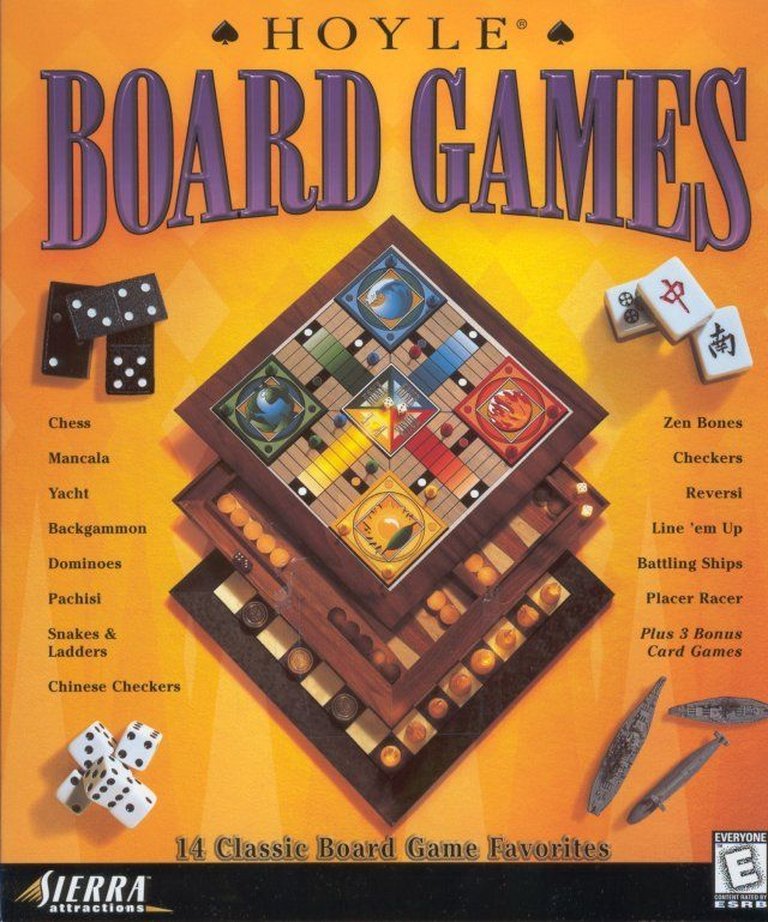
Hoyle Board Games is a classic collection of 14 traditional board and card games, including Backgammon, Chess, Checkers, Dominoes, and more, released in 1998 for Windows and later for Macintosh. The game features customizable characters, multiplayer options (including online play via WON.net), and a variety of game variations, making it a versatile and nostalgic experience for casual and competitive players alike.
Gameplay Videos
Where to Buy Hoyle Board Games
PC
Hoyle Board Games Free Download
Hoyle Board Games Reviews & Reception
mobygames.com (75/100): A collection of classic board games with a variety of options and a create-a-player feature.
thegamersguides.com : A beloved compilation that brings together some of the most iconic tabletop experiences in one nostalgic package.
myabandonware.com (100/100): A video game published in 1998 on Windows by Sierra On-Line, Inc., offering a variety of classic board and card games.
Hoyle Board Games: A Timeless Digital Board Game Collection
Introduction
In the late 1990s, as the digital revolution began to reshape entertainment, Sierra On-Line released Hoyle Board Games (1998), a compilation that sought to preserve the charm of traditional board games in a digital format. Named after Edmond Hoyle, the 18th-century authority on card and board game rules, this title was part of a broader series that aimed to bring classic tabletop experiences to the burgeoning PC gaming audience. Hoyle Board Games stood out not just for its faithful adaptations of beloved games but also for its innovative approach to multiplayer and AI-driven opponents, making it a landmark in the digital board game genre.
This review explores Hoyle Board Games in exhaustive detail, examining its development, gameplay mechanics, narrative and thematic elements, and its lasting impact on the gaming landscape. By analyzing its strengths and weaknesses, we can understand why it remains a nostalgic favorite for many and how it influenced the evolution of digital board games.
Development History & Context
The Studio and Vision
Sierra On-Line, founded in 1979 by Ken and Roberta Williams, was a powerhouse in the adventure game genre, known for iconic series like King’s Quest, Space Quest, and Leisure Suit Larry. By the late 1990s, the studio had diversified its portfolio to include educational and family-friendly titles, recognizing the growing demand for accessible, multiplayer experiences. Hoyle Board Games was developed as part of this strategy, leveraging Sierra’s expertise in character-driven narratives and interactive design to create a digital board game experience that was both engaging and easy to pick up.
The game was developed using Sierra’s proprietary tools, optimized for the CD-ROM format, which allowed for richer audio and visuals compared to earlier floppy disk-based titles. The team, led by designers like Rabih AbouJaoudé and Paul Horn, sought to create a product that would appeal to both casual gamers and board game enthusiasts. Their vision was to replicate the social and strategic depth of physical board games while adding digital conveniences like AI opponents, customizable rules, and online multiplayer.
Technological Constraints and Innovations
The late 1990s were a transitional period for PC gaming. While 3D graphics were becoming more prevalent, many games, including Hoyle Board Games, still relied on 2D sprites and pre-rendered assets due to hardware limitations. The game was designed to run on mid-range PCs of the era, with a focus on accessibility and performance. This meant that while the visuals were not cutting-edge, they were functional and charming, with a cartoony aesthetic that suited the family-friendly tone of the game.
One of the most significant innovations in Hoyle Board Games was its integration of online multiplayer via Sierra’s WON (World Opponent Network) platform. This was a bold move at a time when online gaming was still in its infancy, and it allowed players to challenge opponents from around the world in real-time. The inclusion of AI opponents with distinct personalities—many of whom were drawn from Sierra’s adventure game universe—also added a layer of replayability and humor that set the game apart from its competitors.
The Gaming Landscape of 1998
In 1998, the gaming industry was dominated by genres like first-person shooters (Half-Life, Unreal), real-time strategy (StarCraft, Age of Empires II), and adventure games (Grim Fandango, The Longest Journey). Board games, while popular in physical form, were not yet a major force in digital gaming. Hoyle Board Games entered this landscape as a niche product, targeting families and casual gamers who wanted to enjoy classic games without the hassle of setting up physical boards.
The game’s release coincided with the rise of the internet as a gaming platform, and Sierra’s decision to include online multiplayer was prescient. However, the lack of widespread broadband adoption meant that many players still relied on dial-up connections, which could make online play laggy and unreliable. Despite these challenges, Hoyle Board Games carved out a unique space for itself, offering a digital alternative to traditional board games that was both convenient and socially engaging.
Narrative & Thematic Deep Dive
The Absence of a Traditional Narrative
Unlike Sierra’s adventure games, Hoyle Board Games does not feature a traditional narrative. There is no overarching story or protagonist to follow. Instead, the game’s “narrative” is derived from the interactions between the player and the AI opponents, as well as the social dynamics of multiplayer matches. The game’s charm lies in its ability to simulate the experience of playing board games with friends or family, complete with playful banter, competitive rivalries, and shared moments of triumph or defeat.
Characters and Personalities
One of the most distinctive features of Hoyle Board Games is its roster of AI opponents, many of whom are drawn from Sierra’s adventure game universe. Characters like King Graham (King’s Quest), Roger Wilco (Space Quest), and Larry Laffer (Leisure Suit Larry) make appearances, each with their own unique personalities, taunts, and playing styles. These characters are not just cosmetic additions; they influence the gameplay experience by introducing variability in AI behavior. For example, Larry Laffer might make risqué comments during a game of chess, while Roger Wilco could crack jokes about his intergalactic adventures.
The inclusion of these characters serves multiple purposes:
1. Nostalgia: For fans of Sierra’s adventure games, seeing familiar faces adds a layer of nostalgia and familiarity.
2. Humor: The characters’ quirky dialogue and mannerisms inject humor into the gameplay, making even losses feel less frustrating.
3. Replayability: Different characters have different playing styles, encouraging players to experiment with various opponents to keep the experience fresh.
Themes of Competition and Social Interaction
At its core, Hoyle Board Games is about competition and social interaction. The game’s themes revolve around the universal appeal of board games as a means of bringing people together, whether for friendly rivalry or cooperative play. The digital format removes some of the physical barriers to playing these games (e.g., setting up the board, keeping track of pieces), but it retains the essence of what makes board games enjoyable: the strategic thinking, the unpredictability of human (or AI) opponents, and the shared experience of playing together.
The game also subtly explores themes of skill versus luck. Games like chess and checkers are purely skill-based, rewarding players who can think several moves ahead. In contrast, games like Yacht (a precursor to Yahtzee) and Snakes & Ladders introduce elements of chance, leveling the playing field and making outcomes less predictable. This balance between skill and luck is a key part of what makes board games appealing to a wide audience, and Hoyle Board Games captures this dynamic effectively.
Gameplay Mechanics & Systems
Core Gameplay Loop
Hoyle Board Games is a compilation of 14 classic board and tile-based games, each with its own unique mechanics and rules. The core gameplay loop involves selecting a game, choosing an opponent (either AI or human), and engaging in turn-based competition. The game’s interface is designed to be intuitive, with clear instructions and tooltips to help players understand the rules of each game.
The games included in the compilation are:
1. Backgammon: A strategy game where players move their pieces based on dice rolls, aiming to bear them off the board.
2. Checkers: A classic game of capturing opponent pieces by jumping over them.
3. Battling Ships: A digital adaptation of Battleship, where players take turns guessing the location of their opponent’s fleet.
4. Mancala: A turn-based strategy game involving the distribution of stones into pits.
5. Reversi: A game where players flip their opponent’s pieces by sandwiching them between their own.
6. Chess: The timeless game of strategic piece movement and checkmate.
7. Line ‘em Up: A variant of Connect Four, where players aim to align four pieces in a row.
8. Dominoes: A tile-matching game where players connect dominoes with matching numbers.
9. Snakes & Ladders: A game of chance where players move their pieces based on dice rolls, climbing ladders and avoiding snakes.
10. Placer Racer: A unique game where players race to place their pieces on a shared board.
11. Pachisi: A traditional Indian game involving dice rolls and piece movement.
12. Yacht: A dice game similar to Yahtzee, where players aim to achieve specific combinations.
13. Chinese Checkers: A strategy game where players move their pieces across a star-shaped board.
14. Zen Bones: A tile-matching puzzle game with a meditative aesthetic.
Each game is faithful to its physical counterpart, with rules and mechanics that adhere to traditional standards. The digital format allows for conveniences like automatic rule enforcement, undo buttons, and AI opponents that can adapt to the player’s skill level.
AI and Difficulty Settings
The AI in Hoyle Board Games is designed to be accessible yet challenging. Players can adjust the difficulty settings for each game, ranging from beginner to expert. The AI opponents exhibit different behaviors based on their difficulty level:
– Beginner: Makes obvious mistakes, allowing new players to learn the game.
– Intermediate: Plays competently but occasionally makes suboptimal moves.
– Expert: Employs advanced strategies and rarely makes mistakes, providing a challenge for experienced players.
The inclusion of Sierra’s iconic characters as AI opponents adds personality to the AI, making each match feel unique. For example, playing chess against King Graham might involve different strategies than playing against Larry Laffer, as each character has its own “playstyle” and dialogue.
Multiplayer Modes
Hoyle Board Games offers several multiplayer options, catering to different playstyles:
1. Hotseat Multiplayer: Players take turns on the same computer, passing the keyboard or mouse after each move. This mode is ideal for local play with friends or family.
2. Online Multiplayer: Via Sierra’s WON network, players can challenge opponents from around the world in real-time. This was a groundbreaking feature at the time, though it was limited by the technological constraints of dial-up internet.
3. Create-a-Player: Players can customize their own avatars, adding a personal touch to multiplayer matches.
The multiplayer modes are designed to replicate the social experience of playing board games in person. The online multiplayer, in particular, was ahead of its time, offering a glimpse into the future of digital gaming communities.
UI and Accessibility
The user interface in Hoyle Board Games is clean and functional, with a focus on accessibility. The main menu allows players to quickly select a game, adjust settings, or jump into multiplayer. Each game has its own dedicated interface, with clear visuals and intuitive controls. For example:
– In Chess, players can drag and drop pieces, with valid moves highlighted.
– In Battling Ships, players can click on grid squares to place their fleet or fire shots.
– In Dominoes, players can drag tiles to match them with existing ones on the board.
The game also includes a comprehensive help system, with tutorials and rule explanations for each game. This makes it easy for new players to learn the rules without needing to consult external resources.
Innovations and Flaws
Hoyle Board Games introduced several innovations that set it apart from other digital board game compilations:
1. Character-Driven AI: The inclusion of Sierra’s iconic characters as AI opponents added humor and personality to the gameplay.
2. Online Multiplayer: The integration of online play via WON was a forward-thinking feature that expanded the game’s social potential.
3. Customizable Rules: Players could adjust the rules of each game to suit their preferences, adding flexibility to the experience.
However, the game was not without its flaws:
1. Limited AI Depth: While the AI was competent, it lacked the depth and adaptability of modern AI opponents. Expert-level AI could still be predictable in some games.
2. Technical Limitations: The online multiplayer was hampered by the slow speeds of dial-up internet, leading to lag and disconnections.
3. Visual Simplicity: The 2D graphics, while charming, were not as visually impressive as some of the 3D games emerging at the time.
Despite these limitations, Hoyle Board Games was a well-rounded and enjoyable compilation that successfully brought classic board games into the digital age.
World-Building, Art & Sound
Setting and Atmosphere
Hoyle Board Games does not have a traditional “world” in the sense of a narrative-driven game. Instead, its setting is the digital representation of a cozy game room, where players can gather to enjoy their favorite board games. The atmosphere is warm and inviting, with a focus on comfort and accessibility. The game’s art style reinforces this feeling, using bright colors, playful animations, and a cartoony aesthetic that appeals to players of all ages.
Each game has its own distinct visual theme, reflecting the traditional design of its physical counterpart. For example:
– Chess features a classic wooden board with intricately designed pieces.
– Battling Ships uses a nautical theme, with a grid that resembles an ocean battlefield.
– Zen Bones has a serene, meditative aesthetic, with soft colors and smooth animations.
The game’s setting is further enhanced by its sound design, which includes ambient music and sound effects that evoke the feeling of playing in a lively game room.
Visual Direction
The visual direction of Hoyle Board Games is functional and charming, prioritizing clarity and accessibility over graphical fidelity. The game uses 2D sprites and pre-rendered assets, which were standard for the era but are now considered retro. The character designs for the AI opponents are particularly noteworthy, as they draw from Sierra’s adventure game universe, adding a layer of nostalgia for fans.
The game’s interface is designed to be intuitive, with large, clickable buttons and clear visual feedback. For example:
– In Checkers, captured pieces are clearly marked, and valid moves are highlighted.
– In Dominoes, matching tiles are visually distinct, making it easy to see potential plays.
– In Chess, the board is laid out in a traditional format, with pieces that are easy to distinguish.
While the visuals may not have been cutting-edge in 1998, they were effective in conveying the rules and mechanics of each game, making Hoyle Board Games accessible to players of all skill levels.
Sound Design
The sound design in Hoyle Board Games is understated but effective. The game features a mix of ambient music and sound effects that enhance the gameplay experience without being intrusive. For example:
– Music: The background music is light and cheerful, evoking the feeling of a casual game night. Each game has its own unique track, which helps to set the mood.
– Sound Effects: The game includes sound effects for actions like moving pieces, rolling dice, and capturing opponent pieces. These effects provide auditory feedback, making the gameplay more immersive.
– Voice Acting: The AI opponents occasionally speak, with voice lines that reflect their personalities. For example, Larry Laffer might make a cheeky comment after winning a round of chess.
The sound design is not the game’s strongest feature, but it complements the visuals and gameplay mechanics effectively, creating a cohesive and enjoyable experience.
Reception & Legacy
Critical Reception
Hoyle Board Games received generally positive reviews upon its release, with critics praising its faithful adaptations of classic games, accessible interface, and innovative multiplayer features. The game’s MobyGames score of 7.2 (based on 8 critic reviews) reflects its status as a well-regarded but not groundbreaking title.
Positive Aspects Highlighted by Critics:
1. Variety of Games: Critics appreciated the wide selection of games, which catered to different tastes and skill levels.
2. Accessibility: The game’s intuitive interface and comprehensive help system made it easy for new players to learn the rules.
3. Multiplayer Options: The inclusion of both local and online multiplayer was seen as a major strength, particularly the online component, which was ahead of its time.
4. Character Personalities: The AI opponents, drawn from Sierra’s adventure games, added humor and replayability to the experience.
Criticisms:
1. AI Depth: Some reviewers noted that the AI, while competent, lacked the depth and unpredictability of human opponents.
2. Technical Issues: The online multiplayer was criticized for its reliance on dial-up internet, which could lead to lag and disconnections.
3. Visual Simplicity: The 2D graphics were seen as dated compared to the emerging 3D games of the late 1990s.
Notable Reviews:
– All Game Guide (90%): Praised the game’s variety and multiplayer options, calling it a “highly recommended” package for board game enthusiasts.
– Mac Gamer (90%): Highlighted the game’s longevity and enjoyment, though noted the absence of Dominoes in the Macintosh version.
– FamilyPC Magazine (88%): Emphasized the game’s appeal to families, particularly the ability to “cheat” in a digital environment.
– Computer Gaming World (30%): Criticized the game for its lack of innovation, arguing that better alternatives were available as freeware or shareware.
Commercial Performance
Hoyle Board Games was a commercial success, particularly during the holiday season, when it was marketed as a family-friendly gift. The game’s appeal to casual gamers and its inclusion in Sierra’s broader Hoyle series helped it achieve strong sales. While exact figures are not publicly available, the game’s continued availability on platforms like MyAbandonware and the Internet Archive suggests that it remained popular long after its initial release.
The Hoyle series as a whole was a significant revenue stream for Sierra, with annual releases that included card games, casino games, and puzzle games. Hoyle Board Games was part of this successful franchise, contributing to Sierra’s dominance in the casual gaming market during the late 1990s and early 2000s.
Evolution of the Series
Following the success of Hoyle Board Games, Sierra continued to release annual updates and spin-offs, including:
– Hoyle Board Games 2001 (2000): Added new games and improved graphics.
– Hoyle Puzzle & Board Games (2008, 2009): Expanded the selection to include puzzle games like Mahjong and Sudoku.
– Hoyle Kids Games (2000): A child-friendly version with simplified rules and colorful visuals.
The series evolved to include more modern features, such as 3D graphics and online leaderboards, but the core appeal remained the same: faithful adaptations of classic games with a focus on accessibility and social interaction.
Influence on the Industry
Hoyle Board Games played a significant role in popularizing digital board games, demonstrating that there was a market for faithful adaptations of classic tabletop experiences. The game’s success paved the way for future titles like Tabletop Simulator and Board Game Arena, which offer digital versions of physical board games with enhanced features like online multiplayer and mod support.
The game’s use of AI opponents with distinct personalities also influenced later titles, which sought to add humor and replayability to digital board games. Additionally, Hoyle Board Games was one of the first major titles to integrate online multiplayer for board games, setting a precedent for future digital adaptations.
Legacy and Preservation
Today, Hoyle Board Games is remembered as a nostalgic favorite, particularly among fans of Sierra’s adventure games and classic board game enthusiasts. The game’s legacy is preserved through:
1. Abandonware Sites: Platforms like MyAbandonware and the Internet Archive host downloadable versions of the game, allowing new generations to experience it.
2. Emulation: The game is compatible with emulators like DOSBox, making it accessible on modern systems.
3. Retro Gaming Communities: Fans continue to discuss and share memories of the game on forums and social media, keeping its legacy alive.
While Hoyle Board Games may not be as visually impressive or mechanically deep as modern digital board games, its charm and accessibility ensure that it remains a beloved classic.
Conclusion
Hoyle Board Games (1998) is a testament to the enduring appeal of classic board games and the potential of digital adaptations to bring these experiences to a wider audience. Developed by Sierra On-Line during a transitional period in PC gaming, the title successfully combined faithful rule adaptations, accessible gameplay, and innovative multiplayer features to create a product that was both enjoyable and socially engaging.
The game’s strengths lie in its variety of games, character-driven AI, and multiplayer options, which catered to both casual and experienced players. While its AI depth and technical limitations were notable flaws, they did little to diminish the overall experience, which was defined by its charm, humor, and replayability.
Hoyle Board Games also played a significant role in shaping the digital board game genre, influencing future titles and demonstrating the viability of online multiplayer for tabletop experiences. Its legacy is preserved through abandonware sites, emulation, and retro gaming communities, ensuring that it remains a nostalgic favorite for generations of players.
In the end, Hoyle Board Games is more than just a compilation of classic games; it is a digital time capsule that captures the joy of gathering around a table with friends and family, competing in friendly rivalry, and sharing moments of triumph and defeat. For those who grew up with it, the game is a cherished memory of simpler times. For new players, it offers a glimpse into the origins of digital board gaming and a reminder of the timeless appeal of classic tabletop experiences.
Final Verdict: 8/10 – A charming and accessible compilation that successfully brings classic board games into the digital age, with innovative multiplayer features and a nostalgic appeal that endures to this day.