
- Release Year: 2006
- Platforms: Windows
- Publisher: Electronic Arts, Inc.
- Developer: Electronic Arts, Inc.
- Genre: Compilation, Strategy
- Perspective: Top-down
- Game Mode: LAN, Online PVP, Single-player
- Gameplay: Base building, Real-time strategy, Resource Management
- Setting: Alternate history, Modern, Sci-fi
- Average Score: 74/100
Description
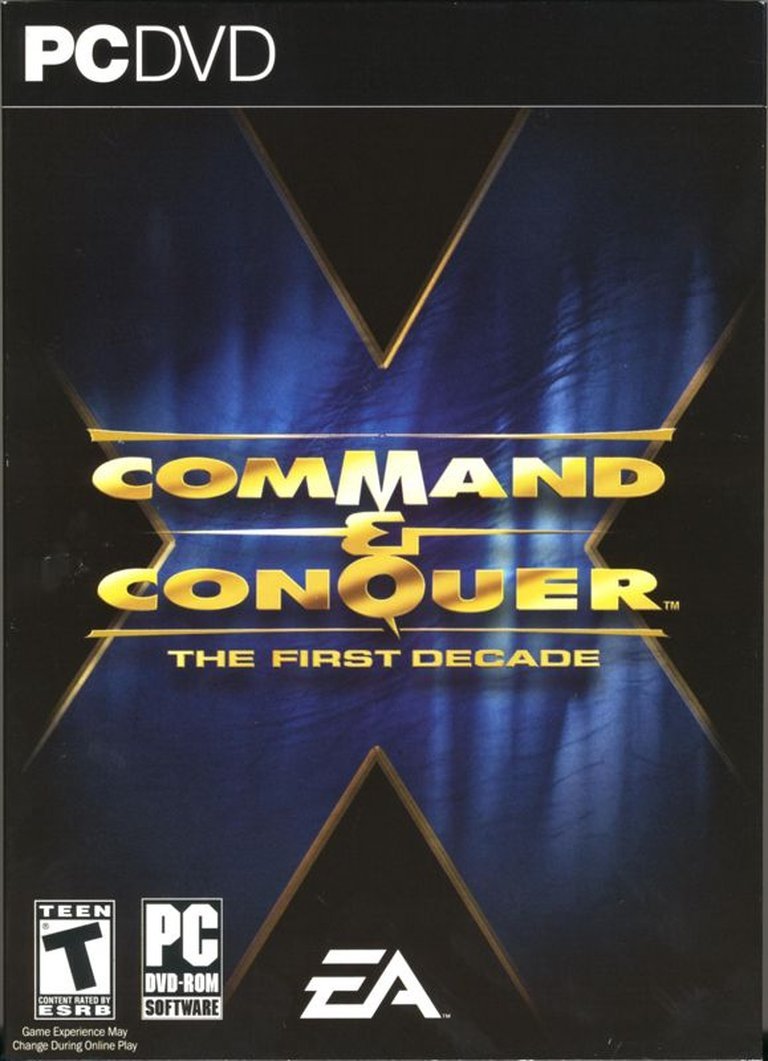
Command & Conquer: The First Decade is a special anniversary compilation celebrating the first ten years of the iconic real-time strategy franchise. Released in 2006, this collection includes twelve classic games from the Command & Conquer series, spanning the Tiberium, Red Alert, and Generals universes, along with expansion packs and bonus content like a documentary DVD and poster. The compilation offers a comprehensive experience of the franchise’s evolution, featuring titles such as Command & Conquer, Red Alert, Tiberian Sun, and Generals, each known for their innovative gameplay, engaging storylines, and competitive multiplayer modes.
Gameplay Videos
Command & Conquer: The First Decade Free Download
Command & Conquer: The First Decade Cracks & Fixes
Command & Conquer: The First Decade Patches & Updates
Command & Conquer: The First Decade Mods
Command & Conquer: The First Decade Reviews & Reception
metacritic.com (71/100): A triumphant return to form for the series.
mobygames.com (81/100): The special anniversary edition of Command & Conquer includes a dozen C&C games spanning over the last ten years plus a bonus DVD.
gamewatcher.com : Unfortunately it feels a bit more like a group therapy session than an exciting insight into the Command and Conquer series.
monstercritic.com (72/100): Command & Conquer: The First Decade is a compilation of the Command & Conquer series’ games published from 1995 to 2003, all bundled into one DVD and updated to run optimally on Windows XP.
Command & Conquer: The First Decade – A Monumental Retrospective of RTS History
Introduction: A Decade of Dominance
Few franchises have left as indelible a mark on the real-time strategy (RTS) genre as Command & Conquer. With its explosive blend of tactical depth, cinematic storytelling, and competitive multiplayer, the series redefined what players expected from strategy games. Command & Conquer: The First Decade (2006) is not just a compilation—it is a time capsule, a celebration of a golden era in gaming, and a testament to the enduring legacy of Westwood Studios. This collection bundles twelve landmark titles, spanning three distinct universes (Tiberium, Red Alert, and Generals), into a single, meticulously curated package. But does it succeed as both a historical artifact and a playable experience? This review dissects its strengths, flaws, and lasting significance.
Development History & Context: The Rise and Fall of Westwood
The Birth of a Genre Titan
The Command & Conquer franchise was born in 1995, a time when RTS games were still in their infancy. Westwood Studios, under the leadership of Louis Castle and Brett Sperry, sought to create a game that combined the strategic depth of Dune II (which they also developed) with a more accessible, fast-paced, and narrative-driven experience. The result was Command & Conquer: Tiberian Dawn, a game that introduced:
– Asymmetrical factions (GDI vs. Nod) with distinct playstyles.
– Full-motion video (FMV) cutscenes, a revolutionary storytelling tool at the time.
– Multiplayer battles that became a staple of LAN parties and early online gaming.
The success of Tiberian Dawn led to the Red Alert sub-series (1996), which swapped sci-fi for an alternate-history Cold War setting, further cementing C&C as a cultural phenomenon.
The EA Acquisition and the End of an Era
In 1998, Electronic Arts acquired Westwood Studios, a move that would ultimately lead to the studio’s dissolution in 2003. While EA continued the franchise, the magic of Westwood’s original vision began to fade. The First Decade was released in 2006, a time when:
– Modern RTS games (Warcraft III, StarCraft, Company of Heroes) were pushing graphical and mechanical boundaries.
– Nostalgia for classic games was growing, but compatibility issues made older titles difficult to play on contemporary systems.
– EA was shifting focus toward Command & Conquer 3: Tiberium Wars, using The First Decade as both a celebration and a marketing tool.
The compilation was developed by EA Los Angeles (formerly Westwood Pacific) with input from surviving Westwood veterans. Its primary goal was to preserve the franchise’s legacy while ensuring compatibility with Windows XP—a noble but technically challenging endeavor.
Narrative & Thematic Deep Dive: War, Propaganda, and Alternate Histories
The Tiberium Universe: A Sci-Fi Epic of Corruption and Power
The Tiberium saga (C&C, Tiberian Sun, Renegade) is a dystopian sci-fi epic centered around:
– Tiberium, an alien mineral that mutates Earth’s ecosystem while serving as a power source.
– Kane, the enigmatic leader of the Brotherhood of Nod, whose messianic rhetoric and ruthless tactics make him one of gaming’s most compelling villains.
– The Global Defense Initiative (GDI), a militarized UN force representing order but often resorting to brutal tactics.
Themes of environmental decay, religious extremism, and corporate militarism permeate the series, making it far more than a simple “good vs. evil” conflict. The FMV sequences, though dated, remain iconic for their over-the-top performances and propaganda-style delivery.
The Red Alert Universe: Alternate History as Satire
Red Alert and its sequels (Red Alert 2, Yuri’s Revenge) embrace campy, pulp-fiction storytelling, blending:
– Time travel (Einstein assassinates Hitler, leading to a Soviet-dominated world).
– Over-the-top superweapons (Tesla coils, psychic mind control, giant squid submarines).
– Cold War paranoia turned up to eleven, with absurd yet oddly prescient political satire.
The series’ tone shifts from the grim seriousness of Tiberium to self-aware absurdity, making it a cult favorite. Characters like Tanya (the commando with a bikini and a rocket launcher) and Yuri (a psychic Soviet madman) became fan favorites, embodying the series’ blend of humor and menace.
Generals: Modern Warfare and Geopolitical Tensions
Generals (2003) and Zero Hour marked a departure, grounding the franchise in modern military conflict:
– Three factions: USA (high-tech), China (massive armies), and the GLA (terrorist insurgents).
– A shift toward realism, with less emphasis on sci-fi or alternate history.
– Controversy over its portrayal of Middle Eastern conflicts, released just two years after 9/11.
While Generals was praised for its tactical depth, it lacked the narrative flair of its predecessors, signaling a potential identity crisis for the franchise.
Gameplay Mechanics & Systems: Evolution of an RTS Giant
Core Gameplay: The Westwood Formula
Every C&C game in The First Decade adheres to a core RTS loop refined over a decade:
1. Resource Gathering: Tiberium (or credits in Red Alert) fuels the war machine.
2. Base Building: Constructing defenses, barracks, and tech structures.
3. Unit Production: Balancing infantry, vehicles, and aircraft.
4. Tactical Combat: Micromanaging units, exploiting weaknesses, and deploying superweapons.
Key Innovations Across the Series:
– Sidebars and Hotkeys: Tiberian Sun introduced a more streamlined UI, while Generals refined it further.
– Fog of War: Red Alert 2 improved line-of-sight mechanics, adding depth to scouting.
– Hero Units: Generals introduced unique commanders with special abilities, a precursor to modern RTS hero mechanics.
Multiplayer: The Heart of the Franchise
C&C was the king of LAN parties in the late ’90s and early 2000s. The First Decade includes:
– LAN and online support (though many older titles required community patches to function properly).
– Asymmetrical faction design, ensuring no two matches played the same.
– Modding communities that kept the games alive long after release.
However, technical issues plagued the compilation:
– Bugs in older titles (C&C Gold and Red Alert suffered from crashes and compatibility problems).
– Missing installation sequences, a beloved feature of the original releases.
– No official patch support, leaving fans to rely on unofficial fixes (e.g., the First Decade Unofficial Patch 1.03).
Renegade: The Black Sheep FPS
Command & Conquer: Renegade (2002) was a bold but flawed experiment—a first-person shooter set in the Tiberium universe. While it offered:
– Large-scale battles with vehicles and base destruction.
– A unique blend of FPS and RTS elements (e.g., capturing buildings to spawn units).
It was overshadowed by contemporaries like Battlefield 1942 and Halo, and its inclusion in The First Decade feels more like a historical footnote than a must-play experience.
World-Building, Art & Sound: The Aesthetic of War
Visual Design: From Pixel Art to 3D
The compilation showcases the evolution of RTS graphics:
– Early Titles (C&C, Red Alert): Sprites and 2D art with a gritty, industrial aesthetic.
– Tiberian Sun: Introduced voxel-based units and darker, more detailed environments.
– Generals: Fully 3D models with dynamic lighting and particle effects.
Despite their age, the games retain a distinct visual identity, thanks to:
– Iconic unit designs (Mammoth Tanks, Apache helicopters, GLA suicide bombers).
– Propaganda-heavy UI, reinforcing the series’ themes of war and media manipulation.
Sound Design: The Voice of War
The C&C series is renowned for its audio design:
– Frank Klepacki’s soundtracks: A mix of industrial metal, electronic beats, and orchestral scores that defined the franchise’s sound.
– Voice acting: From Kane’s chilling monologues to the over-the-top Soviet accents in Red Alert, the series’ dialogue is unforgettable.
– Ambient sounds: The hum of Tiberium fields, the crunch of tanks rolling over debris, and the chaotic battlefield chatter immerse players in the action.
Atmosphere: Propaganda and Paranoia
The C&C universe is dripping with atmosphere, whether it’s:
– The dystopian despair of Tiberian Sun’s mutated wastelands.
– The Cold War kitsch of Red Alert’s neon-lit bases and Soviet propaganda.
– The gritty realism of Generals’ urban battlefields.
The FMV cutscenes, though dated, remain a cultural touchstone, blending B-movie cheese with surprisingly deep lore.
Reception & Legacy: A Mixed but Enduring Triumph
Critical Reception: Praise and Pitfalls
The First Decade received generally positive reviews, with critics praising its value and historical significance but criticizing its technical flaws:
– Game Vortex (96%): “Never has there been a more defining, all-encompassing effort to preserve the great history of our industry.”
– GameZone (88%): “The best compilation of games from any genre all in one DVD.”
– GameSpot (76%): “Long on great gameplay, but short on polish… it deserved a little more care.”
Common Criticisms:
– Bugs and compatibility issues (especially in older titles).
– Lack of physical extras (later re-releases omitted the poster and manual).
– No new content, making it feel like a cash grab to some.
Commercial Performance
The compilation sold over 100,000 copies in the UK alone, earning a Silver ELSPA award. While not a blockbuster, it found an audience among:
– Nostalgic fans eager to relive classic battles.
– Newcomers discovering the series for the first time.
– Modders and preservationists who kept the games alive through patches and custom maps.
Influence on the Genre
Command & Conquer’s impact on RTS gaming is immeasurable:
– Popularized asymmetrical factions, now a staple in games like StarCraft and Company of Heroes.
– Pioneered FMV storytelling, influencing later narrative-driven RTS titles.
– Set the standard for multiplayer RTS, with Red Alert 2 and Generals remaining competitive staples.
The franchise’s decline post-The First Decade (culminating in the disastrous Command & Conquer 4 and the canceled Generals 2) only heightened the compilation’s importance as a definitive archive of the series’ golden age.
Conclusion: A Flawed but Essential Time Capsule
Command & Conquer: The First Decade is not perfect. Its technical issues, lack of polish, and occasional bugs prevent it from being the definitive way to experience these classics. Yet, it remains an invaluable collection for:
– History buffs who want to trace the evolution of RTS gaming.
– Fans who grew up with Kane’s schemes or Tanya’s explosions.
– Modders and preservationists who continue to breathe new life into these games.
Final Verdict: 8.5/10 – A Must-Own for RTS Enthusiasts
While later remasters (C&C Remastered Collection) have surpassed it in polish, The First Decade stands as a monument to Westwood’s genius and a testament to the enduring appeal of Command & Conquer. It is not just a game compilation—it is a piece of gaming history.
For those who lived through the era, it’s a nostalgic triumph. For newcomers, it’s a masterclass in RTS design. And for the franchise itself, it’s a bittersweet farewell to the golden age of Westwood.
Post-Script: The Remastered Future
The 2020 Command & Conquer Remastered Collection (covering Tiberian Dawn and Red Alert) has since eclipsed The First Decade in terms of accessibility and polish. However, The First Decade remains the only way to legally experience the full breadth of the franchise’s first ten years in one package—a flawed but essential artifact for any RTS fan.