
- Release Year: 2022
- Platforms: Windows
- Publisher: Microids SA
- Genre: Special edition
- Game Mode: Single-player
- Average Score: 64/100
Description
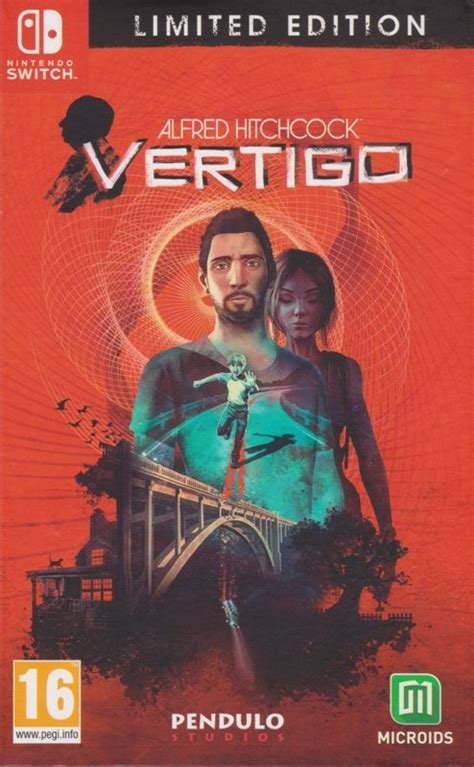
Alfred Hitchcock: Vertigo (Deluxe Edition) is an adventure game developed by Pendulo Studios and published by Microids, loosely inspired by Alfred Hitchcock’s films, particularly Vertigo (1958). The story follows Ed Miller, a writer traumatized by a car crash that left him with vertigo and no memory of his missing wife and daughter. Through therapy and flashbacks, players unravel the mystery of the accident while controlling multiple characters in a 3D world. The Deluxe Edition includes the base game along with digital extras like a soundtrack, art book, wallpapers, in-game filters, and avatars.
Where to Buy Alfred Hitchcock: Vertigo (Deluxe Edition)
PC
Alfred Hitchcock: Vertigo (Deluxe Edition) Patches & Updates
Alfred Hitchcock: Vertigo (Deluxe Edition) Mods
Alfred Hitchcock: Vertigo (Deluxe Edition) Guides & Walkthroughs
Alfred Hitchcock: Vertigo (Deluxe Edition) Reviews & Reception
empireonline.com : Practically every choice or action throughout the game is meaningless.
metacritic.com (64/100): A narratively well-constructed thriller, which helps us to forgive its shortcomings when it comes to gameplay.
popculture.com : The strength of Alfred Hitchcock – Vertigo is its presentation and story.
nextgenplayer.com : Chills and thrills to the max.
Alfred Hitchcock: Vertigo (Deluxe Edition): A Masterclass in Psychological Storytelling or a Missed Opportunity?
Introduction: The Legacy of Hitchcock Meets Interactive Fiction
Alfred Hitchcock’s Vertigo (1958) is a cinematic masterpiece, a labyrinth of obsession, identity, and psychological unraveling. When Pendulo Studios and Microids announced Alfred Hitchcock: Vertigo (2021), the gaming world buzzed with anticipation. Could a video game capture the essence of Hitchcock’s suspense, his signature dolly zoom, his themes of vertigo as both a physical and metaphysical affliction? The Deluxe Edition, released in 2022, packages the base game with a digital art book, soundtrack, and in-game filters—extras that promise to deepen the immersion. But does the game itself stand tall as a tribute to the Master of Suspense, or does it stumble under the weight of its own ambition?
This review dissects Alfred Hitchcock: Vertigo (Deluxe Edition) across its narrative depth, gameplay mechanics, artistic direction, and legacy, arguing that while it succeeds as a psychological thriller with a gripping story and Hitchcockian flair, its gameplay and technical execution fall short of true greatness.
Development History & Context: A Spanish Studio’s Hitchcockian Dream
The Studio Behind the Suspense
Pendulo Studios, a Spanish developer with a rich history in adventure games (Runaway, Blacksad: Under the Skin), took on the daunting task of adapting Hitchcock’s themes into an interactive experience. The studio’s pedigree in narrative-driven games made them a fitting choice, but the challenge was immense: how to translate Hitchcock’s cinematic language—his camerawork, his pacing, his psychological tension—into a playable format.
Licensing Hitchcock’s Legacy
Microids secured the rights to Hitchcock’s name and likeness, a bold move that signaled the game’s intent to be more than a mere adaptation. As narrative designer Josué Monchan noted, Vertigo is “freely inspired” by the film, drawing from Spellbound, Rebecca, and Psycho as well. The goal was not to retell Vertigo but to evoke its essence—obsession, madness, the blurring of reality and memory.
Technological and Creative Constraints
Developed in Unity, the game faced the dual challenge of balancing cinematic ambition with interactive functionality. The team studied Hitchcock’s techniques, particularly the dolly zoom (or Vertigo shot), to create a sense of disorientation. However, the constraints of a small team (Pendulo had faced financial struggles in the past) and the need to support multiple platforms (PC, consoles) may have limited the game’s technical polish.
The Gaming Landscape in 2021-2022
The game arrived in a golden age of narrative adventures (Life Is Strange, The Quarry, Detroit: Become Human), where player agency and branching stories were increasingly expected. Vertigo’s linear, story-driven approach was a gamble—would players embrace a game that prioritized Hitchcockian suspense over gameplay depth?
Narrative & Thematic Deep Dive: A Tale of Vertigo, Memory, and Madness
Plot Summary: The Unreliable Mind of Ed Miller
The game follows Ed Miller, a writer who survives a car crash unscathed but claims his wife and daughter were in the vehicle—despite no evidence of their existence. Plagued by vertigo and fragmented memories, Ed undergoes therapy with Dr. Julia Lomas, while Sheriff Nick Reyes investigates the crash and a related murder. The story unfolds through three perspectives:
– Ed’s flashbacks: Initially idyllic, then darkly revelatory under hypnosis.
– Julia’s therapy sessions: A psychological excavation of Ed’s trauma.
– Nick’s investigation: A grounded counterpoint to Ed’s unreliable narration.
Themes: Hitchcock’s Shadow
- Vertigo as Metaphor
- Physical: Ed’s dizziness mirrors the dolly zoom effect, distorting perception.
- Psychological: The game questions reality itself—are Ed’s memories truth or delusion?
- Obsession and Guilt
- Ed’s fixation on his “lost” family echoes Scottie’s obsession in the film.
- Themes of manipulation and identity crisis (Psycho’s Norman Bates looms large).
- Unreliable Narration
- Hypnosis sequences reveal suppressed truths, forcing players to question everything.
- The game’s structure—rewinding memories—mirrors Hitchcock’s love of twisting perception.
Characters: Flawed, Fascinating, and Frustrating
- Ed Miller: A protagonist whose charm veers into cruelty. His sarcasm and self-destructive tendencies make him compelling but unlikeable.
- Dr. Julia Lomas: The voice of reason, though her methods blur ethical lines.
- Sheriff Nick Reyes: A grounded investigator whose skepticism contrasts Ed’s paranoia.
- Faye: Ed’s enigmatic love interest, whose true nature is a central mystery.
Dialogue and Pacing: A Mixed Bag
- Strengths: The script excels in tension-building, with Hitchcockian twists that recontextualize earlier scenes.
- Weaknesses:
- Some dialogue feels stiff or overly expositional.
- Pacing stumbles in the middle act, where ambiguity gives way to linear progression.
The Ending: A Hitchcockian Payoff?
Without spoilers, the climax delivers a satisfying, if predictable, revelation. The game’s strength lies in its journey—peeling back layers of deception—rather than its destination.
Gameplay Mechanics & Systems: A Thriller with Training Wheels
Core Gameplay Loop: Investigation and Memory
- Point-and-Click Exploration: Players examine environments, collect clues, and trigger flashbacks.
- Hypnosis Mechanic: Rewinding memories to uncover hidden truths is the game’s most innovative feature.
- Quick-Time Events (QTEs): Used for mundane tasks (pouring cat food) and dramatic moments (running from danger). Often criticized as unnecessary.
Puzzles: Simplicity Over Challenge
- Most “puzzles” involve fetching items or observing clues.
- The lack of complexity may frustrate adventure game purists but serves the narrative focus.
Character Switching: A Hitchcockian Perspective Shift
- Playing as Ed, Julia, and Nick provides varied viewpoints but doesn’t significantly alter the story.
- The illusion of choice is undermined by the game’s linear progression.
UI and Accessibility
- The interaction icon (a small white dot) is frequently criticized for being hard to spot.
- Loading screens disrupt the flow, though the Deluxe Edition’s in-game filters add a nice touch.
Innovations and Flaws
- Innovative: The hypnosis mechanic and memory rewinds are clever nods to Hitchcock’s themes.
- Flawed:
- QTEs feel arbitrary.
- Lip-syncing and animations are stiff, breaking immersion.
- The lack of meaningful choices reduces replayability.
World-Building, Art & Sound: A Hitchcockian Dreamscape
Visual Direction: Cel-Shaded Noir
- The game’s cel-shaded art style evokes a comic-book aesthetic, clashing slightly with its realistic environments.
- Character models are expressive but occasionally uncanny (e.g., Ed’s aunt’s warped sweater texture).
Atmosphere: A Masterclass in Suspense
- Lighting and Camerawork: Dynamic angles and shadows create a sense of unease.
- Locations: From Ed’s cluttered home to eerie farmhouses, each setting drips with tension.
Sound Design: Bernard Herrmann’s Ghost
- Composer Juan Miguel Martín’s score channels Hitchcock’s frequent collaborator, Bernard Herrmann (Psycho, Vertigo).
- The soundtrack swells with strings and dissonant motifs, amplifying the psychological horror.
Voice Acting: Hit or Miss
- Strong performances (e.g., Ed’s therapist) contrast with wooden deliveries (e.g., child actors).
- Lip-syncing issues undermine emotional scenes.
Reception & Legacy: A Polarizing Hitchcock Homage
Critical Reception: Mixed but Respectful
- Metacritic Scores:
- PC: 61/100 (“mixed or average”)
- PS5: 64/100
- Praised:
- Atmospheric storytelling.
- Faithful Hitchcockian vibes.
- Criticized:
- Clunky gameplay.
- Lack of player agency.
- Technical issues (lip-syncing, loading times).
Commercial Performance: A Niche Success
- Estimated 100,000–200,000 PC sales in its first year.
- Console versions sold modestly, hindered by delays.
Legacy: A Bold Experiment
- Vertigo stands as a rare example of a game adapting a director’s aesthetic rather than a specific film.
- Its flaws highlight the challenges of translating cinema to interactive media.
- Future games may learn from its strengths (narrative ambition) and weaknesses (gameplay depth).
Conclusion: A Flawed but Fascinating Hitchcockian Experience
Alfred Hitchcock: Vertigo (Deluxe Edition) is a game of contradictions. Its story is gripping, its atmosphere immersive, and its Hitchcockian homages clever. Yet its gameplay is shallow, its technical execution uneven, and its illusions of choice frustrating.
Final Verdict: 7.5/10 – A Must-Play for Hitchcock Fans, but Not a Masterpiece
– For Narrative Lovers: A thrilling, twist-filled ride.
– For Adventure Gamers: A disappointment in puzzles and agency.
– For Hitchcock Enthusiasts: A loving, if imperfect, tribute.
The Deluxe Edition’s extras (art book, soundtrack) sweeten the deal, but the core experience remains the same: a game that soars in storytelling but stumbles in execution. In the end, Vertigo is less a game to play and more a story to experience—one that, like its cinematic namesake, lingers in the mind long after the credits roll.
Should You Buy It?
– Yes, if you crave a psychological thriller with Hitchcockian flair.
– No, if you demand deep gameplay or meaningful choices.
Alfred Hitchcock: Vertigo may not reach the heights of its inspiration, but it’s a daring, memorable experiment—one that proves games can be as suspenseful and thought-provoking as the best of cinema.