
- Release Year: 2021
- Platforms: Browser, Macintosh, Windows
- Genre: Adventure
- Perspective: 1st-person
- Game Mode: Single-player
- Gameplay: Point and select, Visual novel
- Setting: City – Berlin, Europe, Interwar
Description
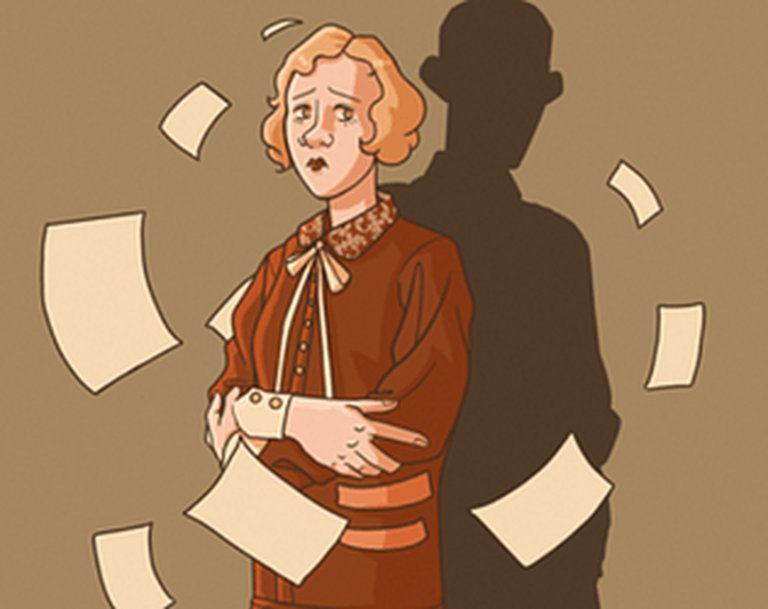
Doubts is a first-person visual novel adventure set in interwar Berlin, where players navigate a fixed/flip-screen environment as a female protagonist. The game, developed using TyranoBuilder, blends narrative-driven gameplay with point-and-select mechanics, immersing players in a historically rich European setting. Released in 2021 on Windows, Mac, and browser platforms, it offers a unique storytelling experience with a focus on dialogue and exploration.
doubts Mods
doubts Reviews & Reception
mrdavepizza.com : A wonderful depiction of that environment. I really liked the slight sepia/salmon tint to everything and the cartoonish but historically accurate items throughout the room.
Doubts: A Haunting Glimpse into Uncertainty
Introduction: A Fleeting Moment of Doubt
In the vast landscape of indie games, Doubts (2021) stands as a quiet, introspective gem—a short but deeply affecting visual novel that lingers in the mind long after its brief playtime. Developed by solo German artist Fulmen, Doubts is a first-person point-and-click adventure set in 1926 Berlin, where players assume the role of Gerda, a woman grappling with the consequences of her impulsive decision to flee with her enigmatic boyfriend, Joseph. As she sits alone in a dimly lit hotel room, the weight of uncertainty presses upon her, and the player must unravel the truth behind Joseph’s intentions through subtle environmental storytelling and introspective dialogue.
At its core, Doubts is not a game of grand revelations or complex mechanics, but rather a meditation on trust, vulnerability, and the quiet dread of second-guessing one’s choices. Its brevity (a mere 10-20 minutes) belies its emotional depth, making it a masterclass in minimalist narrative design. While it may lack the sprawling branching paths of larger visual novels, its hand-drawn art, historical authenticity, and haunting atmosphere elevate it into something far more memorable than its runtime suggests.
This review will dissect Doubts in its entirety—from its development origins to its narrative subtleties, gameplay mechanics, and cultural impact—to determine why, despite its obscurity, it deserves recognition as one of the most effective short-form visual novels of recent years.
Development History & Context: The Birth of a Solo Passion Project
The Creator: Fulmen’s Artistic Vision
Doubts was crafted by Fulmen, a solo developer whose work is characterized by hand-drawn aesthetics, historical settings, and deeply personal storytelling. Little is known about Fulmen beyond their itch.io profile, but their portfolio suggests a fascination with early 20th-century Europe, feminine perspectives, and psychological tension. Doubts is not their only work—other titles like The Life and Suffering of Sir Brante (a historical interactive fiction) and CRASH Autodrive (a noir-inspired mystery) demonstrate a recurring interest in moral ambiguity and period-accurate atmospheres.
The game was built using TyranoBuilder, a user-friendly engine for visual novels, which allowed Fulmen to focus on art, writing, and atmosphere rather than complex programming. This choice reflects the game’s indie ethos—a labor of love rather than a commercial endeavor. Released for free on itch.io in April 2021, Doubts was never intended to be a blockbuster; instead, it serves as a proof of concept for Fulmen’s ability to evoke emotion through minimalism.
The Gaming Landscape in 2021: A Renaissance of Short-Form Narratives
2021 was a pivotal year for indie visual novels, with titles like Citizen Sleeper, Unpacking, and The Past Within proving that brevity and emotional impact could coexist. The rise of itch.io as a platform for experimental storytelling allowed developers like Fulmen to distribute their work without the pressures of commercial success. Doubts emerged alongside other short, free visual novels that prioritized atmosphere over gameplay, such as:
– A Date in the Park (2020) – A romantic slice-of-life story.
– The Static Speaks My Name (2021) – A psychological horror visual novel.
– One Night, Hot Springs (2017) – A transgender narrative experience.
What sets Doubts apart is its historical grounding. Unlike many contemporary visual novels that lean into fantasy or sci-fi, Fulmen’s work is rooted in the interwar period, a time of social upheaval, economic instability, and personal reinvention—themes that resonate deeply with Gerda’s internal conflict.
Technological Constraints & Artistic Choices
Given its solo development and free distribution, Doubts operates within strict technical limitations:
– Fixed/flip-screen perspective – The game is confined to a single hotel room, reinforcing Gerda’s isolation and claustrophobia.
– Point-and-select interface – Interaction is limited to examining objects and reading thoughts, eschewing complex puzzles for narrative immersion.
– No voice acting – The story unfolds through text and ambient sound, relying on the player’s imagination to fill in emotional gaps.
These constraints are not weaknesses but deliberate choices that enhance the game’s intimacy. The absence of voice acting or animation forces players to engage with Gerda’s written inner monologue, making her doubts feel more personal and immediate.
Narrative & Thematic Deep Dive: The Anatomy of Uncertainty
Plot Summary: A Woman on the Edge of a Decision
Doubts opens in 1926 Berlin, a city still reeling from the aftermath of World War I and the Weimar Republic’s economic turmoil. Gerda, a young woman of modest means, has abandoned her old life to elope with Joseph, a man whose charm and promises of a better future have swept her off her feet. However, as she sits alone in their shabby hotel room, waiting for Joseph to return, cracks begin to form in her resolve.
The game unfolds in real-time as Gerda examines objects in the room—a suitcase, a mirror, a letter, a pocket watch—each triggering fragmented memories, suspicions, and revelations. Through her internal dialogue, players piece together:
– Joseph’s mysterious past (Is he a criminal? A con artist? A fugitive?)
– Gerda’s own insecurities (Did she make the right choice? Is she being naive?)
– The societal pressures of 1920s Germany (What options does a woman like Gerda truly have?)
The narrative culminates in two possible endings, determined by how thoroughly the player explores the room and interprets the clues:
1. The “Trust” Ending – Gerda decides to believe in Joseph, despite lingering doubts.
2. The “Escape” Ending – Gerda abandons Joseph, realizing she has been deceived.
Neither ending is explicitly “correct”, reinforcing the game’s central theme: uncertainty is inherent in human relationships, and sometimes, there are no clear answers.
Character Analysis: Gerda and the Specter of Joseph
Gerda: The Reluctant Protagonist
Gerda is a passive yet deeply introspective protagonist, a rarity in gaming where agency and action typically define player characters. Her lack of direct control over her situation mirrors the limited autonomy of women in the 1920s, where economic dependence and social expectations often dictated life choices.
Key traits:
– Optimistic but naive – She wants to believe in Joseph’s promises, despite red flags.
– Observant yet indecisive – She notices inconsistencies but hesitates to act on them.
– Voiceless in a patriarchal world – Her internal monologue is her only form of resistance.
Her silent suffering makes her relatable and tragic—a woman caught between hope and fear, love and self-preservation.
Joseph: The Absent Antagonist
Joseph is never physically present in the game, yet his presence looms over every interaction. He is a cypher, a man whose true nature is left ambiguous:
– Is he a loving partner? (Some clues suggest genuine affection.)
– Is he a manipulator? (Other clues hint at deception.)
– Is he dangerous? (The game’s tension suggests potential harm.)
His absence is a narrative masterstroke—by never showing him, Fulmen forces the player to project their own fears and biases onto him, making the mystery deeply personal.
Themes: Doubt, Agency, and Historical Context
1. The Illusion of Choice in a Restrictive Society
Gerda’s dilemma is not just personal but societal. In Weimar Germany, women had few independent opportunities—marriage was often the only path to stability. Her doubt is not just about Joseph but about whether she has any real alternatives.
- Economic dependence – Without Joseph, where would she go?
- Social stigma – A woman alone in 1926 Berlin was vulnerable.
- The weight of tradition – Was running away liberation or recklessness?
2. The Unreliable Narrator: Is Gerda Paranoid or Perceptive?
The game deliberately blurs the line between Gerda’s paranoia and legitimate concerns. Some clues support her suspicions, while others could be misinterpretations.
- The suitcase – Does it contain incriminating evidence, or is she reading too much into it?
- The letter – Is it a love note or a threat?
- The pocket watch – A gift or stolen property?
This ambiguity forces players to question their own judgments, making the experience deeply immersive.
3. The Weimar Republic as a Backdrop of Instability
The historical setting is not mere window dressing—it amplifies Gerda’s internal conflict. Post-WWI Germany was a time of:
– Hyperinflation – Money was worthless, making survival difficult.
– Political extremism – The rise of fascism and communism created social unrest.
– Moral decay – Berlin’s cabaret culture and underground crime made it a city of both freedom and danger.
Gerda’s personal uncertainty mirrors the national uncertainty of Germany at the time—a brilliant thematic parallel.
Gameplay Mechanics & Systems: Minimalism as a Strength
Core Gameplay Loop: Exploration and Interpretation
Doubts is not a traditional “game” in the mechanical sense. There are:
– No puzzles (beyond interpreting clues).
– No dialogue trees (Gerda’s thoughts are linear but optional).
– No fail states (players can explore at their own pace).
Instead, the gameplay revolves around:
1. Examining objects – Each item in the room triggers a thought or memory.
2. Reading Gerda’s internal monologue – The text reveals her doubts and fears.
3. Piecing together the narrative – Players connect clues to form their own conclusions.
This lack of traditional gameplay is not a flaw but a feature—it forces players to engage with the story rather than distracting them with mechanics.
The Two Endings: A Study in Player Agency
The game’s branching endings are determined by:
– How many objects the player examines.
– Whether they uncover “key” clues (e.g., a hidden letter, a suspicious item in the suitcase).
However, the lack of a “true” ending is intentional—life rarely offers clear answers, and Doubts respects that ambiguity.
UI and Accessibility: Simplicity as a Virtue
The game’s interface is sparse but effective:
– Point-and-click navigation – Intuitive and unobtrusive.
– Text-based thoughts – No voice acting or animations to distract from the writing.
– No inventory or complex menus – The focus is purely on narrative.
This minimalist design ensures that nothing detracts from Gerda’s emotional journey.
World-Building, Art & Sound: Crafting a Mood of Unease
Visual Design: A Hand-Drawn Weimar Nightmare
Fulmen’s art style is the game’s strongest asset:
– Sepia-toned illustrations – Evokes old photographs, reinforcing the historical setting.
– Cartoonish yet detailed – Objects are stylized but recognizable, making the world feel lived-in.
– Claustrophobic framing – The single-room setting enhances Gerda’s isolation.
The lack of animation is not a limitation but a deliberate choice—it forces players to imagine Gerda’s emotions, making the experience more personal.
Sound Design: Silence as a Weapon
The game’s audio is sparse but impactful:
– Ambient noise (distant traffic, creaking floorboards) – Creates atmosphere without overpowering.
– No music – The silence is deafening, amplifying Gerda’s loneliness.
– Subtle sound cues (a door closing, a clock ticking) – Heightens tension.
The absence of a soundtrack is brilliant—it mirrors Gerda’s internal silence, her unspoken fears.
Atmosphere: A Masterclass in Tension
Doubts excels in environmental storytelling:
– The dim lighting suggests secrecy and decay.
– The messy, lived-in room implies haste and desperation.
– The absence of Joseph makes the space feel haunted.
Every visual and auditory element works in harmony to create a sense of creeping dread.
Reception & Legacy: A Cult Classic in the Making?
Critical Reception: Praise for Brevity and Emotion
Given its free, niche release, Doubts did not receive widespread mainstream coverage, but indie critics and players have lavished praise on it:
– Mr. Dave Pizza (2021) – Called it “a surprisingly powerful yet short visual novel” with “strong character development.”
– VNDB users – Rated it 5.33/10, with comments highlighting its “haunting atmosphere” and “effective minimalism.”
– Indie game forums – Often cited as “an underrated gem” for fans of historical narratives.
While not a commercial success, it has garnered a devoted following among those who appreciate short, emotionally resonant experiences.
Legacy: Influencing the Short-Form Visual Novel Scene
Doubts stands as a testament to the power of minimalism in gaming. Its success (despite its obscurity) has inspired other solo developers to:
– Focus on atmosphere over mechanics.
– Use historical settings for deeper thematic weight.
– Embrace ambiguity in storytelling.
Games like:
– The Static Speaks My Name (2021) – A psychological horror visual novel with similar introspective depth.
– One Night, Hot Springs (2017) – A transgender narrative that prioritizes emotional impact over gameplay.
– A Date in the Park (2020) – A romantic slice-of-life with minimalist storytelling.
All owe a debt to Doubts for proving that a game doesn’t need length or complexity to be memorable.
Conclusion: A Small Game with a Lasting Impact
Doubts is not a game for those seeking action, puzzles, or grand narratives. It is, instead, a quiet, introspective experience—a snapshot of a woman’s doubt in a moment of crisis. Its strengths lie in its brevity, its ambiguity, and its historical authenticity, making it one of the most effective short-form visual novels of the past decade.
Final Verdict: 8.5/10 – A Haunting Masterpiece of Minimalism
Pros:
✅ Deeply emotional storytelling – Gerda’s internal conflict is relatable and heartbreaking.
✅ Historically rich setting – Weimar Berlin is more than a backdrop; it enhances the themes.
✅ Masterful atmosphere – The art, sound, and writing create palpable tension.
✅ Respects player intelligence – No hand-holding; players interpret clues for themselves.
Cons:
❌ Extremely short – Some may find it too brief for a full narrative experience.
❌ Limited replayability – Once the mystery is “solved,” there’s little reason to return.
❌ No voice acting – While intentional, some players may miss auditory emotional cues.
Who Should Play Doubts?
- Fans of historical fiction – Especially those interested in Weimar Germany.
- Lovers of psychological narratives – If you enjoy ambiguity and introspection, this is a must-play.
- Supporters of indie developers – A free, passion-driven project that deserves recognition.
Final Thoughts: Why Doubts Matters
In an industry obsessed with scale, spectacle, and open worlds, Doubts is a reminder that games can be small, personal, and profound. It doesn’t need hundreds of hours of content or triple-A polish to leave a lasting impression. Instead, it trusts its players to engage with its themes, to sit with discomfort, and to embrace uncertainty.
For those willing to slow down and listen, Doubts offers something rare in gaming: a moment of quiet, haunting beauty.
Play it. Reflect on it. And remember Gerda’s story long after the credits roll.
Where to Play:
🔗 Download Doubts for free on itch.io
Support the Developer:
If you enjoy Doubts, consider donating to Fulmen or checking out their other works—because games like this deserve to be celebrated.