
- Release Year: 2007
- Platforms: Windows
- Publisher: Mindscape SA
- Developer: phenomedia publishing gmbh
- Genre: Action
- Perspective: Side view
- Game Mode: Single-player
- Gameplay: Platform
- Setting: Egypt (Ancient), Fantasy
- Average Score: 68/100
Description
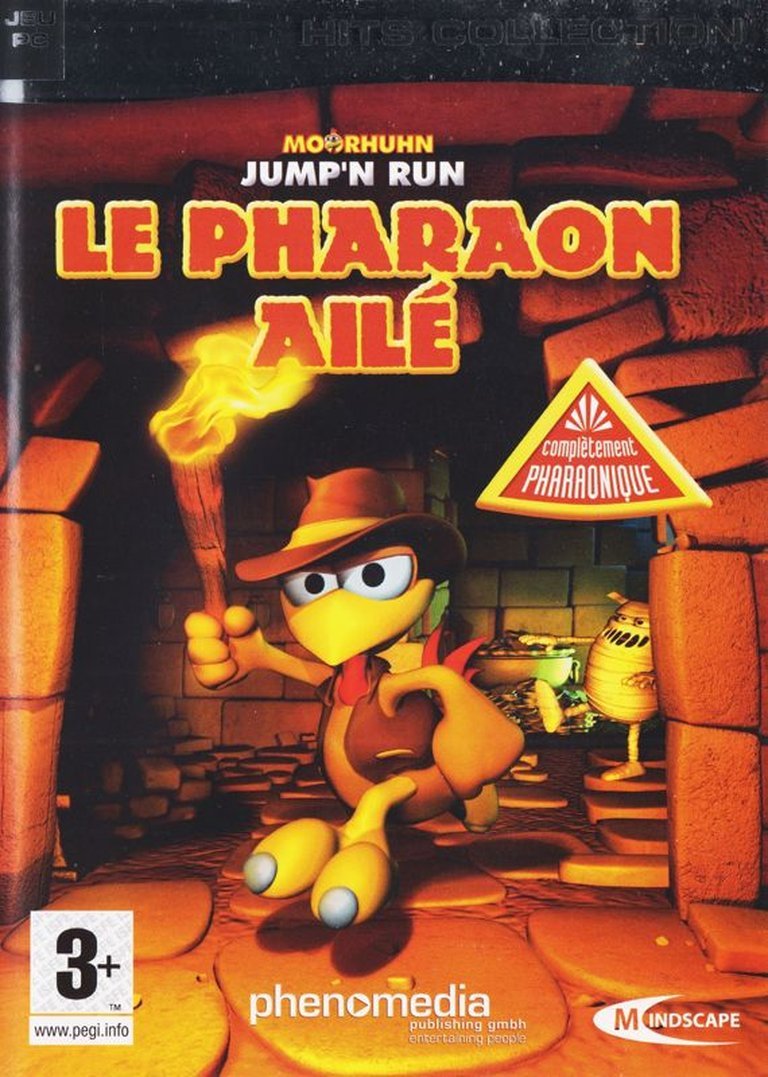
Crazy Chicken: The Winged Pharaoh is a classic 2D platformer set in ancient Egypt, where players take on the role of Crazy Chicken, a treasure-seeking adventurer on a quest to find the tomb of Pharaoh Tut Chick Amun. The game features 30 stages, each containing a clay tablet that provides clues to progress to the next level, with the ultimate goal of collecting all 30 tablets to unlock the pharaoh’s tomb. With side-scrolling action and direct control, players must jump on enemies’ heads to defeat them while navigating through a fantasy-inspired Egyptian setting.
Gameplay Videos
Crazy Chicken: The Winged Pharaoh Free Download
Crazy Chicken: The Winged Pharaoh Reviews & Reception
mobygames.com (40/100): A classic 2D platformer where enemies are taken out by jumping on their heads.
myabandonware.com (96/100): This action game is now abandonware and is set in a fantasy, egypt and platform themes.
Crazy Chicken: The Winged Pharaoh: A Comprehensive Retrospective
Introduction
In the annals of gaming history, few franchises have achieved the cultural ubiquity of Crazy Chicken (Moorhuhn in its native Germany). Born from an unlikely advertising campaign for Johnnie Walker whisky, the series evolved into a multimedia phenomenon, spawning countless sequels, spin-offs, and even merchandise. Among its many iterations, Crazy Chicken: The Winged Pharaoh (2007) stands as a fascinating artifact—a game that embodies the franchise’s whimsical charm while attempting to carve out its own identity within the crowded platformer genre. This review will dissect the game’s development, narrative, mechanics, and legacy, offering a definitive analysis of its place in gaming history.
Development History & Context
The Rise and Fall of Phenomedia
The Crazy Chicken franchise traces its origins to 1998, when Dutch studio Witan developed KippenSchieten as an advergame for Johnnie Walker. The game’s unexpected viral success led to its official release in 1999, catapulting the franchise into German pop culture. Phenomedia AG, the franchise’s steward, rode the wave of early 2000s internet culture, leveraging the game’s shareability and low system requirements to dominate office computers across Germany.
However, Phenomedia’s meteoric rise was followed by a spectacular fall. In 2002, the company’s leadership was embroiled in a securities fraud scandal, leading to insolvency and the eventual transfer of the Crazy Chicken IP to Phenomedia publishing GmbH. By 2007, the franchise had diversified into multiple sub-series, including kart racers, point-and-click adventures, and platformers. The Winged Pharaoh emerged during this transitional period, developed by Phenomedia publishing GmbH and published by Mindscape SA.
Technological Constraints and Design Philosophy
Released in 2007, The Winged Pharaoh was a late entry in the 2D platformer genre, which had largely ceded mainstream popularity to 3D titles. The game’s development was constrained by the technological limitations of its time, particularly its reliance on a 2D scrolling engine. Despite this, the developers sought to innovate within the genre’s confines, incorporating puzzle-solving elements and a broader array of interactive objects than previous Crazy Chicken platformers.
The game’s art style reflects a deliberate embrace of retro aesthetics, blending vibrant, cartoonish visuals with a whimsical interpretation of ancient Egypt. This design choice was likely influenced by the franchise’s roots in casual gaming, where accessibility and charm often outweighed graphical fidelity.
Narrative & Thematic Deep Dive
Plot and Characters
The Winged Pharaoh follows the adventures of Moorhuhn Indy, the franchise’s Indiana Jones parody, as he embarks on a treasure hunt to uncover the tomb of Tut Chick Amun. The narrative is minimalist, serving primarily as a framework for the game’s platforming challenges. Indy’s quest revolves around collecting 30 clay tablets scattered across 30 stages, each containing clues to the next. This structure is reminiscent of classic adventure games, where progression is gated by the acquisition of key items.
Indy’s character design and personality are central to the game’s appeal. Unlike the franchise’s earlier shooting gallery protagonists, Indy is imbued with a distinct personality—a mix of adventurousness and childish naiveté, paired with a general clumsiness that manifests in both dialogue and gameplay. This characterization aligns with the franchise’s broader shift toward narrative-driven spin-offs, such as the Adventure and Jump’n Run sub-series.
Themes and Cultural Context
The game’s Egyptian setting is more than mere window dressing; it serves as a vehicle for exploring themes of exploration, discovery, and the allure of ancient mysteries. The inclusion of hieroglyphics, pyramids, and mummified enemies reflects a playful engagement with Egyptology, albeit one that prioritizes humor over historical accuracy.
Thematically, The Winged Pharaoh also touches on the franchise’s recurring motif of the underdog triumphing against overwhelming odds. Indy, a chicken, is an unlikely hero in a world filled with traps, enemies, and environmental hazards. This juxtaposition of the absurd and the heroic underscores the game’s lighthearted tone, which has been a hallmark of the Crazy Chicken series since its inception.
Gameplay Mechanics & Systems
Core Gameplay Loop
At its core, The Winged Pharaoh is a classic 2D platformer, with players navigating side-scrolling levels by jumping, running, and defeating enemies. The game’s primary innovation lies in its integration of puzzle-solving elements, which require players to interact with objects and decipher clues to progress. This hybrid approach distinguishes it from the franchise’s earlier platformers, such as The Good, The Egg & The Ugly (2005), which focused more on combat and exploration.
The game’s 30 stages are designed with a mix of linear progression and non-linear exploration. Each stage contains a clay tablet, which must be collected to unlock the next level. This structure encourages thorough exploration, as players must scour each stage for hidden paths and interactive objects.
Combat and Enemy Design
Combat in The Winged Pharaoh is straightforward, with players defeating enemies by jumping on their heads—a mechanic borrowed from classics like Super Mario Bros. However, the game introduces a variety of enemy types, each with unique behaviors and weaknesses. For example, some enemies require specific items to defeat, while others can only be bypassed through environmental manipulation.
The game’s boss encounters are a notable departure from the franchise’s usual fare. Unlike the shooting gallery bosses of earlier Crazy Chicken games, The Winged Pharaoh‘s bosses are integrated into the platforming experience, requiring players to navigate complex patterns and exploit environmental hazards to emerge victorious.
Character Progression and Items
While The Winged Pharaoh lacks a traditional progression system, it does feature a variety of items and power-ups that enhance Indy’s abilities. These include tools for solving puzzles, such as keys and levers, as well as combat aids like temporary invincibility. The game’s emphasis on item-based progression reflects its adventure-game influences, rewarding players for exploration and experimentation.
UI and Controls
The game’s user interface is functional but unremarkable, with a minimalist HUD that displays essential information such as health and collected items. The controls are responsive, with Indy’s movements feeling precise and weighty—a crucial factor in a platformer where timing and spatial awareness are paramount.
World-Building, Art & Sound
Setting and Atmosphere
The Winged Pharaoh‘s Egyptian setting is rendered with a vibrant, cartoonish aesthetic that blends historical motifs with whimsical fantasy. The game’s levels are filled with pyramids, hieroglyphics, and traps, all rendered in a style that prioritizes charm over realism. This artistic direction is consistent with the franchise’s broader visual identity, which has always favored accessibility and humor over gritty realism.
The game’s atmosphere is further enhanced by its sound design, which features a mix of playful sound effects and an upbeat, adventurous soundtrack. The audio cues for actions like jumping, collecting items, and defeating enemies are satisfying and responsive, contributing to the game’s overall sense of polish.
Visual Direction
The game’s visuals are a testament to the enduring appeal of 2D platformers. Despite its late release in the genre’s lifecycle, The Winged Pharaoh leverages its retro aesthetic to create a cohesive and engaging world. The character sprites are expressive, with Indy’s animations conveying a sense of personality and humor. The enemy designs, while simple, are varied and memorable, ranging from mummified foes to giant scarabs.
Sound Design
The game’s soundtrack is a standout feature, composed by Henrik Jacoby. The music blends adventurous themes with playful melodies, creating an auditory experience that complements the game’s lighthearted tone. The sound effects are equally well-crafted, with each action accompanied by a satisfying audio cue. This attention to detail enhances the game’s immersive qualities, making the world of The Winged Pharaoh feel alive and dynamic.
Reception & Legacy
Critical and Commercial Reception
Upon its release in 2007, The Winged Pharaoh received mixed reviews. Critics praised its charming visuals and engaging gameplay but noted its lack of innovation within the platformer genre. The game’s reception was further complicated by its release during a period of transition for the Crazy Chicken franchise, which was struggling to maintain its relevance in an increasingly competitive gaming landscape.
Commercially, the game performed modestly, failing to replicate the viral success of the franchise’s earlier entries. This was partly due to the declining popularity of 2D platformers in the late 2000s, as well as the franchise’s waning cultural cachet. Despite this, The Winged Pharaoh found a niche audience among fans of retro platformers and casual gamers.
Influence and Legacy
While The Winged Pharaoh did not leave a significant mark on the broader gaming industry, it remains a notable entry in the Crazy Chicken franchise. Its blend of platforming and puzzle-solving mechanics influenced subsequent entries in the Jump’n Run sub-series, such as Atlantis (2008) and Traps and Treasures (2021). The game’s Egyptian setting also inspired later spin-offs, including Crazy Chicken: Jewel of Darkness (2007), which explored similar themes of ancient mysteries and treasure hunting.
In retrospect, The Winged Pharaoh is best understood as a transitional title—a game that attempted to bridge the gap between the franchise’s casual roots and its aspirations toward more complex gameplay. While it may not have achieved the same level of success as its predecessors, it remains a charming and engaging experience that captures the spirit of the Crazy Chicken series.
Conclusion
The Winged Pharaoh is a game of contradictions—a late-entry 2D platformer released in an era dominated by 3D titles, a casual game with aspirations toward complexity, and a franchise staple that struggled to find its footing in a changing industry. Yet, despite these challenges, the game succeeds in delivering a charming and engaging experience that captures the whimsical spirit of the Crazy Chicken series.
Its blend of platforming, puzzle-solving, and adventure-game mechanics creates a gameplay loop that is both accessible and rewarding. The game’s vibrant visuals, expressive character design, and playful sound design contribute to an atmosphere that is as inviting as it is nostalgic. While it may not have left a lasting mark on the broader gaming landscape, The Winged Pharaoh remains a testament to the enduring appeal of retro platformers and the creative potential of the Crazy Chicken franchise.
In the final analysis, Crazy Chicken: The Winged Pharaoh is a game that defies easy categorization. It is neither a masterpiece nor a failure but rather a fascinating artifact of its time—a game that embodies the strengths and limitations of its era while offering a glimpse into the creative evolution of one of gaming’s most unlikely franchises. For fans of retro platformers and casual gaming, it is a title well worth revisiting.