
Description
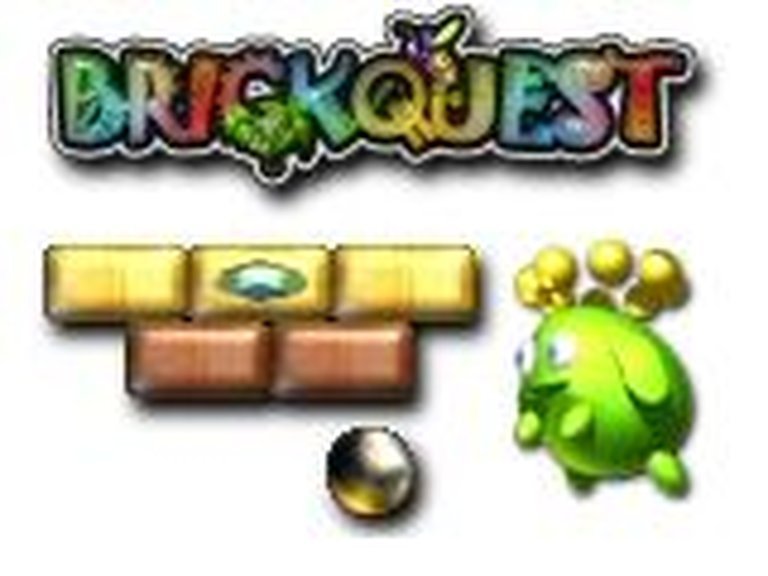
Brickquest is an Arkanoid/Breakout-style arcade game set in a magical world called Selenia, where the Gwamos have been captured by the evil emperor of Grossanglot. Players control the spaceship Liberator, using a paddle to launch a ball and break bricks, which may release helpful or harmful power-ups. The goal is to free the Gwamos by catching a special item with a white bird silhouette, advancing through levels while avoiding losing all lives. The game features fantasy and sci-fi elements, with mechanics like lasers, multiple balls, and fireballs that enhance gameplay.
Brickquest Free Download
PC
Brickquest Cracks & Fixes
Brickquest Reviews & Reception
sockscap64.com (70/100): Brickquest is an Arkanoid / Breakout variant.
Brickquest: A Forgotten Gem in the Breakout Pantheon
Introduction: The Unassuming Hero of Brick-Breaking Games
In the vast, often overlooked landscape of Breakout and Arkanoid clones, Brickquest (2006) stands as a curious artifact—a game that dared to blend the simplicity of paddle-and-ball mechanics with a whimsical narrative and a surprising depth of design. Developed by the obscure French studio UnikGame, Brickquest is more than just another brick-breaker; it is a love letter to the genre, wrapped in a fantastical sci-fi/fantasy hybrid aesthetic. While it never achieved the commercial success or critical acclaim of its predecessors, its charm, inventive power-ups, and understated ambition make it a fascinating case study in indie game design.
This review will dissect Brickquest in exhaustive detail, exploring its development history, narrative quirks, gameplay innovations, and the reasons why it remains a cult curiosity rather than a household name. By the end, we’ll determine whether Brickquest is a hidden masterpiece or a well-intentioned but flawed relic of the mid-2000s indie scene.
Development History & Context: The Birth of a Brick-Breaking Oddity
The Studio Behind the Bricks: UnikGame’s Obscure Legacy
Brickquest was the brainchild of UnikGame, a small French development team consisting of just three individuals:
– Thierry Bouhaben (Concept & Design)
– Patrice Bouhaben (Programming & Design)
– Boody (Music)
The Bouhaben brothers, who also worked on Gamino and later Brickquest 2 (2008), were clearly passionate about arcade-style gameplay. Their approach to Brickquest was straightforward: take the proven Breakout formula and infuse it with personality, progression, and a light narrative—something many clones of the era lacked.
Technological Constraints & the 2006 Gaming Landscape
Released on October 10, 2006, Brickquest arrived in a gaming ecosystem dominated by:
– The rise of Xbox 360 and PlayStation 3 (both launched in late 2005/early 2006).
– The casual gaming boom, fueled by titles like Peggle and Bejeweled.
– The indie revolution, with games like Cave Story (2004) and Braid (2008) redefining what small teams could achieve.
Yet, Brickquest was a Windows-exclusive shareware title, distributed digitally—a model that was still finding its footing. The game’s minimum system requirements (Windows 2000, 128MB RAM, DirectX 6) reflect its modest ambitions, ensuring it could run on nearly any PC of the era.
A Genre Stuck in Time: The Breakout Paradigm
By 2006, the Breakout genre was already three decades old, with Arkanoid (1986) having cemented its legacy. Most iterations since then had been:
– Pure arcade experiences (e.g., DX-Ball, Ricochet).
– Gimmick-driven variants (e.g., Brickles, Alleyway).
Brickquest attempted to elevate the formula by:
1. Adding a narrative framework (rescuing the Gwamos).
2. Introducing a progression system (multiple worlds, difficulty scaling).
3. Expanding power-ups beyond the usual paddle resizing.
However, its shareware distribution and lack of major publisher backing meant it flew under the radar, overshadowed by bigger releases like The Elder Scrolls IV: Oblivion and Gears of War.
Narrative & Thematic Deep Dive: A Whimsical Rescue Mission
Plot Summary: The Plight of the Gwamos
Brickquest’s premise is deceptively simple:
“The Gwamos of the magical world of Selenia have been captured by the evil emperor of Grossanglot. You, in your spaceship Liberator, are going to free them.”
This one-sentence setup is expanded through:
– Level design: Each of the 8 worlds (forests, caves, oceans, etc.) represents a different environment where the Gwamos are imprisoned.
– The Gwamos themselves: Mysterious bird-like creatures whose freedom is the player’s ultimate goal.
Themes: Freedom, Persistence, and the Hero’s Journey
Despite its minimalist storytelling, Brickquest touches on:
1. The Hero’s Journey – The player is the Liberator, a lone savior battling against an oppressive force.
2. Persistence Through Adversity – The game’s difficulty curve and life system reinforce the idea of struggling against overwhelming odds.
3. Whimsy vs. Tyranny – The contrast between the colorful, fantastical Gwamos and the dark, oppressive Grossanglot creates a simple but effective moral dichotomy.
Dialogue & Character: The Silence of the Bricks
Brickquest is almost entirely wordless—there are no cutscenes, no NPC interactions, and no written dialogue. Instead, the narrative is conveyed through:
– Visual cues (the Gwamos’ silhouette in power-ups).
– Level transitions (moving from one world to the next).
– The implicit stakes (losing a life feels like failing a rescue mission).
This minimalist storytelling is both a strength and a weakness:
✅ Strength: It allows players to project their own interpretations onto the game.
❌ Weakness: It lacks the emotional depth of even slightly more narrative-driven arcade games (e.g., Peggle’s cheerful tone).
Gameplay Mechanics & Systems: Breaking Down the Bricks
Core Gameplay Loop: The Arkanoid Foundation
At its heart, Brickquest is a side-view, fixed-screen brick-breaker:
– Paddle Control: The player moves the Liberator (a spaceship-shaped paddle) horizontally.
– Ball Physics: The ball bounces off bricks, walls, and the paddle with realistic (if slightly floaty) physics.
– Brick Destruction: Hitting bricks reduces them to rubble, sometimes dropping power-ups.
Power-Ups: The Game’s True Innovation
Where Brickquest shines is in its diverse and impactful power-up system. Unlike many Breakout clones that rely on paddle size changes and multi-ball, Brickquest introduces:
| Power-Up | Effect | Strategic Impact |
|---|---|---|
| Laser Paddle | Fires projectiles upward | Lets players attack bricks directly |
| Fire Ball | Ball passes through bricks | Speeds up level clearance |
| Catch Ball | Paddle can “grab” the ball | Prevents accidental deaths |
| Small/Large Paddle | Adjusts paddle size | Risk vs. reward in maneuverability |
| Multiple Balls | Adds extra balls | Chaos management |
| Gwamos Silhouette | Frees a Gwamos, ends level | Primary objective |
This variety ensures no two playthroughs feel identical, a rarity in the genre.
Progression & Difficulty: A Well-Structured Quest
Brickquest features:
– 8 distinct worlds, each with 20 levels (160 total).
– 3 difficulty settings, adjusting brick durability and power-up frequency.
– A life system (lose a life if the ball falls; game over if all lives are lost).
The difficulty curve is fair but punishing:
– Early levels ease players in with simple brick layouts.
– Later stages introduce moving bricks, indestructible blocks, and tighter spaces.
Flaws in the Foundation
Despite its strengths, Brickquest suffers from:
1. Repetitive Level Design – Some brick patterns feel recycled.
2. Unforgiving Ball Physics – The ball’s speed and bounce angles can feel unpredictable.
3. Lack of Save System – In an era where even arcade games had checkpoints, Brickquest’s no-save approach feels archaic.
World-Building, Art & Sound: A Fantasy-Sci-Fi Hybrid
Visual Design: A Clash of Aesthetics
Brickquest’s art style is a mix of fantasy and sci-fi:
– The Liberator (player’s paddle) is a spaceship, suggesting a tech-driven rescue mission.
– The Gwamos are ethereal, bird-like creatures, evoking magic and mystery.
– The worlds range from lush forests to mechanical dungeons, giving each stage a distinct feel.
However, the graphics are functional rather than stunning—a product of its 2006 indie budget.
Sound & Music: The Unsung Hero
Composed by Boody, the soundtrack is upbeat and energetic, fitting the game’s fast-paced action. The sound effects (brick breaks, power-up collects) are satisfying, though not groundbreaking.
Atmosphere: A Lonely but Noble Quest
The game’s minimalist presentation creates a lone-hero-against-the-world vibe, reinforced by:
– The absence of NPCs or allies.
– The silent determination of the Gwamos’ rescue.
Reception & Legacy: The Game That Time Forgot
Critical & Commercial Reception: A Ghost in the Machine
Brickquest received almost no mainstream coverage:
– No Metacritic reviews.
– No major gaming outlet features.
– A MobyGames score of “n/a” (due to lack of documented reviews).
Its shareware model and lack of marketing ensured it remained a niche curiosity.
Cult Following & Influence
Despite its obscurity, Brickquest has:
– A small but dedicated fanbase (evidenced by its MobyGames collection count).
– Inspired its sequel, Brickquest 2 (2008), which refined some mechanics.
– Proven that even simple games can have charm if they innovate within their constraints.
Why Did It Fade Into Obscurity?
- Overshadowed by Bigger Titles – 2006 was a monster year for gaming (Oblivion, Gears of War, Okami).
- No Publisher Backing – UnikGame lacked the resources for marketing or distribution.
- Genre Fatigue – By 2006, Breakout clones were a dime a dozen.
Conclusion: A Flawed but Fascinating Relic
Brickquest is not a perfect game, but it is a fascinating one. It takes a 30-year-old formula and injects it with just enough personality and innovation to stand out from the crowd. Its power-up variety, whimsical premise, and punishing-but-fair difficulty make it a hidden gem for fans of the genre.
Final Verdict: 7.5/10 – A Cult Classic Worth Rescuing
Pros:
✅ Inventive power-ups that keep gameplay fresh.
✅ Charming, if minimalist, narrative hook.
✅ Well-structured progression across 160 levels.
Cons:
❌ Repetitive level design in later stages.
❌ No save system in an era where that was unacceptable.
❌ Lack of polish in ball physics and visuals.
Brickquest may not be a masterpiece, but it is a testament to what small teams can achieve when they love their craft. If you’re a fan of Breakout games and crave something with a little more soul, Brickquest is well worth your time.
Where to Play?
– Originally shareware, now abandonware (available on various retro gaming sites).
– Brickquest 2 (2008) refines some mechanics but lacks the original’s charm.
Final Thought:
In a world where indie games are celebrated for their creativity, Brickquest deserves a second look—not as a revolutionary title, but as a humble, heartfelt tribute to the games that came before it.
Would you rescue the Gwamos? 🚀🐦