
- Release Year: 2018
- Platforms: Linux, Macintosh, Windows
- Publisher: JoyBits Ltd.
- Developer: JoyBits Ltd.
- Genre: Puzzle
- Perspective: Fixed / flip-screen
- Game Mode: Single-player
- Gameplay: Hidden object
- Average Score: 30/100
Description
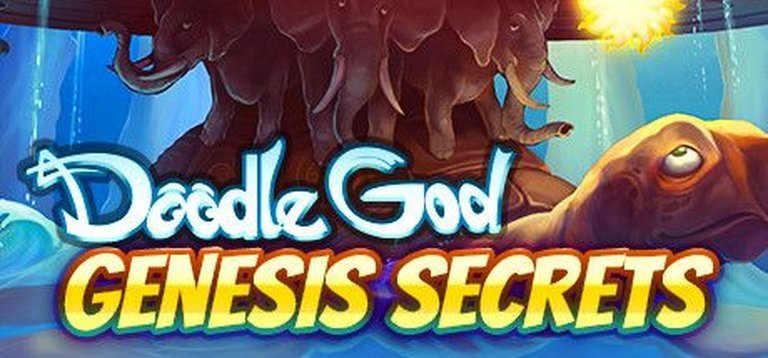
Doodle God: Genesis Secrets is a puzzle game where players create an entire universe by mixing and matching different elements, blending alchemy-style gameplay with hidden object mechanics. Part of the beloved Doodle God series, it offers a unique twist on the classic formula, allowing players of all ages to explore creative combinations and uncover secrets in a playful, god-like sandbox.
Gameplay Videos
Where to Buy Doodle God: Genesis Secrets
PC
Doodle God: Genesis Secrets Patches & Updates
Doodle God: Genesis Secrets Mods
Doodle God: Genesis Secrets Guides & Walkthroughs
Doodle God: Genesis Secrets Reviews & Reception
steambase.io (30/100): This score is calculated from 20 total reviews which give it a rating of Mostly Negative.
store.steampowered.com (30/100): All Reviews: Mostly Negative (20) – 30% of the 20 user reviews for this game are positive.
raijin.gg (30/100): Player reviews have been mostly negative, reflected in a 30% rating that aligns with its modest daily player retention.
Doodle God: Genesis Secrets – A Comprehensive Retrospective
Introduction: The Alchemy of Creation and Chaos
Doodle God: Genesis Secrets (2018) is a curious artifact in the pantheon of casual puzzle games—a title that attempts to blend the addictive simplicity of alchemy-based creation with the methodical scrutiny of hidden object gameplay. Developed by JoyBits Ltd., the game is a spin-off of the long-running Doodle God series, which first emerged in 2010 as a mobile phenomenon. At its core, Genesis Secrets invites players to assume the role of a deity, combining primordial elements to forge increasingly complex concepts, from microorganisms to armies, all while navigating a labyrinth of humorous quotes, unintended consequences, and a new “Hidden Object” mode that purportedly adds depth to the formula.
Yet, beneath its whimsical surface lies a game that has polarized players. With a Steam user score of 30/100 and a “Mostly Negative” reception, Genesis Secrets stands as a cautionary tale about iteration without innovation. This review will dissect the game’s development, narrative ambitions, mechanical execution, and legacy, ultimately asking: Does this god game deserve worship, or is it a false idol in the temple of casual gaming?
Development History & Context: The JoyBits Legacy
The Rise of the Doodle Series
JoyBits Ltd., a Belarusian studio founded in 2009, struck gold with Doodle God (2010), a mobile game that distilled the appeal of alchemy into a bite-sized, addictive loop. The premise was simple: combine fire, water, earth, and air to create new elements, unlocking a vast web of possibilities. The game’s success spawned sequels (Doodle Devil, Doodle Kingdom), spin-offs (Doodle Mafia, Doodle Farm), and even a Blitz series that introduced time-pressure mechanics.
By 2018, the Doodle franchise had become a staple of casual gaming, but it also faced criticism for repetitive design. Genesis Secrets was positioned as a fresh take, integrating a hidden object mode and a visual planet evolution system to differentiate itself from its predecessors.
Technological Constraints & Design Philosophy
Released on May 10, 2018, for Windows, macOS, and Linux, Genesis Secrets was built with modest system requirements:
– OS: Windows 7+, macOS 10.7+, Linux Kernel 3.0+
– Processor: Intel Core 2 Duo / AMD Athlon 64 X2
– RAM: 1GB
– Storage: 200MB
The game’s technical footprint reflects its casual roots—it was designed to run on low-end machines, prioritizing accessibility over graphical fidelity. The FMOD sound engine and fixed/flip-screen visuals further emphasize its mobile-inspired heritage.
The Gaming Landscape in 2018
2018 was a year of indie renaissance and casual gaming saturation. Titles like Stardew Valley (2016) and Celeste (2018) proved that indie games could achieve critical acclaim, while mobile ports and browser-based games flooded digital storefronts. Genesis Secrets entered this ecosystem as a niche alchemy simulator, competing with:
– Little Alchemy (2010) – A direct competitor in the element-combining genre.
– Hidden Object games like Mystery Case Files and Grim Legends.
– Idling/clicker games such as AdVenture Capitalist.
JoyBits’ challenge was to reinvent without alienating—a task Genesis Secrets struggled with, as evidenced by its lukewarm reception.
Narrative & Thematic Deep Dive: Playing God with a Smile
The Premise: Creation as a Puzzle
Genesis Secrets frames itself as a cosmic creation myth. Players begin with the four classical elements (earth, air, fire, water) and gradually unlock 300+ items, from “bacteria” to “zombie apocalypse.” The game’s narrative is minimalist but playful, with two key pillars:
1. The Alchemy of Progress – Each combination feels like a tiny eureka moment, reinforcing the godlike fantasy.
2. Unintended Consequences – Creating “the wheel” might lead to “war,” while “life” can spawn “death.” This mechanic adds a darkly humorous layer, suggesting that even divine power has limits.
The Role of Quotes & Philosophical Whimsy
A defining feature of the Doodle God series is its integration of quotes from philosophers, scientists, and comedians. Genesis Secrets continues this tradition, peppering the experience with hundreds of aphorisms that range from profound to absurd:
– “The only way to discover the limits of the possible is to go beyond them into the impossible.” — Arthur C. Clarke
– “I put a dollar in a change machine. Nothing changed.” — George Carlin
These quotes serve as narrative glue, reinforcing the game’s themes of creation, chaos, and human folly. However, their randomness can also feel disjointed, lacking the cohesion of a traditional story.
Themes: Power, Responsibility, and Absurdity
At its best, Genesis Secrets grapples with big ideas:
– The Hubris of Creation – The game subtly critiques the idea of playing god, as even “harmless” inventions (like the wheel) can spiral into catastrophe.
– Emergent Complexity – The joy of discovery is tempered by the realization that progress is non-linear and unpredictable.
– Absurdist Humor – The juxtaposition of high-minded quotes with ridiculous outcomes (e.g., “love + vampire = Twilight”) keeps the tone lighthearted.
However, these themes are underdeveloped. The game’s lack of a structured narrative or character arcs means its philosophical musings often feel superficial—more like window dressing than a meaningful exploration.
Gameplay Mechanics & Systems: The Alchemy of Repetition
Core Gameplay Loop: Combine, Discover, Repeat
The heart of Genesis Secrets is its element-combining mechanics, which follow a straightforward formula:
1. Select two elements (e.g., fire + water = steam).
2. Unlock new combinations (steam + earth = geyser).
3. Progress through “eras” (Stone Age, Industrial Age, etc.).
This loop is inherently satisfying in short bursts but grows repetitive over time. The game’s 300+ combinations sound impressive, but many feel arbitrary or illogical, leading to frustration when players hit dead ends.
The Hidden Object Mode: A Misguided Experiment?
The marquee addition in Genesis Secrets is its Hidden Object mode, which tasks players with:
– Finding items in cluttered scenes to unlock new elements.
– Solving mini-puzzles (e.g., matching symbols, decoding riddles).
On paper, this should add variety. In practice, it feels tacked on:
– The hidden object segments disrupt the flow of the alchemy gameplay.
– The visual design is muddy, making some objects difficult to distinguish.
– The mode lacks the depth of dedicated hidden object games like Mystery Case Files.
Visual Planet Mode: A Gimmick with Little Payoff
Another new feature is the Visual Planet mode, which supposedly lets players “see their planet come alive.” In reality, this amounts to:
– A static, low-poly globe that changes slightly as new elements are unlocked.
– No interactive depth—it’s purely cosmetic.
This feature feels like a missed opportunity. A dynamic, evolving world could have added immersion, but instead, it’s a passive backdrop.
UI & Progression: Clunky but Functional
The game’s point-and-click interface is simple but dated:
– No controller support (mouse-only).
– Menus are cluttered, especially in later stages with hundreds of elements.
– No in-game tutorial for new mechanics, leading to confusion.
Progression is linear but gated by:
– Completion percentage (encouraging players to find every combination).
– Achievements (e.g., “Master of the Worlds” for completing all eras without hints).
However, bugs plague the achievement system, with reports of unlocks failing to trigger—a recurring complaint in Steam discussions.
World-Building, Art & Sound: Aesthetic Minimalism
Visual Design: Charming but Dated
Genesis Secrets adopts a cartoonish, low-poly art style that aligns with its casual roots:
– Bright, simple colors that evoke a childlike sense of wonder.
– Static backgrounds with minimal animation.
– Element icons that are functional but lack personality.
The Visual Planet mode is the most ambitious artistic feature, but its lack of interactivity makes it feel underwhelming.
Sound Design: Whimsical but Repetitive
The game’s audio is functional but unmemorable:
– FMOD-powered sound effects (bubbles for water, crackles for fire).
– A lighthearted, looped soundtrack that grows tedious.
– No voice acting—quotes are text-only.
The sound design doesn’t detract from the experience, but it also doesn’t elevate it.
Atmosphere: A Mixed Bag
Genesis Secrets aims for a playful, godlike atmosphere, but its execution is uneven:
– The humor and quotes create a whimsical tone.
– The lack of dynamic feedback (e.g., no reactions from the “planet” when disasters occur) makes the world feel sterile.
– The hidden object segments clash with the alchemy gameplay, breaking immersion.
Reception & Legacy: A Fallen God?
Critical & Commercial Reception
Genesis Secrets launched to little fanfare:
– No Metacritic critic reviews (a red flag for a commercial release).
– Steam user score: 30/100 (Mostly Negative).
– Common complaints:
– Buggy achievements (e.g., “Master of the Worlds” not unlocking).
– Technical issues (crashes on launch, missing DLL errors).
– Repetitive gameplay with little innovation.
Despite its flaws, the game found a small, niche audience:
– 621 units sold on Steam (per Raijin.gg).
– 1.1K wishlists, suggesting modest interest.
– Included in JoyBits bundles, indicating it remains a catalog filler.
Influence & Industry Impact
Genesis Secrets has had minimal influence on the gaming landscape:
– It did not revitalize the Doodle God series, which continued with Doodle God: Universe (2021).
– Its hidden object mechanics were not adopted by later alchemy games.
– It serves as a cautionary example of how iterative design without meaningful innovation can backfire.
The Doodle Series’ Evolution
The Doodle franchise has since shifted focus:
– Doodle God: Universe (2021) returned to pure alchemy mechanics.
– Doodle Devil: 3volution (2021) explored dark humor and destruction.
– JoyBits has diversified into other genres (Doodle Mafia, Doodle Farm), suggesting the alchemy formula may be exhausted.
Conclusion: A Flawed but Fascinating Experiment
Doodle God: Genesis Secrets is a game of contradictions:
– It expands the Doodle God formula with new modes but fails to refine the core experience.
– It flirts with deep themes (creation, chaos, responsibility) but lacks narrative cohesion.
– It targets casual players but frustrates them with bugs and arbitrary design choices.
Final Verdict: 5/10 – “A Curio for Completionists”
Pros:
✅ Addictive alchemy mechanics in short bursts.
✅ Humorous quotes and unintended consequences.
✅ Low system requirements make it accessible.
Cons:
❌ Hidden Object mode feels tacked on and poorly executed.
❌ Repetitive, illogical combinations frustrate progression.
❌ Buggy achievements and technical issues mar the experience.
❌ Visual Planet mode is underwhelming.
Who Should Play It?
- Fans of the Doodle God series who want more of the same.
- Casual puzzle enthusiasts looking for a low-stakes time-waster.
- Completionists who enjoy unlocking every combination.
Who Should Avoid It?
- Players seeking deep narrative or innovation.
- Those who dislike repetitive, trial-and-error gameplay.
- Anyone frustrated by buggy achievement systems.
Legacy: A Footnote in Gaming History
Doodle God: Genesis Secrets is not a bad game, but it’s not a great one either. It’s a missed opportunity—a title that could have evolved the alchemy genre but instead played it safe. In the grand tapestry of gaming, it remains a minor curiosity, remembered more for its flaws than its triumphs.
For those who love the idea of playing god, Little Alchemy or even the original Doodle God may be better alternatives. But if you’re a die-hard fan or a casual puzzle aficionado, Genesis Secrets offers a few hours of diverting, if flawed, fun.
Final Score: ★★☆☆☆ (2.5/5) – “A Divine Experiment Gone Awry”