
- Release Year: 2021
- Platforms: Windows
- Publisher: DigiPen (USA) Corp.
- Developer: Asvaq Games
- Genre: Action
- Perspective: Behind view
- Game Mode: Single-player
- Gameplay: Platform, Puzzle elements
- Setting: Futuristic, Sci-fi
- Average Score: 65/100
Description
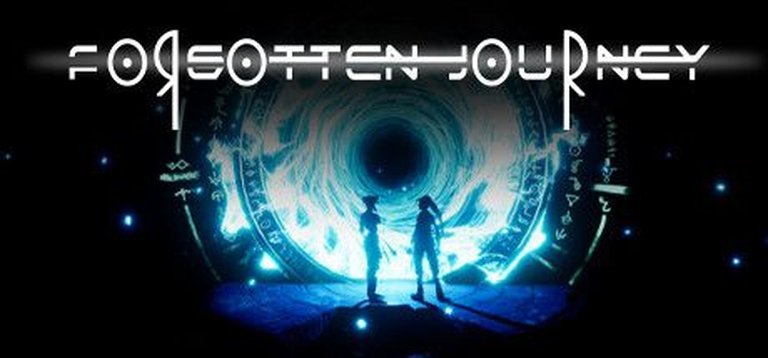
Forgotten Journey is a puzzle-oriented platformer set in a vibrant, sci-fi world where the protagonist, Mainkah, accidentally opens an interstellar gate and finds herself stranded in an unknown realm. Players navigate a linear path, solving puzzles, jumping, and climbing with the aid of an AI companion to uncover the mysteries of this alien landscape and find a way home. Developed by Asvaq Games using Unreal Engine 4, the game blends exploration, platforming, and puzzle-solving in a visually engaging adventure.
Gameplay Videos
Where to Buy Forgotten Journey
Forgotten Journey Guides & Walkthroughs
Forgotten Journey Reviews & Reception
steambase.io (66/100): Forgotten Journey has earned a Player Score of 66 / 100.
raijin.gg (65.74/100): Forgotten Journey holds a 65.74% positive rating on Steam, based on 108 player reviews.
Forgotten Journey: A Student Project That Dares to Dream
Introduction
In the vast, ever-expanding universe of indie games, Forgotten Journey stands as a testament to the ambition and creativity of student developers. Released in 2021 by Asvaq Games, a team of fourth-year students at DigiPen Institute of Technology Europe-Bilbao, this puzzle-oriented platformer is a labor of love that blends exploration, problem-solving, and a touch of sci-fi whimsy. While it may not have set the world alight upon release, Forgotten Journey is a fascinating case study in what a small, passionate team can achieve within the constraints of a nine-month development cycle. This review will delve deep into the game’s development history, narrative, gameplay mechanics, world-building, and legacy, offering a comprehensive analysis of its strengths, weaknesses, and place in the broader gaming landscape.
Development History & Context
The Birth of Asvaq Games
Forgotten Journey is the brainchild of Asvaq Games, a student team operating under the umbrella of DigiPen Institute of Technology Europe-Bilbao. DigiPen is renowned for its rigorous game development programs, and Forgotten Journey is a prime example of the institute’s hands-on, project-based approach to education. The game was developed over a nine-month period, a relatively short timeframe for a project of this scope, which speaks volumes about the team’s dedication and efficiency.
The choice of Unreal Engine 4 as the development platform was a strategic one. Unreal Engine 4’s robust toolset and visual fidelity allowed the team to create a game that punches above its weight in terms of aesthetics and technical polish. The engine’s Blueprints visual scripting system likely played a crucial role in streamlining the development process, enabling the team to iterate quickly on gameplay mechanics and level design.
Technological Constraints and Innovations
Developing a game within the confines of an academic schedule presents unique challenges. The team had to balance ambition with feasibility, ensuring that their vision could be realized within the allotted time. This constraint is evident in the game’s linear structure and relatively modest scope, but it also forced the team to focus on refining core mechanics rather than sprawling open-world design.
One of the standout features of Forgotten Journey is its use of an AI companion, a mechanic that adds depth to the puzzle-solving experience. The companion, while not revolutionary, is a clever way to introduce cooperative gameplay elements without requiring multiplayer functionality. This innovation is a testament to the team’s ability to think creatively within their limitations.
The Gaming Landscape in 2021
Forgotten Journey entered a gaming market that was already saturated with indie platformers. Games like Celeste, Hollow Knight, and Ori and the Will of the Wisps had set a high bar for the genre, making it difficult for newcomers to stand out. Additionally, the COVID-19 pandemic had disrupted traditional marketing and distribution channels, making it harder for indie games to gain visibility.
Despite these challenges, Forgotten Journey carved out a niche for itself by leveraging its unique blend of puzzle-solving and platforming. The game’s free-to-play model on Steam also helped it reach a wider audience, although this approach comes with its own set of challenges, such as monetization and player retention.
Narrative & Thematic Deep Dive
Plot Overview
Forgotten Journey follows the story of Mynka (also referred to as Mainkah in some sources), a young woman who accidentally opens an interstellar gate while performing repairs. This mishap transports her to an unknown world, where she must navigate a series of puzzles and platforming challenges to find her way home. The premise is simple but effective, providing a clear motivation for the player’s actions and a sense of urgency to the proceedings.
Characters and Dialogue
Mynka is a compelling protagonist, not least because she is one of the few female leads in a genre often dominated by male characters. Her design is functional and expressive, allowing players to empathize with her plight. The AI companion, while not a fully fleshed-out character, serves as a useful gameplay mechanic and a source of occasional humor and guidance.
The dialogue in Forgotten Journey is minimal but effective. The game relies more on environmental storytelling and visual cues than on lengthy exposition, which is a smart choice given its puzzle-platformer roots. The occasional snippets of dialogue that do appear are well-written and serve to deepen the player’s connection to Mynka and her journey.
Themes and Symbolism
At its core, Forgotten Journey is a story about discovery and perseverance. Mynka’s accidental transportation to a foreign world mirrors the player’s own journey through the game’s challenges. The puzzles she must solve are not just obstacles but opportunities for growth and learning, reflecting the broader theme of overcoming adversity through ingenuity and determination.
The game’s sci-fi setting also allows for exploration of themes related to technology and its unintended consequences. Mynka’s initial mistake—opening the interstellar gate—serves as a cautionary tale about the dangers of tampering with forces beyond one’s understanding. However, the game ultimately presents a hopeful message, suggesting that even in the face of such mistakes, redemption and resolution are possible.
Gameplay Mechanics & Systems
Core Gameplay Loop
Forgotten Journey is, at its heart, a puzzle-platformer. The core gameplay loop involves navigating Mynka through a series of linear levels, each filled with platforming challenges and environmental puzzles. The game’s linear structure is both a strength and a weakness. On the one hand, it allows for tightly designed levels with a clear progression of difficulty. On the other, it limits the game’s replayability and exploration potential.
The platforming mechanics are solid, if not groundbreaking. Mynka’s movement is responsive, and the controls are intuitive, making it easy for players to chain together jumps, climbs, and other acrobatic maneuvers. The game’s physics, powered by Nvidia’s PhysX engine, are well-implemented, ensuring that interactions with the environment feel natural and satisfying.
Puzzle Design
The puzzles in Forgotten Journey are the game’s standout feature. They are cleverly designed, requiring players to think critically about their surroundings and the tools at their disposal. The AI companion plays a crucial role in many of these puzzles, often serving as a mobile platform or a means of activating switches and mechanisms.
One of the most impressive aspects of the puzzle design is the way it integrates seamlessly with the platforming elements. Rather than feeling like separate challenges, the puzzles and platforming sections flow into one another, creating a cohesive and engaging experience. This integration is a testament to the team’s thoughtful level design and attention to detail.
Character Progression and UI
Forgotten Journey does not feature a traditional character progression system. Instead, the game’s challenge comes from the increasing complexity of its puzzles and platforming sections. This approach is refreshing in an era where many games rely on RPG-like progression mechanics to gate content and artificially extend playtime.
The user interface (UI) is clean and unobtrusive, providing players with the information they need without overwhelming them. The minimalist design ensures that the focus remains on the gameplay and the game’s stunning visuals.
Innovative and Flawed Systems
While Forgotten Journey is a polished and enjoyable experience, it is not without its flaws. One of the most significant issues is the game’s occasional technical hiccups. Players have reported bugs related to camera angles, particularly during puzzle sections where precise positioning is required. These issues can be frustrating, especially in a game that otherwise prides itself on tight, responsive controls.
Another area where the game falls short is in its lack of accessibility options. The controls are not fully rebindable, which can be a significant barrier for players with non-standard keyboard layouts or disabilities. This oversight is particularly glaring given the game’s emphasis on precision platforming and puzzle-solving.
World-Building, Art & Sound
Setting and Atmosphere
Forgotten Journey takes place in a vibrant, otherworldly landscape filled with lush forests, towering ruins, and mysterious structures. The game’s setting is a feast for the eyes, with each level offering a distinct visual identity. The sci-fi elements are subtly integrated into the environment, creating a sense of wonder and discovery.
The atmosphere is further enhanced by the game’s use of lighting and color. The levels are bathed in a warm, inviting glow, which contrasts nicely with the cooler tones of the game’s more futuristic elements. This contrast helps to create a sense of balance between the natural and the artificial, reinforcing the game’s themes of exploration and discovery.
Visual Direction
The visual direction in Forgotten Journey is top-notch, with a clear emphasis on creating a cohesive and immersive world. The game’s art style is a blend of realistic and stylized elements, with detailed textures and models that bring the environment to life. The character designs are equally impressive, with Mynka and her AI companion both standing out as memorable and expressive figures.
The use of Unreal Engine 4 is evident in the game’s visual fidelity. The engine’s advanced lighting and particle effects are used to great effect, creating a world that feels alive and dynamic. The attention to detail is particularly impressive given the game’s status as a student project, and it speaks to the team’s dedication and skill.
Sound Design and Music
The sound design in Forgotten Journey is understated but effective. The game’s ambient soundscape is filled with the rustling of leaves, the distant calls of unknown creatures, and the hum of ancient machinery. These sounds help to immerse the player in the game’s world, creating a sense of place and atmosphere.
The music, while not particularly memorable, is well-suited to the game’s tone. The soundtrack is a mix of ambient and orchestral pieces, with a focus on creating a sense of wonder and adventure. The music swells and recedes in response to the player’s actions, adding an extra layer of dynamism to the experience.
Reception & Legacy
Critical and Commercial Reception
Forgotten Journey received a mixed reception upon its release in July 2021. On Steam, the game holds a “Mixed” rating based on 108 user reviews, with 65% of those reviews being positive. This divided response is not uncommon for indie games, particularly those developed by student teams with limited resources.
Critics and players alike praised the game’s visuals, puzzle design, and overall polish. The game’s linear structure and lack of character progression were noted as potential drawbacks, but these were generally outweighed by the game’s strengths. The technical issues, particularly the camera bugs, were a common point of criticism, with some players finding them severe enough to hinder their enjoyment of the game.
Commercially, Forgotten Journey has had modest success. The game’s free-to-play model on Steam has helped it reach a wide audience, but it has not achieved the same level of visibility or acclaim as some of its contemporaries. As of 2026, the game has sold approximately 11,420 copies, a respectable figure for a student project but far from a commercial blockbuster.
Evolution of Reputation
In the years since its release, Forgotten Journey has developed a small but dedicated fanbase. The game’s strengths—its puzzle design, visuals, and overall polish—have been increasingly recognized, and it has become a cult favorite among fans of the puzzle-platformer genre. The game’s reputation has also benefited from its status as a student project, with many players appreciating the ambition and creativity on display.
Influence on Subsequent Games
While Forgotten Journey has not had a direct influence on the broader gaming industry, it serves as an inspiring example of what a small, passionate team can achieve. The game’s success has likely encouraged other student developers to pursue their own ambitious projects, and its innovative use of an AI companion has potential applications in future puzzle-platformers.
Conclusion
Forgotten Journey is a remarkable achievement, particularly when viewed through the lens of its development as a student project. The game’s strengths—its clever puzzle design, stunning visuals, and cohesive world-building—far outweigh its weaknesses, which are largely the result of its limited scope and technical constraints. While it may not be a perfect game, it is a testament to the power of creativity and ambition, and it deserves to be remembered as a standout example of indie game development.
Final Verdict: Forgotten Journey is a hidden gem in the puzzle-platformer genre, offering a polished and engaging experience that belies its student project origins. While it may not have the same level of polish or depth as some of its AAA counterparts, it is a game that rewards patience, ingenuity, and a sense of adventure. For fans of the genre, it is well worth the journey. 7.5/10