
- Release Year: 2017
- Platforms: Windows
- Genre: Action
- Perspective: 1st-person
- Game Mode: Single-player
- Gameplay: Platform
- Average Score: 62/100
- VR Support: Yes
Description
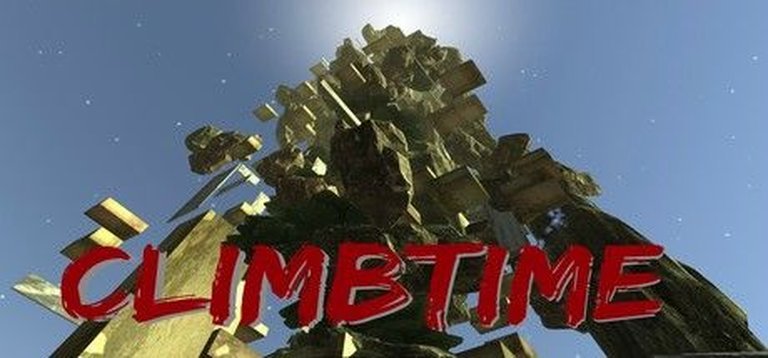
Climbtime is a first-person action-platformer game released in 2017, offering a mix of climbing, gliding, and exploration across various modes. Players can engage in time-attack climbing challenges, score-based gliding runs, crystal-hunting adventures, or freely explore realistic mountain and canyon terrains inspired by real-world locations like the Grand Canyon and Yosemite. The game supports VR and traditional controls, providing an immersive experience with diverse gameplay mechanics.
Where to Buy Climbtime
PC
Climbtime Guides & Walkthroughs
Climbtime Reviews & Reception
steambase.io (62/100): A Mixed rating with 62% positive reviews.
store.steampowered.com (62/100): Mixed reviews with 62% positive feedback.
Climbtime: A Vertical Odyssey Through Procedural Peaks
Introduction: The Lure of the Ascent
In the crowded landscape of indie games, Climbtime (2017) stands as a curious artifact—a vertical slice of ambition, procedural generation, and unfulfilled potential. Developed by the obscure studio Saluda Systems, this first-person platformer dared to blend the adrenaline of parkour with the serene beauty of real-world landscapes, all while experimenting with VR integration. Yet, despite its innovative premise, Climbtime remains a footnote in gaming history, a title that slipped through the cracks of Steam’s vast library. This review seeks to ascend its procedural towers, dissect its mechanics, and understand why it failed to grip the gaming community’s imagination.
Development History & Context: A Solo Climber in a Crowded Canyon
Climbtime emerged in May 2017, a time when the indie scene was flooded with experimental titles leveraging Unity’s accessibility. The game’s development was shrouded in mystery, with no pre-release marketing or developer diaries. Saluda Systems, a studio with no prior notable releases, crafted Climbtime as a passion project, blending two burgeoning trends: procedural generation and VR support.
Technologically, Climbtime was constrained by its modest scope. Built in Unity, it lacked the polish of contemporaries like Mirror’s Edge or Dying Light, instead opting for a stripped-down, arcade-like experience. The gaming landscape of 2017 was dominated by narrative-driven indies (Night in the Woods, Hollow Knight) and battle royales (PUBG), leaving little room for a niche climbing simulator. VR, while growing, was still a novelty, and Climbtime’s half-baked implementation failed to capitalize on the medium’s strengths.
Narrative & Thematic Deep Dive: The Silence of the Summit
Climbtime is a game of pure mechanics, devoid of narrative or thematic depth. There are no characters, no dialogue, no lore—just the player, the mountain, and the clock. This minimalism could be seen as a strength, evoking the meditative solitude of climbing, but it also renders the experience emotionally hollow.
The game’s four modes (Climb, Glide, Crystal Hunt, Explore) offer superficial variety, but none delve into storytelling. The Explore mode, which models real-world terrains like the Grand Canyon and Yosemite, hints at a missed opportunity—imagine a game that blended climbing with environmental storytelling, à la Firewatch or The Witness. Instead, Climbtime remains a sterile playground, its procedural towers lacking the soul of their real-world counterparts.
Gameplay Mechanics & Systems: The Thrill and Frustration of the Climb
Core Gameplay Loop: A Race Against Gravity
Climbtime’s primary mode, Climb, is a time-attack challenge where players scale procedurally generated towers to reach a blue cube at the summit. The controls are simple:
– Jump (spacebar)
– Grab (left-click)
– Boost (shift)
The climbing mechanics are janky yet oddly satisfying, requiring precise timing to chain jumps and grabs. The procedural generation ensures no two climbs are identical, but the lack of handholds or environmental cues makes progression feel arbitrary. Players often flail wildly, hoping to latch onto an invisible ledge—a far cry from the deliberate movement of Assassin’s Creed or Tomb Raider.
Glide Mode: A Fleeting Moment of Grace
The Glide mode offers a score-attack variant, where players descend while flying close to rock formations. This mode is the game’s most polished, with a risk-reward system that punishes reckless speed but rewards precision. The sensation of soaring through canyons is briefly exhilarating, but technical issues (e.g., sudden crashes) mar the experience.
Crystal Hunt & Explore: Missed Potential
- Crystal Hunt tasks players with finding 10 hidden crystals, but the sound-based detection system is unreliable, leading to frustrating searches.
- Explore mode is the most ambitious, featuring real-world terrains, but it’s barren—no objectives, no secrets, just empty vistas.
VR Support: A Broken Promise
Climbtime’s VR implementation is half-hearted. Oculus Rift support was reportedly broken at launch, and Vive users complained of jittery controls and motion sickness. The game’s Steam discussions reveal a community begging for fixes, but updates were sparse.
World-Building, Art & Sound: The Beauty of the Void
Visually, Climbtime is a mixed bag. The procedural towers are repetitive, but the Explore mode’s real-world terrains are striking, if underutilized. The art direction leans into minimalism, with muted colors and simple textures that evoke a dreamlike ascent.
The sound design is functional but forgettable. The Crystal Hunt mode’s audio cues are the sole standout, growing louder as players near their target. Otherwise, the game is silent, lacking even a basic soundtrack—a missed opportunity to amplify the tension of the climb.
Reception & Legacy: A Game That Fell Through the Cracks
Climbtime’s reception was tepid. On Steam, it holds a Mixed (62%) rating from 53 reviews, with players praising its novelty but criticizing its janky controls and lack of depth. Common complaints included:
– Frequent crashes (especially in VR)
– Unresponsive controls
– Repetitive gameplay
Commercially, it was a non-entity, buried under Steam’s algorithmic deluge. Its legacy is negligible—no sequels, no spiritual successors, no influence on the climbing genre. It remains a curio, a game that could have been great with more polish and ambition.
Conclusion: A Summit Worth the Climb?
Climbtime is a flawed gem—a game with a brilliant core idea hamstrung by technical limitations and lack of vision. Its procedural climbing is addictive in bursts, but the absence of narrative, progression, or meaningful variety makes it hard to recommend.
Final Verdict: 5/10 – A Noble Failure
For those curious about experimental climbing mechanics, Climbtime offers a free, if frustrating, experience. But as a historical artifact, it serves as a reminder of the risks and rewards of indie development—a game that dared to climb, only to slip and fall into obscurity.
Should You Play It?
– Yes, if: You enjoy janky physics, procedural challenges, or VR curiosities.
– No, if: You seek polish, narrative, or lasting engagement.
Climbtime is a footnote, but in its brief moments of grace, it hints at what could have been—a vertical masterpiece, lost to the sands of Steam’s endless library.