
- Release Year: 2019
- Platforms: PlayStation 4, Windows, Xbox One
- Publisher: Koei Tecmo America Corp., Koei Tecmo Games Co., Ltd.
- Genre: Compilation
Description
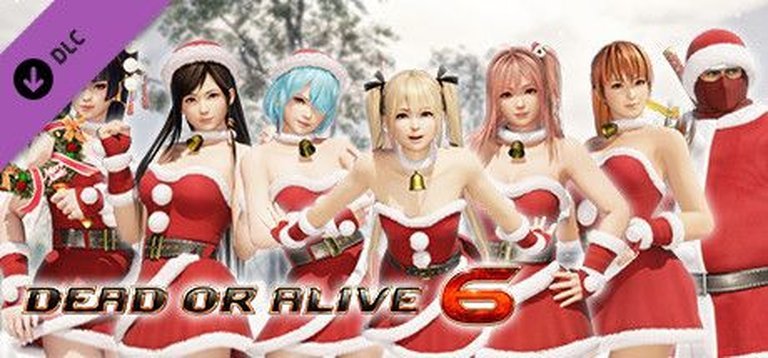
‘Dead or Alive 6: Santa’s Helper Costume Set’ is a downloadable content pack for the fighting game ‘Dead or Alive 6’, released in 2019. This compilation includes festive Christmas-themed costumes for the game’s roster of characters, allowing players to customize their fighters with holiday-inspired outfits. The set features a variety of designs tailored to each character, adding a seasonal twist to the game’s visual style while maintaining the core gameplay mechanics of the series.
Gameplay Videos
Dead or Alive 6: Santa’s Helper Costume Set Mods
Dead or Alive 6: Santa’s Helper Costume Set Guides & Walkthroughs
Dead or Alive 6: Santa’s Helper Costume Set – A Festive Deep Dive into Fighting Game Fashion
Introduction: The Legacy of Dead or Alive and the Art of Costume DLC
The Dead or Alive series has long been a cornerstone of the fighting game genre, renowned for its fast-paced combat, intricate counter systems, and—perhaps most controversially—its emphasis on character customization. Since its inception in 1996, the franchise has evolved from a technical marvel in 3D fighting to a cultural phenomenon, blending martial arts precision with a distinct aesthetic flair. Dead or Alive 6 (2019), developed by Team Ninja and published by Koei Tecmo, continues this tradition, refining mechanics while expanding its already vast wardrobe of alternate costumes.
Enter the Santa’s Helper Costume Set, a festive DLC pack released on December 4, 2019, across Windows, PlayStation 4, and Xbox One. This compilation is more than just a seasonal cash grab; it’s a microcosm of the Dead or Alive philosophy—where combat and cosplay intersect in a spectacle of style and strategy. With 28 costumes spanning the entire roster (save for DLC crossover characters Mai Shiranui and Kula Diamond), this set is a celebration of holiday-themed excess, offering players a chance to deck their fighters in red, green, and black variations of Santa’s Helper attire.
But what does this DLC mean in the broader context of Dead or Alive 6? Is it a mere novelty, or does it reflect deeper themes of character identity, player expression, and the commercialization of fighting games? This review will dissect the Santa’s Helper Costume Set from every angle—its development, narrative implications (or lack thereof), gameplay impact, artistic design, reception, and legacy—ultimately answering whether it’s a worthwhile addition to the DOA6 experience.
Development History & Context: The Business of Holiday Cheer
The Studio Behind the Stockings: Team Ninja’s DLC Machine
Team Ninja, the development arm of Koei Tecmo, has built a reputation for two things: razor-sharp combat mechanics and an aggressive monetization strategy. The Dead or Alive series, alongside Ninja Gaiden and Nioh, showcases their technical prowess, but it’s their approach to post-launch content that often sparks debate. DOA6 is no exception. Released in March 2019, the base game was met with mixed reactions—praised for its refined Triangle System (a rock-paper-scissors mechanic of strikes, throws, and holds) but criticized for its toned-down visuals compared to DOA5 and a perceived lack of content at launch.
The solution? A deluge of DLC. By December 2019, DOA6 had already seen multiple costume packs, including the Bunny Costume Set, Hot Summer Costume Set, and School Uniform Set. The Santa’s Helper Costume Set arrived as part of this ongoing strategy, capitalizing on the holiday season to drive engagement and revenue. Priced at $23.99 for the full set (or $1.99 per individual costume), it’s a classic example of Team Ninja’s “à la carte” approach—offering players the choice between bulk savings or targeted purchases.
Technological Constraints and Design Philosophy
From a technical standpoint, the Santa’s Helper Costume Set is a straightforward implementation. The costumes are essentially reskins of existing character models, leveraging DOA6’s robust character customization engine. The engine, which allows for dynamic cloth physics and detailed texture mapping, ensures that each costume—whether it’s Kasumi’s frilly red dress or Bass’s black-and-red Santa suit—moves fluidly during combat.
However, the DLC’s development wasn’t without challenges. The exclusion of Mai Shiranui and Kula Diamond (characters from The King of Fighters and Fatal Fury crossovers) highlights the complexities of licensing and asset integration. Additionally, the need for players to own the base characters before purchasing their respective costumes underscores the fragmented nature of DOA6’s monetization. This “nickel-and-dime” approach, while profitable, has been a point of contention among fans.
The Gaming Landscape in 2019: DLC as the Norm
By 2019, DLC had become an entrenched part of the gaming industry. Titles like Street Fighter V, Mortal Kombat 11, and Tekken 7 all embraced post-launch content, though their approaches varied. Street Fighter V’s controversial “fight money” system and Mortal Kombat 11’s Kombat Packs set precedents for how fighting games could monetize cosmetics and characters.
DOA6’s Santa’s Helper Costume Set fits squarely within this trend, but with a twist: it’s unabashedly festive. Unlike Mortal Kombat’s horror-themed skins or Tekken’s anime crossovers, DOA6’s holiday DLC leans into whimsy, offering a temporary escape from the series’ usual tone of high-stakes tournaments and ninja rivalries. It’s a reminder that, at its core, Dead or Alive has always been as much about spectacle as it is about competition.
Narrative & Thematic Deep Dive: Do Costumes Tell a Story?
The Illusion of Narrative in Dead or Alive 6
Dead or Alive 6’s story mode, The New Generation, is a convoluted affair involving cloning, corporate espionage, and supernatural ninjutsu. It’s serviceable but hardly the reason players flock to the series. Instead, DOA’s narrative strength lies in its character interactions—rivalries like Kasumi vs. Ayane or Hayabusa vs. Raidou, which play out in brief pre- and post-fight dialogues.
The Santa’s Helper Costume Set contributes precisely zero to this narrative. There are no special intros, no holiday-themed stages, and no lore explanations for why a hardened assassin like Bayman or a stoic ninja like Hayabusa would don a Santa outfit. This isn’t a flaw, per se—it’s an acknowledgment of what DOA’s DLC is meant to be: pure, unadulterated fan service.
Thematic Analysis: Holiday Cheer or Commercial Cynicism?
The costumes themselves are a study in contrast. For female characters like Kasumi, Helena, and Marie Rose, the designs lean heavily into the “sexy Santa” trope—short skirts, thigh-high stockings, and cleavage-baring tops. Male characters, on the other hand, get more modest (though no less ridiculous) interpretations: Zack’s outfit is a full Santa suit, while Jann Lee’s is a sleeveless, muscle-showcasing variant.
This dichotomy raises questions about the DLC’s thematic intent. Is it a celebration of holiday cheer, or does it reinforce gendered stereotypes in character design? The answer, as with much of DOA’s aesthetic, is both. The series has never shied away from sexualization, and the Santa’s Helper Costume Set is no exception. Yet, there’s an undeniable charm to seeing characters like the stoic Hayate or the mysterious Phase-4 in festive attire—it humanizes them in a way the main story never does.
Character-Specific Breakdown: Who Wears It Best?
Let’s examine a few standout costumes:
- Kasumi: Her red-and-white dress with a fur-trimmed miniskirt is the quintessential “sexy Santa” look, complete with a Santa hat that somehow stays on during her lightning-fast ninjutsu.
- Bass: The only character with two variants (red and black), his outfits are among the most detailed, featuring a Santa jacket over a muscle shirt and cargo pants—a bizarre but oddly fitting choice for the hulking wrestler.
- Phase-4: Her green dress (a rare non-red option) stands out, offering a refreshing contrast to the sea of crimson. It’s a small but appreciated nod to variety.
- Rig: The hulking grappler’s Santa suit is stretched to its limits, emphasizing his massive frame in a way that’s both humorous and intimidating.
These designs don’t just change how characters look—they subtly alter how players perceive them. A Santa-outfitted Hayabusa is still a lethal ninja, but there’s an inherent absurdity to his appearance that can make fights feel more lighthearted.
Gameplay Mechanics & Systems: Do Costumes Affect Combat?
The Illusion of Impact: Purely Cosmetic, But Not Without Consequence
The Santa’s Helper Costume Set is, first and foremost, a cosmetic DLC. It doesn’t alter move sets, stats, or gameplay mechanics in any way. However, to dismiss it as “just skins” would be to overlook the psychological and meta-effects it has on the DOA6 experience.
Player Psychology and the “Santa Effect”
Fighting games are as much about mindset as they are about execution. A player controlling a Santa-clad Kasumi might approach a match with a different mentality than usual—perhaps more relaxed, perhaps more aggressive, depending on their attachment to the costume. There’s also the opponent’s perspective: facing a Santa-outfitted Bayman can be disorienting, breaking the usual rhythm of a match.
This phenomenon, which we’ll call the “Santa Effect,” is difficult to quantify but undeniable. Costumes in fighting games serve as a form of self-expression, and the Santa’s Helper Set amplifies this by tying that expression to a specific, time-sensitive theme.
UI and Customization: A Seamless (If Shallow) Integration
DOA6’s costume selection menu is straightforward, allowing players to equip their purchased outfits with ease. The Santa’s Helper Costume Set integrates seamlessly into this system, with no additional UI clutter or confusion. However, the lack of a dedicated “Holiday” filter or category means players must manually scroll through their wardrobe to find the festive attire—a minor oversight that highlights the DLC’s status as an afterthought in the grander scheme of the game’s design.
The Premium Ticket System: A Double-Edged Sword
One of the more interesting aspects of the Santa’s Helper Costume Set is its compatibility with DOA6’s Premium Ticket system. Introduced as part of the game’s monetization strategy, Premium Tickets allow players to purchase individual costumes from sets they already own, ostensibly offering more flexibility.
In practice, this system is a double-edged sword. On one hand, it prevents players from accidentally repurchasing content. On the other, it reinforces the idea that DOA6’s DLC ecosystem is designed to extract maximum value from its player base. The Santa’s Helper Costume Set is no exception—it’s a reminder that, in the world of modern fighting games, everything is for sale.
World-Building, Art & Sound: A Festive Feast for the Senses
Visual Design: Holiday Kitsch Meets Fighting Game Flair
The Santa’s Helper Costume Set is a masterclass in thematic consistency. Each costume adheres to a holiday palette—reds, greens, whites, and blacks—while retaining the unique silhouettes and design languages of the characters. Kasumi’s outfit, for example, incorporates elements of her traditional ninja garb (like fingerless gloves) into the Santa motif, ensuring she’s still recognizable even in festive attire.
The attention to detail is impressive. Fabric physics ensure that skirts flutter and stockings stretch realistically during combat. Textures are crisp, with fur trims and metallic buckles adding depth to the designs. Even the Santa hats, which one might expect to clip through characters’ heads during animations, stay remarkably well-behaved.
Sound Design: Silence is Golden (Because There’s Nothing New)
Here’s where the Santa’s Helper Costume Set falters: sound design. Unlike some DLC packs that introduce new voice lines or stage music, this set offers nothing in the way of audio enhancements. Characters don’t quip about their outfits, nor is there a holiday-themed soundtrack to accompany the visuals. It’s a missed opportunity—imagine the delight of hearing Hayabusa deadpan, “This suit is undignified,” or Zack cracking a joke about his Santa belly.
Atmosphere: A Holiday Vibe Without the Holiday Stage
The lack of a dedicated holiday stage is another oversight. DOA6’s stages are already a highlight, with dynamic environments like the DOATEC Tokyo helipad or the Sacred Miyama shrine. A Christmas-themed arena—a snowy village, a decorated dojo, or even a tacky mall Santa setup—would have elevated the Santa’s Helper Costume Set from a simple reskin to a full seasonal event.
As it stands, the costumes exist in a vacuum. They’re fun, but they don’t feel like part of a larger holiday celebration within the game’s world. This disconnect underscores a broader issue with DOA6’s DLC: it’s often more about quantity than cohesion.
Reception & Legacy: How the Gaming World Reacted
Critical Reception: A Mixed Bag of Holiday Cheer
The Santa’s Helper Costume Set received little in the way of formal critical review—most gaming outlets didn’t bother covering it, dismissing it as yet another DOA6 skin pack. User reviews on Steam, however, paint a more nuanced picture. As of 2025, the set holds a meager three user reviews, with a split of one positive and two negative.
The positive review praises the costumes for their “adorable” designs and the joy of seeing characters in festive attire. The negative reviews, meanwhile, criticize the lack of new content beyond the skins and the high price point for what amounts to a seasonal novelty.
Commercial Performance: A Niche Product for a Dedicated Fanbase
Sales data for the Santa’s Helper Costume Set is scarce, but its presence on platforms like Deku Deals and GG.deals—where it frequently goes on sale for as low as $9.59—suggests it’s not a top seller. This aligns with the broader trend of DOA6’s DLC: while the game has a dedicated fanbase, its monetization strategy has struggled to achieve the same level of success as competitors like Street Fighter or Tekken.
Legacy: A Footnote in DOA6’s DLC Saga
In the grand tapestry of Dead or Alive 6’s post-launch content, the Santa’s Helper Costume Set is a minor thread. It’s neither the most controversial (that honor goes to the Sexy Bunny Costume Set) nor the most innovative (the Morphing Ninja Costume Set takes that crown). Instead, it’s a quirky, seasonal curiosity—a testament to Team Ninja’s willingness to experiment with themes, even if the execution is sometimes lacking.
Its true legacy lies in what it represents: the commodification of holiday cheer in gaming. The Santa’s Helper Costume Set is a product of its time, reflecting an industry where seasonal DLC is as much a tradition as Christmas trees and eggnog.
Conclusion: A Festive Fluff Piece with Hidden Depth
The Dead or Alive 6: Santa’s Helper Costume Set is, at its core, a frivolous indulgence. It doesn’t revolutionize gameplay, deepen the narrative, or introduce groundbreaking art. What it does do, however, is offer a moment of levity in a genre often defined by its intensity. There’s something undeniably charming about watching Ryū Hayabusa, a ninja who has battled demons and corporate overlords, square off in a Santa suit.
Is it worth $23.99? For most players, no. The lack of additional content—no stages, no voice lines, no special mechanics—makes it a tough sell at full price. However, for dedicated DOA6 fans or collectors of fighting game cosmetics, it’s a fun, if niche, addition to the wardrobe.
Final Verdict: 6.5/10 – A Stocking Stuffer, Not a Showstopper
The Santa’s Helper Costume Set is the video game equivalent of a novelty Christmas sweater: silly, seasonal, and ultimately forgettable, but not without its charms. It’s a reminder that, in the high-stakes world of competitive fighting games, there’s still room for a little holiday absurdity.
Pros:
– + Faithful, detailed costume designs that respect character aesthetics.
– + A rare opportunity to see the entire roster in themed attire.
– + Seamless integration with DOA6’s existing systems.
Cons:
– – No new gameplay content, stages, or audio.
– – High price point for what amounts to reskins.
– – Reinforces DOA6’s fragmented monetization strategy.
Who It’s For:
– DOA6 completionists and cosmetic collectors.
– Players who enjoy the absurdity of festive fighters.
– Those who don’t mind paying a premium for seasonal flair.
Who Should Skip:
– Competitive players who prioritize mechanics over aesthetics.
– Budget-conscious gamers (wait for a sale).
– Anyone expecting more than just costumes.
In the annals of Dead or Alive history, the Santa’s Helper Costume Set won’t be remembered as a landmark achievement. But for a brief, shining moment in December 2019, it gave players the gift of laughter—and in a genre often defined by its seriousness, that’s no small feat.