
- Release Year: 2008
- Platforms: Windows
- Publisher: dtp entertainment AG
- Developer: Rotobee Realtime 3D GmbH
- Genre: Adventure
- Perspective: 1st-person, 3rd-person
- Game Mode: Single-player
- Gameplay: Dating, Dialogue choices, Mini-games, Romance
- Setting: Paris
- Average Score: 77/100
Description
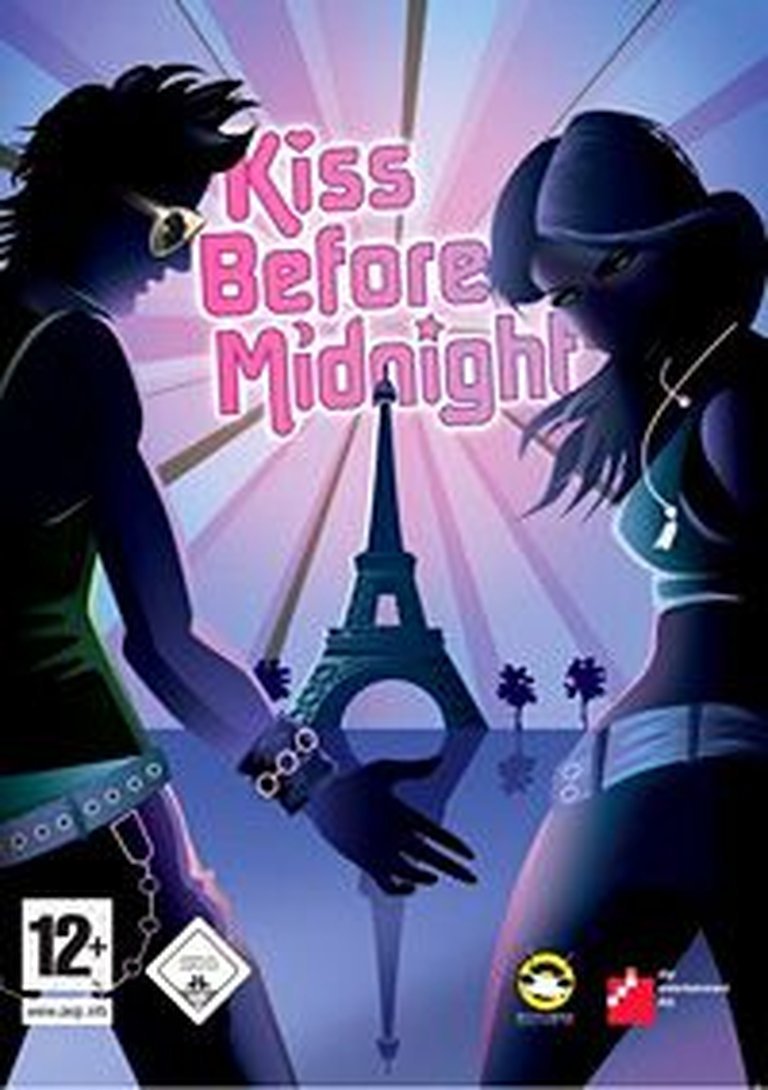
Kiss Before Midnight is a dating simulation game set in Paris, where players navigate the intertwined romantic lives of nine characters. The story follows Paul, who returns to his friends Amelie and Ricky, reigniting his crush on Devine, who is about to marry Vincent. Meanwhile, Ricky pursues Luca, a waitress, and Amelie seeks a relationship with her former professor, Marcel. Players influence the characters’ relationships through dialogue choices, mini-games involving dressing for events, and using gesture cards to sway conversations. The game spans 15 episodes, with outcomes determined by the player’s decisions, shaping who ends up with whom.
Kiss Before Midnight Guides & Walkthroughs
Kiss Before Midnight Reviews & Reception
mobygames.com (100/100): A triumphant return to form for the series.
vgtimes.com (55/100): A game with balanced gameplay and graphics.
Kiss Before Midnight: A Forgotten Gem of Romantic Adventure
Introduction
In the vast landscape of video game history, certain titles slip through the cracks, overlooked by mainstream audiences yet cherished by those who discover their unique charm. Kiss Before Midnight (2008) is one such game—a dating simulation that blends romance, intrigue, and light adventure in a way that feels both nostalgic and refreshingly original. Developed by Rotobee Realtime 3D GmbH and published by dtp entertainment AG, this game is a time capsule of early 2000s storytelling in gaming, offering a glimpse into a genre that was still finding its footing in Western markets.
At its core, Kiss Before Midnight is a narrative-driven experience set in the romantic backdrop of Paris, where players navigate the intertwined lives of nine characters, each with their own desires, secrets, and relationships. The game’s premise is simple yet compelling: influence the relationships between these characters through dialogue choices, mini-games, and strategic decision-making, ultimately determining who ends up with whom by the story’s conclusion. While it may not have achieved the commercial success or critical acclaim of other titles in its genre, Kiss Before Midnight stands as a fascinating artifact of its time, offering a blend of charm, quirkiness, and ambition that deserves a closer look.
This review will delve deep into the game’s development history, narrative and thematic elements, gameplay mechanics, artistic direction, and its lasting legacy. By examining these aspects, we aim to shed light on why Kiss Before Midnight is a game worth remembering, even if it never quite found its audience.
Development History & Context
The Studio and Creators
Rotobee Realtime 3D GmbH, the studio behind Kiss Before Midnight, was a relatively small but ambitious developer based in Germany. Founded in the early 2000s, Rotobee specialized in creating 3D real-time applications, including games and interactive experiences. While the studio is not widely recognized today, its work on Kiss Before Midnight reflects a commitment to storytelling and character-driven gameplay that was somewhat ahead of its time.
The game was directed by Dennis Franken, with Tim Bärmann serving as producer and Jürgen Oppermann as the story producer. The writing team included Anne von Vaszary, Jürgen Oppermann, and Hanno Raichle, who crafted the game’s intricate web of relationships and dialogue. The music, composed by Jan Morgenstern, added a layer of atmospheric depth to the game’s Parisian setting.
Technological Constraints and Innovations
Kiss Before Midnight was released in 2008, a time when the gaming industry was transitioning from the sixth to the seventh generation of consoles. The game was developed for Windows, utilizing the technological capabilities of the era to create a visually appealing and interactive experience. However, it was not without its limitations. The game’s 3D graphics, while serviceable, were not groundbreaking, and the animations could sometimes feel stiff or unpolished. Despite these constraints, the developers managed to create a game that was rich in narrative and character interaction, leveraging the strengths of the dating simulation genre.
One of the game’s most innovative features was its use of a card-based mini-game to influence conversations. This mechanic allowed players to strategically steer dialogue in favor of their chosen characters, adding a layer of depth to the gameplay that went beyond simple dialogue choices. Additionally, the game’s episodic structure, with 15 distinct episodes, gave it a serialized feel that was uncommon in dating simulations at the time.
The Gaming Landscape in 2008
The late 2000s were a period of significant growth and diversification in the gaming industry. While blockbuster titles like Grand Theft Auto IV and Call of Duty: Modern Warfare dominated the market, there was also a burgeoning interest in niche genres, including dating simulations and visual novels. However, these genres were still largely confined to Japanese markets, with only a handful of titles making their way to Western audiences.
Kiss Before Midnight was one of the few Western-developed dating simulations to emerge during this period. Its release in 2008 placed it alongside other notable titles like Singles 2: Triple Trouble (2006) and Singles: Flirt Up Your Life! (2003), both of which were also developed by Rotobee. While these games shared some similarities in terms of gameplay and themes, Kiss Before Midnight distinguished itself with its focus on a more mature and interconnected narrative, set against the backdrop of Paris.
The Vision Behind the Game
The creators of Kiss Before Midnight sought to craft a game that was as much about storytelling as it was about gameplay. The game’s narrative was designed to be nonlinear, with player choices directly influencing the relationships between characters. This emphasis on player agency was a key selling point, as it allowed for multiple playthroughs with different outcomes.
The game’s setting in Paris was also a deliberate choice, as the city’s romantic allure provided the perfect backdrop for a story about love, betrayal, and second chances. The developers aimed to capture the essence of Parisian culture, from its cafés and fashion to its historic landmarks, all of which are woven into the game’s narrative and aesthetic.
Narrative & Thematic Deep Dive
Plot Overview
Kiss Before Midnight revolves around a group of nine characters whose lives intersect in Paris. The story begins with the return of Paul, a young man who has spent the past year studying in Berlin. Upon his return, he reunites with his friends Amelie and Ricky, as well as his old crush, Devine. However, Paul’s joy is short-lived when he learns that Devine is set to marry Vincent, a macho and somewhat arrogant man, in just a few days.
The game’s narrative unfolds over 15 episodes, each of which presents players with choices that influence the relationships between the characters. The story is driven by the interactions between these characters, with dialogue choices and mini-games determining the direction of their relationships. The ultimate goal is to guide the characters toward their desired romantic outcomes, whether that means pairing Paul with Devine, Ricky with Luca, or Amelie with Marcel.
Character Analysis
The game features a diverse cast of characters, each with their own personalities, motivations, and secrets. Below is a breakdown of the main characters:
-
Paul: The protagonist of the story, Paul is a thoughtful and introspective young man who has spent the past year studying in Berlin. His return to Paris reignites his feelings for Devine, but he must navigate the complexities of her impending marriage to Vincent.
-
Devine: Paul’s old crush, Devine is a beautiful and enigmatic woman who seems torn between her feelings for Paul and her commitment to Vincent. Her character is defined by her internal conflict, as she struggles to reconcile her past with her present.
-
Vincent: Devine’s fiancé, Vincent is a confident and somewhat domineering man who represents the antithesis of Paul’s sensitive nature. His relationship with Devine is fraught with tension, as he seems unaware of her lingering feelings for Paul.
-
Amelie: Paul’s childhood friend, Amelie is a kind and intelligent woman who harbors a secret crush on her former professor, Marcel. Her story arc revolves around her attempts to win his affection while navigating the complexities of their age difference.
-
Ricky: Another of Paul’s friends, Ricky is a laid-back and easygoing young man who finds himself drawn to Luca, a red-haired waitress at the group’s favorite café. His relationship with Luca is one of the game’s more lighthearted subplots.
-
Luca: A spirited and independent waitress, Luca is the object of Ricky’s affection. Her character is defined by her warmth and humor, making her one of the more likable figures in the game.
-
Marcel: Amelie’s former professor, Marcel is a sophisticated and intellectual man who seems oblivious to Amelie’s feelings for him. His character serves as a foil to the younger, more impulsive characters in the game.
-
Estelle: Amelie’s fashion-conscious and manipulative twin sister, Estelle adds a layer of intrigue to the story. Her actions often serve to complicate the relationships between the other characters, making her a wildcard in the game’s narrative.
-
Marie: A flower girl who plays a minor but pivotal role in the story, Marie’s interactions with the other characters often serve as a catalyst for key events.
Themes and Motifs
Kiss Before Midnight explores a variety of themes, many of which are central to the dating simulation genre. These include:
-
Love and Longing: The game’s central theme is the pursuit of love, with each character grappling with their own desires and insecurities. Paul’s longing for Devine, Amelie’s crush on Marcel, and Ricky’s infatuation with Luca all reflect the universal human experience of yearning for connection.
-
Second Chances: The game’s title, Kiss Before Midnight, evokes the idea of a fleeting opportunity—a chance to seize love before it slips away. This theme is reflected in the characters’ struggles to reconcile their pasts with their presents, as they seek to make amends or pursue relationships that were once out of reach.
-
Deception and Betrayal: The game’s narrative is rife with secrets and hidden motivations. Devine’s impending marriage to Vincent, despite her feelings for Paul, and Estelle’s manipulative behavior are just two examples of the ways in which deception drives the story forward.
-
Friendship and Loyalty: The relationships between the characters are not solely romantic; they are also bound by friendship and loyalty. Paul’s relationships with Amelie and Ricky, for example, serve as a counterbalance to the romantic entanglements that define much of the game’s narrative.
-
The Passage of Time: The game’s episodic structure, with its 15 distinct episodes, reinforces the idea of time as a finite resource. The characters’ relationships evolve over the course of the game, with each episode bringing them closer to their ultimate fates.
Dialogue and Writing
The writing in Kiss Before Midnight is one of its strongest assets. The dialogue is witty, engaging, and often humorous, with each character possessing a distinct voice that reflects their personality. The game’s writers successfully capture the nuances of human interaction, from the awkwardness of unrequited love to the tension of romantic rivalry.
One of the game’s most innovative features is its use of a card-based mini-game to influence conversations. This mechanic allows players to strategically steer dialogue in favor of their chosen characters, adding a layer of depth to the gameplay that goes beyond simple dialogue choices. The cards represent different gestures or tactics, such as flattery, humor, or sincerity, and players must choose the right card at the right moment to achieve their desired outcome.
Narrative Structure
The game’s narrative is divided into 15 episodes, each of which presents players with a series of choices that influence the relationships between the characters. The episodic structure gives the game a serialized feel, with each episode building on the events of the previous one. This approach allows for a high degree of replayability, as players can experiment with different choices to see how they affect the story’s outcome.
The game’s nonlinear narrative is one of its most compelling features. Unlike many dating simulations, which follow a more rigid, branching-path structure, Kiss Before Midnight allows for a greater degree of player agency. The relationships between the characters are fluid, with each choice having the potential to alter the course of the story in unexpected ways.
Gameplay Mechanics & Systems
Core Gameplay Loop
At its heart, Kiss Before Midnight is a dating simulation, and its core gameplay loop revolves around influencing the relationships between the game’s characters. Players take on the role of an unseen protagonist who guides the characters through their interactions, making choices that determine the direction of their relationships.
The game is divided into 15 episodes, each of which presents players with a series of dialogue choices and mini-games. The goal is to steer the characters toward their desired romantic outcomes, whether that means pairing Paul with Devine, Ricky with Luca, or Amelie with Marcel. The game’s nonlinear narrative allows for multiple playthroughs, with each choice having the potential to alter the story’s outcome.
Dialogue Choices and the Card System
One of the game’s most innovative features is its use of a card-based mini-game to influence conversations. This mechanic allows players to strategically steer dialogue in favor of their chosen characters, adding a layer of depth to the gameplay that goes beyond simple dialogue choices.
The cards represent different gestures or tactics, such as flattery, humor, or sincerity, and players must choose the right card at the right moment to achieve their desired outcome. For example, if a player wants to encourage a romantic relationship between Paul and Devine, they might use a “flattery” card to make Paul compliment Devine’s appearance or a “sincerity” card to have him express his true feelings.
The card system is a clever way to gamify the process of influencing relationships, and it adds a strategic element to the gameplay. Players must carefully consider which cards to use and when, as the wrong choice can lead to unintended consequences.
Mini-Games
In addition to the card-based mini-game, Kiss Before Midnight features a dressing mini-game that allows players to prepare characters for specific events. This mechanic is relatively simple, involving the selection of appropriate clothing and accessories for the characters, but it adds a layer of customization to the gameplay.
The dressing mini-game is not as central to the experience as the card system, but it serves as a nice complement to the game’s narrative focus. It also reinforces the idea that appearances matter in the world of Kiss Before Midnight, where first impressions can make or break a relationship.
Character Progression
While Kiss Before Midnight does not feature traditional character progression mechanics, such as leveling up or skill trees, the relationships between the characters do evolve over the course of the game. Each choice the player makes influences the characters’ feelings toward one another, with some relationships strengthening and others weakening as a result.
The game’s episodic structure allows for a high degree of replayability, as players can experiment with different choices to see how they affect the story’s outcome. This approach encourages players to engage with the game’s narrative on a deeper level, as they seek to uncover all of the possible endings.
User Interface and Controls
The game’s user interface is simple and intuitive, with a focus on accessibility. Players navigate the game’s menus using the mouse, selecting dialogue choices and mini-game options with a simple click. The interface is clean and uncluttered, allowing players to focus on the game’s narrative and characters.
The controls are similarly straightforward, with the game’s mini-games requiring only basic mouse inputs. This simplicity makes the game easy to pick up and play, even for those who are not familiar with the dating simulation genre.
Innovations and Flaws
Kiss Before Midnight is not without its flaws. The game’s 3D graphics, while serviceable, are not particularly impressive, and the animations can sometimes feel stiff or unpolished. Additionally, the game’s episodic structure, while innovative, can sometimes feel disjointed, with certain episodes feeling more like filler than essential parts of the narrative.
However, the game’s strengths far outweigh its weaknesses. The card-based mini-game is a clever and engaging mechanic that adds depth to the gameplay, and the game’s writing is sharp, witty, and full of charm. The characters are well-developed, with distinct personalities and motivations, and the game’s setting in Paris is richly detailed and atmospheric.
World-Building, Art & Sound
Setting and Atmosphere
Kiss Before Midnight is set in Paris, a city that is synonymous with romance, art, and culture. The game’s developers have done an excellent job of capturing the essence of the city, from its iconic landmarks to its bustling cafés and fashion houses. The game’s setting is not just a backdrop; it is an integral part of the narrative, with the city’s atmosphere influencing the characters’ interactions and relationships.
The game’s Paris is a place of contrasts, where the elegance of high society coexists with the grit of everyday life. The characters move through a world that is both glamorous and grounded, with the game’s narrative reflecting the complexities of life in the city. Whether it’s the tension between Paul and Vincent or the lighthearted flirtation between Ricky and Luca, the game’s setting plays a crucial role in shaping the story.
Visual Direction
The game’s visual direction is a mix of realism and stylization, with a focus on capturing the beauty and charm of Paris. The character models are detailed and expressive, with each character possessing a distinct look that reflects their personality. The environments are similarly well-crafted, with the game’s locations ranging from the opulence of a high-society ball to the cozy intimacy of a café.
While the game’s graphics are not groundbreaking, they are more than adequate for the purposes of the narrative. The animations, while sometimes stiff, are generally smooth and fluid, and the game’s art direction is consistent and cohesive. The game’s visuals are not its strongest selling point, but they do an excellent job of supporting the narrative and enhancing the player’s immersion in the world.
Sound Design and Music
The game’s sound design is subtle but effective, with ambient noises and character voices adding depth to the experience. The voice acting is particularly noteworthy, with each character possessing a distinct voice that reflects their personality. The dialogue is well-delivered, with the actors capturing the nuances of the characters’ emotions and motivations.
The game’s music, composed by Jan Morgenstern, is a highlight of the experience. The soundtrack is a mix of romantic and atmospheric pieces, with the music shifting to reflect the tone of the scene. Whether it’s a tender piano melody during a romantic moment or a more upbeat track during a lighthearted interaction, the music enhances the game’s emotional impact and immerses the player in the world.
Reception & Legacy
Critical and Commercial Reception
Kiss Before Midnight was released to little fanfare in 2008, with the game receiving minimal coverage from mainstream gaming outlets. The game’s niche appeal and lack of marketing likely contributed to its obscurity, as it struggled to find an audience in a market dominated by blockbuster titles.
Despite its lack of commercial success, the game has developed a small but dedicated following over the years. Players who have discovered the game often praise its engaging narrative, well-developed characters, and innovative gameplay mechanics. The game’s unique blend of romance, intrigue, and light adventure has resonated with those who appreciate storytelling in games, and its episodic structure has made it a favorite among fans of nonlinear narratives.
Evolution of Reputation
In the years since its release, Kiss Before Midnight has gained a reputation as a hidden gem of the dating simulation genre. While it may not have achieved the same level of recognition as other titles in the genre, such as Tokimeki Memorial or Persona, it has carved out a niche for itself as a game that offers a unique and compelling experience.
The game’s reputation has been bolstered by its inclusion in discussions about underrated or overlooked games, with critics and players alike highlighting its strengths. The game’s writing, in particular, has been praised for its wit and charm, and its card-based mini-game has been cited as an innovative mechanic that adds depth to the gameplay.
Influence on Subsequent Games
While Kiss Before Midnight may not have had a direct influence on subsequent games, its approach to storytelling and gameplay has resonated with developers and players alike. The game’s emphasis on player agency and nonlinear narrative has become increasingly common in modern gaming, with titles like Life is Strange and Detroit: Become Human exploring similar themes.
The game’s card-based mini-game has also inspired other developers to experiment with similar mechanics, with games like Dream Daddy and Hatoful Boyfriend incorporating elements of strategy and choice into their gameplay. While these games may not be direct descendants of Kiss Before Midnight, they share a similar commitment to storytelling and character-driven gameplay.
Legacy in the Dating Simulation Genre
Kiss Before Midnight occupies a unique place in the history of the dating simulation genre. As one of the few Western-developed titles in a genre dominated by Japanese games, it stands as a testament to the universal appeal of romance and storytelling in gaming. The game’s blend of European charm and innovative gameplay mechanics has made it a standout title, even if it never achieved mainstream success.
The game’s legacy is one of quiet influence, with its ideas and mechanics resonating with players and developers alike. While it may not be remembered as a classic of the genre, it has earned a place in the hearts of those who have discovered its charms.
Conclusion
Kiss Before Midnight is a game that defies easy categorization. It is a dating simulation, a romantic adventure, and a character-driven narrative all rolled into one. While it may not have achieved the commercial success or critical acclaim of other titles in its genre, it stands as a testament to the power of storytelling in gaming.
The game’s strengths lie in its engaging narrative, well-developed characters, and innovative gameplay mechanics. The card-based mini-game adds a layer of strategy to the experience, while the game’s episodic structure allows for a high degree of replayability. The setting of Paris is richly detailed and atmospheric, and the game’s music and sound design enhance the player’s immersion in the world.
While Kiss Before Midnight may not be a perfect game, it is a compelling and unique experience that deserves to be remembered. It is a game that rewards players who are willing to engage with its narrative and characters, offering a blend of romance, intrigue, and light adventure that is both charming and thought-provoking.
In the grand tapestry of video game history, Kiss Before Midnight may be a small and overlooked thread, but it is one that adds depth and richness to the medium. It is a game that reminds us of the power of storytelling in gaming, and it stands as a testament to the creativity and ambition of its developers.
For those who are willing to seek it out, Kiss Before Midnight offers a rewarding and memorable experience—a kiss before midnight that is well worth the wait.