
- Release Year: 2013
- Platforms: Android, Linux, Macintosh, Windows
- Publisher: Priority Interrupt
- Developer: Priority Interrupt
- Genre: Action
- Perspective: 1st-person
- Game Mode: Single-player
- Gameplay: Roguelike
- Average Score: 79/100
Description
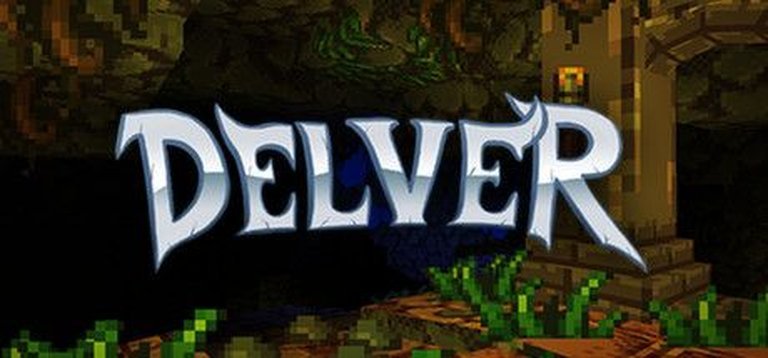
Delver is a first-person roguelike dungeon crawler where players take on the role of an explorer navigating procedurally-generated dungeons in search of the Yithidian Orb. Inspired by classics like The Legend of Zelda and Ultima Underworld, the game features randomized levels, permadeath, and a mix of combat, loot collection, and trap avoidance. Starting at a campfire with basic gear, players must descend through dungeon floors, battling enemies and uncovering hidden treasures, with each run offering a unique challenge.
Gameplay Videos
Where to Buy Delver
PC
Delver Patches & Updates
Delver Mods
Delver Guides & Walkthroughs
Delver Reviews & Reception
metacritic.com (65/100): Apart from little variety of enemies and interiors this roguelike’s biggest flaw is that it does nothing to draw the player away from the boring playstyle based on eliminating enemies from a safe distance.
reddit.com : One of my favorite roguelites of all time is a 3d dungeon crawler called Delver, but almost no one knows about it. Graphics are retro but good and charming.
gamesreviews2010.com (85/100): Delver is a fantastic first-person action roguelike that will keep you on the edge of your seat. With its challenging gameplay, randomly generated levels, and crunchy pixel graphics, it’s a must-play for fans of the genre.
gamepressure.com (88/100): First person dungeon crawler in the convention of RPG action roguelike game, maintained in old-school aesthetics. The game is about traversing dungeons, killing monsters and developing the character we lead.
Delver Cheats & Codes
PC
On Steam, right-click the game, enter the Properties menu, and then click Set launch options…, enter debug=true, and save. While in the game, just load a save file, and press K to enter the debug menu.
| Code | Effect |
|---|---|
| debug=true | Activates the debug menu (press K to access). |
Macintosh
On Steam, right-click the game, enter the Properties menu, and then click Set launch options…, enter debug=true, and save. While in the game, just load a save file, and press K to enter the debug menu.
| Code | Effect |
|---|---|
| debug=true | Activates the debug menu (press K to access). |
Delver: A First-Person Roguelike Dungeon Crawler That Defies Time
Introduction: The Unsung Hero of the Roguelike Renaissance
In an era where roguelikes and dungeon crawlers have exploded into mainstream popularity—thanks to titles like Hades, Dead Cells, and The Binding of Isaac—it’s easy to overlook the humble, pixelated pioneers that paved the way. Delver, developed by the one-man studio Priority Interrupt, is one such gem. Released in 2013 (with a full launch in 2018), this first-person dungeon crawler blends the procedural generation of classic roguelikes with the tactile, immersive combat of Ultima Underworld and Hexen, all wrapped in a charming, low-resolution aesthetic that feels both retro and timeless.
At its core, Delver is a game about failure, persistence, and the thrill of the unknown. You play as an unnamed adventurer, descending into a labyrinthine dungeon in search of the Yithidian Orb—a MacGuffin that serves as both carrot and stick. The dungeon is alive, shifting with each playthrough, ensuring that no two runs are ever the same. Death is permanent, loot is unpredictable, and every potion could be a lifesaving elixir or a vial of instant death.
But what makes Delver special isn’t just its adherence to roguelike conventions—it’s how it feels. The game’s crunchy pixel art, weighty combat, and minimalist storytelling create an atmosphere of desperate survival, where every swing of your sword, every thrown bomb, and every hastily quaffed potion could mean the difference between victory and another humiliating demise.
This review will dissect Delver in exhaustive detail, exploring its development history, narrative subtleties, gameplay mechanics, artistic choices, and lasting legacy. By the end, you’ll understand why this underappreciated indie title remains a cult favorite nearly a decade after its initial release.
Development History & Context: A Labor of Love in the Early Access Wild West
The Birth of Priority Interrupt
Delver is the brainchild of Chad Cuddigan, a solo developer who founded Priority Interrupt to bring his vision to life. Inspired by classic dungeon crawlers like Ultima Underworld, Hexen, and The Legend of Zelda’s dungeons, Cuddigan set out to create a first-person roguelike that emphasized procedural generation, tactical combat, and emergent gameplay.
The game’s development began in 2012, with an Android alpha release that same year. This early version was met with praise for its fluid gameplay but criticism for its clunky inventory system—a recurring theme in early reviews. The game’s initial reception was positive enough to warrant a Steam Greenlight campaign, which succeeded in 2013, leading to an Early Access launch on September 6, 2013.
The Early Access Era: A Double-Edged Sword
The mid-2010s were the Wild West of Early Access, a time when games like DayZ, Starbound, and Rust were redefining what it meant to develop a game in public. Delver entered this landscape with a clear roadmap:
– Revamped art and sound
– Deeper RPG mechanics
– Special events and mini-bosses
– Full gamepad support
– New content and balance tweaks
However, Early Access was (and still is) a gamble. Some players embraced the game’s raw, unpolished state, while others criticized its lack of content and purpose. John Walker of Rock, Paper, Shotgun noted in 2013 that Delver felt “lacking in collectibles and shops,” suggesting that the game needed more long-term progression to keep players engaged.
Despite these criticisms, Cuddigan and his small team (including artist Joshua Skelton and composer Tobias Arnold) continued refining the game. Updates trickled in over the years, culminating in a full 1.0 release on February 2, 2018, complete with:
– A level editor
– Steam Workshop support
– Linux and macOS ports
The Open-Source Legacy
In a move that solidified Delver’s place in indie gaming history, Priority Interrupt released the game’s source code on GitHub in November 2018 under the GNU General Public License (later switched to the zlib License). This decision was rare for a commercial game and spoke to Cuddigan’s commitment to the modding community.
The open-source release allowed fans to:
– Create custom dungeons, weapons, and enemies
– Fix bugs and improve performance
– Port the game to new platforms
– Experiment with total conversions
This move ensured that Delver would live on long after its official development ceased—a testament to the power of community-driven game preservation.
The Gaming Landscape in 2013-2018: A Roguelike Revolution
Delver emerged during a golden age for roguelikes and indie dungeon crawlers:
– 2011: The Binding of Isaac redefined the genre.
– 2012: FTL: Faster Than Light brought roguelike mechanics to spaceship management.
– 2013: Rogue Legacy blended permadeath with Metroidvania progression.
– 2015: Darkest Dungeon introduced psychological horror to the formula.
– 2017: Dead Cells perfected the “roguelite” hybrid model.
Amidst this explosion of innovation, Delver stood out for its first-person perspective—a rarity in a genre dominated by top-down and side-scrolling games. While titles like Legend of Grimrock (2012) and Slasher’s Keep (2017) also embraced first-person dungeon crawling, Delver’s pixel-art aesthetic and roguelike structure gave it a unique identity.
Narrative & Thematic Deep Dive: Minimalism as a Strength
The Story (Or Lack Thereof)
Delver is not a game driven by narrative. There is no grand lore, no cinematic cutscenes, and no dialogue trees. Instead, the game embraces environmental storytelling and player-driven interpretation.
The premise is simple:
– You are an adventurer.
– You must descend into a dungeon to retrieve the Yithidian Orb.
– You will die. A lot.
That’s it. There are no NPCs to guide you, no quest logs to follow, and no overarching plot twists. The dungeon itself is the story—a procedurally generated hellscape where every run is a new chapter in your personal saga of failure and (occasional) triumph.
Themes: Futility, Persistence, and the Allure of the Unknown
Despite its minimalist approach, Delver explores several deep thematic undercurrents:
-
The Myth of Sisyphus (Futility and Persistence)
- Every run begins the same way: at a campfire, gearing up for another descent.
- Death resets your progress, but gold carries over, allowing for incremental upgrades.
- The game forces you to ask: Is the Orb worth it? Or is the journey itself the reward?
-
The Thrill of Discovery (And the Fear of the Unknown)
- Potions are unlabeled—their effects are only revealed upon consumption.
- Traps are indistinguishable until triggered.
- Enemies lurk in the dark, waiting to ambush the unprepared.
- The dungeon is a Schrödinger’s box of possibilities, where every corner could hide treasure or doom.
-
Consumerism and the Illusion of Progress
- The campfire merchants sell weapons, potions, and upgrades—but nothing is guaranteed to help.
- A “legendary” sword might break after three hits.
- A “healing” potion might actually be poison.
- The game mockingly subverts the RPG trope of “better gear = success.”
-
Isolation and Survival
- There are no allies, no companions, and no respite.
- The dungeon is a hostile, indifferent world—you are alone in your struggle.
- The only “progression” is the player’s growing skill, not their character’s stats.
The Absence of Dialogue: A Bold Creative Choice
Delver has no spoken or written dialogue outside of item descriptions and the occasional environmental text (e.g., graffiti on walls). This absence is intentional—it forces the player to project their own narrative onto the experience.
- Is the adventurer a hero? A fool? A greedy treasure hunter?
- Why does the Orb matter? Is it a source of power? A curse? A myth?
- What happened to the previous delvers? Their skeletons litter the dungeon, silent witnesses to past failures.
This lack of exposition makes Delver feel like a folktale—a story passed down through generations, where the details change with each telling.
Gameplay Mechanics & Systems: A Masterclass in Roguelike Design
Core Gameplay Loop: Descend, Loot, Die, Repeat
Delver’s structure is deceptively simple:
1. Prepare at the campfire (buy gear, allocate stats).
2. Enter the dungeon (procedurally generated, 7+ levels deep).
3. Fight, explore, and survive (find the ladder to the next floor).
4. Die horribly (permadeath, return to campfire with gold).
5. Repeat (with slightly better gear, if you’re lucky).
This loop is addictive because it respects the player’s time:
– Runs are short (10-30 minutes).
– Death feels fair (usually).
– Progress is tangible (gold = better starting gear).
Combat: Weighty, Tactical, and Unforgiving
Delver’s combat is deceptively deep, blending:
– Melee weapons (swords, axes, maces—each with unique swing arcs and speeds).
– Ranged weapons (bows, wands, bombs—limited by durability or charges).
– Throwable items (potions explode on impact, weapons can be yeeted at enemies).
– Environmental hazards (spikes, teleport traps, pits).
Melee Combat: Timing is Everything
- Light attacks are fast but weak.
- Heavy attacks deal more damage but leave you vulnerable.
- Strafing and positioning are crucial—enemies will flank, retreat, and ambush.
- Weapon durability means you can’t rely on one tool forever.
Ranged Combat: A Double-Edged Sword
- Bows are overpowered if you master kiting (enemies drop arrows, making ammo infinite).
- Wands offer magic attacks (fireballs, ice blasts, stun rays) but have limited charges.
- Bombs are high-risk, high-reward—short fuse, massive damage.
Enemy AI: Smarter Than It Looks
- Enemies flee when wounded to regroup.
- Ranged foes keep distance.
- Some enemies dodge or block attacks.
- Mini-bosses (like the Lich) require pattern recognition.
Progression & Permadeath: The Gold Standard
Delver’s progression system is brutal but fair:
– Experience points are earned by killing enemies and exploring.
– Leveling up grants +1 HP and a random stat boost (Strength, Defense, Speed, etc.).
– Gold is the only persistent currency—used to buy better starting gear.
This system punishes greed but rewards skill:
– Hoarding gold for later runs is smart.
– Spending it all on one run is risky (die, and it’s gone).
– No “meta-progression”—no unlockable characters, no permanent upgrades.
Inventory & Item Management: A Love-Hate Relationship
The inventory system is both brilliant and frustrating:
– Limited slots force tough choices (do you keep the healing potion or the bomb?).
– Items degrade (weapons break, wands run out of charges).
– Potions are unidentified—drinking a red potion could heal you or kill you.
– Food regenerates health but takes time to consume.
This system encourages experimentation:
– Throwing potions at enemies can backfire (or save your life).
– Dropping items to make space is a constant struggle.
– Managing durability is key—don’t get caught with a broken sword.
Procedural Generation: The Dungeon as a Character
Delver’s dungeons are fully procedurally generated, with:
– Random layouts (no two runs are alike).
– Dynamic enemy spawns (some floors are packed, others eerily empty).
– Hidden rooms (filled with loot or traps).
– Variable loot tables (one run might give you a legendary sword; the next, a rusty dagger).
This unpredictability keeps the game fresh but can also feel unfair (e.g., getting ambushed by three skeletons in a tight corridor).
Mod Support & Workshop: The Game’s Second Life
The Steam Workshop integration (added in 2018) transformed Delver from a niche indie game into a modder’s paradise. Popular mods include:
– New dungeon themes (ice caverns, volcanic ruins).
– Custom enemies and bosses.
– Quality-of-life tweaks (better inventory management).
– Total conversions (e.g., Delver: Barony Edition).
The open-source release further extended the game’s lifespan, allowing fans to:
– Port it to new platforms (including handhelds like the Steam Deck).
– Fix bugs and optimize performance.
– Create entirely new games using Delver’s engine.
World-Building, Art & Sound: A Pixelated Nightmare
Visual Design: Retro Aesthetics with Modern Flair
Delver’s art style is a love letter to 16-bit dungeon crawlers, blending:
– Pixel-art sprites (enemies, items, and environmental objects).
– Low-resolution 3D environments (blocky but atmospheric).
– Dynamic lighting (torches flicker, shadows shift).
– A “SNES-in-3D” vibe (as described by artist Joshua Skelton).
The game’s visual identity is cohesive and immersive:
– Enemies are distinct and readable (skeletons, goblins, druids).
– Traps are subtly telegraphed (but still deadly).
– Loot is color-coded (gold = valuable, red = dangerous).
Sound Design: Minimalist but Effective
The audio in Delver is understated but crucial:
– Ambient dungeon sounds (dripping water, distant growls).
– Combat cues (clanging swords, arrow whizzes).
– Music is sparse—mostly looping chiptune tracks that enhance the retro feel.
While not audiophiles’ dream, the sound design serves its purpose:
– Footsteps help with spatial awareness.
– Enemy growls warn of ambushes.
– Potion-drinking sounds add tactile feedback.
Atmosphere: A Dungeon That Feels Alive
Delver’s greatest strength is its atmosphere:
– The dungeon is dark, claustrophobic, and unpredictable.
– Permadeath makes every decision tense.
– Procedural generation ensures no two runs feel the same.
It’s a game that rewards patience, punishes greed, and thrives on chaos.
Reception & Legacy: The Cult Classic That Refused to Die
Critical Reception: A Mixed but Respectful Response
Delver’s reception has been polarized but generally positive:
– GameStar (Germany): 80% – Praised its accessibility and challenge.
– Rock, Paper, Shotgun (2013): Criticized its lack of content but acknowledged its potential.
– Rock, Paper, Shotgun (2016): Praised its improvements and minimalist design.
– Metacritic User Score: 7.6/10 (Generally Favorable).
Common Praises:
✅ Addictive roguelike gameplay
✅ Charming retro aesthetic
✅ Tactical, weighty combat
✅ Great modding support
Common Criticisms:
❌ Repetitive after extended play
❌ Clunky inventory management
❌ Lack of long-term progression
❌ Somewhat shallow base game
Commercial Performance: A Niche Success
Delver was never a blockbuster, but it found a dedicated audience:
– Sold over 500,000 copies (per Games Reviews 2010).
– Steam Workshop mods kept players engaged long after release.
– Open-source release ensured longevity.
Legacy: The Game That Inspired a Generation
Delver’s influence can be seen in:
– Later first-person roguelikes (Slasher’s Keep, Caves of Qud).
– Modding communities embracing open-source games.
– The resurgence of pixel-art dungeon crawlers (Barony, HyperRogue).
It remains a cult classic—a game that didn’t need a big budget or AAA polish to leave a lasting mark.
Conclusion: A Flawed Masterpiece Worth Delving Into
Delver is not a perfect game. Its lack of narrative depth, repetitive structure, and clunky inventory system hold it back from true greatness. Yet, what it lacks in polish, it makes up for in charm, challenge, and sheer replayability.
Final Verdict: 8.5/10 – A Must-Play for Roguelike Fans
Pros:
✔ Addictive, fast-paced roguelike gameplay
✔ Weighty, tactical combat
✔ Charming retro aesthetic
✔ Excellent modding support
✔ Permadeath that feels fair
Cons:
✖ Repetitive after long sessions
✖ Clunky inventory management
✖ Lack of long-term progression
✖ Base game feels lightweight
Who Should Play Delver?
- Roguelike enthusiasts who love permadeath and procedural generation.
- Dungeon crawler fans who miss old-school Ultima Underworld vibes.
- Modders and tinkerers who want to customize their experience.
- Players who enjoy short, intense runs (perfect for Steam Deck or handheld gaming).
Final Thoughts: A Game That Deserves More Love
Delver is proof that great games don’t need AAA budgets. It’s a labor of love, a testament to indie creativity, and a hidden gem in the roguelike genre. If you’ve ever wanted a first-person Binding of Isaac with pixel-art charm, this is the game for you.
Now go forth, adventurer. The Yithidian Orb awaits—and so does your doom.
Have you played Delver? What’s your favorite roguelike? Let us know in the comments! 🎮🔥