
- Release Year: 1993
- Platforms: DOS, Windows
- Publisher: Advantage Plus Distributors Inc., Software Creations
- Developer: Adept Software
- Genre: Action
- Perspective: Top-down
- Game Mode: Single-player
- Gameplay: Puzzle elements
- Setting: Fantasy
- Average Score: 75/100
Description
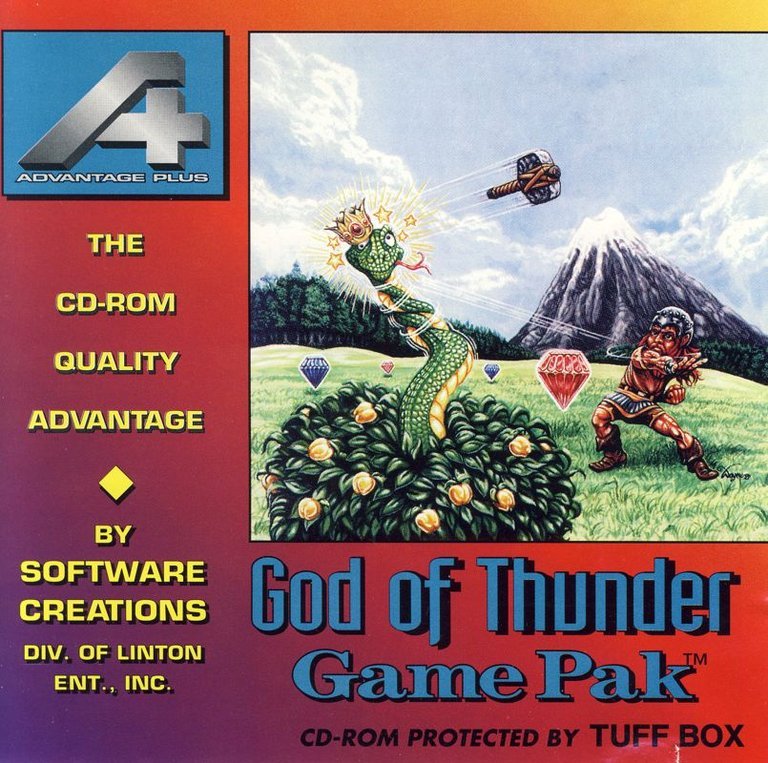
In ‘God of Thunder’, the Norse god Thor must reclaim Midgard from the trickster Loki, who has overrun the land with monsters while Odin sleeps. Combining top-down action with puzzle-solving, Thor battles enemies using his hammer Mjolnir and lightning attacks, navigating hazards and solving environmental puzzles to restore order. The game blends mythology with classic gameplay, offering a mix of combat and brain-teasing challenges across a fantasy setting.
Gameplay Videos
Where to Buy God of Thunder
PC
God of Thunder Free Download
God of Thunder Guides & Walkthroughs
God of Thunder Reviews & Reception
bestgamesreviews.info (55/100): God of Thunder is a fascinating time capsule of early 90s gaming, but its clunky controls, frustrating puzzles, and mediocre presentation make it a difficult game to recommend to modern gamers.
retrofreakreviews.com : The hardest ones are when there are one or more worms on screen (that can insta-kill you the moment you’re in a straight line with them) and you need to push logs and rocks to block their attack.
myabandonware.com (95/100): This is a fantastic game that console fans will find quite familiar. Two thumbs up!
God of Thunder Cheats & Codes
PC
Start the game with command line parameter: /VOLSTAGG
| Code | Effect |
|---|---|
| Z | Magic Refill |
| 1 | Disable clipping while pressed (walk through walls) |
| 2 | Slow game speed |
| 3 | Border flashes green during some game calculations |
| 4 | Thor not damaged while this key pressed |
| B | Breaks current script execution |
| D | Die immediately (does not require /VOLSTAGG to work) |
| K | Game freezes until ESC is pressed |
| X | Return to title screen |
| Z | Set magic level to 100% and also boss health to zero |
God of Thunder: A Retro Masterpiece or a Forgotten Relic?
Introduction
In the pantheon of retro gaming, few titles evoke the same sense of nostalgic wonder as God of Thunder. Released in 1993 by Adept Software, this DOS-based action-puzzle game transports players to the mythical realm of Midgard, where Thor, the god of thunder, must reclaim his father Odin’s stolen land from the clutches of the mischievous Loki. With its blend of Norse mythology, tongue-in-cheek humor, and challenging gameplay, God of Thunder stands as a testament to the creativity and ingenuity of early ’90s game development. This review delves deep into the game’s legacy, mechanics, and cultural impact, offering a comprehensive analysis of its place in video game history.
Development History & Context
The Studio and Creators
God of Thunder was developed by Adept Software, a relatively obscure studio that nonetheless managed to create a game with enduring appeal. The project was spearheaded by Ron Davis, who served as the lead programmer and designer. Davis’s vision was to craft a game that combined the action-adventure elements of The Legend of Zelda with the puzzle-solving mechanics of Eggerland, all while infusing it with a healthy dose of Norse mythology and humor.
Technological Constraints
The game was developed for DOS, a platform that presented both opportunities and challenges. The hardware limitations of the era meant that God of Thunder had to be optimized for performance, often at the expense of graphical fidelity. The game’s top-down perspective and flip-screen transitions were a direct result of these constraints, allowing for a larger game world without overwhelming the system’s memory.
The Gaming Landscape
In 1993, the gaming industry was in a state of flux. The 16-bit era was in full swing, with consoles like the Super Nintendo and Sega Genesis dominating the market. However, the PC gaming scene was also thriving, with shareware titles gaining popularity. God of Thunder was released as shareware, a distribution model that allowed players to try the first episode for free and purchase the remaining episodes if they enjoyed the experience. This model was crucial for the game’s initial success and helped it reach a wider audience.
Narrative & Thematic Deep Dive
Plot Overview
The narrative of God of Thunder is rooted in Norse mythology, with a few creative liberties taken for comedic effect. The game begins with Odin, the king of the gods, in a state of “Odinsleep,” a period of deep slumber during which he recharges his powers. Seizing this opportunity, Loki, the god of mischief, steals Midgard and populates it with monsters. Odin’s son, Thor, is tasked with reclaiming the land using his magical hammer, Mjolnir.
Characters and Dialogue
Thor is the protagonist, and his journey is filled with encounters with various characters, both friend and foe. The game features a cast of quirky NPCs, each with their own unique personalities and dialogue. Odin, for instance, serves as a guiding voice, offering advice and occasionally scolding Thor for his actions. Loki, on the other hand, is the quintessential trickster, embodying the game’s humorous tone.
The dialogue in God of Thunder is laced with wit and sarcasm, often breaking the fourth wall and acknowledging the game’s own mechanics. This self-aware humor adds a layer of charm to the narrative, making the characters feel more relatable and the world more immersive.
Themes
At its core, God of Thunder explores themes of heroism, perseverance, and the struggle between good and evil. Thor’s journey is not just a physical one but also a moral one, as he must navigate the complexities of his divine heritage and the responsibilities that come with it. The game also touches on themes of family and loyalty, with Thor’s relationship with Odin serving as a central narrative thread.
Gameplay Mechanics & Systems
Core Gameplay Loop
God of Thunder is a blend of action, adventure, and puzzle-solving. The core gameplay loop involves exploring Midgard, battling enemies, and solving puzzles to progress through the story. The game is divided into three episodes, each with its own unique challenges and boss battles.
Combat
Combat in God of Thunder is centered around the use of Mjolnir, Thor’s magical hammer. The hammer can be thrown at enemies and will return to Thor after hitting its target. This mechanic is not only crucial for combat but also for solving puzzles, as the hammer can be used to flick switches and interact with the environment.
The combat system is simple yet effective, with a focus on timing and precision. Enemies vary in their behavior and attack patterns, requiring players to adapt their strategies accordingly. The game also features a variety of power-ups and magical items that can be used to enhance Thor’s abilities, adding depth to the combat mechanics.
Puzzle-Solving
Puzzle-solving is a significant aspect of God of Thunder, with many challenges requiring players to think creatively and use the environment to their advantage. Puzzles range from simple block-pushing exercises to more complex sequences that involve multiple steps and interactions. The game’s top-down perspective and flip-screen transitions allow for a wide variety of puzzle designs, each with its own unique mechanics.
Character Progression
As Thor progresses through the game, he gains new abilities and upgrades to his hammer and armor. These upgrades are often tied to the defeat of major bosses, providing a sense of accomplishment and progression. The game also features a currency system, with jewels serving as the primary form of currency. These jewels can be used to purchase items and upgrades from vendors, adding a layer of strategy to the gameplay.
UI and Controls
The user interface in God of Thunder is straightforward and functional, with a focus on ease of use. The game is controlled primarily through the keyboard, with simple commands for movement, attacking, and interacting with the environment. The UI provides clear feedback on Thor’s health, magic, and inventory, ensuring that players always have the information they need to make informed decisions.
World-Building, Art & Sound
Setting and Atmosphere
God of Thunder is set in the mythical realm of Midgard, a land filled with diverse environments and challenges. The game’s world is richly detailed, with each area offering its own unique aesthetic and gameplay mechanics. From lush forests to treacherous caves, the game’s environments are designed to immerse players in the world of Norse mythology.
Visual Direction
The visual style of God of Thunder is a product of its time, with simple yet effective pixel art that captures the essence of the game’s mythological setting. The game’s top-down perspective and flip-screen transitions allow for a wide variety of environments, each with its own unique look and feel. The character designs are cartoonish and exaggerated, adding to the game’s humorous tone.
Sound Design
The sound design in God of Thunder is functional but unremarkable, with simple sound effects and a forgettable soundtrack. The game’s music, composed by Roy Davis, is serviceable but lacks the memorability of other retro titles. The sound effects, while basic, provide clear feedback on player actions, ensuring that the gameplay remains engaging and responsive.
Reception & Legacy
Critical Reception
Upon its release, God of Thunder received generally positive reviews from critics. Publications like Computer Gaming World praised the game’s gameplay and puzzles, comparing it favorably to The Legend of Zelda. Sandy Petersen of Dragon magazine gave the game a score of 3 out of 5 stars, highlighting its unique blend of action and puzzle-solving.
Commercial Success
God of Thunder was released as shareware, a distribution model that allowed players to try the first episode for free and purchase the remaining episodes if they enjoyed the experience. This model was crucial for the game’s initial success and helped it reach a wider audience. The game’s commercial success was modest but significant, given the competitive nature of the gaming market at the time.
Evolution of Reputation
Over the years, God of Thunder has developed a cult following among retro gaming enthusiasts. The game’s unique blend of action, puzzle-solving, and humor has ensured its place in the pantheon of classic DOS titles. The release of the game’s source code in 2020, along with its inclusion in the ScummVM project, has further cemented its legacy, allowing new generations of players to experience its charm.
Influence on Subsequent Games
God of Thunder has had a notable influence on subsequent games, particularly in the action-puzzle genre. Its blend of combat and puzzle-solving mechanics has inspired numerous titles, and its humorous tone has set a precedent for self-aware storytelling in video games. The game’s use of Norse mythology has also paved the way for other titles to explore similar themes, contributing to the rich tapestry of mythological storytelling in video games.
Conclusion
God of Thunder is a testament to the creativity and ingenuity of early ’90s game development. With its blend of action, puzzle-solving, and humor, the game offers a unique and engaging experience that has stood the test of time. While its graphical and auditory presentation may not hold up to modern standards, its gameplay mechanics and narrative charm continue to captivate players. As a piece of video game history, God of Thunder deserves recognition for its contributions to the action-puzzle genre and its enduring legacy in the world of retro gaming.
In the grand tapestry of video game history, God of Thunder may not be the most visually stunning or technically advanced title, but it is undoubtedly one of the most charming and memorable. Its blend of Norse mythology, tongue-in-cheek humor, and challenging gameplay makes it a standout title in the DOS gaming library. For those willing to look past its dated presentation, God of Thunder offers a rewarding and nostalgic journey through the mythical realm of Midgard.